Artwork
Pharaoh's daughter discovers Moses in the rush basket
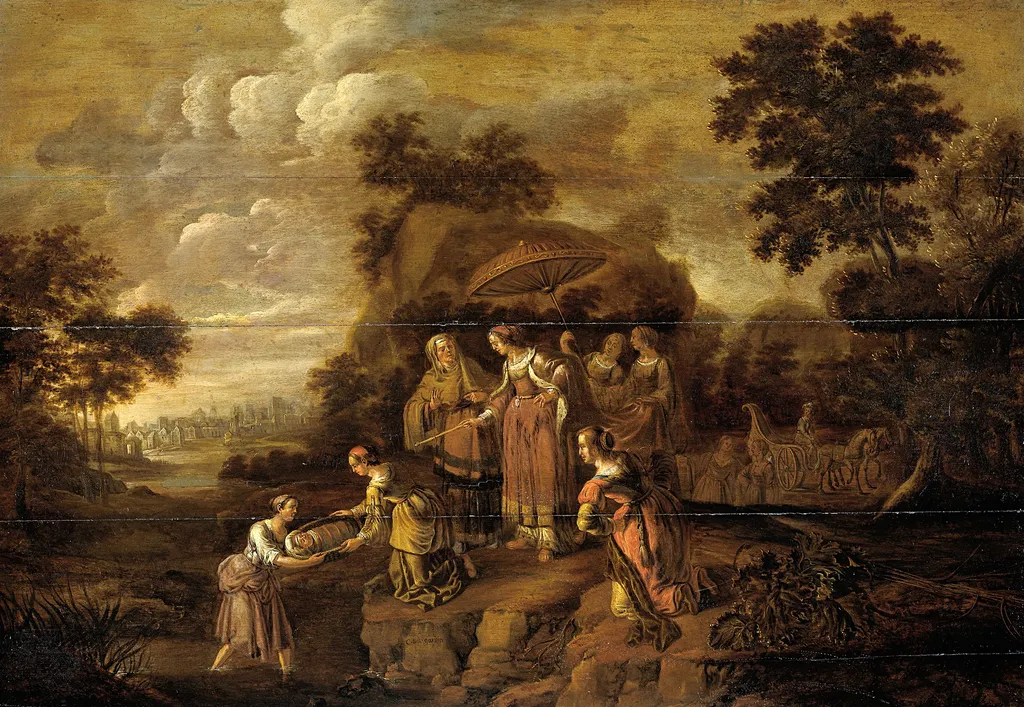
Pharaoh's daughter discovers Moses in the rush basket is an oil painting by the Flemish Baroque painting artist Guilliam du Gardijn. It dates from 1622 and is held in the collection of the Rijksmuseum.
About this work
Subject & Meaning
The composition focuses entirely on this singular act of discovery, serving as a devotional image that recalls the origins of the Hebrew leader.
Guilliam du Gardijn's 1622 oil painting depicts the biblical narrative of the Finding of Moses, a scene from religious tradition where Pharaoh's daughter discovers the infant hidden in a basket among the reeds. As the main subject, this moment represents divine providence and the intersection of royal power with humble salvation. The work functions as a visual interpretation of this specific scriptural event, utilizing the medium of oil on panel to render the figures and setting associated with the Old Testament story.
The composition focuses entirely on this singular act of discovery, serving as a devotional image that recalls the origins of the Hebrew leader.
Technique & Style
Executed in oil paint on panel in 1622, the work exhibits the smooth, enamel-like handling typical of early seventeenth-century Dutch cabinet painting, with careful glazing to model the drapery and figures. The composition is organized along a shallow, stage-like recession, directing the viewer’s eye from the central group of Pharaoh’s daughter and attendants toward the diagonally placed basket with the infant Moses. Stylistic features include sharply delineated anatomy and costume details, set against a softly painted landscape background that recedes into atmospheric haze.
The panel’s dimensions are 75.7 cm in height by 109.5 cm in width, consistent with contemporary Dutch history paintings designed for private devotion or display.
History & Provenance
Created in 1622, the oil-on-panel painting Pharaoh's daughter discovers Moses in the rush basket was executed by the artist Guilliam du Gardijn. The work measures 75.7 cm in height and 109.5 cm in width. Historical records indicate that the piece was once part of the collection of Abraham Bredius before entering the holdings of the Rijksmuseum. The artwork depicts the religious subject of the Finding of Moses.
Overview
Guilliam du Gardijn’s oil painting, dated 1622, depicts the biblical episode in which the Egyptian princess discovers the infant Moses hidden in a basket of reeds. The work is part of the Rijksmuseum’s collection and presents the narrative in a tranquil, river‑bank setting.
Context
The work reflects the continued interest of Dutch artists in biblical narratives during the post‑Reformation era, when such subjects were rendered with domestic tranquility rather than overt drama. Du Gardijn’s treatment aligns with contemporary trends that favored naturalistic settings and understated emotional expression.
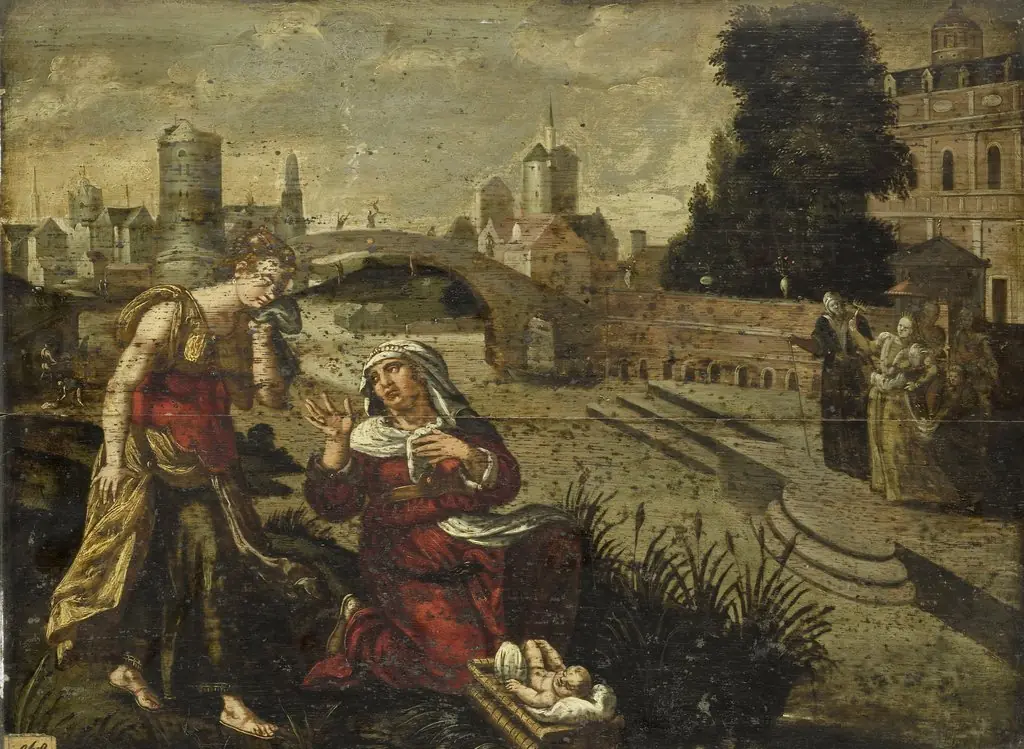
Own this work as a print
Artist & collection

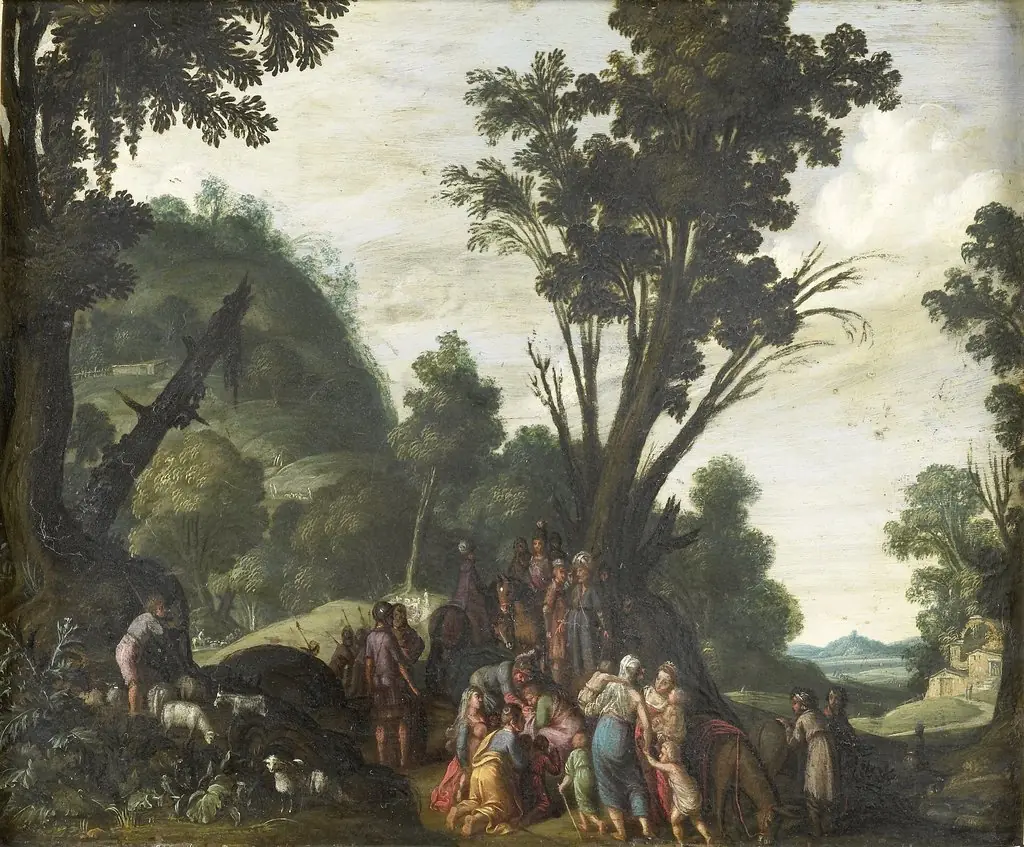 The meeting of Jacob and Esau
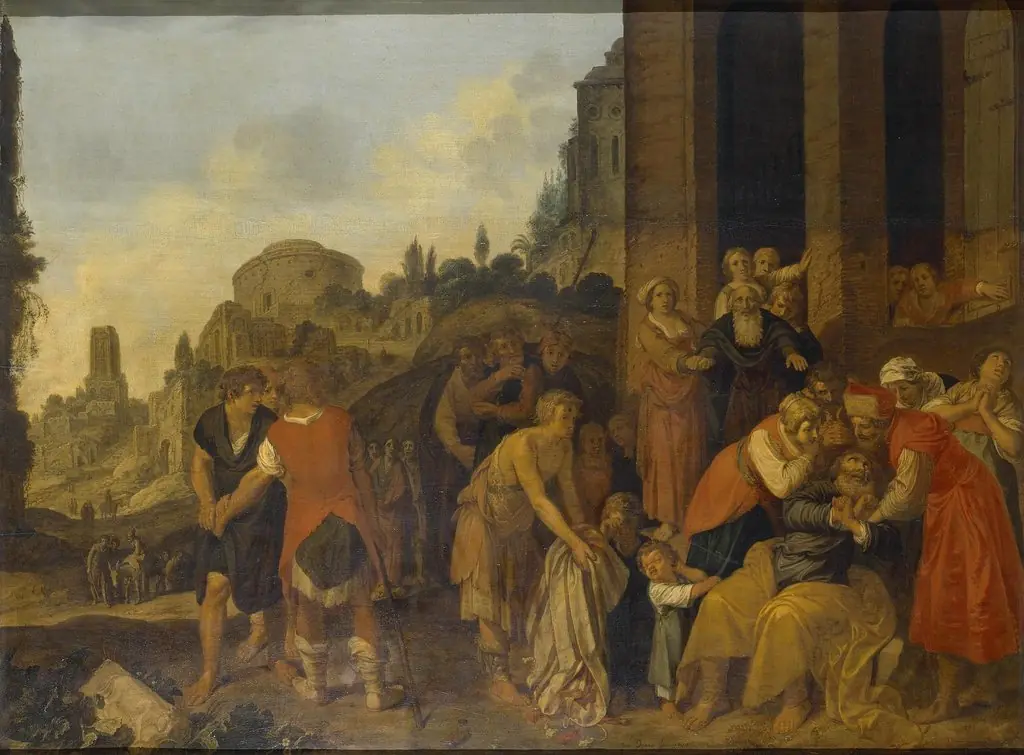 Jacob's Sons Show Him Joseph's Blood-Stained Robe
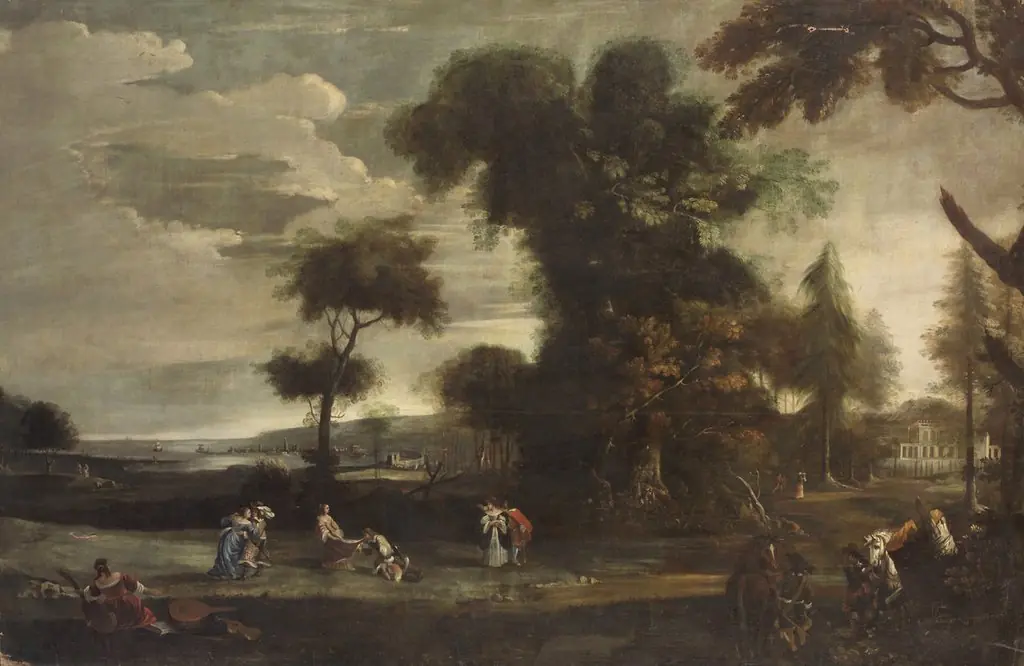 Landscape with love couple
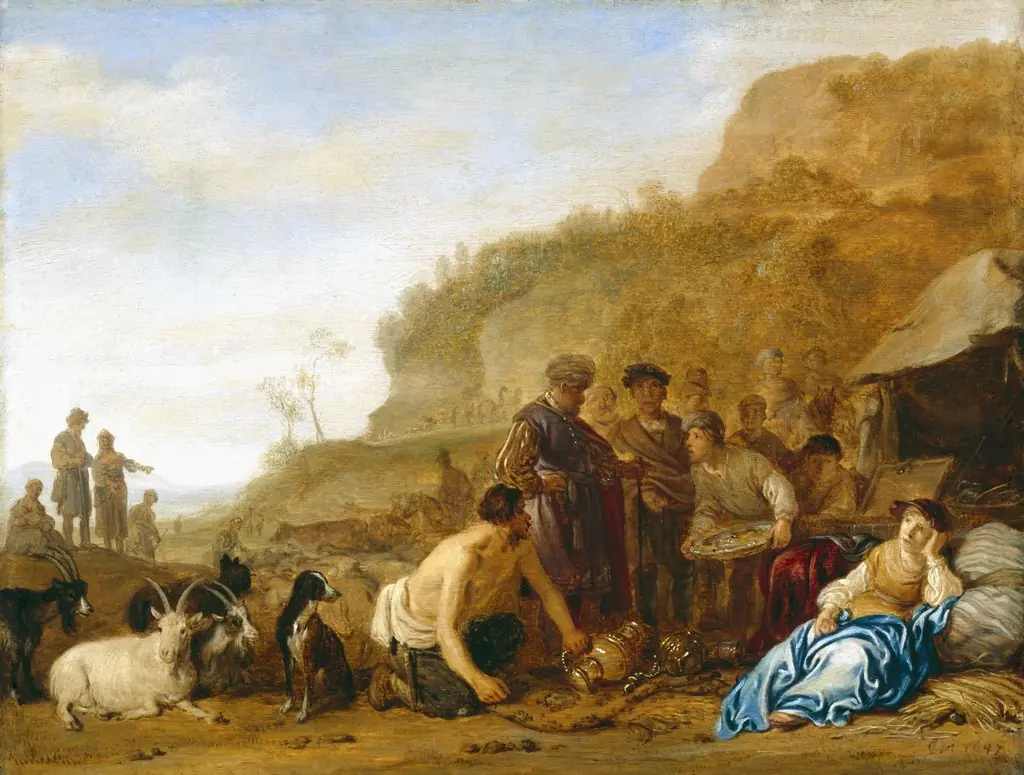 Laban Searching for His Gods
 Primăvara
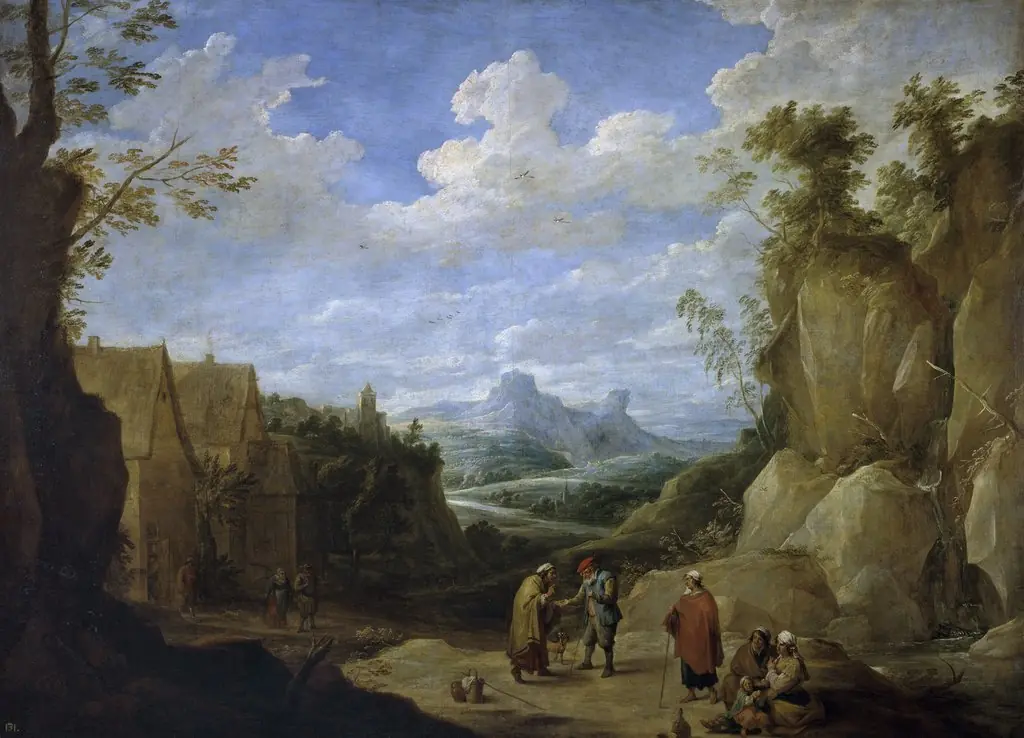 Landscape with Gypsies
 Moses schlägt Wasser aus dem Felsen
 Landscape with Roman Ruins and the Meeting of Rebecca and Eliezer
 Landscape with a Group of Wanderers
 Predigt Johannes des Täufers