Artwork
Dance of Death: The Miser
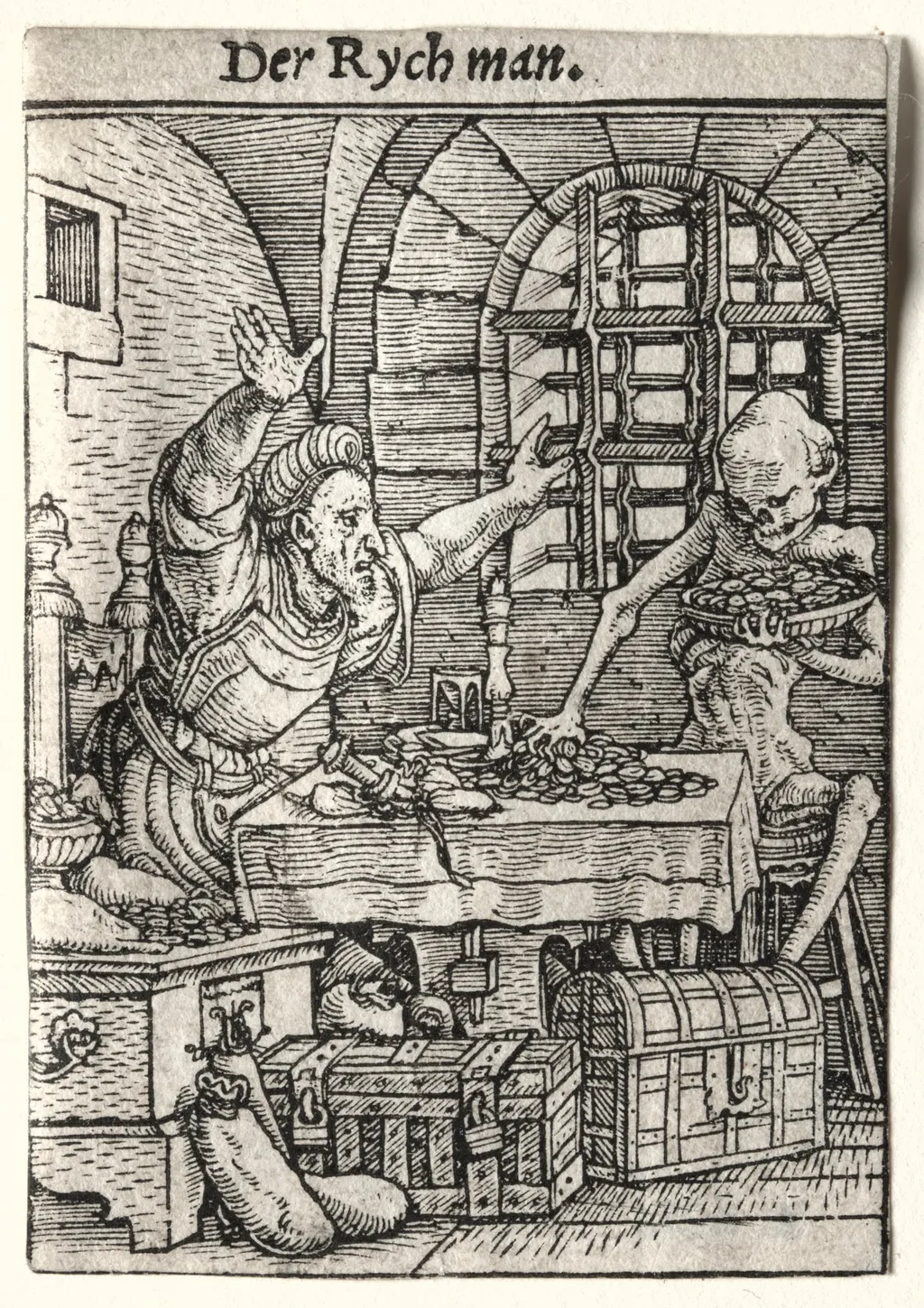
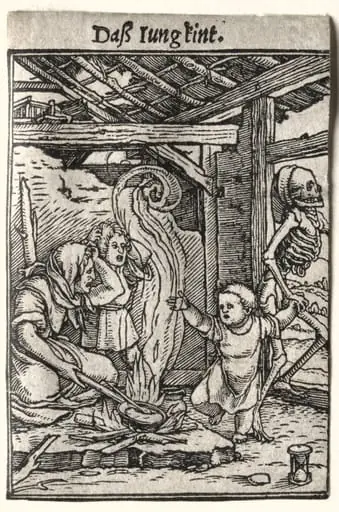
Dance of Death: The Miser is a print by the Renaissance artist Hans Holbein the Younger. It dates from 1526 and is held in the collection of the Cleveland Museum of Art.
- Accession no.
- 1929.161
- Credit line
- Gift of The Print Club of Cleveland
About this work
Look up Hans Holbein the Younger (German, active England and Switzerland, 1497/98–1543) for more.
This woodcut shows a bony skeleton leading a rich man by the hand. The miser clutches a bag of coins while Death grins. A scroll in the skeleton’s other hand reads: “I am come to fetch thee.”
The Dance of Death series started after the Black Death. It shows Death taking everyone, rich or poor. Holbein’s skeletons feel alive, not scary.
Look up Hans Holbein the Younger (German, active England and Switzerland, 1497/98–1543) for more.
Overview
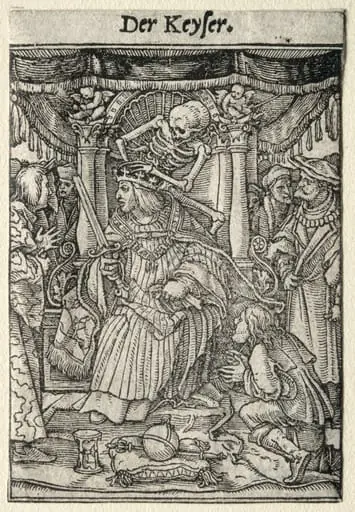
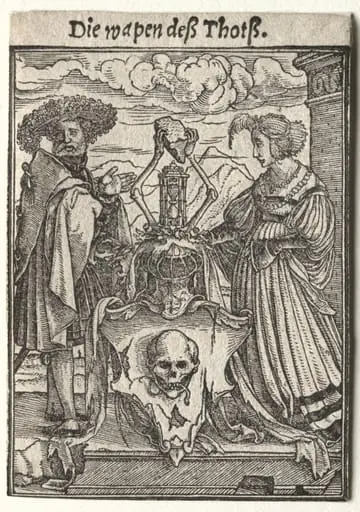
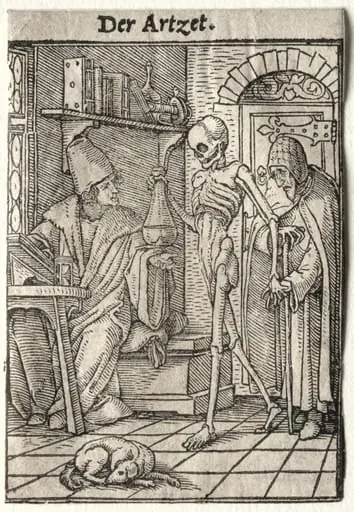
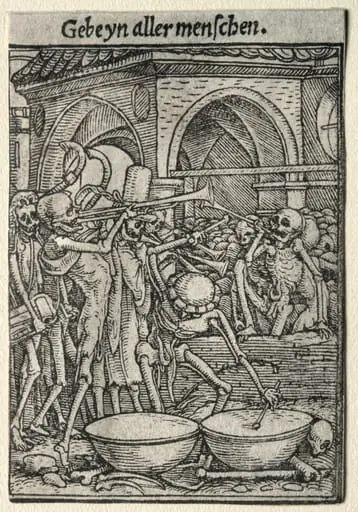
The print titled “Dance of Death: The Miser” belongs to Hans Holbein the Younger’s extensive “Dance of Death” series, a collection of forty‑one woodcuts executed by the cutter Hans Lützelburger shortly before his death in 1526 and first issued in 1538. The image depicts a skeletal figure, emblematic of Death, grasping the hand of a wealthy individual who clutches a sack of coins, while the skeleton holds a scroll bearing the words, “I am come to fetch thee.”
Subject & Meaning
The scene illustrates the medieval allegory of the danse macabre, in which death summons representatives from every social stratum to remind viewers of mortality and the inevitability of judgment. By pairing a miser, symbol of earthly greed, with the impartial, smiling skeleton, the print underscores that wealth cannot shield one from the universal call of death.
Technique & Style
The composition is rendered in fine woodcut technique, the result of Lützelburger’s precise carving of Holbein’s designs. The stark contrast of black ink against white paper accentuates the skeletal anatomy and the miser’s opulent attire, while the expressive line work gives the skeleton a lively, almost human presence rather than a purely terrifying figure.
Context
Originating from 14th‑century plague‑era morality plays performed in churchyards, the “Dance of Death” motif spread across Europe as a visual reminder of the short life expectancy following epidemics such as the Black Death. Holbein’s series, produced in the early 16th century, reflects this tradition, adapting it to the concerns of a society still grappling with the aftermath of recurring disease and social upheaval.
Own this work as a print
Artist & collection
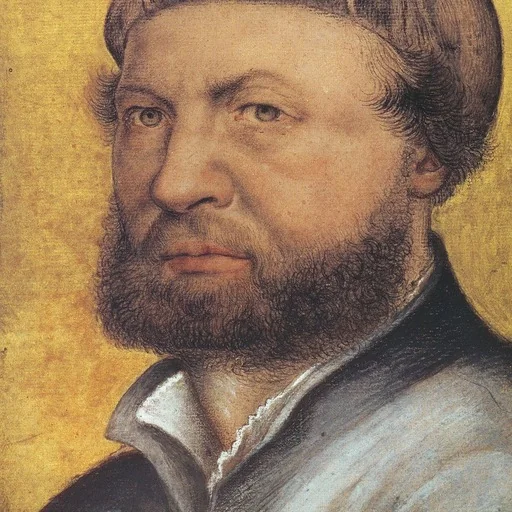
Artist
Hans Holbein the Younger (UK: HOL-byne, US: HOHL-byne, HAWL-; German: Hans Holbein der Jüngere; c.