Artwork
Self-portrait
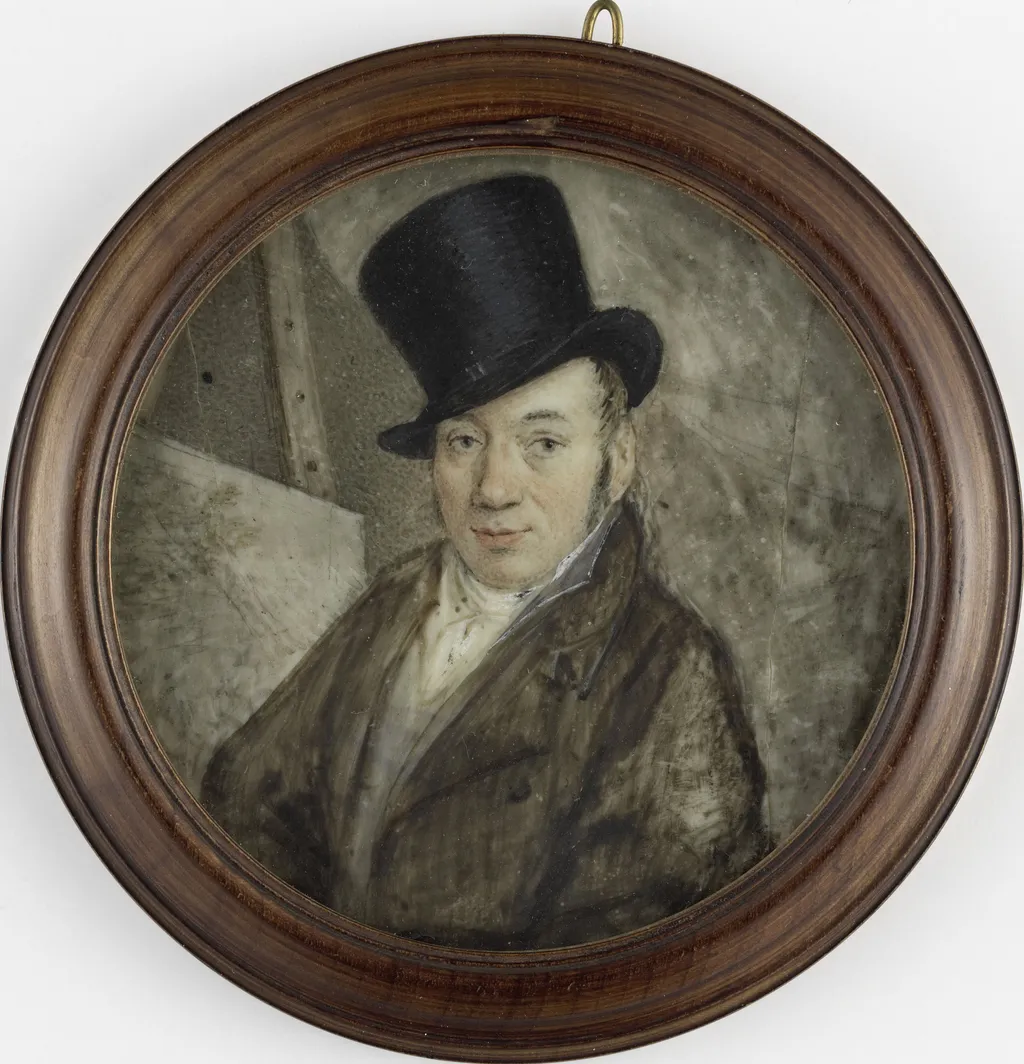
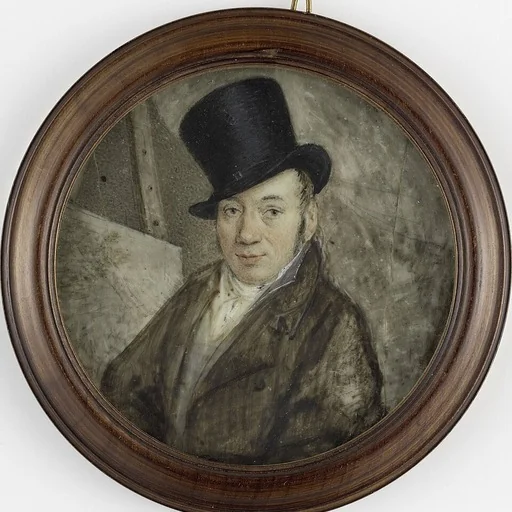
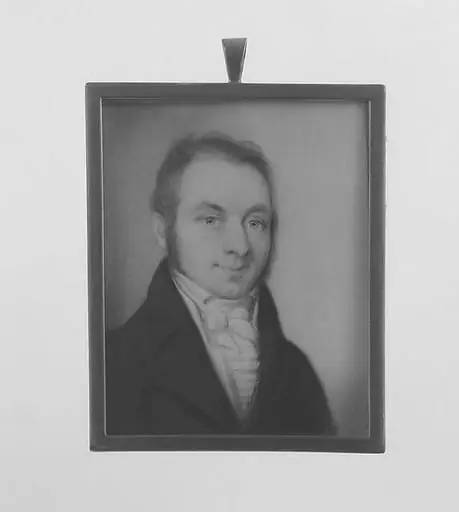
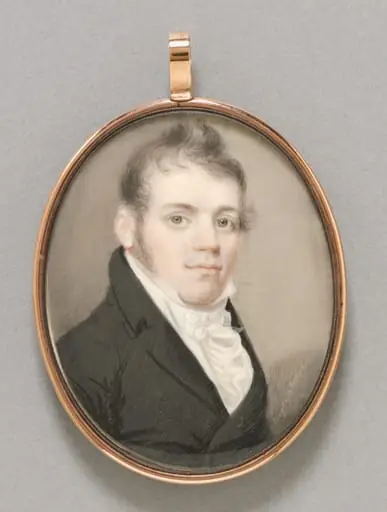
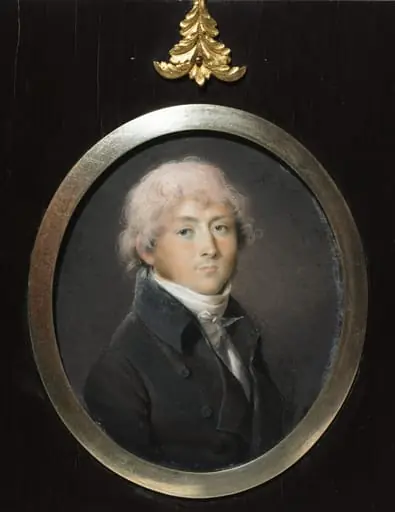
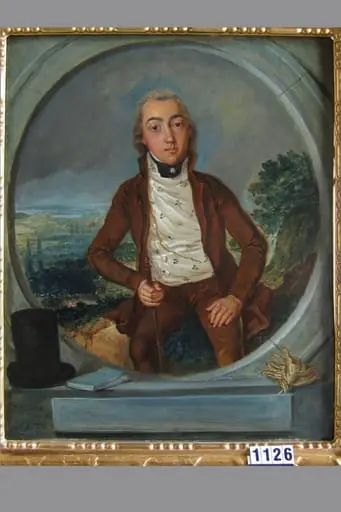
Self-portrait is an ivory painting by the Realist artist Harmanus Fock. It dates from 1800 and is held in the collection of the Rijksmuseum.
About this work
Technique & Style
The paint layer rests directly on the ivory, allowing fine detail to emerge with a subtle sheen that enhances the rendering of facial features.
The work is executed on a thin ivory panel, a material that imparts a luminous translucence to the painted surface and influences the delicate handling characteristic of early 19th‑century portraiture. The paint layer rests directly on the ivory, allowing fine detail to emerge with a subtle sheen that enhances the rendering of facial features. This support contributes to the formal quality of the self‑portrait, where the smooth tonal transitions and precise brushwork emphasize the artist’s focus on facial expression and anatomical accuracy.
History & Provenance
Harmanus Fock painted a Self-portrait in 1800 using ivory as the medium, classifying it as a portrait genre work. The piece originates from the Rijksmuseum collection and remains housed there, reflecting a clear creation history tied to its artist and contemporary Dutch portraiture traditions.
The Self-portrait by Harmanus Fock is held in the collection of the Rijksmuseum, as recorded in the Wikidata entry for the work, which also places its physical location at the Rijksmuseum. Created in 1800 on ivory, the painting has been part of the museum's holdings, though no specific inventory or accession number is provided in the available sources. The sources do not document any exhibition history for the work, and no loans, displays, or past exhibitions are noted.
Context
Harmanus Fock's Self-portrait (1800) occupies a significant position within his oeuvre as a rare example of an ivory painting, reflecting the artist's engagement with emerging miniature formats in the late 18th and early 19th centuries. The work's reception is closely tied to its presence in the Rijksmuseum collection, where it is categorized as a self-portrait and studied within the context of Dutch portraiture's evolution during the Napoleonic era. Scholarship highlights its material uniqueness and thematic focus on the artist's identity, situating it within broader discussions of artistic self-representation in Northern European art circa 1800.
Overview
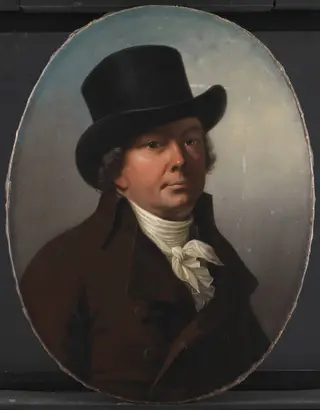
Harmanus Fock’s Self‑portrait, executed in 1800, is a modestly sized, circular work rendered on a carved ivory surface. The piece is part of the Rijksmuseum’s collection and presents the artist himself in a restrained pose, his features rendered with a calm, contemplative expression.
Subject & Meaning
Fock portrays himself with pale skin, light hair, and a dark top hat, dressed in a dark coat over a light shirt. The understated rendering and gentle tonal shifts convey a quiet introspection, suggesting the artist’s desire to present a thoughtful, rather than flamboyant, self‑image.
Own this work as a print
Artist & collection