Artwork
James Fowle Baldwin
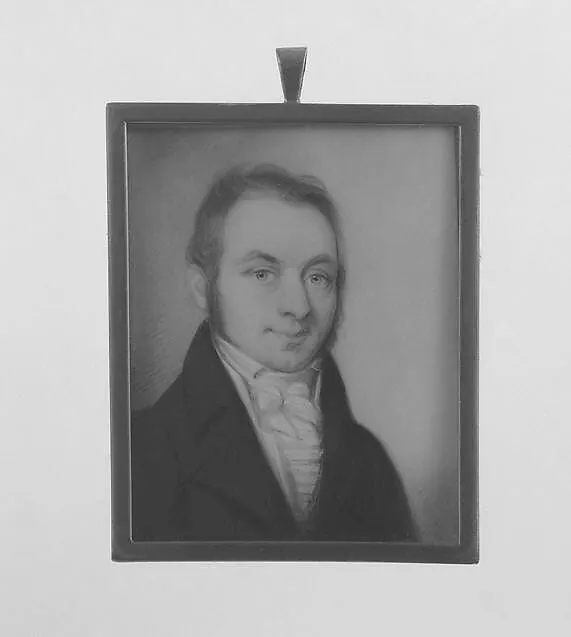
James Fowle Baldwin is a watercolor painting by the American Folk Art artist Elkanah Tisdale. It dates from 1817 and is held in the collection of the Metropolitan Museum of Art.
About this work
Subject & Meaning
The depiction lacks overt allegorical symbols, instead relying on conventional attire and a straightforward composition to convey the sitter's presence.
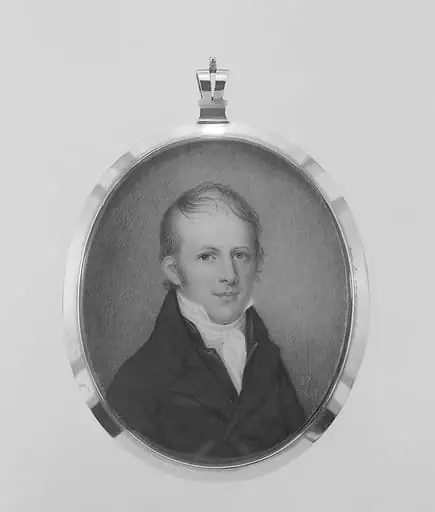
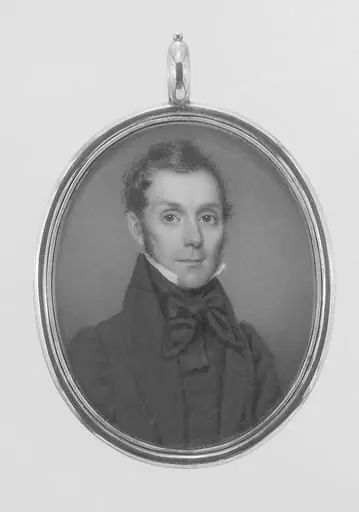
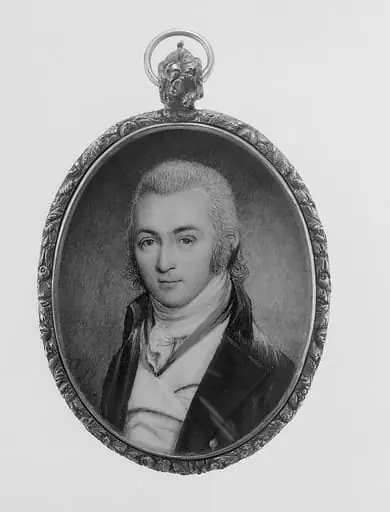
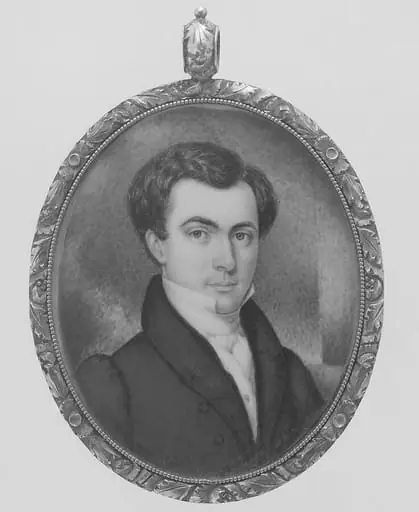
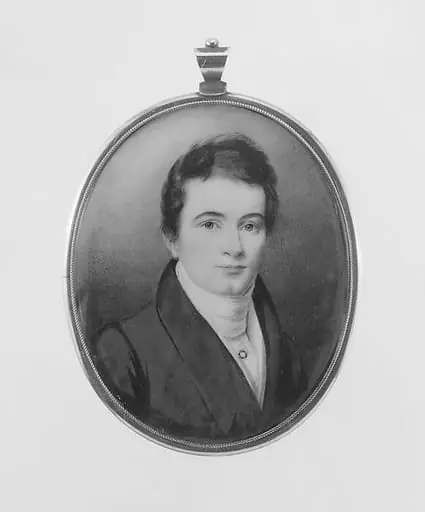
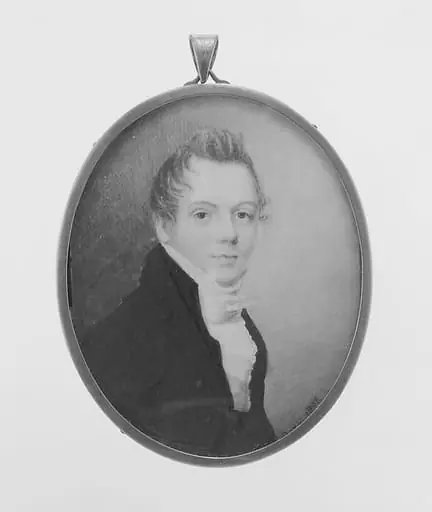
The painting portrays James Fowle Baldwin, a man identified in the work as its primary subject. As a portrait created by Elkanah Tisdale in 1817, the image functions as a visual record of an individual of respectable standing, typical of early American portraiture that emphasized social status and personal identity. The depiction lacks overt allegorical symbols, instead relying on conventional attire and a straightforward composition to convey the sitter's presence.
Technique & Style
The portrait of James Fowle Baldwin by Elkanah Tisdale employs watercolor on ivory, a delicate support that allowed for fine detail and luminous effects typical of miniature portraiture in the early 19th century. The handling is precise, with careful stippling and controlled washes to define facial features and costume, reflecting Tisdale's training in the miniature tradition. Stylistically, the work adheres to the conventions of Federal-era portraiture, emphasizing clarity, symmetry, and restrained individuality.
The sitter is depicted in three-quarter view, gazing directly at the viewer, with subdued modeling and a muted palette.
History & Provenance
Created in 1817, this watercolor on ivory portrait depicts James Fowle Baldwin and was executed by the artist Elkanah Tisdale. The work measures approximately 6.4 by 5.1 centimetres, a scale consistent with the miniature format. The piece is currently held in the collection of the Metropolitan Museum of Art within its American Wing.
Legacy
James Fowle Baldwin, painted by Elkanah Tisdale in 1817, is part of the Metropolitan Museum of Art's American Wing, where its inclusion signals sustained scholarly and curatorial interest in early American portraiture. The work's presence in a major museum collection underscores its enduring reputation as a representative example of Federal-era miniature portrait painting, contributing to the historical understanding of elite New England subjects and the development of American visual culture.
Overview
Created in 1817 by Elkanah Tisdale, this miniature portrait depicts James Fowle Baldwin. Executed in watercolor on ivory, the work exemplifies the American portrait miniature tradition of the early nineteenth century. The composition features a bust-length view of the sitter against a neutral, unadorned background, focusing attention on his facial features and attire.
Baldwin is shown wearing a dark coat with a high collar, typical of men's fashion during the Regency era. His hair is neatly combed, and his expression remains calm and direct as he gazes forward. Tisdale utilizes the smooth, translucent quality of the ivory support to apply thin, delicate washes of color, allowing for subtle gradations in tone and a luminous skin texture.
This medium was favored for its ability to capture fine detail within a compact format, often measuring only a few inches in height. The portrait reflects Tisdale's skill as a miniaturist active in Boston and New York, a period when such intimate likenesses served as personal keepsakes for families and friends before the advent of photography.
Artist & collection

Artist
Elkanah Tisdale (1768 – May 1, 1835) was an American engraver, miniature painter and cartoonist.