Artwork
Untitled
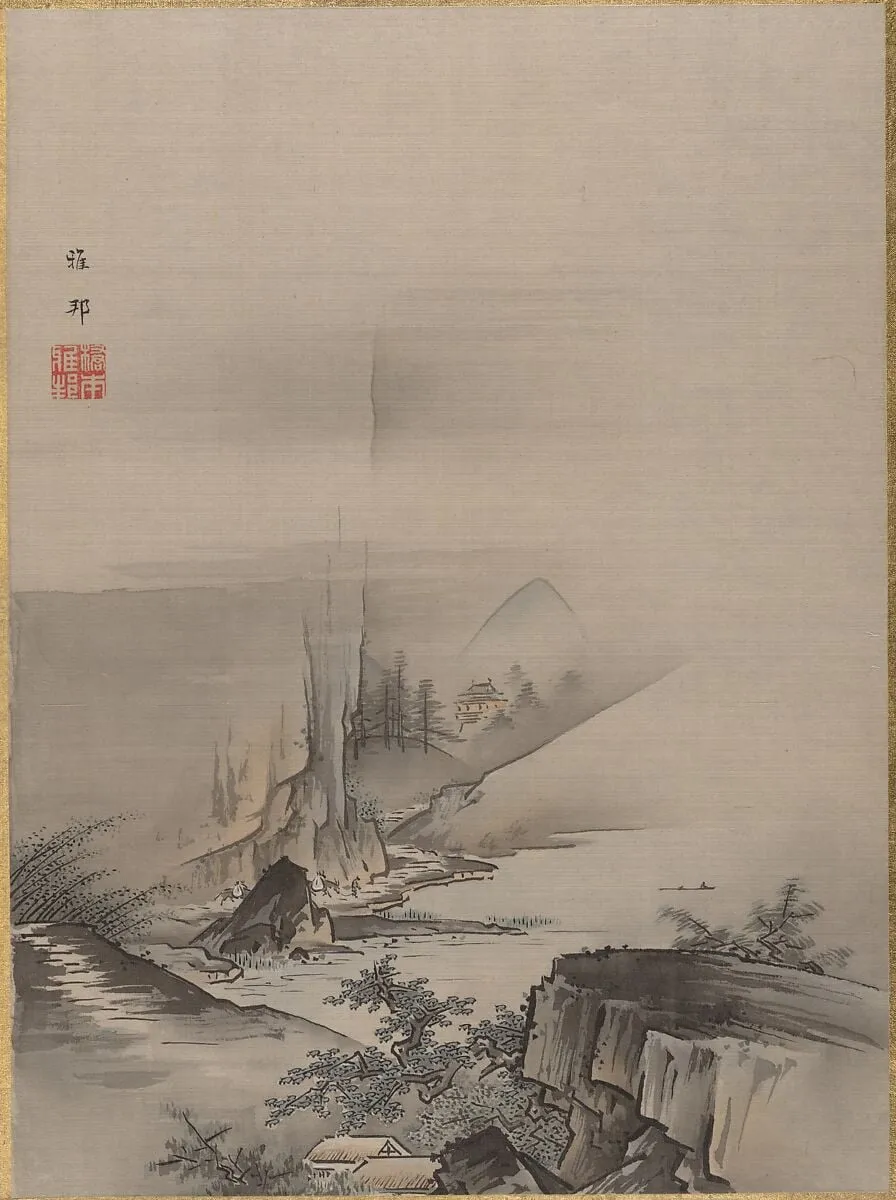
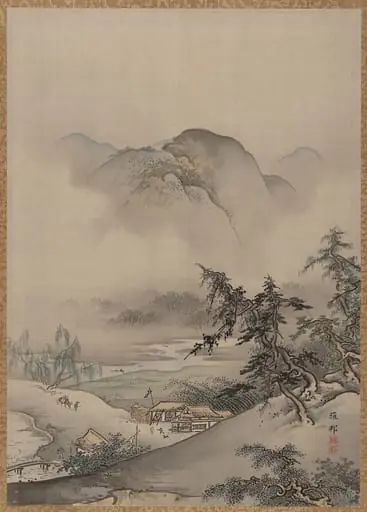
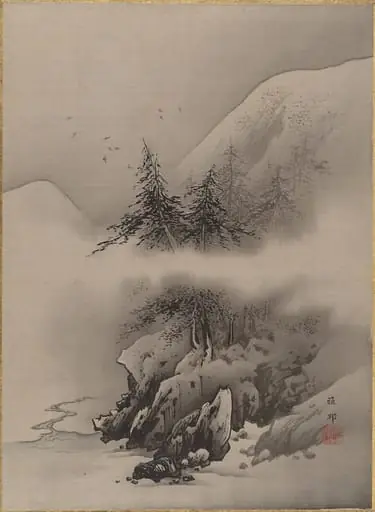
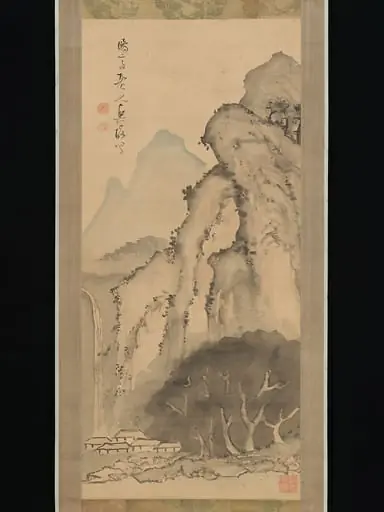
Untitled is an ink painting by the Impressionist artist Hashimoto Gahō. It dates from 1890 and is held in the collection of the Metropolitan Museum of Art.
- Accession no.
- 14.76.61.50
- Credit line
- Charles Stewart Smith Collection, Gift of Mrs. Charles Stewart Smith, Charles Stewart Smith Jr., and Howard Caswell Smith, in memory of Charles Stewart Smith, 1914
About this work
Technique & Style
4 cm in width, are consistent with the album-leaf format, which typically favored vertical or small-scale compositions.
This 1890 work by Hashimoto Gahō is executed as an album leaf in ink and color on silk, a traditional East Asian format suited to intimate viewing and portable collections. The medium combines monochrome ink with applied color, allowing for both tonal washes and selective chromatic accents characteristic of late nineteenth-century Japanese painting. The modest dimensions, approximately 35.9 cm in height by 26.4 cm in width, are consistent with the album-leaf format, which typically favored vertical or small-scale compositions.
Classified as a landscape painting, the work depicts a mountain and river, subjects rendered through brushwork on silk that demands careful handling owing to the fabric's absorbency and the irreversible nature of ink once applied.
History & Provenance
Created in 1890 by the Japanese artist Hashimoto Gahō, this untitled landscape painting was produced in Japan. The work, executed as an album leaf using ink and color on silk, depicts a scene containing mountains and a river. Since its inception, the piece has entered the collection of the Metropolitan Museum of Art, where it is currently housed.
The physical dimensions of the silk support measure 35.9 cm in height and 26.4 cm in width. No specific details regarding an original commissioner or intermediate ownership history prior to its museum acquisition are provided in the available records.
The painting Untitled by Hashimoto Gahō is part of the collection of the Metropolitan Museum of Art in New York, where it is catalogued as part of the museum's holdings of Japanese paintings. Its precise accession number is not provided in the available documentation, but the work is identified as a landscape painting created in 1890 on silk using ink and color. Both source records confirm its presence in the Metropolitan Museum of Art's collection and describe it as a landscape depicting a mountain and a river. No exhibition history for this specific work is documented in the supplied sources.
Context
Hashimoto Gahō’s Untitled (1890) is recorded as a landscape painting on silk, depicting a mountain and river, and is housed in the Metropolitan Museum of Art. Its inclusion in the museum’s collection and detailed cataloguing reflect scholarly attention to the work as part of the artist’s late‑career output, which focused on natural scenery within the tradition of Japanese genre painting. The precise dating to 1890 and documentation of its creation in Japan provide context for understanding the piece within the broader development of Meiji‑era landscape art, positioning it as an example of how contemporary artists engaged with both indigenous subjects and Western compositional influences.
Overview
Hashimoto Gahō's Untitled, created in 1890, is an album leaf painting rendered in ink and color on silk. This landscape composition presents a serene natural scene, focusing on the interplay of mountainous terrain and a winding river. The artwork exemplifies Gahō's approach to traditional Japanese painting during a period of significant cultural transition.
Subject & Meaning
The painting portrays a dramatic natural vista, featuring jagged blue mountains that dominate the background. A river gracefully navigates through this rugged landscape, reflecting a pale sky above. Small trees are depicted clinging precariously to the cliffs, while a solitary boat drifts gently near the riverbank, adding a subtle human presence to the expansive scene.
Artist & collection

 Summer Landscape
 狩野探水守常筆 蓬莱山・瀟湘八景図|Mount Penglai with Eight Views of Xiao and Xiang
 清 樊圻 為玉翁作山水圖 冊|Landscapes Painted for Yuweng
 明仇英秋江待渡 軸
 Landscape in the Style of Ching Hao
 山水図|Landscape with Pavilion
 Landscape in the Style of Ching Hao
 倣趙伯駒山水圖 軸|Landscape in the Style of Zhao Boju (Fang Zhao Boju shanshui)
 Returning Sails off a Distant Shores, from Eight Views of Xiao-Xiang
 Untitled