Artwork
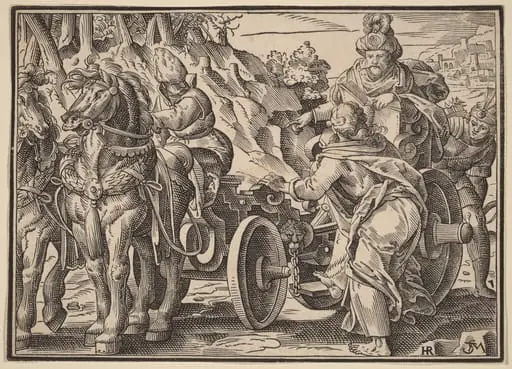
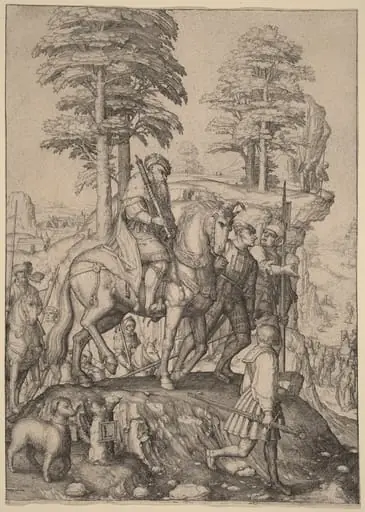
The Parable of the Good Samaritan: The Good Samaritan Putting the Traveler on His Donkey
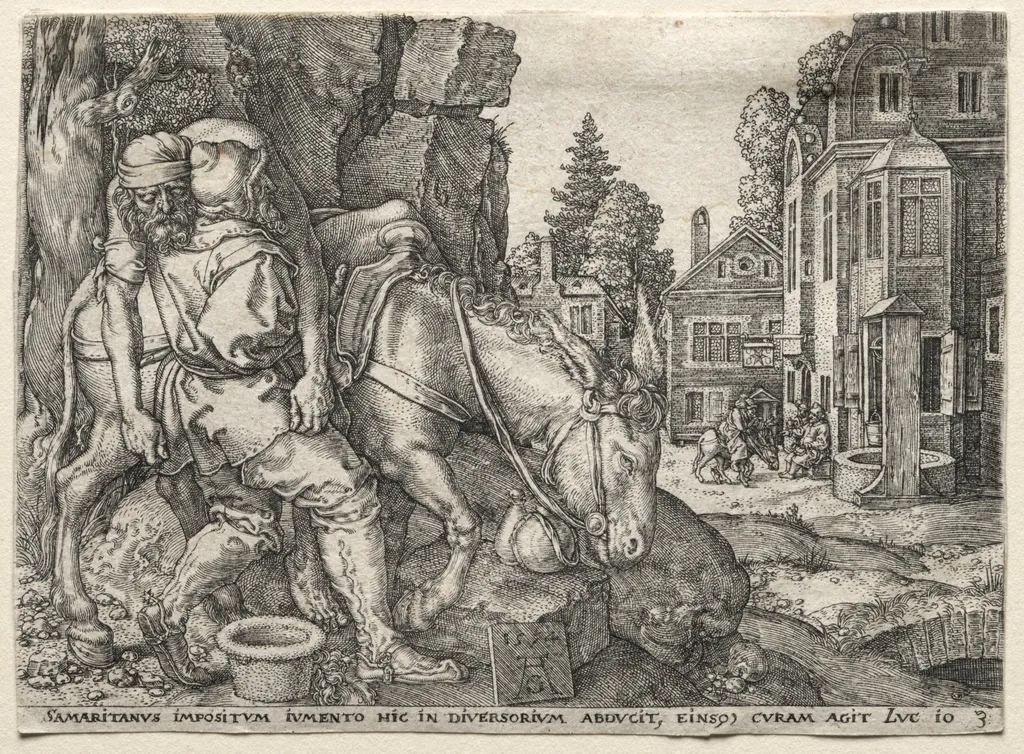
The Parable of the Good Samaritan: The Good Samaritan Putting the Traveler on His Donkey is a print by the Renaissance artist Heinrich Aldegrever. It dates from 1554 and is held in the collection of the Cleveland Museum of Art.
- Accession no.
- 1923.758
- Credit line
- Gift of Leonard C. Hanna Jr.
About this work
Overview
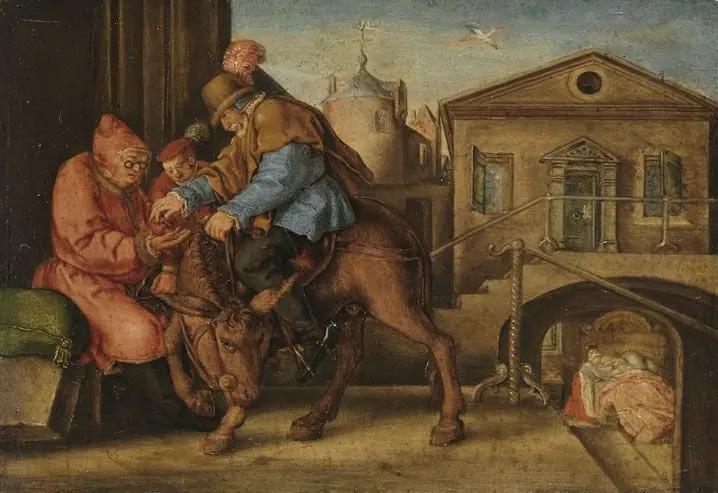
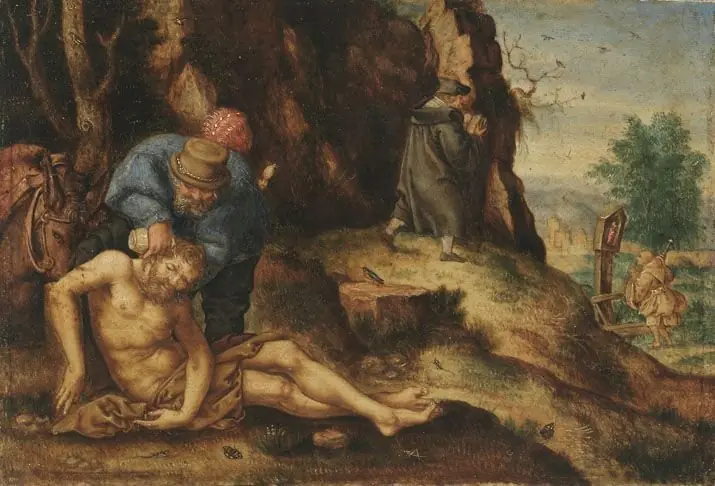
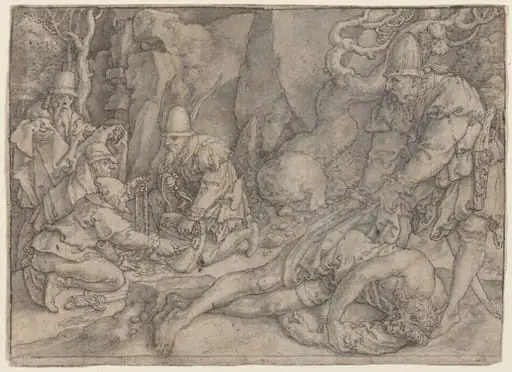
Heinrich Aldegrever’s 1554 print, titled The Parable of the Good Samaritan: The Good Samaritan Putting the Traveler on His Donkey, is part of the Cleveland Museum of Art’s collection. The work illustrates the biblical episode in which a Samaritan assists an injured wayfarer, emphasizing themes of charity and humanity.
Subject & Meaning
The composition shows a bearded, turban‑clad figure supporting a wounded traveler onto a donkey. The injured man, wearing a plain tunic and a head bandage, receives aid in a landscape of distant trees and architecture, underscoring the moral of compassionate assistance across social boundaries.
Technique & Style
Executed as a woodcut print, Aldegrever employs a careful gradation of tones to suggest depth, while the intricate line work defines the folds of the garments and the expressions of the figures. The use of chiaroscuro creates a subtle contrast that highlights the central act of kindness.
History & Provenance
Created in the mid‑16th century, the print reflects Aldegrever’s engagement with religious reformist themes. It entered the Cleveland Museum of Art’s holdings through a 20th‑century acquisition, where it remains on display as part of the museum’s European prints collection.
Own this work as a print
Artist & collection
Artist
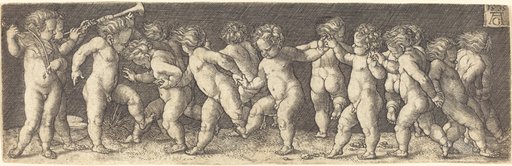
Heinrich Aldegrever or Aldegraf (1502–1555, 1558 or 1561) was a German painter and engraver. He was one of the "Little Masters", the group of German artists making small old master prints in the generation after Albrecht Dürer.