Artwork
Bjerglandskab med ruiner
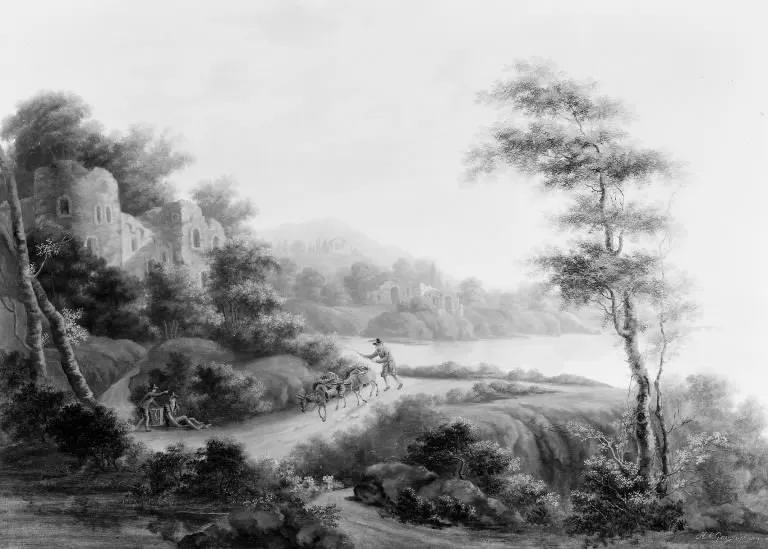
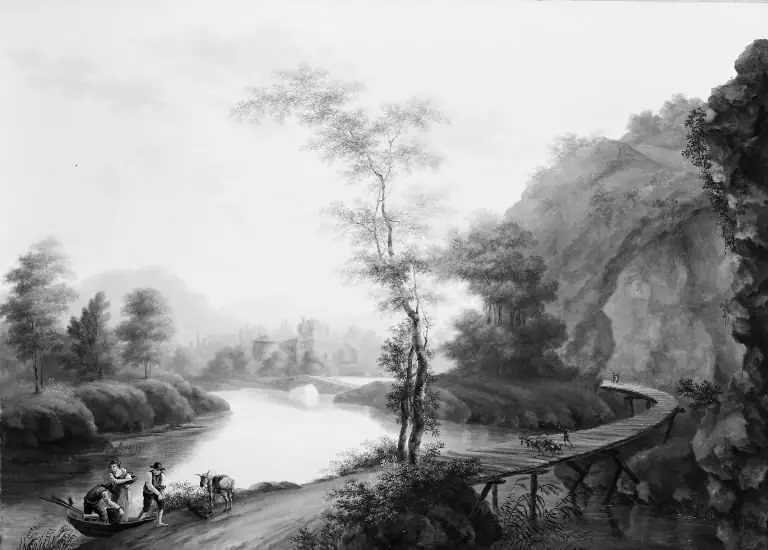
Bjerglandskab med ruiner is an oil painting by the German Romanticist artist Heinrich August Grosch. It dates from 1807 and is held in the collection of the Statens Museum for Kunst.
About this work
Overview
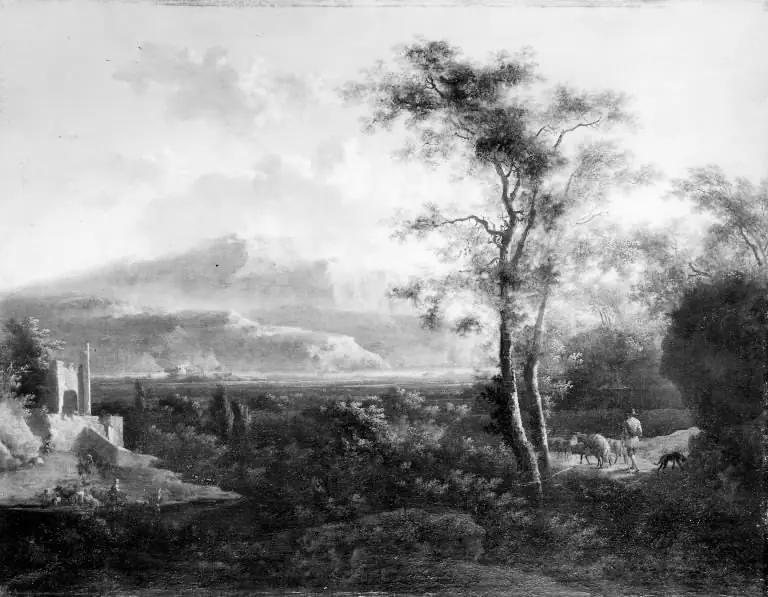
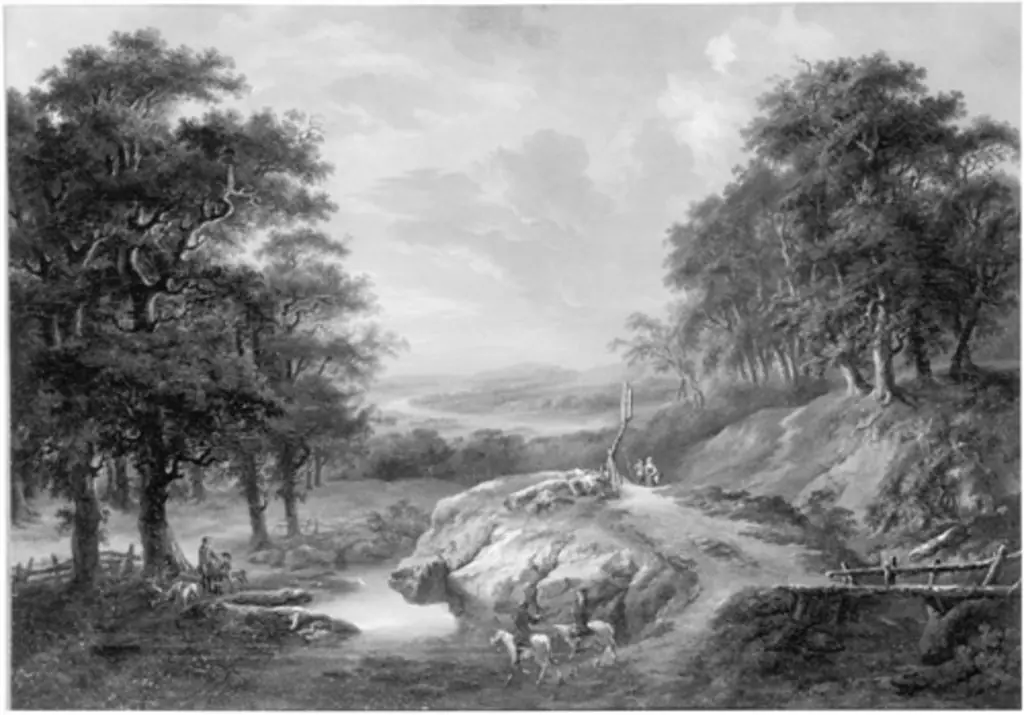
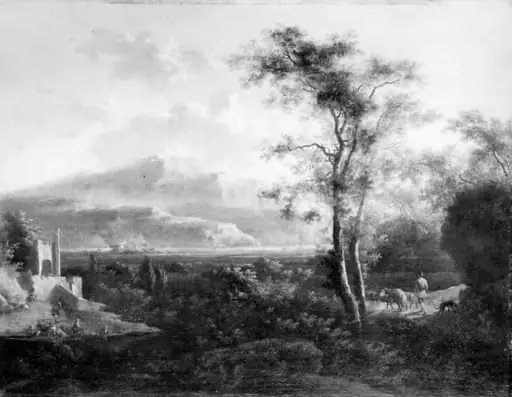
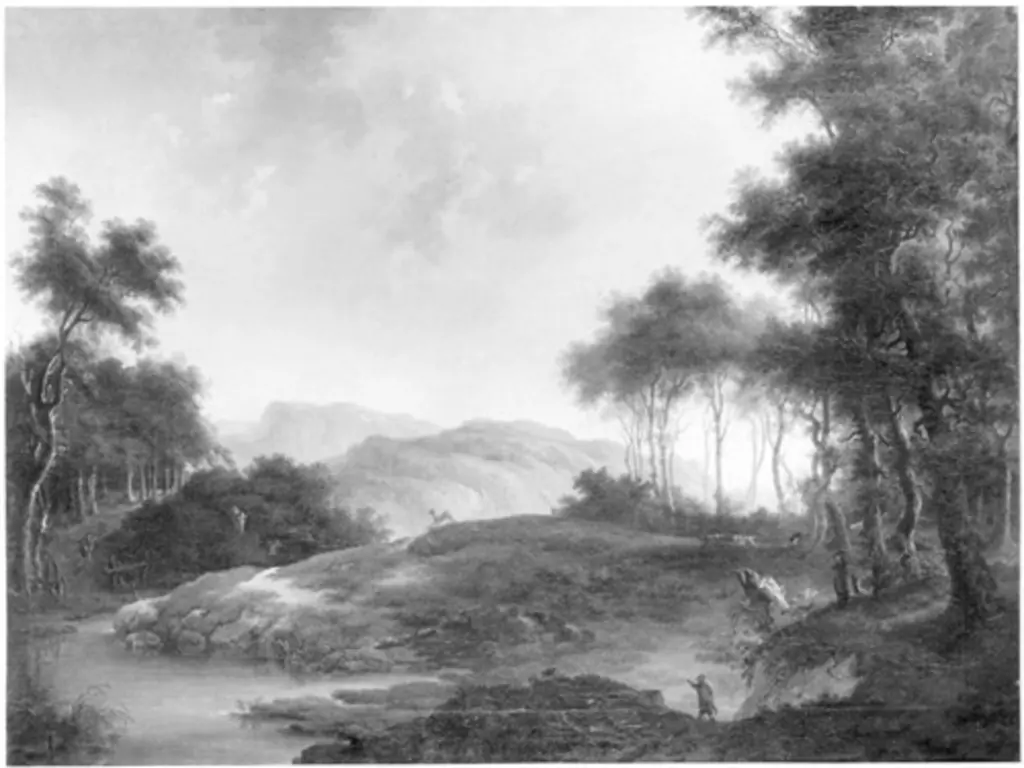
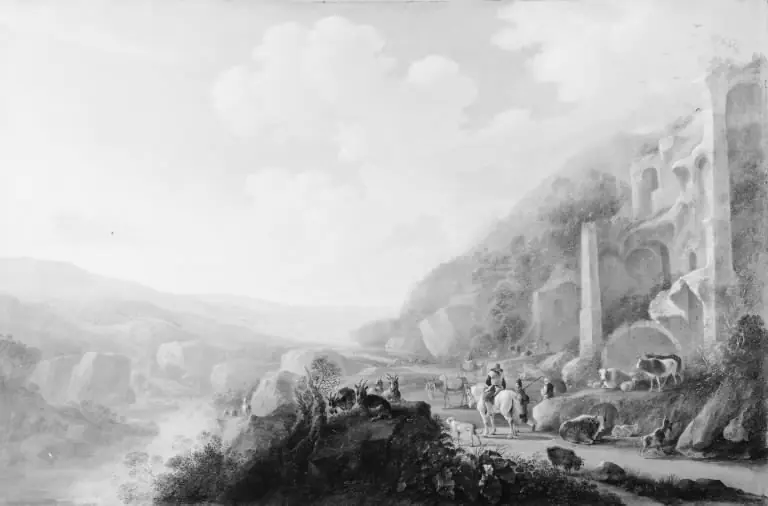
Heinrich August Grosch’s oil painting Bjerglandskab med ruiner, executed in 1807, depicts a tranquil, mist‑shrouded hillside. A solitary figure draws a small cart along a winding path flanked by trees, while a river snakes through the lower ground. The composition is dominated by muted greys and soft light, giving the scene a contemplative atmosphere.
Subject & Meaning
The work juxtaposes natural serenity with the decay of ancient ruins half‑buried on the slope, suggesting the passage of time and the fleeting nature of human constructs. The lone traveler, moving forward despite the remnants of the past, may imply a quiet perseverance or a reflective journey through history.
Technique & Style
Grosch employs smooth, blended brushwork to render the mist and atmospheric haze, creating a seamless transition between sky, land, and water. The subdued palette and delicate modeling of forms evoke a dream‑like quality, while the subtle contrasts of light and shadow hint at a restrained use of chiaroscuro.
History & Provenance
Created in the early nineteenth century, the painting entered the collection of Denmark’s national gallery, Statens Museum for Kunst, where it remains on display. Its acquisition reflects the museum’s interest in documenting Danish landscape painting of the period.
Context
The piece belongs to a tradition of Romantic landscape art that emphasized mood, the sublime, and the ruins of antiquity as symbols of transience. Grosch’s treatment aligns with contemporary Northern European painters who favored atmospheric effects over precise topographical detail.
Artist & collection