Artwork
Caudieux
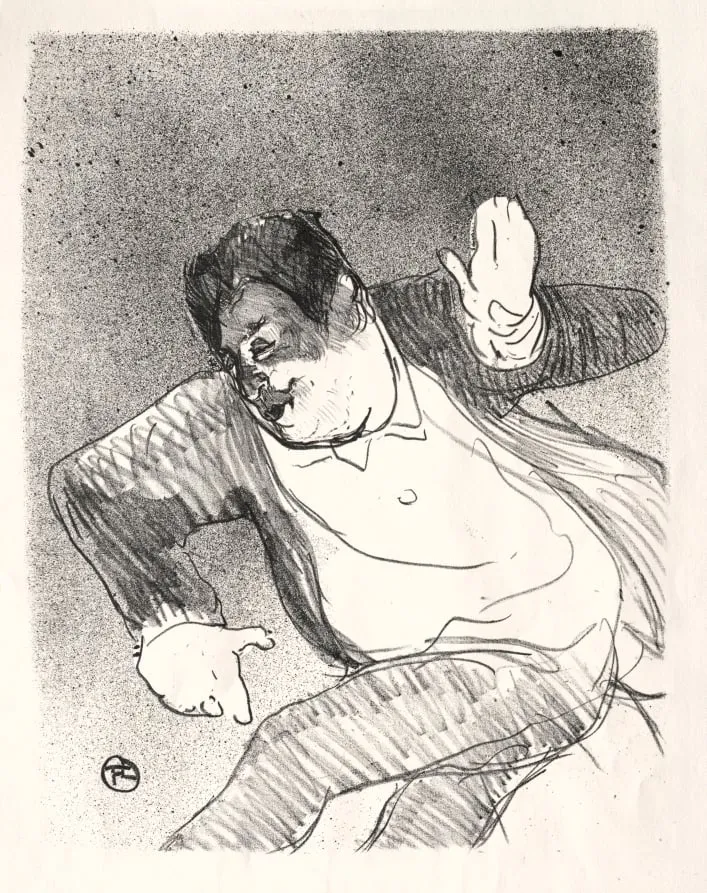
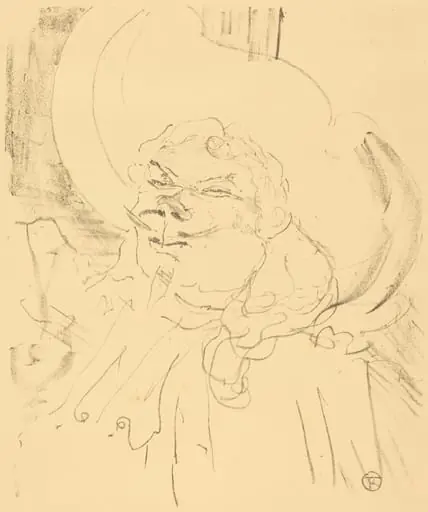
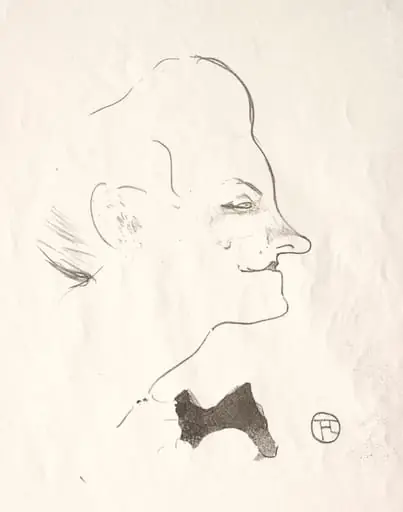
Caudieux is a print by the Impressionist artist Henri de Toulouse-Lautrec. It dates from 1893 and is held in the collection of the Cleveland Museum of Art.
- Accession no.
- 1942.1057
- Credit line
- Mr. and Mrs. Lewis B. Williams Collection
About this work
This sketch shows a man sprawled sideways, one arm stretched up like he’s waving or reaching.
This sketch shows a man sprawled sideways, one arm stretched up like he’s waving or reaching. His jacket is loose, his tie undone, and his face is turned toward us with a half-smile. The lines are quick, almost scribbled, giving him a lively, messy look.
The drawing feels like it was made fast, maybe while the artist watched the man move. Toulouse-Lautrec often sketched people in action, especially in Parisian cafés and theaters.
Next, check out Henri de Toulouse-Lautrec (French, 1864–1901) for more sketches like this.
Overview
Created in 1893, Caudieux is a lithographic print by Henri de Toulouse-Lautrec, part of a broader series capturing the energy of Parisian entertainment districts. The work reflects his deep immersion in the city’s cabarets and cafés, where he observed patrons and performers with intimate immediacy. Unlike formal portraits, this piece conveys a fleeting moment, emphasizing motion and informal posture over idealized representation.
Subject & Meaning
The figure, identified as Caudieux, is depicted mid-movement: slouched, jacket askew, tie loose, one arm raised in a gesture that suggests either greeting or exhaustion. His half-smile and direct gaze invite the viewer into an unguarded moment, revealing the humanity of a man often overlooked in polite society. Toulouse-Lautrec’s choice to portray such figures with dignity underscores his interest in the lives of those existing on the margins of urban culture.
Technique & Style
Toulouse-Lautrec employed rapid, fluid linework characteristic of his sketch-based printmaking. The drawing’s spontaneity, rough contours, minimal shading, and asymmetrical composition, mirrors the immediacy of live observation. He favored lithography for its capacity to translate the energy of pen-and-ink sketches into reproducible form, allowing his depictions of nightlife to reach wider audiences beyond the elite art world.
History & Provenance
The print emerged during a period when Toulouse-Lautrec was actively producing posters and lithographs for Montmartre venues. Caudieux likely originated from his personal sketchbook, later adapted for print. While its early ownership is undocumented, it entered institutional collections in the 20th century as interest grew in his documentation of Belle Époque social life, distinguishing it from his more commercial posters.
Context
In 1890s Paris, the rise of cabarets, music halls, and cafés created new spaces for social mixing across classes. Toulouse-Lautrec, excluded from aristocratic circles due to his physical condition, found belonging among performers and patrons. His drawings of figures like Caudieux reflect not only the visual culture of the time but also a quiet empathy for those whose lives unfolded in the dim light of evening entertainment.
Legacy
Toulouse-Lautrec’s sketches, including Caudieux, redefined the artistic treatment of everyday subjects, influencing modern graphic design and expressionist drawing. By elevating transient, unpolished moments into printed art, he challenged traditional hierarchies of subject matter. His work remains a vital record of how urban life was perceived and represented at the turn of the century.
Artist & collection
Artist
Comte Henri Marie Raymond de Toulouse-Lautrec-Montfa (24 November 1864 – 9 September 1901), known as Toulouse-Lautrec (French: ), was a French painter, printmaker, draughtsman, caricaturist, and illustrator.

- Emilienne d'Alençon
 Coquelin the Elder (Coquelin aine)
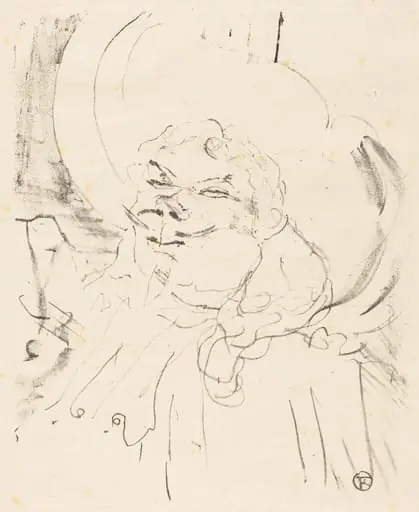 Coquelin the Elder (Coquelin aine)
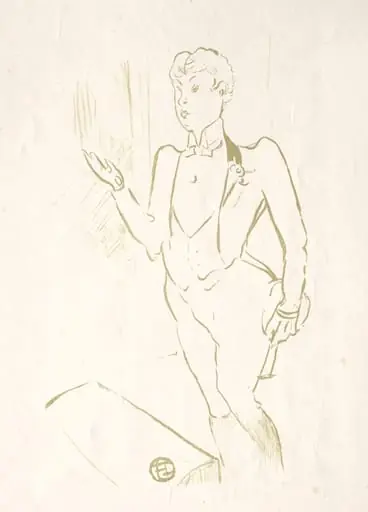 Mary Hamilton
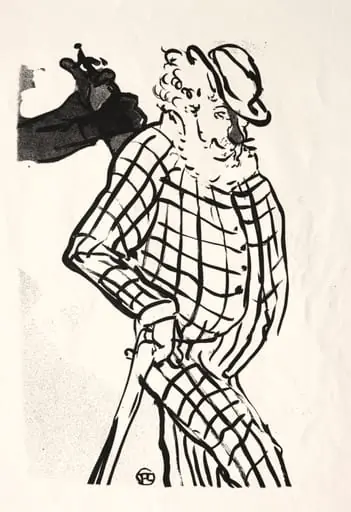 Le Café-concert: Chanteur Americain
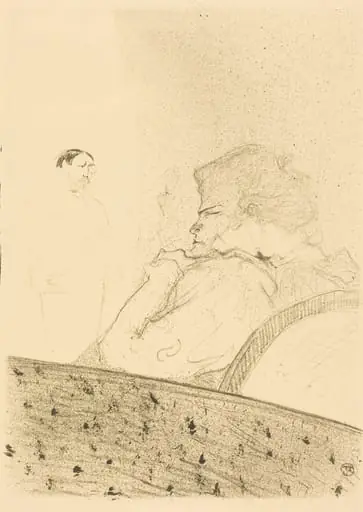 Brandes in His Box (Brandès dans sa loge)
 Ida Heath at the Bar
 Le Café-concert: Edmée Lescot
 American Singer (Chanteur américain)
 Man wearing a bowler hat
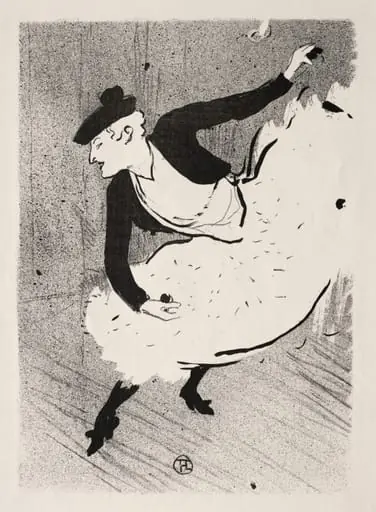 Edmée Lescot
 Le Café-concert: Yvette Guilbert