Artwork
Branche de lierre
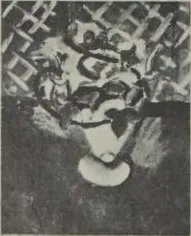
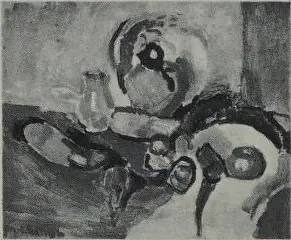
Branche de lierre is an oil painting by the Fauvist artist Henri Matisse. It dates from 1916 and is held in the collection of the Kunsthaus Zürich.
About this work
Overview
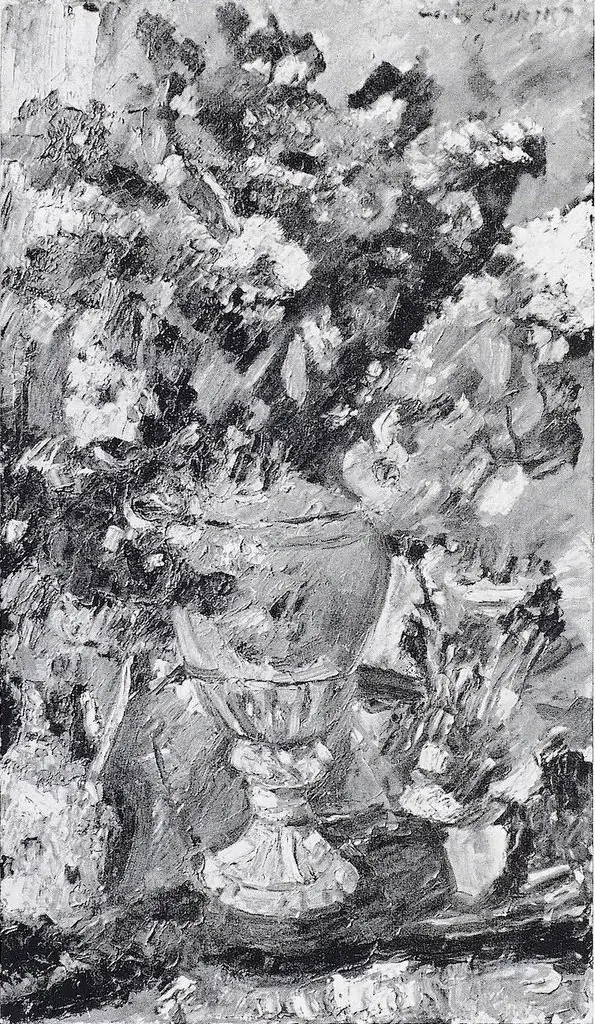
It depicts a simple arrangement of flowering branches in a plain vase, rendered with deliberate simplicity and emotional restraint.
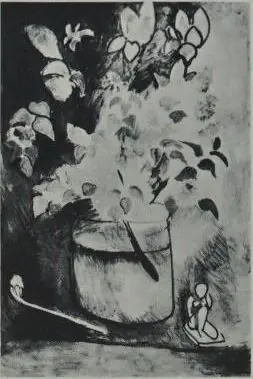
Painted in 1916, Branche de lierre is an oil on canvas still life by Henri Matisse. It depicts a simple arrangement of flowering branches in a plain vase, rendered with deliberate simplicity and emotional restraint. Though created during the later years of Fauvism, the work reflects a shift toward quieter, more structured compositions. Matisse, primarily known for his color-driven innovations, here focuses on form and spatial balance.
Subject & Meaning
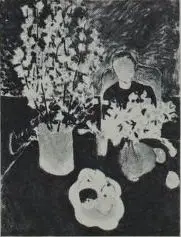
The painting presents a modest bouquet of white and pink blossoms, their stems loosely spilling beyond the rim of a smooth, unadorned vase. The dark background isolates the arrangement, emphasizing its fragility and quiet presence. Rather than celebrating floral abundance, the work conveys stillness and intimacy, suggesting a contemplative moment observed in domestic space. The subject is unembellished, inviting attention to subtle relationships between form and tone.
Technique & Style
Matisse applied oil paint in flat, unmodulated planes, avoiding traditional modeling or chiaroscuro. The petals and stems are defined by thin, sinuous outlines and soft transitions, suggesting movement without detail. The vase is rendered with smooth, rounded contours, contrasting with the irregularity of the branches.
Color is restrained, pale florals against a deep ground, demonstrating a move away from Fauvist intensity toward a more meditative use of hue and shape.
History & Provenance
Created in 1916, the painting entered the collection of Kunsthaus Zürich in the 20th century, where it remains today. Its provenance reflects Matisse’s growing international recognition during and after World War I. Unlike his more flamboyant Fauve works, this piece was not widely exhibited at the time, suggesting it was valued by the artist as a personal study rather than a public statement.
Context
Painted during wartime, Branche de lierre reflects a broader trend in Matisse’s work toward introspection and formal economy. While contemporaries explored fragmentation and abstraction, Matisse turned to still life as a means of ordering visual experience. The painting aligns with his interest in Japanese prints and the quiet harmony of domestic interiors, offering a counterpoint to the chaos of the era.
Legacy
Though less known than his large-scale compositions, Branche de lierre exemplifies Matisse’s enduring exploration of simplicity and balance. Its restrained palette and deliberate composition influenced later generations of modernists who sought emotional depth through minimal means. The work stands as a quiet testament to his belief that beauty resides in careful arrangement, not in excess.
Artist & collection
Artist
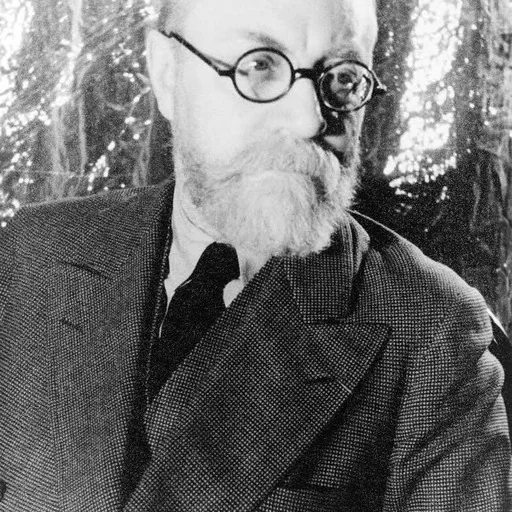
Henri Émile Benoît Matisse (French:; 31 December 1869 – 3 November 1954) was a French visual artist, known for both his use of colour and his fluid and original draughtsmanship.