Artwork
Bouquet (Vase with Two Handles)
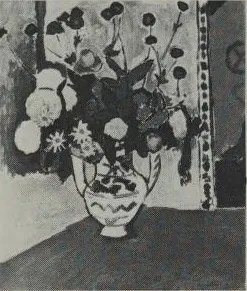
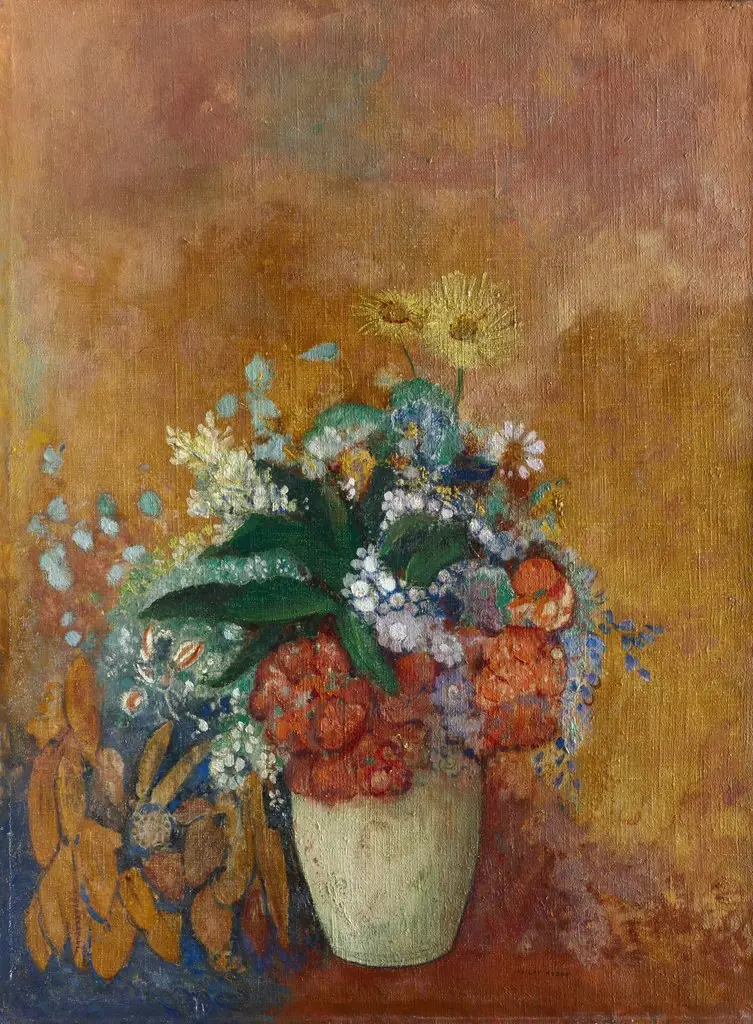
Bouquet (Vase with Two Handles) is an oil painting by the Fauvist artist Henri Matisse. It dates from 1907 and is held in the collection of the Hermitage Museum.
About this work
Overview
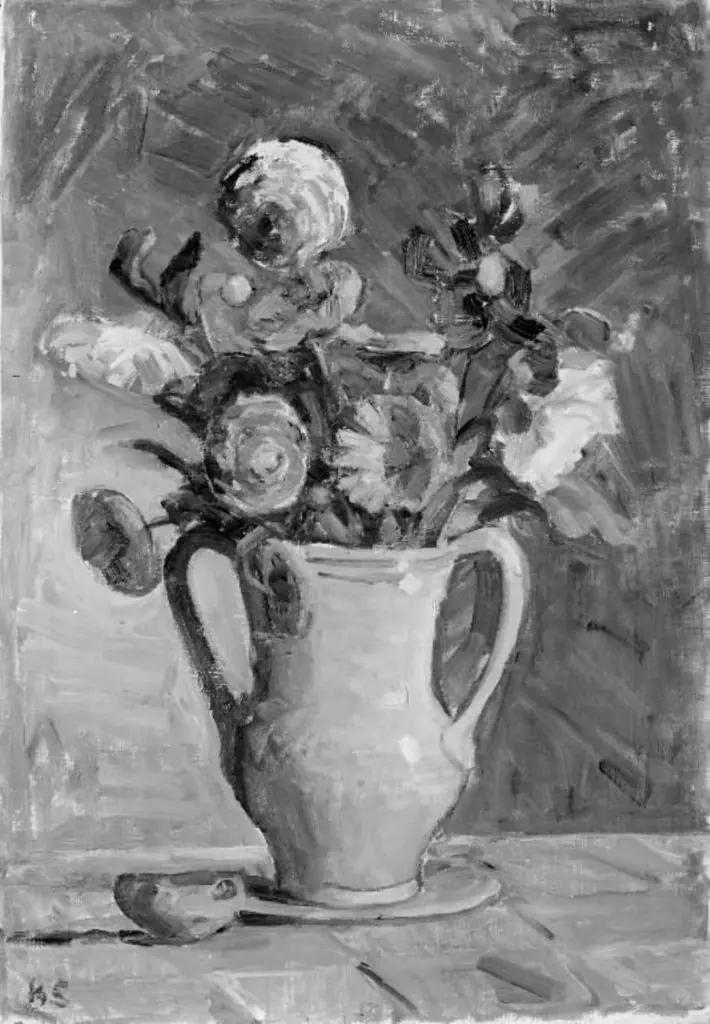
Created in 1907, Henri Matisse’s oil painting Bouquet (Vase with Two Handles) presents a still‑life composition of flowers arranged in a two‑handled vase. The work exemplifies the Fauvist approach, employing vivid, non‑representational hues that emphasize decorative impact over realistic depiction.
Subject & Meaning
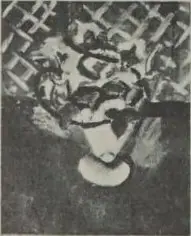
The canvas features a cluster of blossoms rendered in contrasting light and dark tones, set against a pale background that heightens their visual prominence. The flowers are positioned in a seemingly kinetic fashion, some pointing upward, others downward, suggesting a sense of movement within an otherwise static arrangement.
Technique & Style
Matisse applies oil paint with broad, fluid strokes, allowing color to dominate form. The vase, rendered in white with stark black outlines, serves as a structural counterpoint to the exuberant palette of the flowers. This bold chromatic treatment aligns with Fauvism’s departure from naturalistic color in favor of expressive intensity.
History & Provenance
As a central figure in early twentieth‑century modernism, Matisse produced this piece during the height of his involvement with the Fauvist group. While specific ownership details are limited, the painting remains a documented example of his 1907 output, illustrating the period’s experimental shift toward abstraction and color‑driven composition.
Artist & collection
Artist
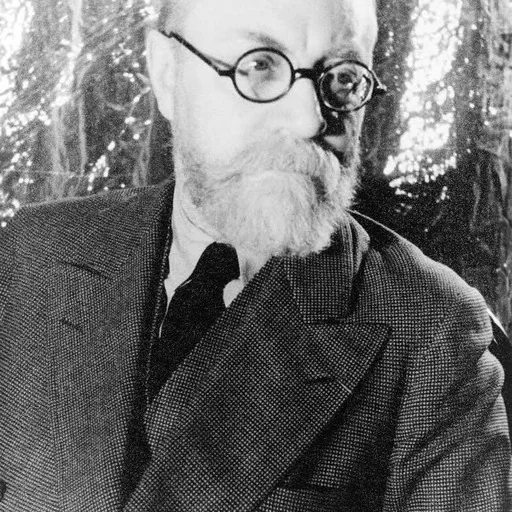
Henri Émile Benoît Matisse (French:; 31 December 1869 – 3 November 1954) was a French visual artist, known for both his use of colour and his fluid and original draughtsmanship.