Artwork
Les toits de Collioure
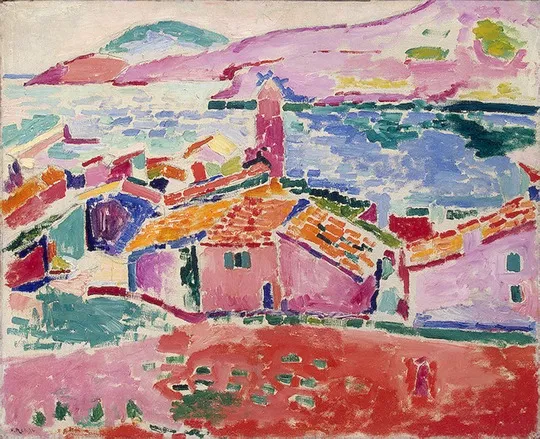
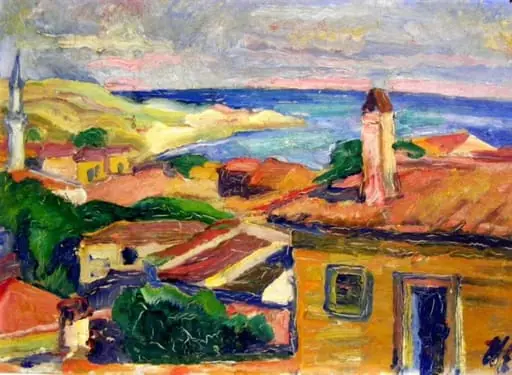
Les toits de Collioure is an oil painting by the Fauvist artist Henri Matisse. It dates from 1905 and is held in the collection of the Hermitage Museum.
About this work
Overview
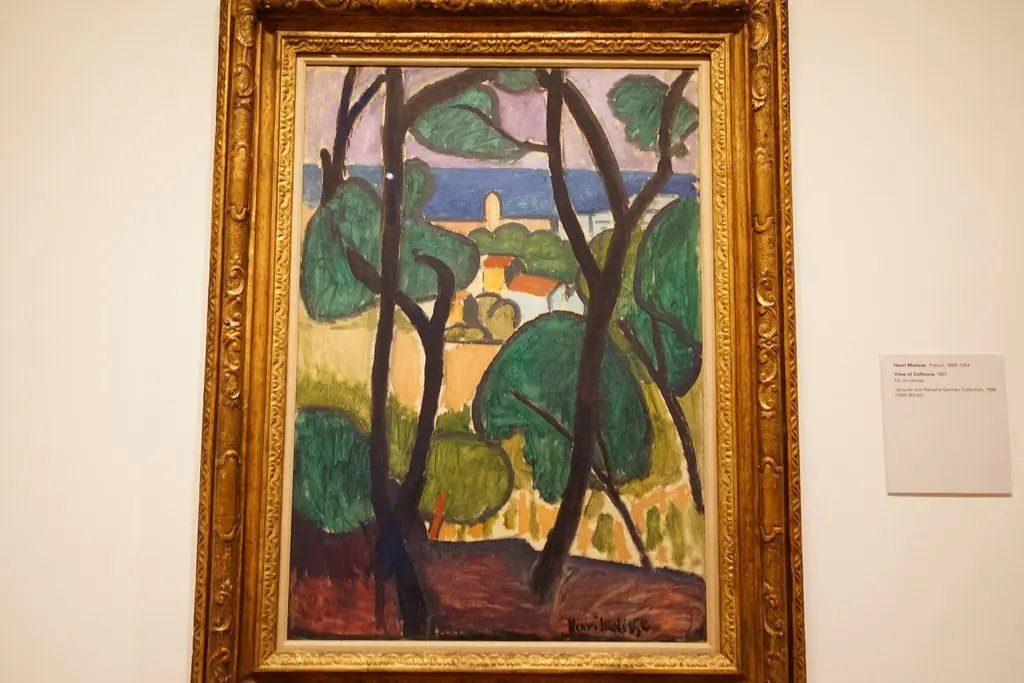
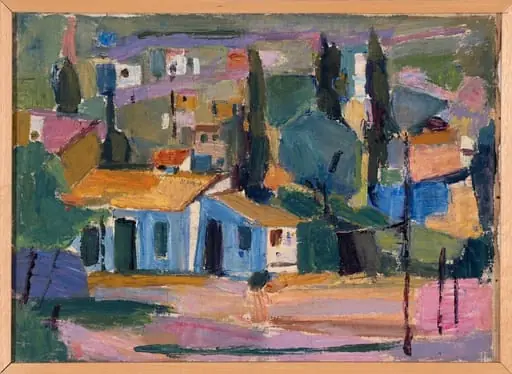
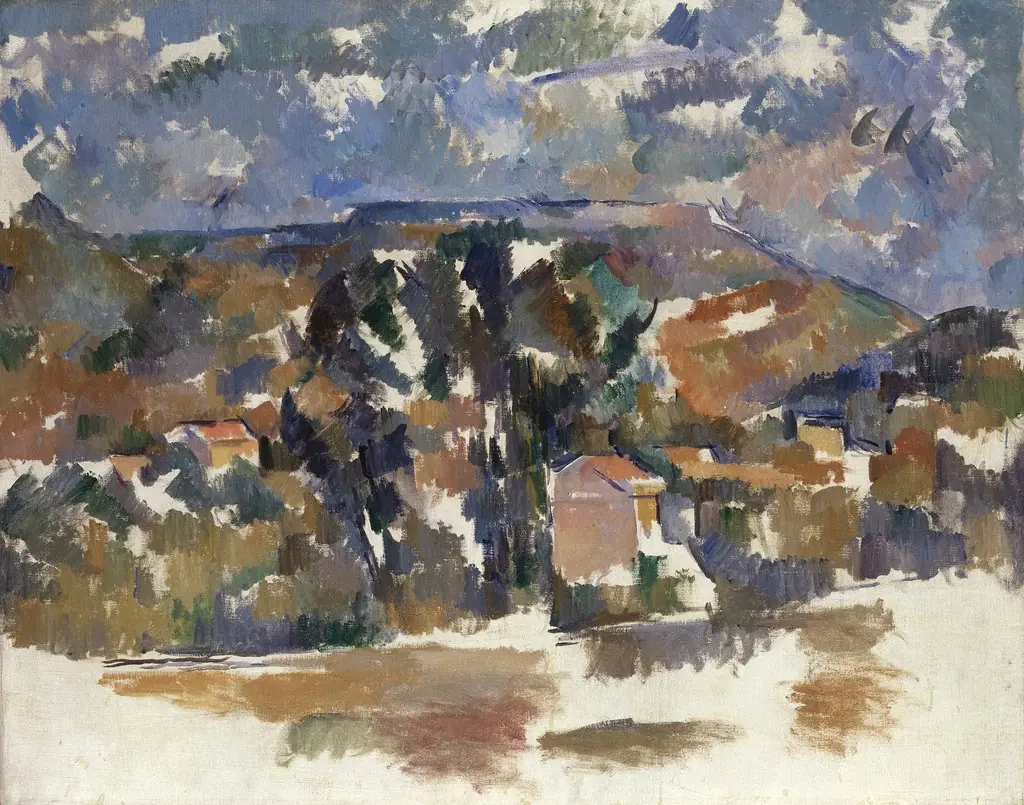
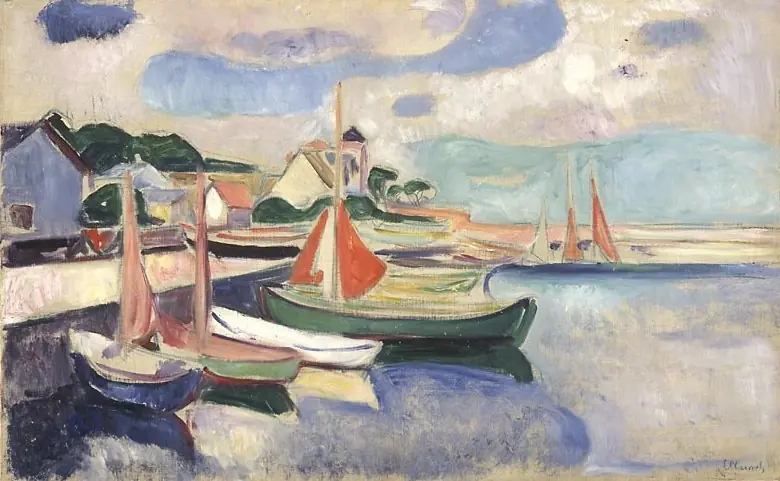
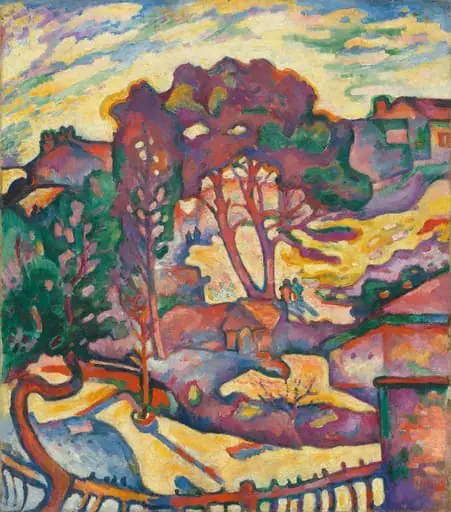
Painted in 1905, Les toits de Collioure is an oil-on-canvas work by Henri Matisse depicting the southern French town of Collioure. It belongs to a brief but pivotal phase in the artist’s career when he embraced intense, non-naturalistic color and expressive brushwork. The painting captures a quiet urban landscape with minimal detail, focusing instead on the emotional impact of hue and form.
Subject & Meaning
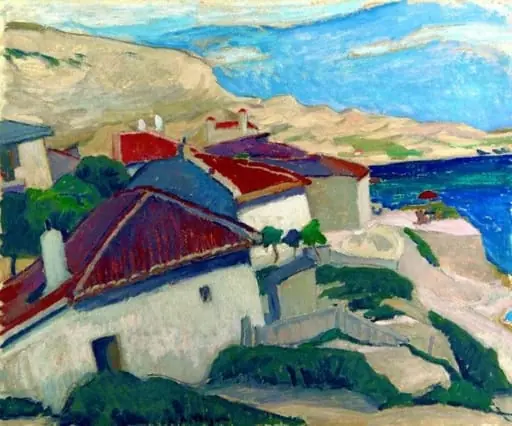
The scene presents a cluster of rooftops and buildings in Collioure, rendered without architectural precision.
The scene presents a cluster of rooftops and buildings in Collioure, rendered without architectural precision. Matisse prioritized the sensory experience of the place over literal representation. The warm pinks and reds of the roofs, contrasted with cool blues and purples in the sky, suggest a luminous Mediterranean atmosphere, evoking warmth and stillness rather than documenting specific structures.
Technique & Style
Matisse applied oil paint in broad, unblended strokes, leaving the brushwork visibly energetic and deliberate. Colors are simplified and intensified, detached from local tone, rooftops glow in saturated hues unrelated to actual pigmentation. This approach, characteristic of early Fauvism, rejects realism in favor of emotional resonance through color and gesture.
History & Provenance
The painting was originally owned by Russian collector Sergei Shchukin, whose acquisitions helped introduce modern French art to Russia. After the Russian Revolution, it entered the State Museum of New Western Art in Moscow. In 1948, it was transferred to the State Hermitage Museum in St. Petersburg, where it remains in the permanent collection.
Context
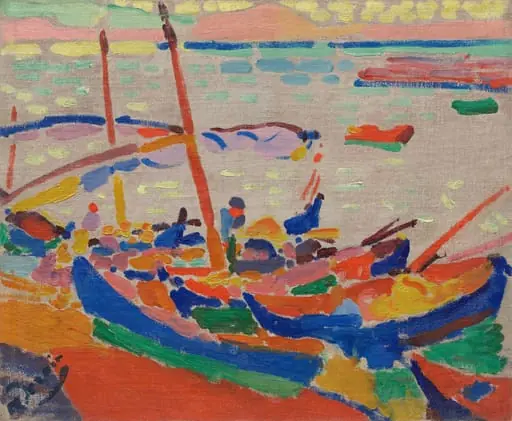
Created during Matisse’s summer stay in Collioure alongside André Derain, this work emerged from a period of intense experimentation with color theory. Fauvism, though short-lived, challenged academic conventions by treating color as an independent expressive force. Les toits de Collioure reflects this radical shift, aligning with broader early 20th-century movements seeking emotional authenticity over visual fidelity.
Legacy
The painting stands as a clear example of Fauvism’s influence on modern art’s evolution. Its bold palette and simplified forms paved the way for later abstraction and expressive use of color. While not widely exhibited outside the Hermitage, it remains a key reference in studies of Matisse’s development and the broader trajectory of modern painting.
Artist & collection
Artist
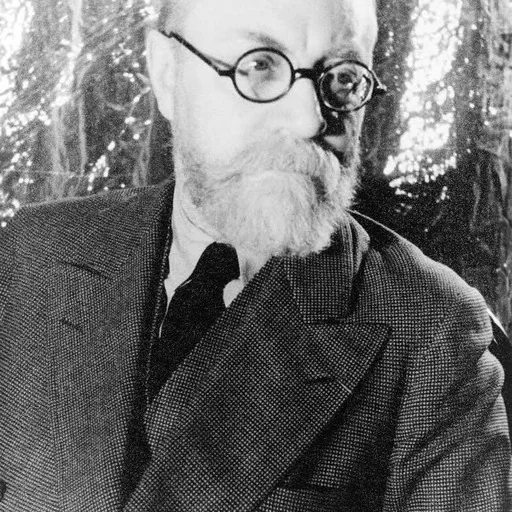
Henri Émile Benoît Matisse (French:; 31 December 1869 – 3 November 1954) was a French visual artist, known for both his use of colour and his fluid and original draughtsmanship.