Artwork
The Gulf of Marseilles Seen from L'Estaque
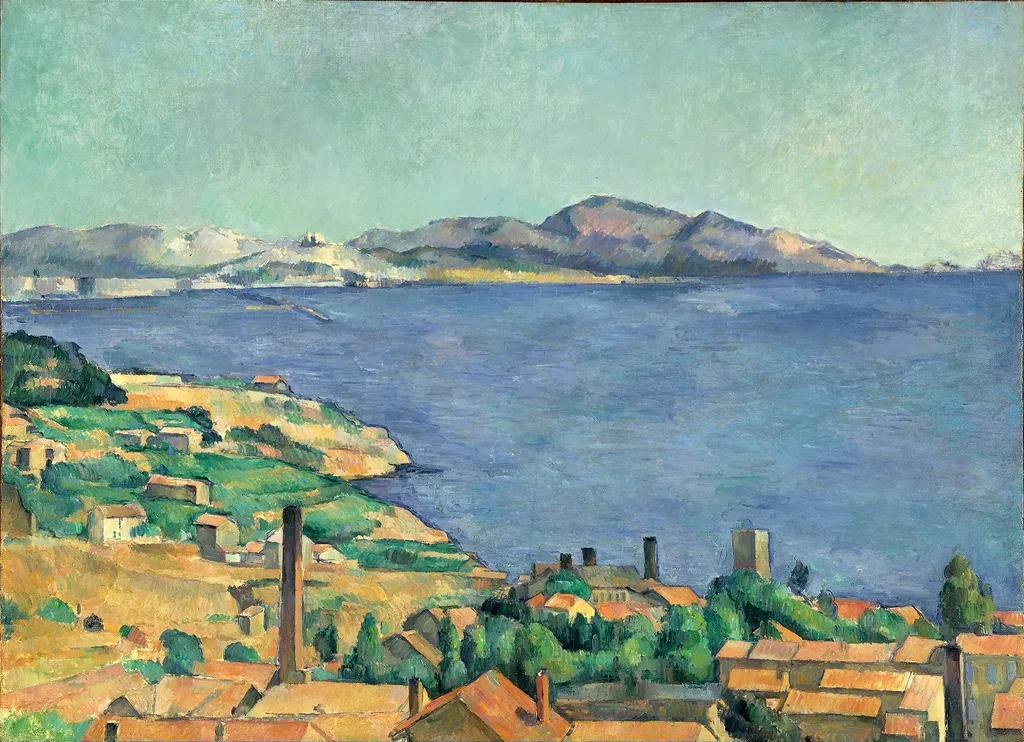
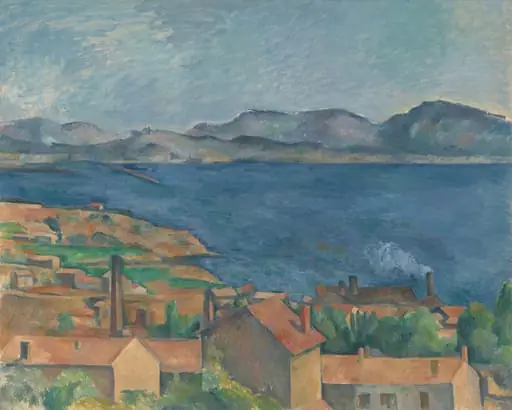
The Gulf of Marseilles Seen from L'Estaque is an oil painting by the Post-Impressionist artist Paul Cézanne. It dates from 1893 and is held in the collection of the Metropolitan Museum of Art.
About this work
Subject & Meaning
The work represents one of approximately twenty views of L'Estaque Cézanne created between 1876 and 1884, with over ten oriented toward the water.
The painting depicts L'Estaque, a former fishing village in southern France that is now a suburb of Marseille, offering a panoramic view of the Mediterranean Sea. The composition includes specific architectural and natural elements such as trees, the town's red-roofed houses, and the sea. In the distance, situated on the hills to the right of the pier, the contours of the Notre-Dame-de-la-Garde basilica near Marseille are visible.
The work represents one of approximately twenty views of L'Estaque Cézanne created between 1876 and 1884, with over ten oriented toward the water. The artist described the location's intense sunlight as reducing objects to colored silhouettes, blue, red, brown, and violet, rather than traditional modeled forms, likening the visual effect of red roofs against the blue sea to a playing card.
Technique & Style
Executed in 1885, this landscape is an oil painting on canvas measuring 73 by 100.3 centimeters. The work depicts the former fishing village of L'Estaque, featuring red rooftops against the blue Mediterranean Sea, with the silhouette of the Notre-Dame-de-la-Garde basilica visible on distant hills. Stylistically, the composition reflects Cézanne's interest in rendering intense sunlight where objects appear as colored silhouettes rather than traditionally modeled forms.
In a letter to Camille Pissarro regarding the location, the artist described the scene as resembling a playing card, noting that the harsh light reduced forms to shapes defined by blue, red, brown, and violet hues. This approach emphasizes geometric structure and color relationships over atmospheric softness, characteristic of the artist's broader investigation into the architecture of nature during his multiple visits to the region between 1876 and 1884.
History & Provenance
The Gulf of Marseilles Seen from L'Estaque is held in the collection of the Metropolitan Museum of Art in New York. The work, an oil painting on canvas created in 1885, was previously owned by Louisine Havemeyer. While the provided sources confirm the museum's current custody and the painting's dimensions, they do not list a specific inventory or accession number.
Furthermore, the available texts describe the visual content and Cézanne's visits to L'Estaque but contain no information regarding the artwork's exhibition history or specific loan records.
Overview
Paul Cézanne's The Gulf of Marseilles Seen from L'Estaque, painted in oil in 1893, captures a vibrant coastal scene. This work exemplifies his mature Post-Impressionist style, where he meticulously structured natural forms to explore new ways of representing space on canvas. The painting is now part of the collection at The Metropolitan Museum of Art, offering insight into his innovative approach to landscape.
Context
As a leading figure of Post-Impressionism, Cézanne moved away from the fleeting impressions of his predecessors towards a more analytical and enduring representation of reality. His sustained engagement with landscape subjects, particularly views around L'Estaque, served as a laboratory for his theories on pictorial construction. This systematic investigation into form and space ultimately created a crucial link between the Impressionist movement and the nascent Cubist experiments of the early 20th century.
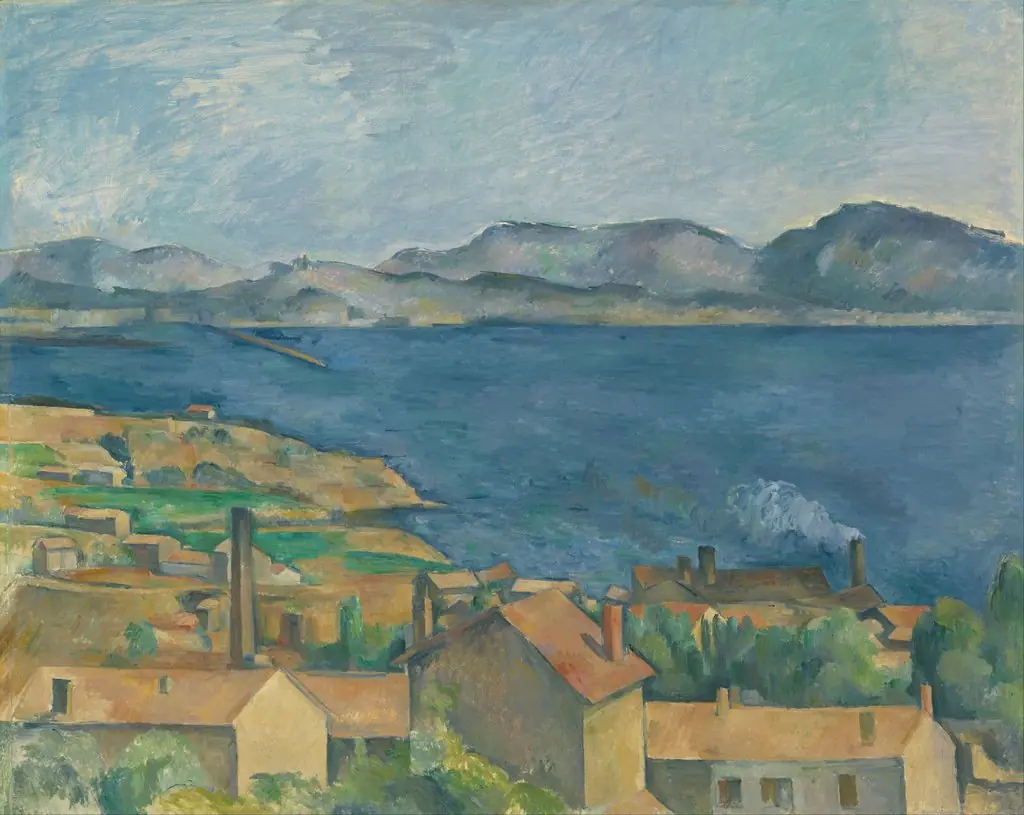
Own this work as a print
Artist & collection

Artist
Paul Cézanne ( say-ZAN, UK also siz-AN, US also say-ZAHN; French: ; Occitan: Pau Cesana; 19 January 1839 – 22 October 1906) was a French Post-Impressionist painter whose work introduced new modes of representation,…

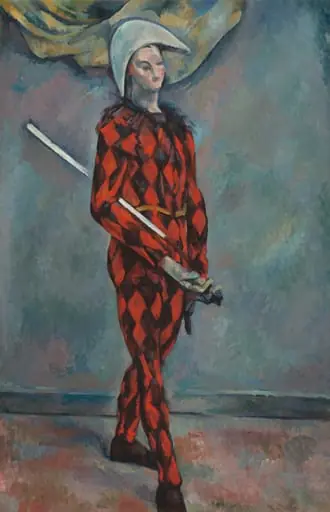 Harlequin
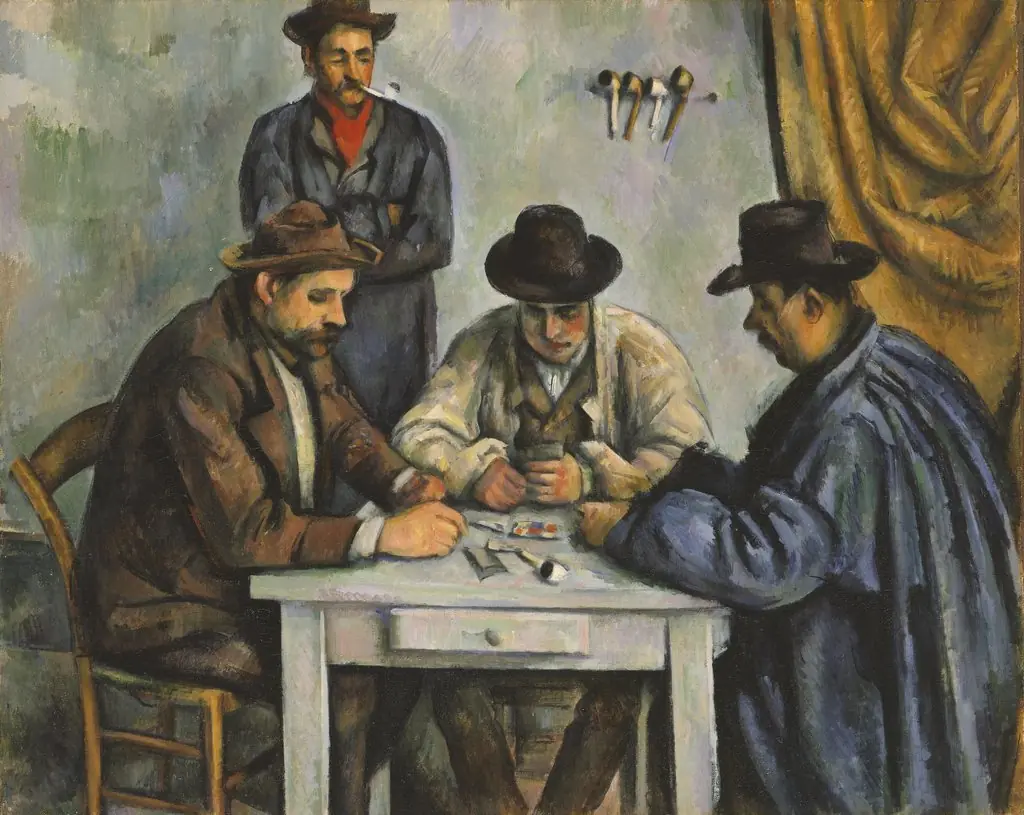 The Card Players
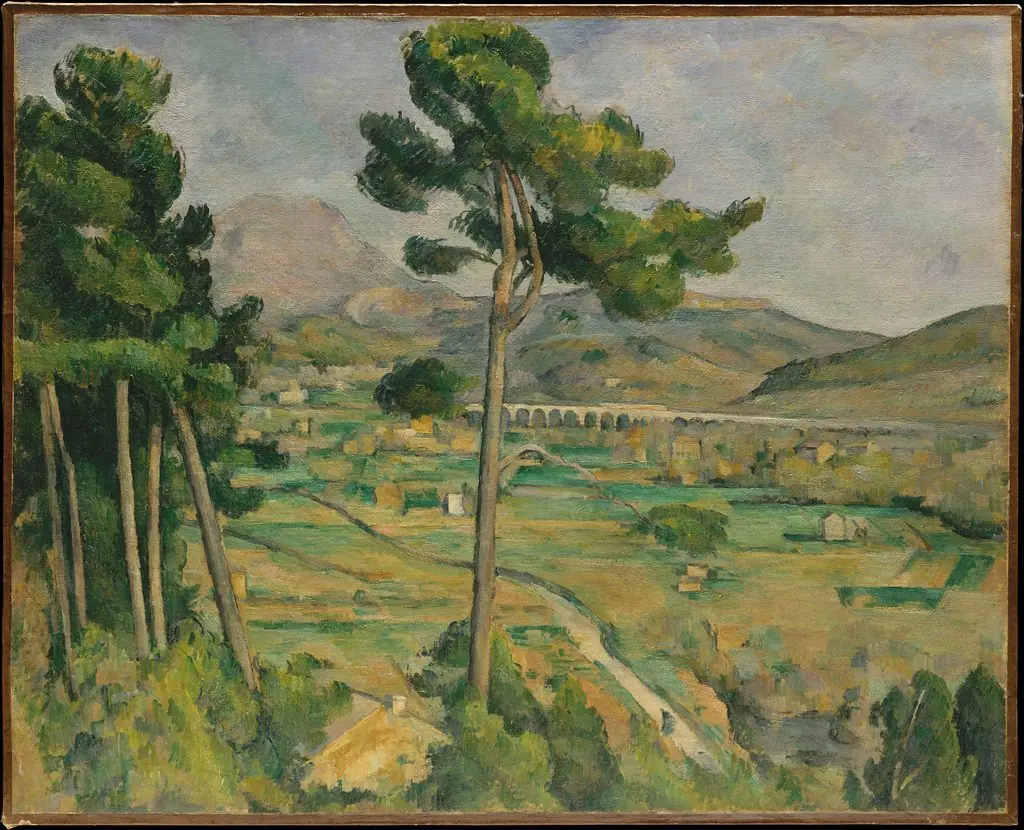 Mont Sainte-Victoire and the Viaduct of the Arc River Valley
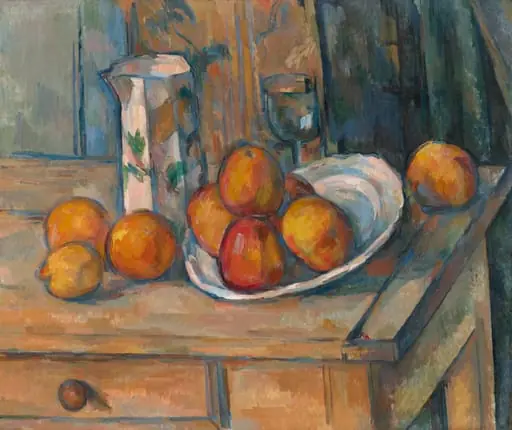 Still Life with Milk Jug and Fruit
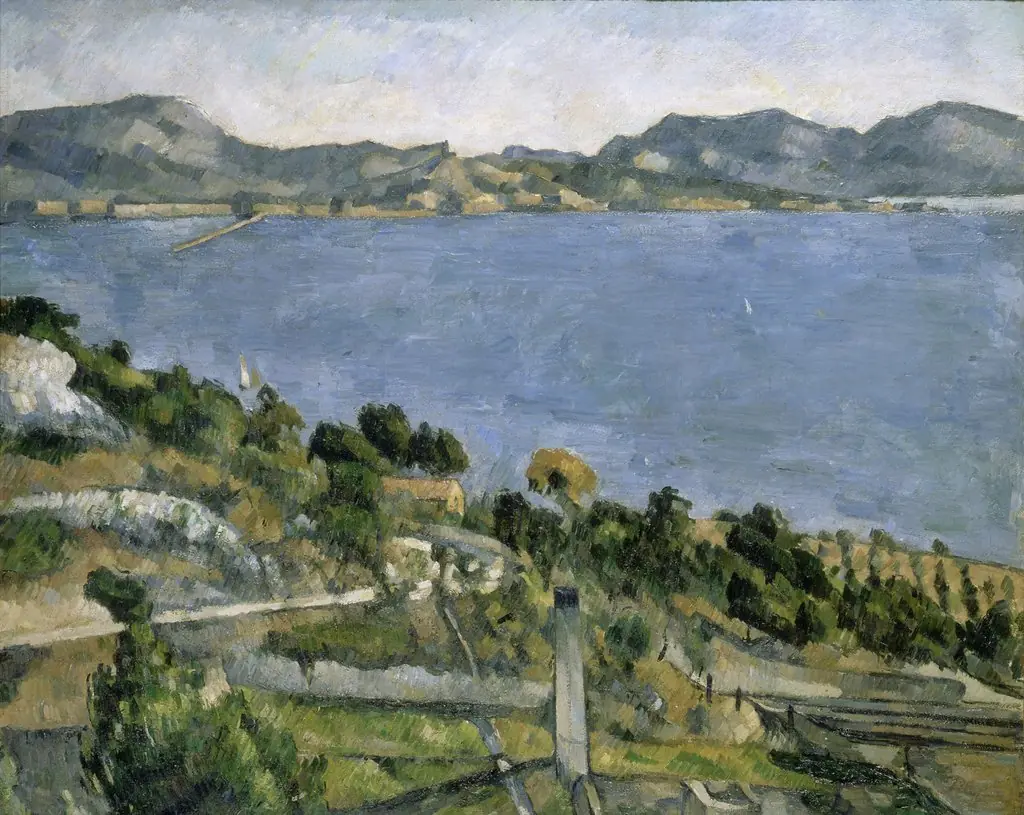 Le Golfe de Marseille vu de l'Estaque (The Gulf of Marseille Seen from L'Estaque)
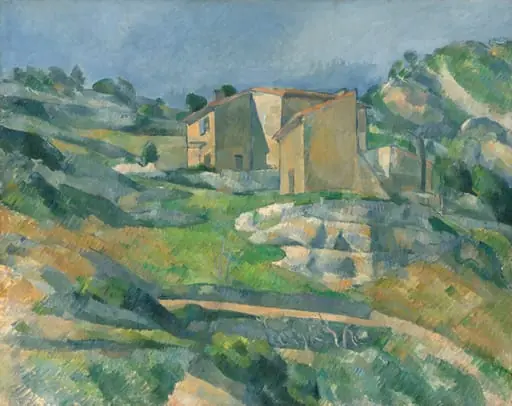 Houses in Provence: The Riaux Valley near L'Estaque
 Louis Guillaume
 Still Life with Jar, Cup, and Apples
- The Bay of Marseilles, Seen from L'Estaque
 Bay of L'Estaque
 The Bay of Marseille, Seen from L'Estaque
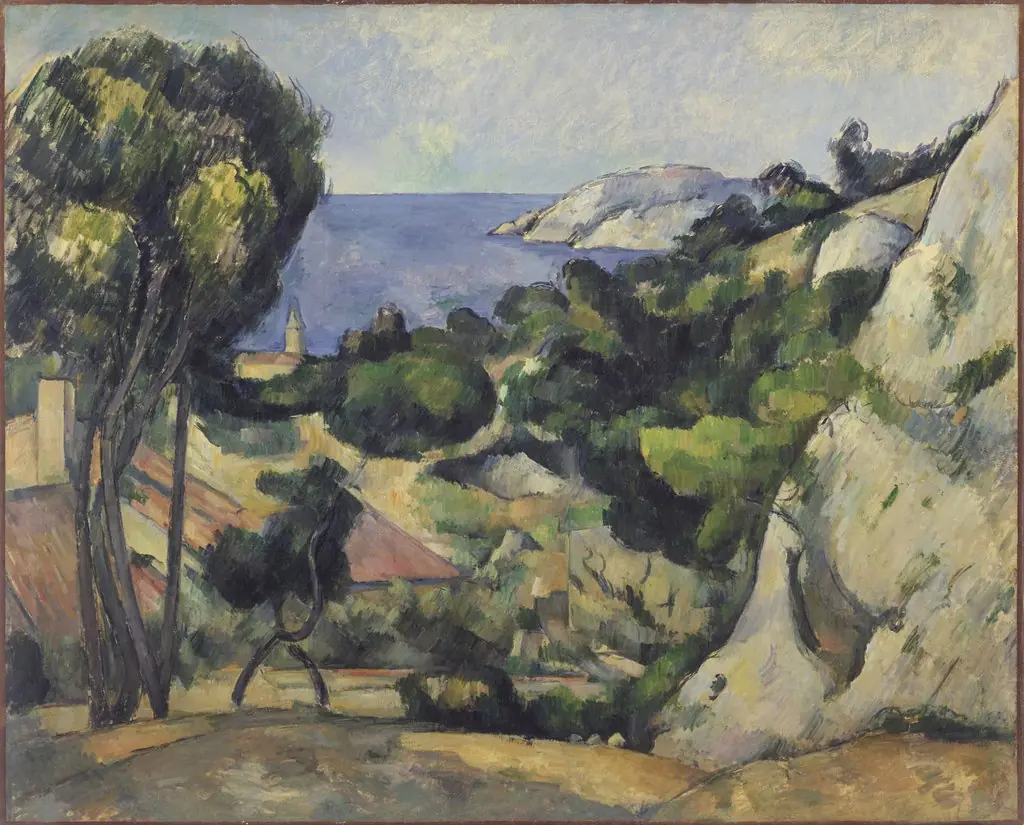 Estaque
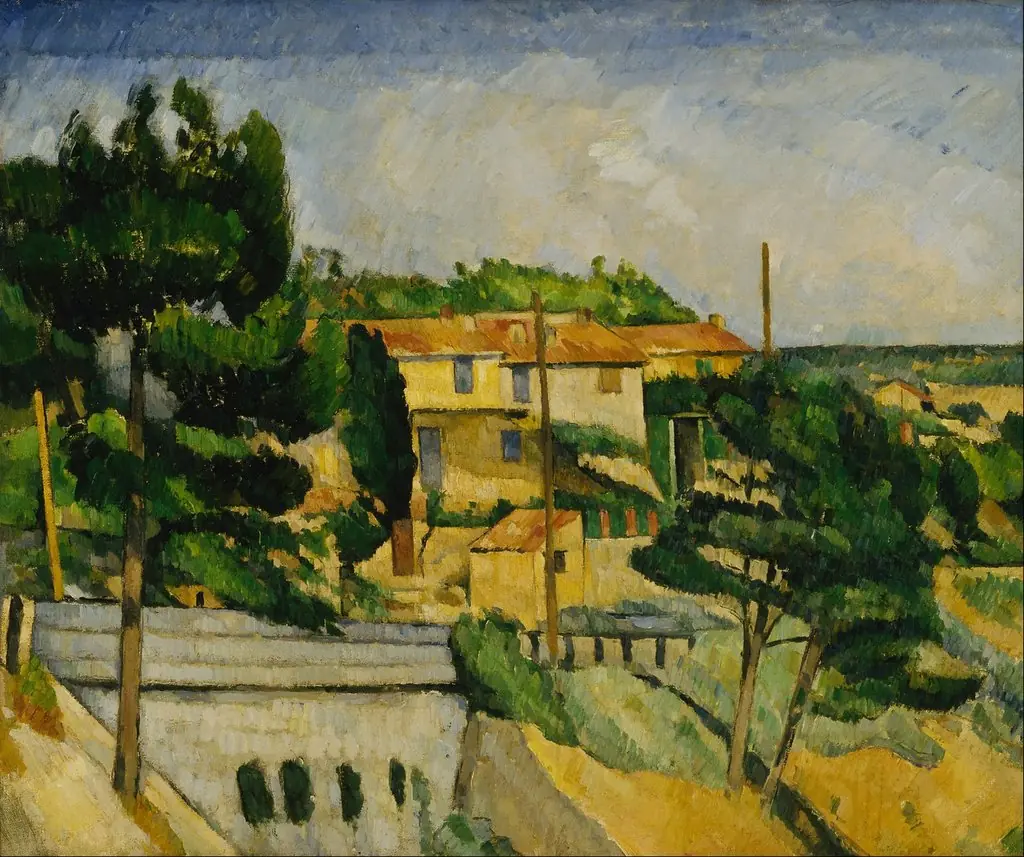 The Road Bridge at L'Estaque
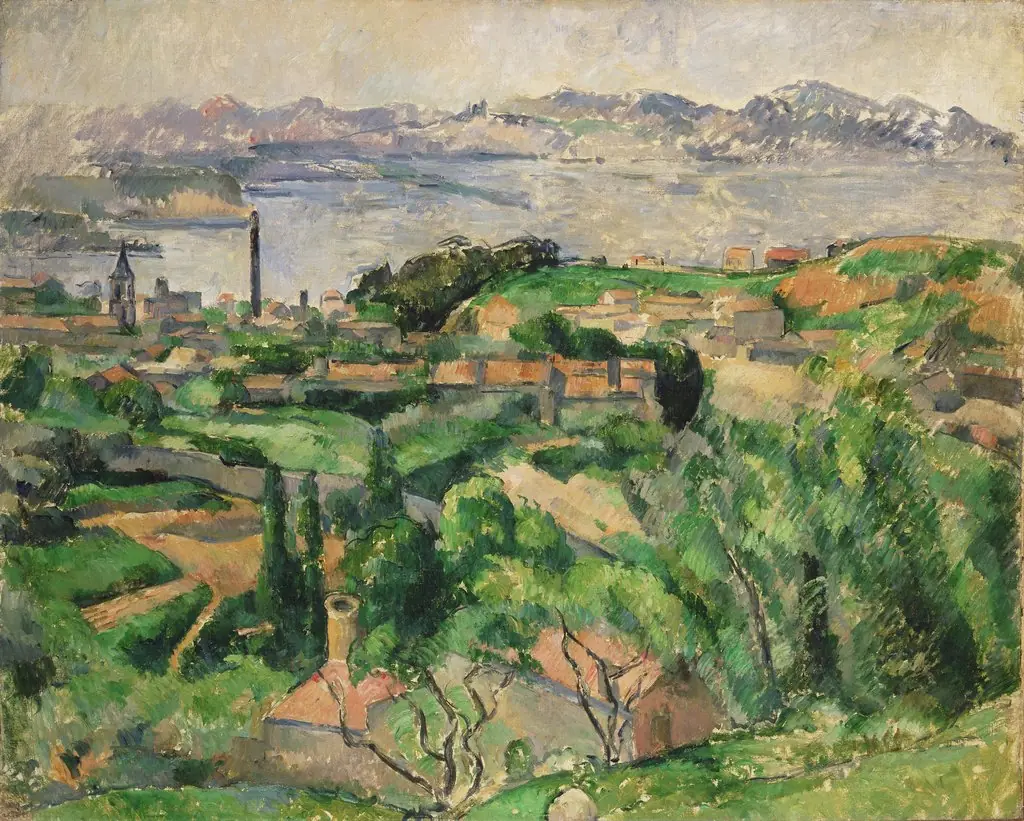 View of the Bay of Marseille with the Village of Saint-Henri
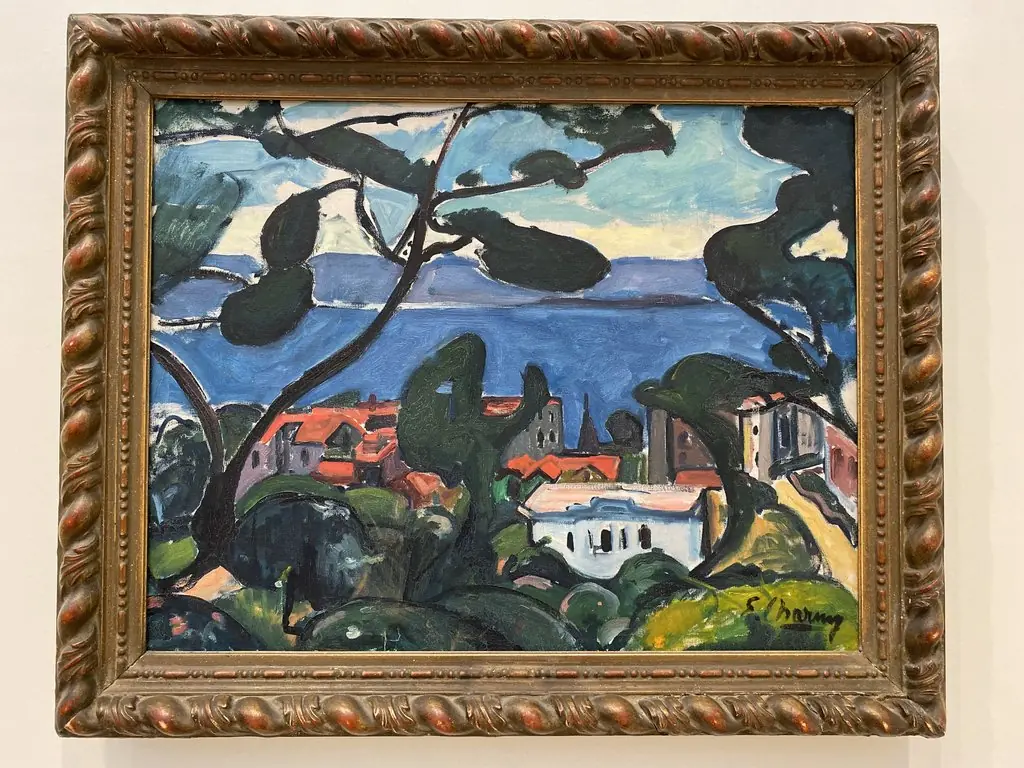 L'Estaque
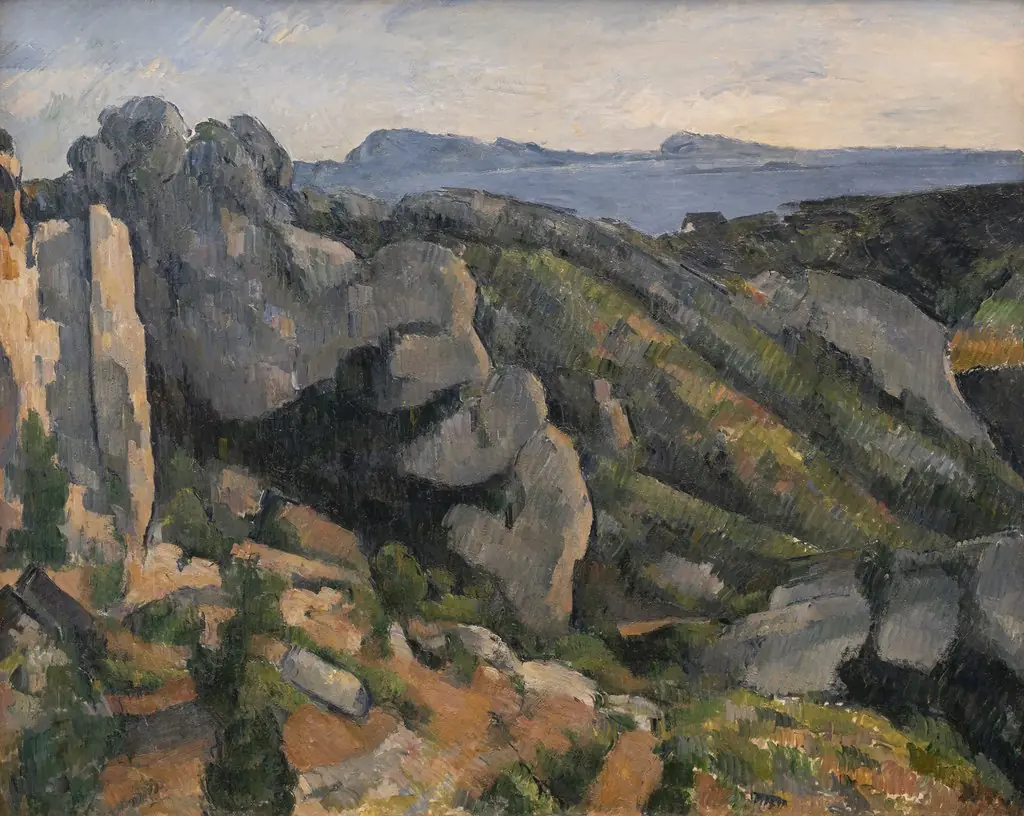 Rochers à l'Estaque (Rocks at L'Estaque)
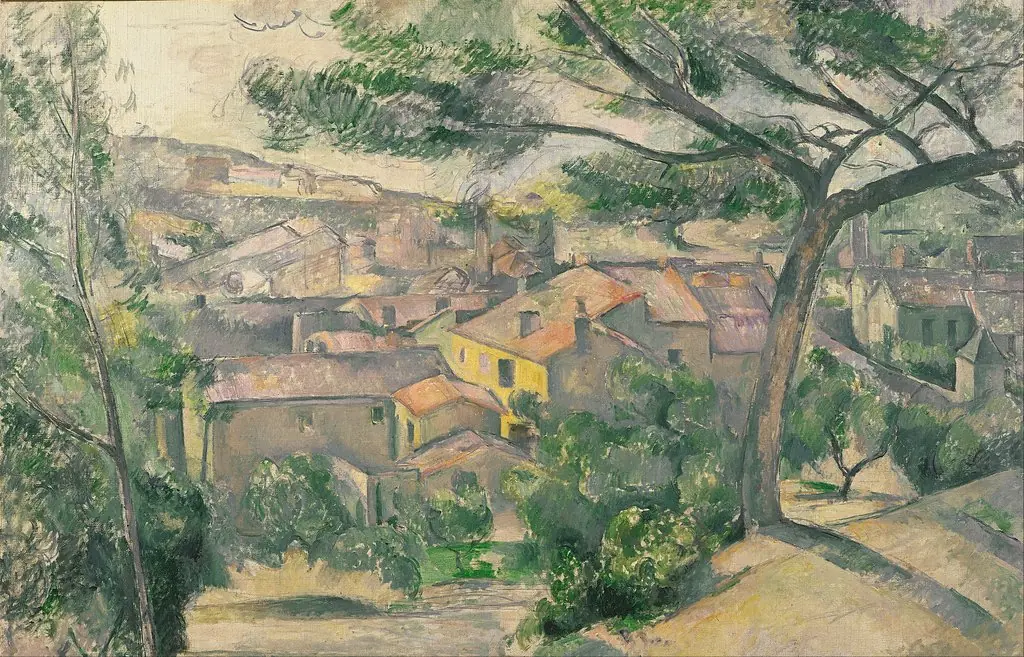 Morning View of L'Estaque Against the Sunlight
 The Terrace, L'Estaque