Artwork
Pastorale
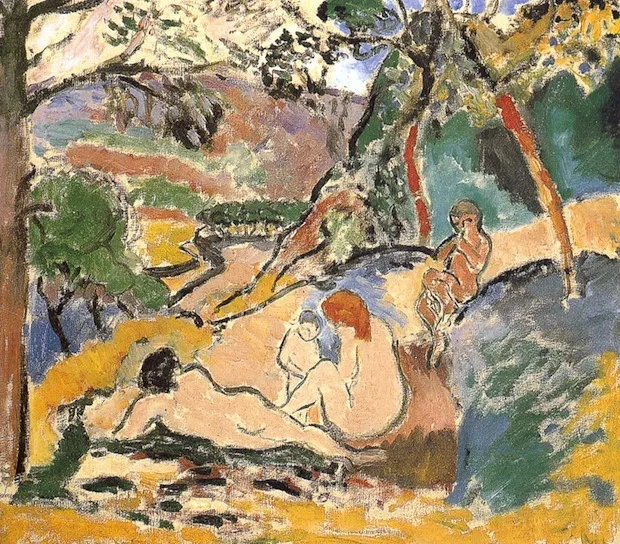
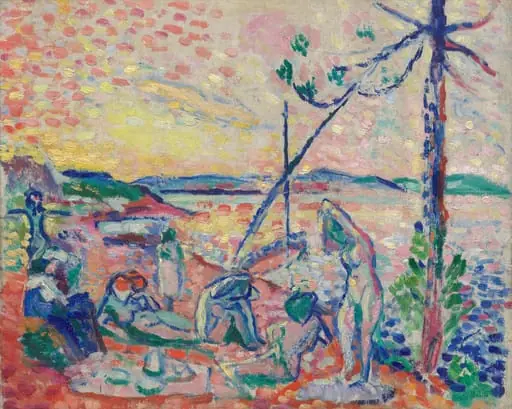
Pastorale is an oil painting by the Fauvist artist Henri Matisse. It dates from 1905 and is held in the collection of the Musée d'art moderne de Paris.
About this work
Overview
Henri Matisse created Pastorale in 1905 as an oil painting during his Fauvist phase. The work reflects his exploration of color as an emotional and structural force, distinct from naturalistic representation. Though less known than his later cut-outs, this piece exemplifies his early commitment to expressive form and simplified composition within a landscape setting.
Subject & Meaning
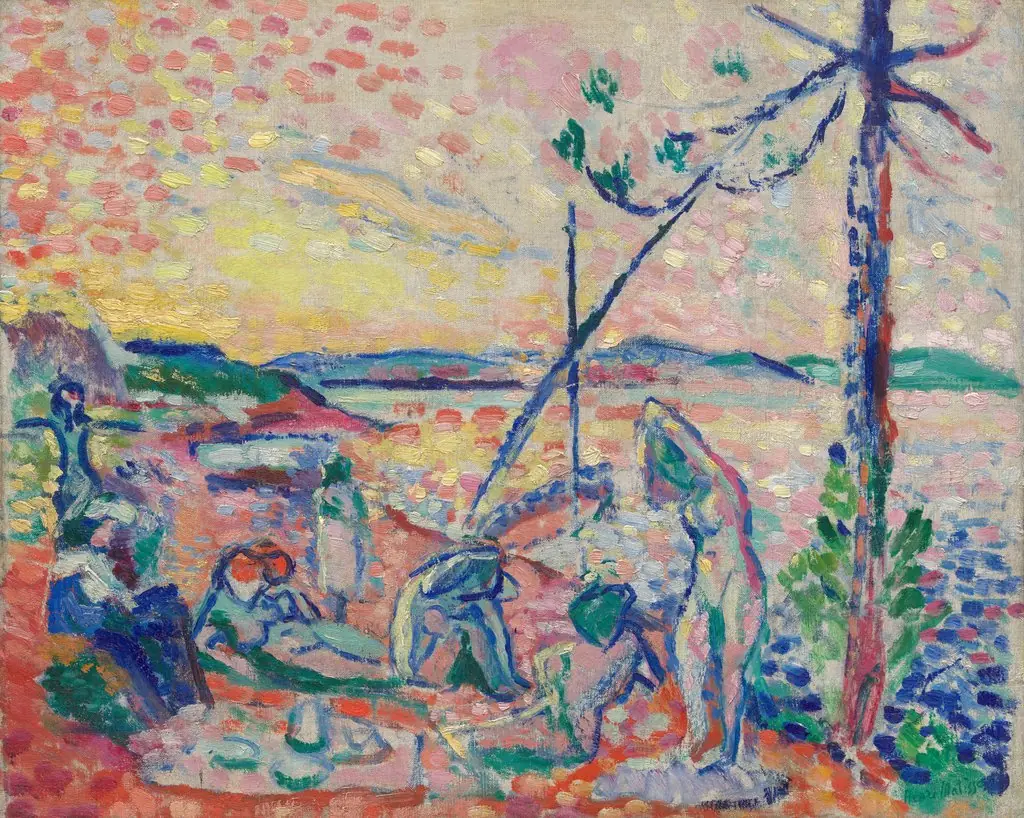
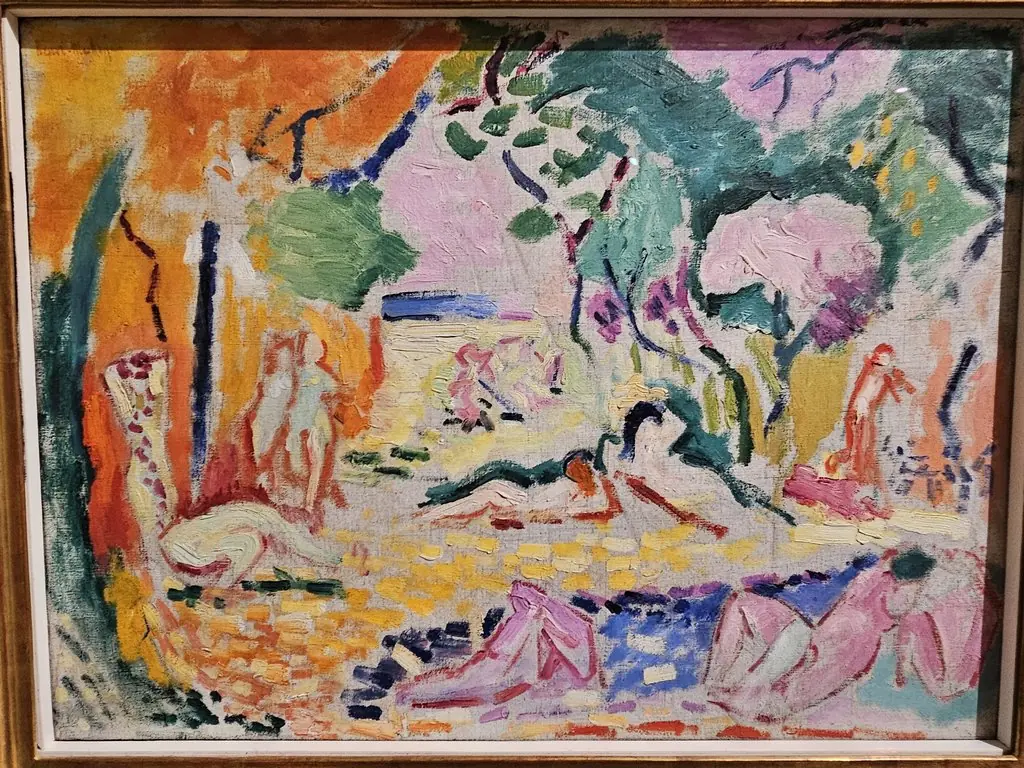
The painting depicts four nude figures in a wooded setting, arranged in relaxed, contemplative poses. Their interaction suggests a quiet, ritualistic harmony with nature, evoking classical pastoral ideals without literal narrative. Matisse avoids storytelling, instead using the human form to anchor a mood of stillness and organic unity, distancing the scene from realism toward symbolic serenity.
Technique & Style
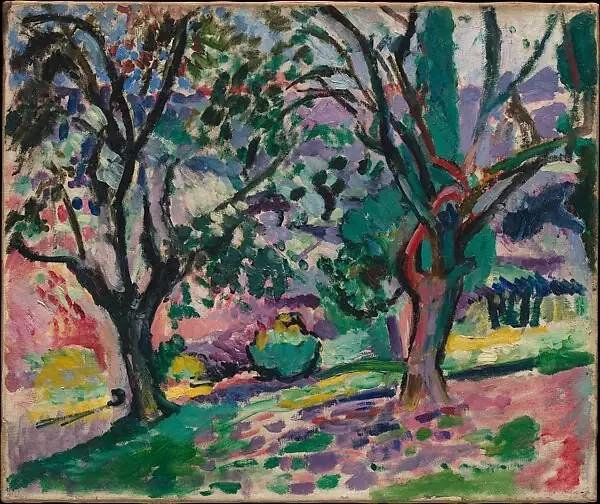
Greens, browns, and muted yellows dominate the landscape, with patches of blue sky suggesting depth without perspective.
Matisse employed loose, fluid brushwork and unblended hues to construct the scene. Greens, browns, and muted yellows dominate the landscape, with patches of blue sky suggesting depth without perspective. Color is applied flatly and deliberately, rejecting chiaroscuro in favor of emotional resonance. The forms are simplified, with contours defined by tone rather than line, characteristic of Fauvist experimentation.
History & Provenance
Completed in 1905, Pastorale entered the collection of the Musée d'art moderne de Paris, where it remains today. It was painted during a period of intense innovation for Matisse, following his participation in the 1905 Salon d'Automne, where Fauvism gained public attention. The work was not widely exhibited at the time but was recognized by peers as a key example of his evolving aesthetic.
Context
In 1905, Matisse was part of a radical circle challenging academic norms, alongside artists like Derain and Vlaminck. Fauvism rejected traditional modeling and subdued palettes, embracing intense, arbitrary color as a primary expressive tool. Pastorale reflects this shift, aligning with broader modernist interests in primitivism and emotional authenticity over illusionistic detail.
Legacy
Though not among Matisse’s most reproduced works, Pastorale illustrates the foundational role of color and form in his artistic development. It contributed to the legitimization of expressive abstraction in early modern painting and influenced later generations seeking to prioritize emotional tone over representational fidelity in landscape and figure studies.
Artist & collection
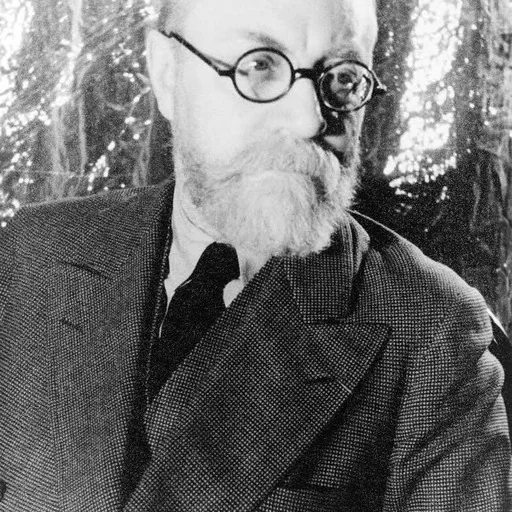
Artist
Henri Émile Benoît Matisse (French:; 31 December 1869 – 3 November 1954) was a French visual artist, known for both his use of colour and his fluid and original draughtsmanship.