Artwork
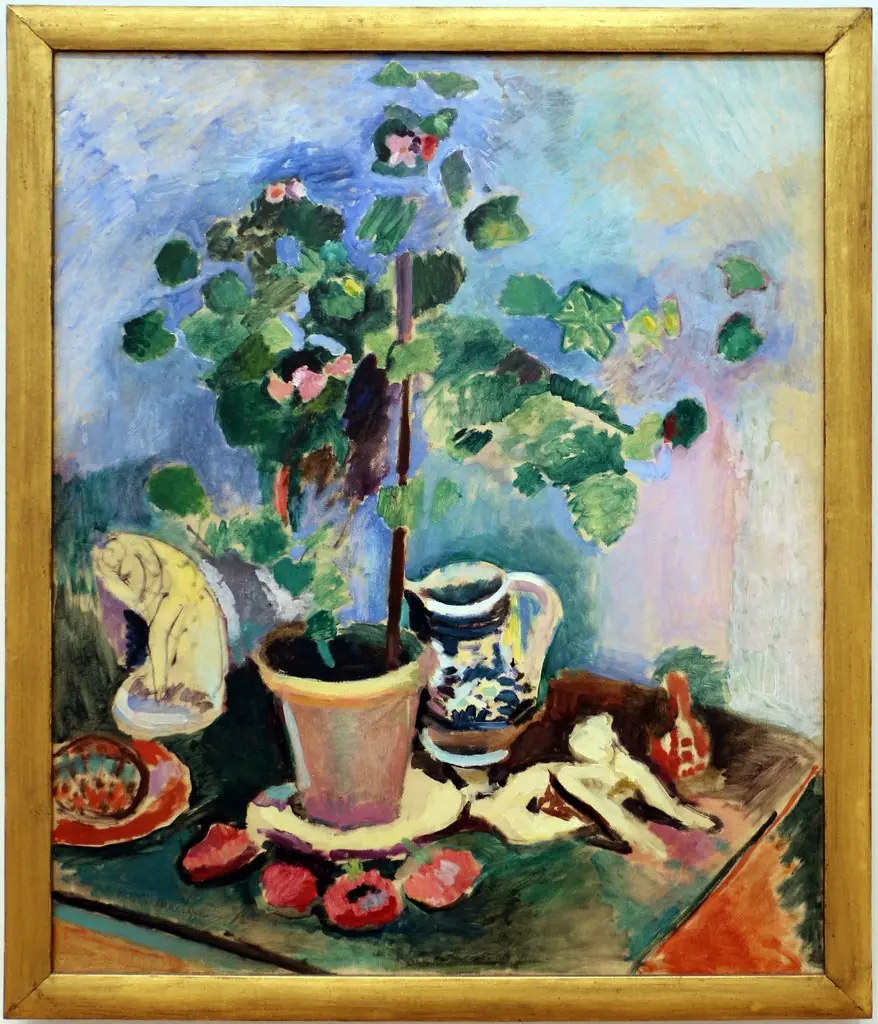
Still Life with Geranium
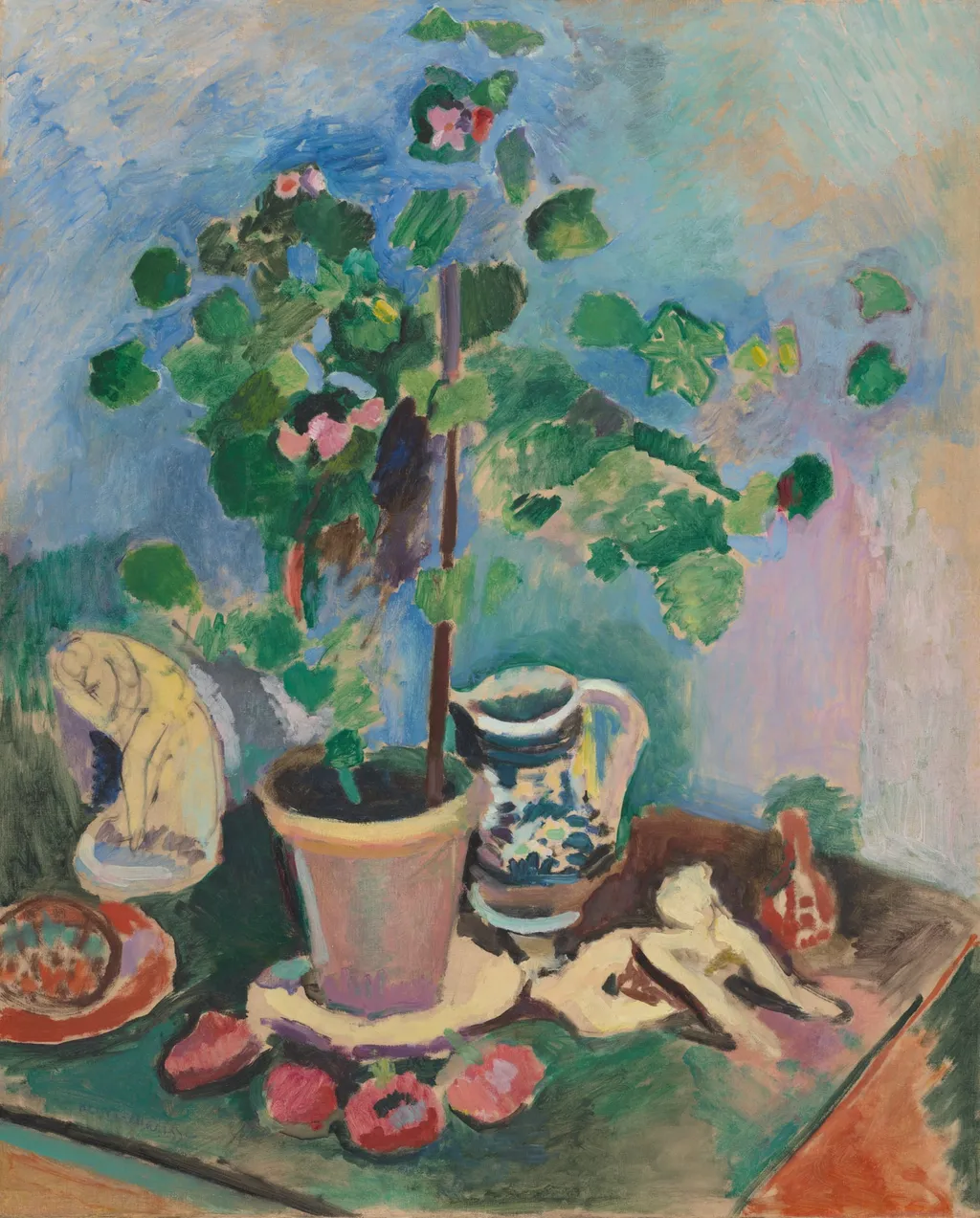
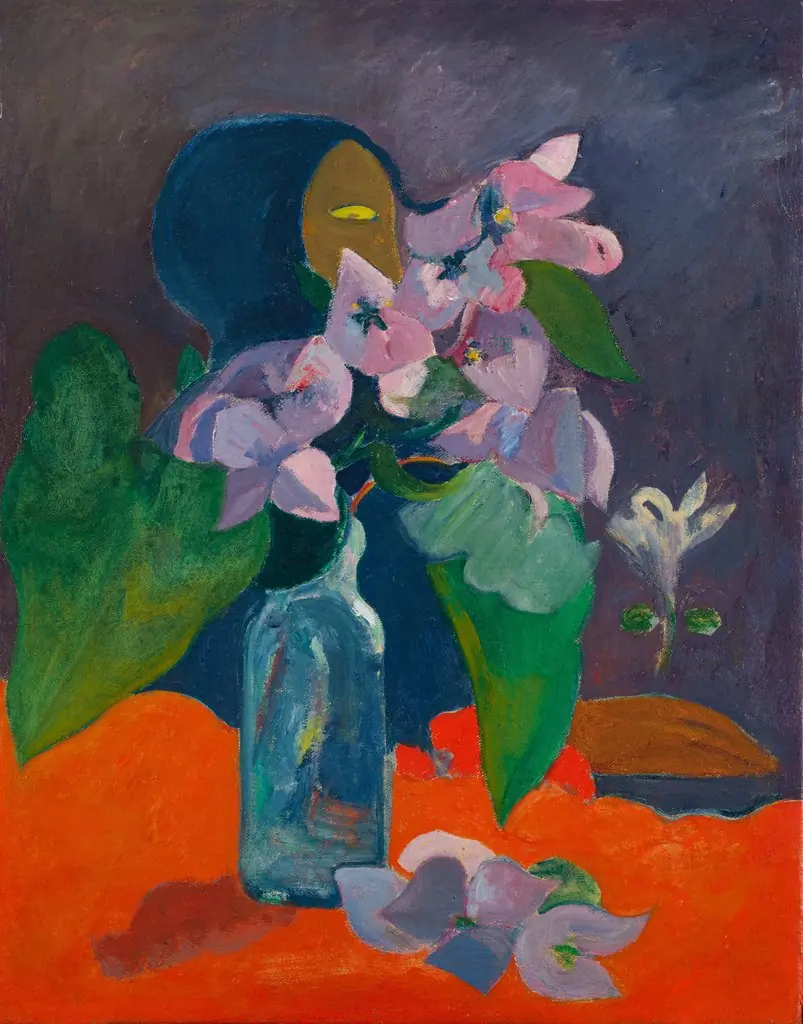
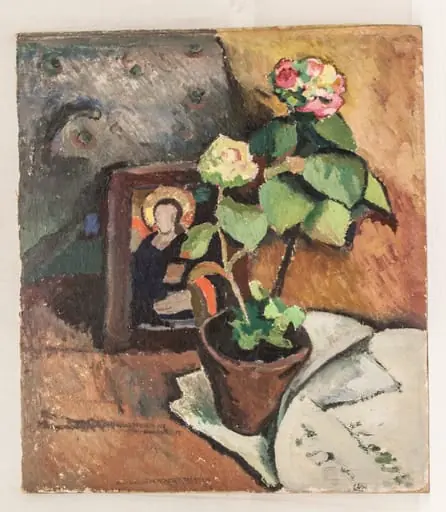
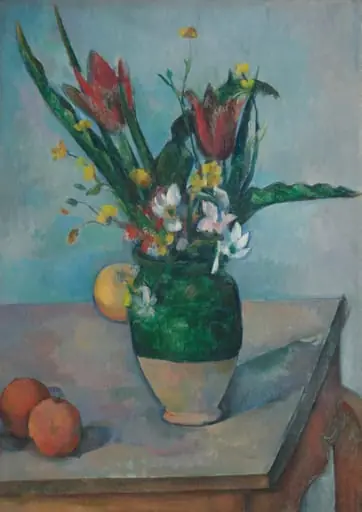
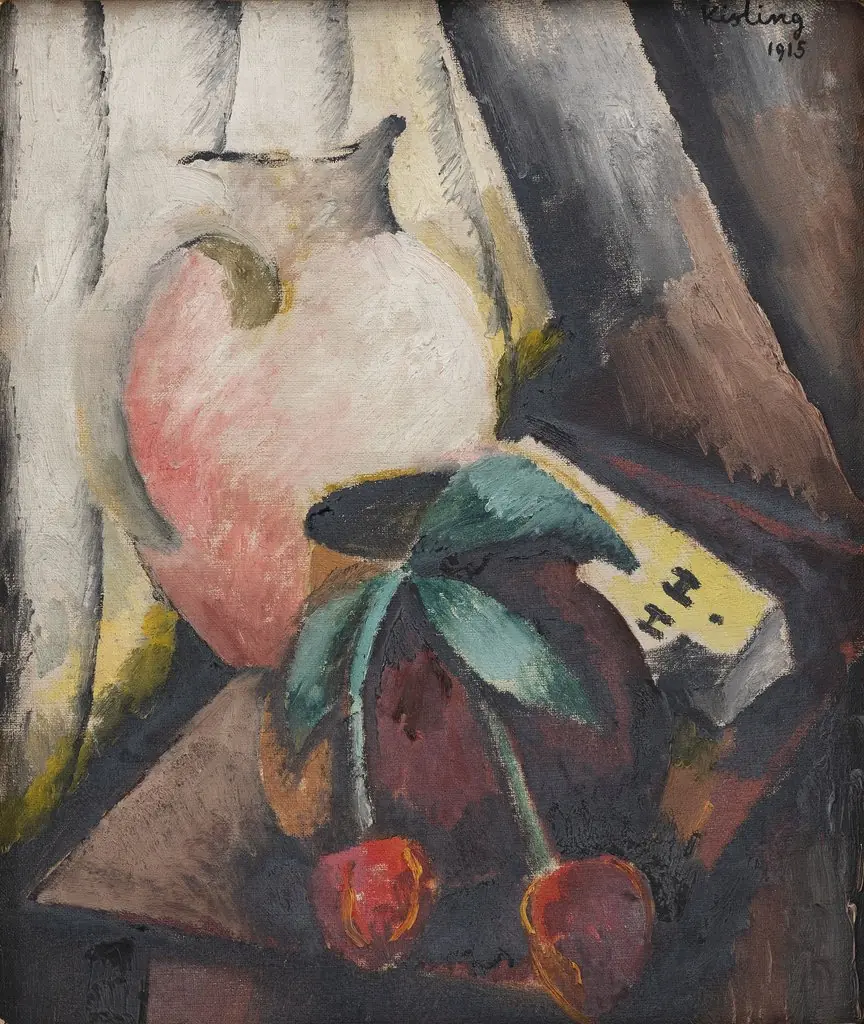
Still Life with Geranium is an oil painting by the Fauvist artist Henri Matisse. It dates from 1906 and is held in the collection of the Art Institute of Chicago.
- Accession no.
- 87045
- Credit line
- Joseph Winterbotham Collection
About this work
Overview
It stands as part of the Winterbotham Collection at the Art Institute of Chicago, one of thirty-five works donated by the collector.
Henri Matisse’s Still Life with Geranium blends the conventions of still life with the expressive energy of early modernism. Painted in oil on canvas, the work reflects his engagement with Fauvist principles, bold color, loose brushwork, and emotional intensity, while retaining compositional structure. It stands as part of the Winterbotham Collection at the Art Institute of Chicago, one of thirty-five works donated by the collector.
Subject & Meaning
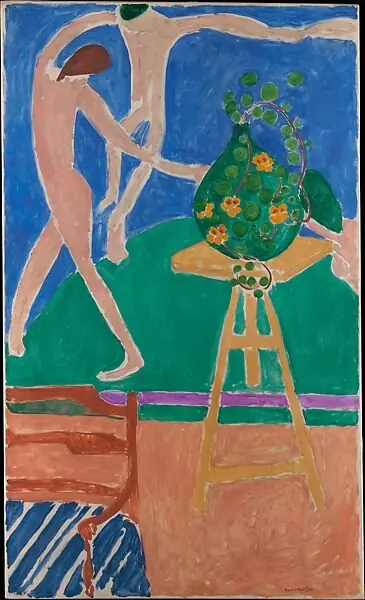
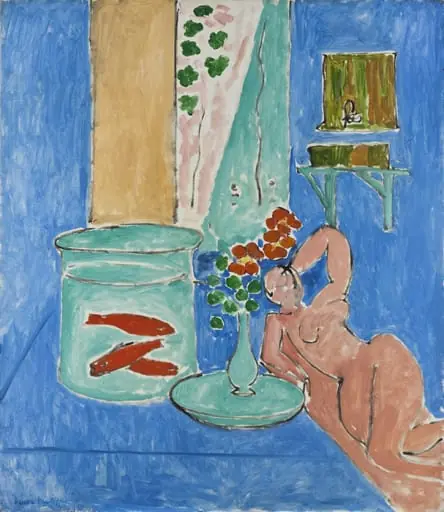
The painting presents a vase of vivid red geraniums alongside ceramic vessels and two sculpted figures, one leaning and one reaching. Rather than depicting a domestic interior, Matisse evokes an open, dreamlike space, dissolving boundaries between object and environment. The figures, likely plaster casts, appear as silent observers, their minimal modeling contrasting with the vibrancy of the flowers and the textured tablecloth.
Technique & Style
Matisse applied paint thickly and swiftly, especially in the lower half of the canvas, where the geraniums and ceramics gain density through impasto. Above, the background dissolves into thin washes of blue and green, suggesting atmosphere rather than form. The palette favors intense reds against muted tones, a hallmark of Fauvism, while the brushwork remains spontaneous, rejecting academic precision in favor of sensory immediacy.
History & Provenance
The painting includes two sculptural forms Matisse later cast in bronze: Woman Leaning on Her Hands and Thorn Extractor. These figures, originally modeled in plaster, were frequently integrated into his paintings as symbolic elements. The work entered the Art Institute of Chicago through the Winterbotham Collection, assembled by a Chicago-based patron with a focus on modern French art.
Context
Created during Matisse’s Fauve period, the painting responds to Cézanne’s structural approach while rejecting naturalism in favor of emotional expression. It reflects broader shifts in early 20th-century art, where still life became a vehicle for exploring color, form, and spatial ambiguity. The inclusion of non-European ceramics signals an interest in global artifacts, common among avant-garde artists of the time.
Legacy
Still Life with Geranium exemplifies Matisse’s ability to transform ordinary subjects into dynamic compositions that challenge perception. The integration of sculpture into painting influenced later artists exploring multidisciplinary space. Its presence in a major American collection underscores its role in introducing European modernism to U.S. audiences during the early 1900s.
Artist & collection
Artist
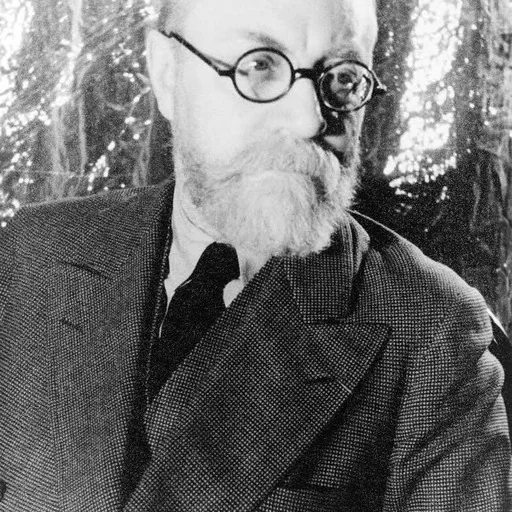
Henri Émile Benoît Matisse (French:; 31 December 1869 – 3 November 1954) was a French visual artist, known for both his use of colour and his fluid and original draughtsmanship.