Artwork
William Charles Macready as William Tell
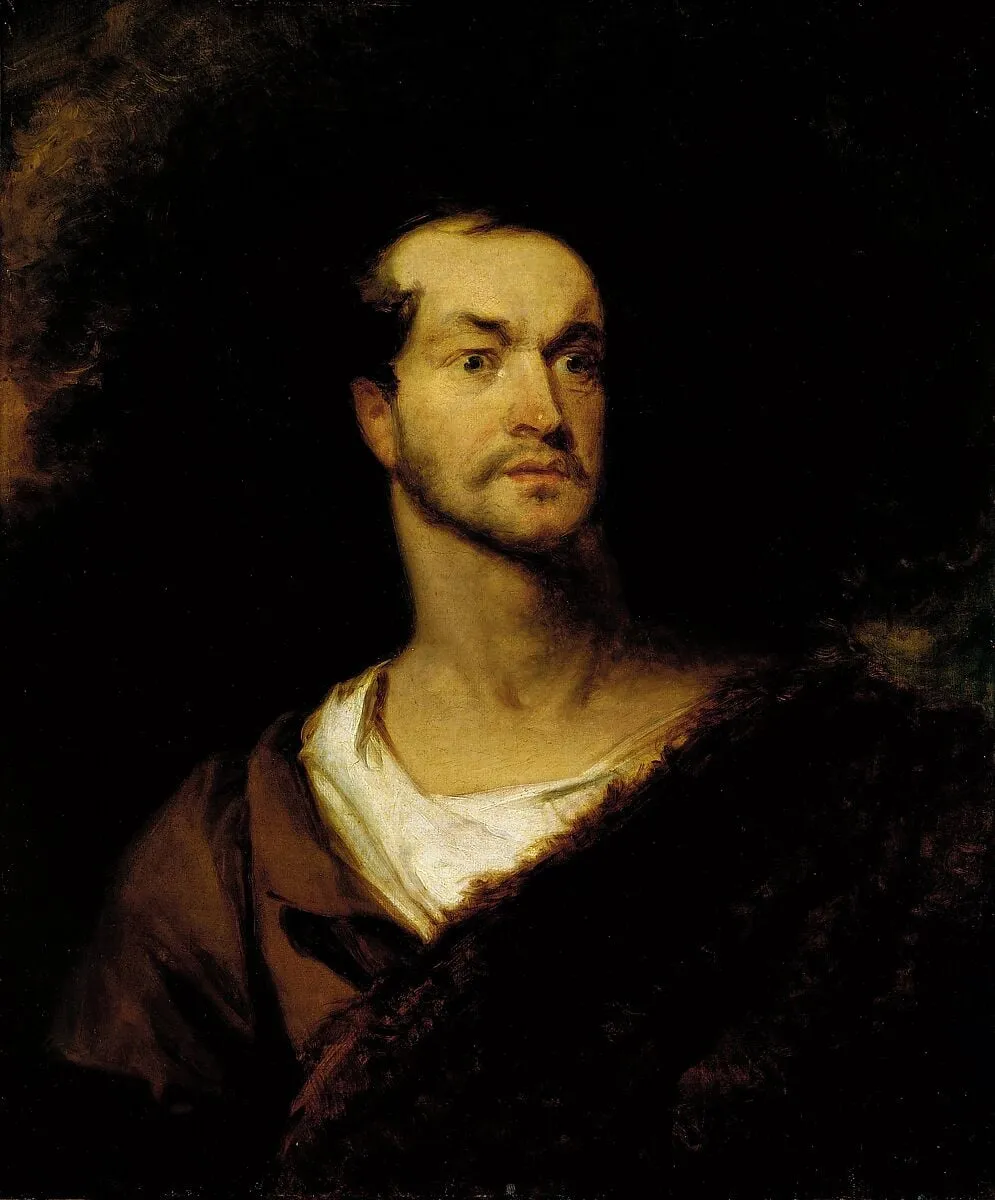
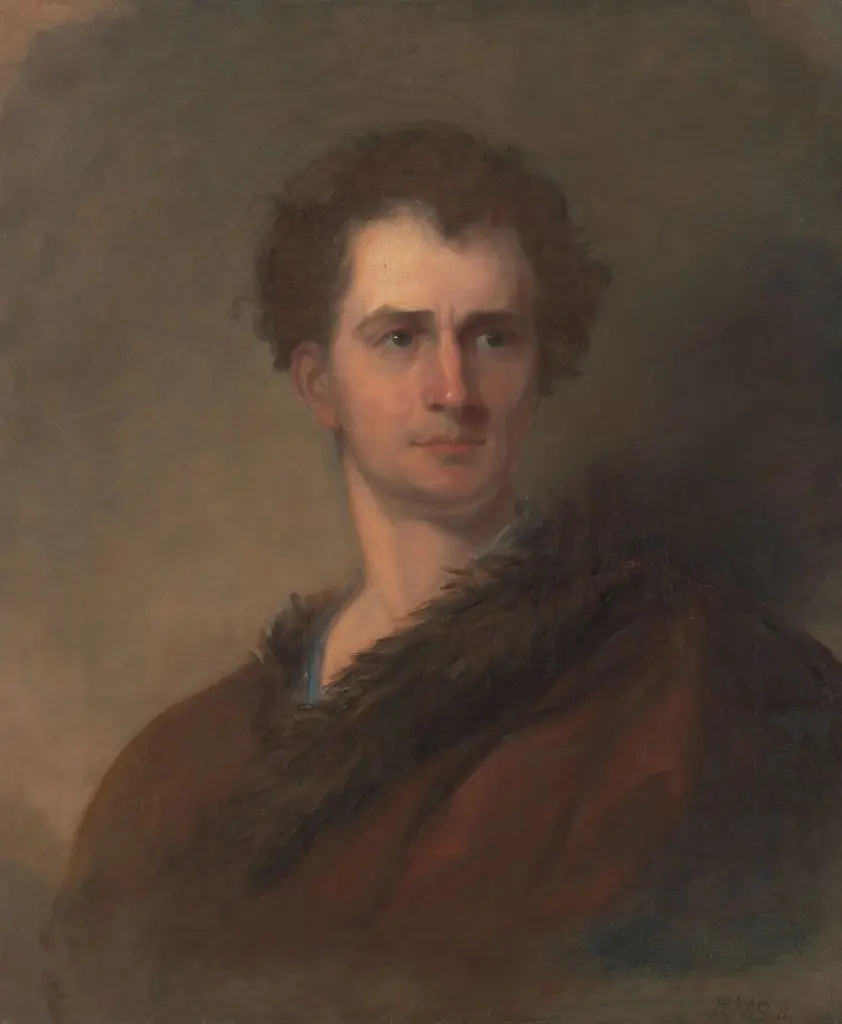
William Charles Macready as William Tell is an oil painting by the Romanticist artist Henry Inman. It dates from 1826 and is held in the collection of the Metropolitan Museum of Art.
About this work
Subject & Meaning
By focusing on Macready's portrayal, the piece records the actor's interpretation of the resistance fighter within the context of 19th-century theater.
Executed in 1826 by Henry Inman, this oil on canvas functions as a theatrical portrait depicting the British actor William Charles Macready in the titular role of William Tell. The work captures Macready as a male figure, with attention to his facial expression to convey the character's intensity. While classified generally as a portrait, the painting's primary subject merges the identity of the performer with the legendary Swiss folk hero.
The iconography relies on the actor's embodiment of Tell, representing a specific moment of dramatic performance rather than a historical depiction of the figure himself. By focusing on Macready's portrayal, the piece records the actor's interpretation of the resistance fighter within the context of 19th-century theater.
Technique & Style
The portrait is executed in oil paint on canvas, a standard support for early nineteenth-century American portraiture. The painting measures 76.8 by 63.5 centimeters, a moderately sized upright canvas suited to a half- or three-quarter-length depiction of the sitter. It is classified within the Metropolitan Museum of Art's American Wing and falls within the portrait genre, consistent with Henry Inman's practice of producing formal likenesses of prominent cultural figures.
The work depicts the actor William Charles Macready in the role of William Tell, rendered as a single male figure with attention to the eyes as a focal expressive element.
History & Provenance
Painted in 1826, Henry Inman’s portrait of William Charles Macready depicts the actor in the role of William Tell. The painting is held in the collection of the Metropolitan Museum of Art in New York, where it is part of the American Wing. It measures 76.8 by 63.5 centimeters.
Specific inventory or accession numbers are not provided in the available sources, and no exhibition history is documented.
Context
The 1826 oil on canvas portrait by Henry Inman, listed in The American Wing of the Metropolitan Museum of Art, portrays actor William Macready in the role of William Tell. As a representative example of early American portraiture, the work illustrates the period’s interest in theatrical subjects and the status of performers within society. Its inclusion in a major museum collection underscores its historical significance and the scholarly attention it has received as part of Inman’s broader body of portraiture.
Overview
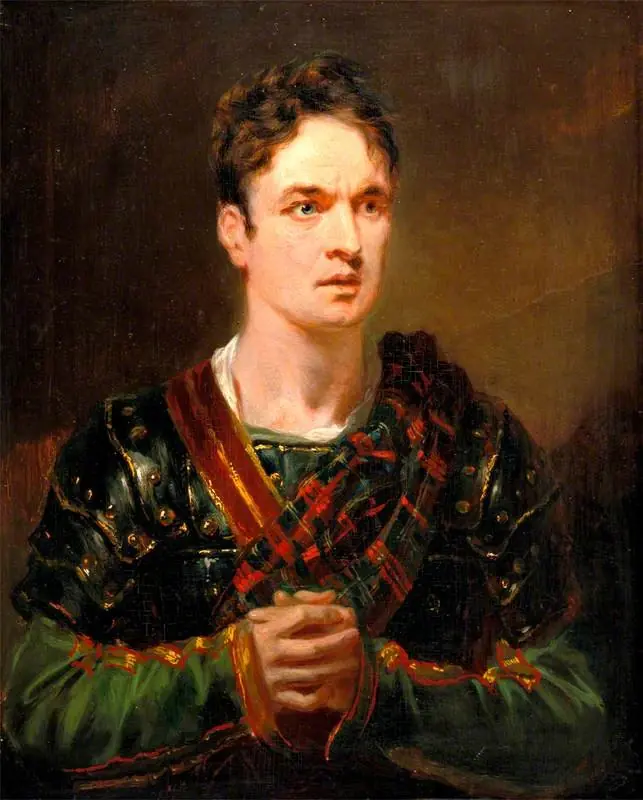
Painted in 1826 by Henry Inman, this oil on canvas portrait depicts the English actor William Charles Macready in the title role of Friedrich Schiller's play William Tell. The work captures Macready in a theatrical pose, dressed in a green coat and white shirt, holding a crossbow in his left hand while his right arm extends upward as if aiming at an apple. Inman isolates the figure against a neutral background, removing stage scenery and audience to focus entirely on the actor's dramatic expression and physical tension.
Created during Macready's early career in London, the painting serves as a significant record of his performance style and the popularity of Schiller's tragedy in the early 19th century. Inman, an American artist who traveled to Europe, produced this work while studying abroad, demonstrating his ability to render contemporary theatrical figures with psychological depth. The composition emphasizes the narrative moment of the famous apple-shot, freezing the action to highlight the actor's command of the stage.
Artist & collection


 Junius Brutus Booth
 Peter Paul Rubens
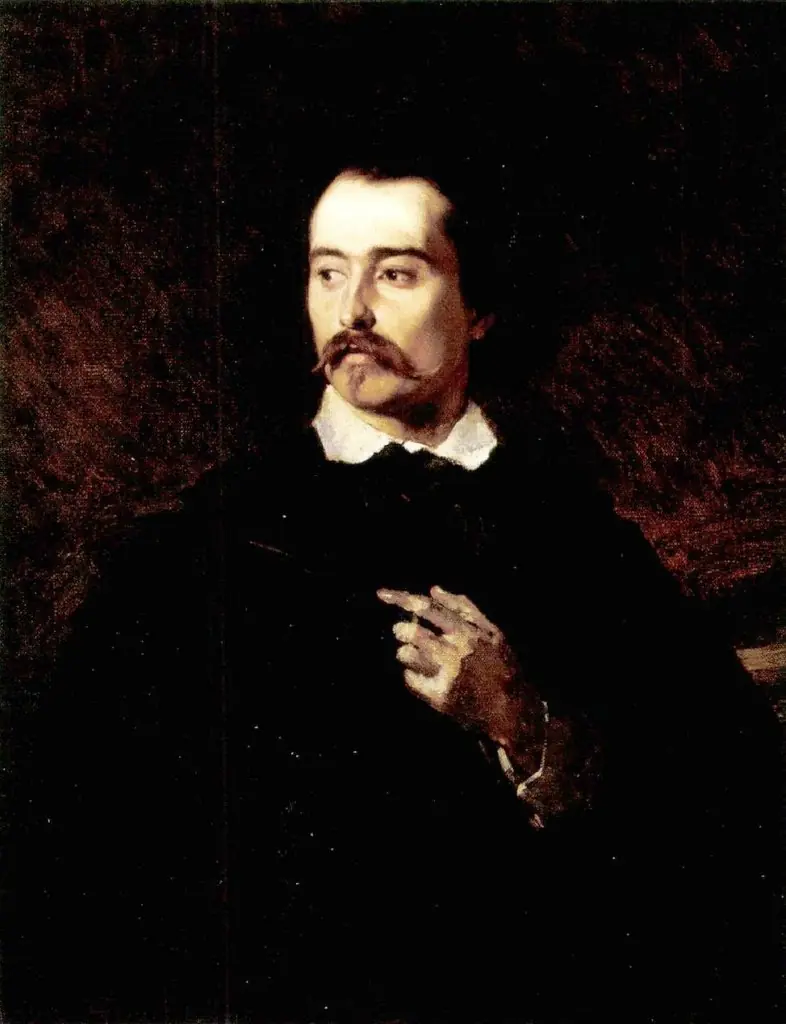 Portrait of Painter József Borsos
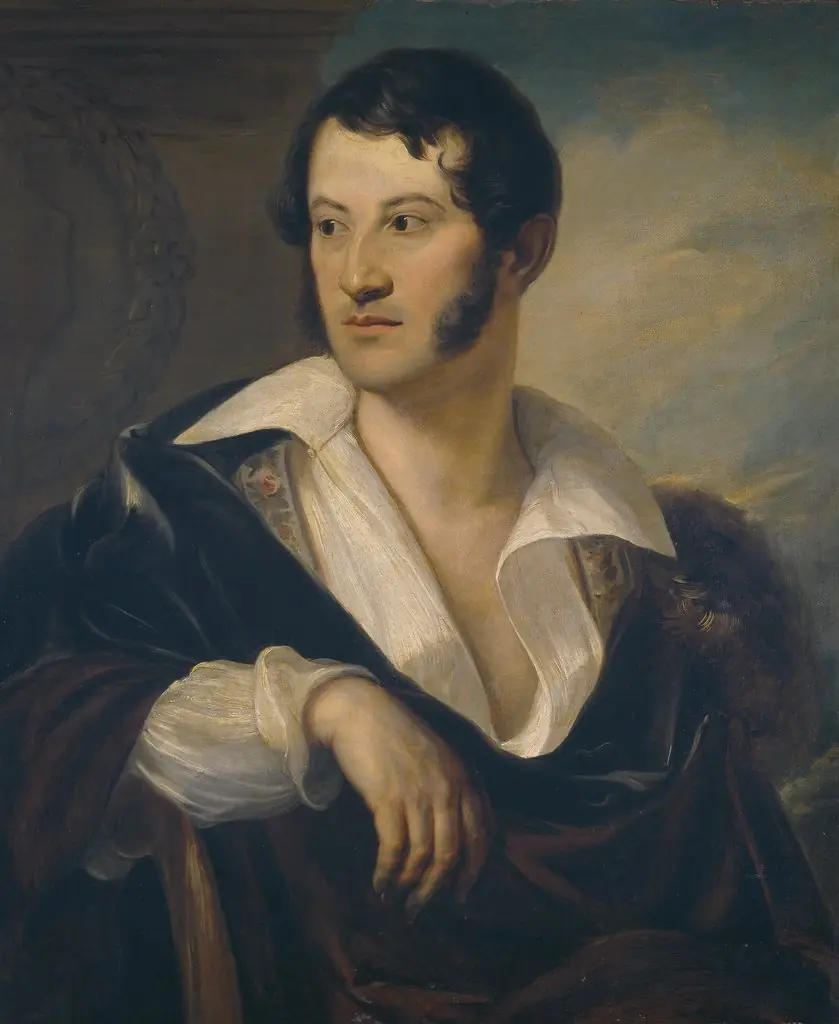 Gonzalo de Vilches, 1st Earl of Vilches (?)
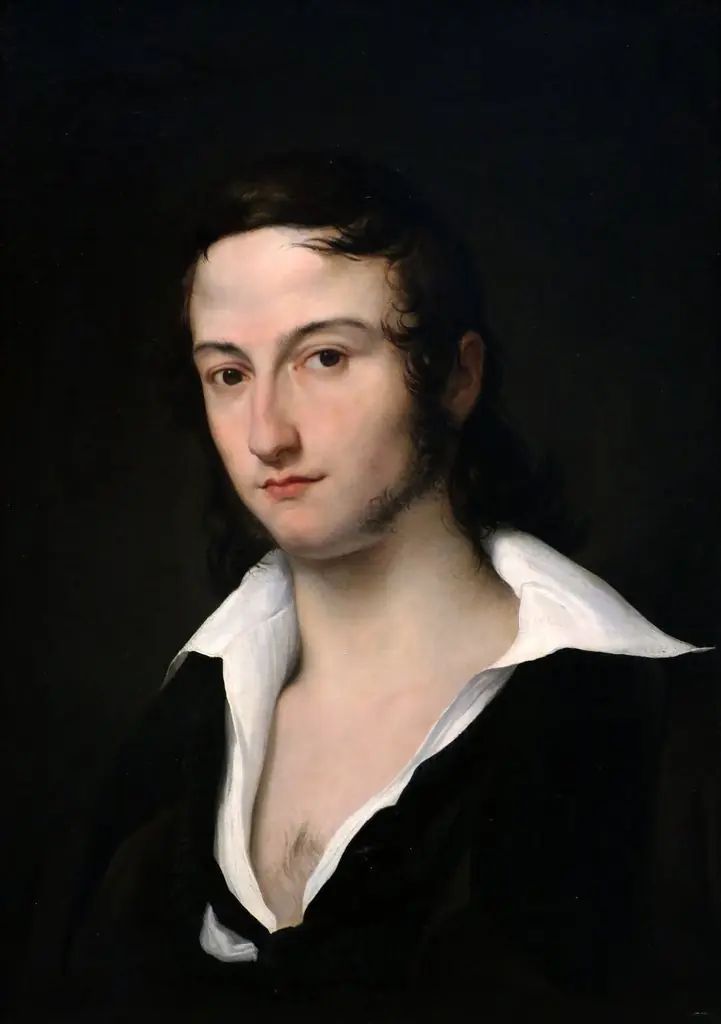 Portrait of Carlo Della Bianca
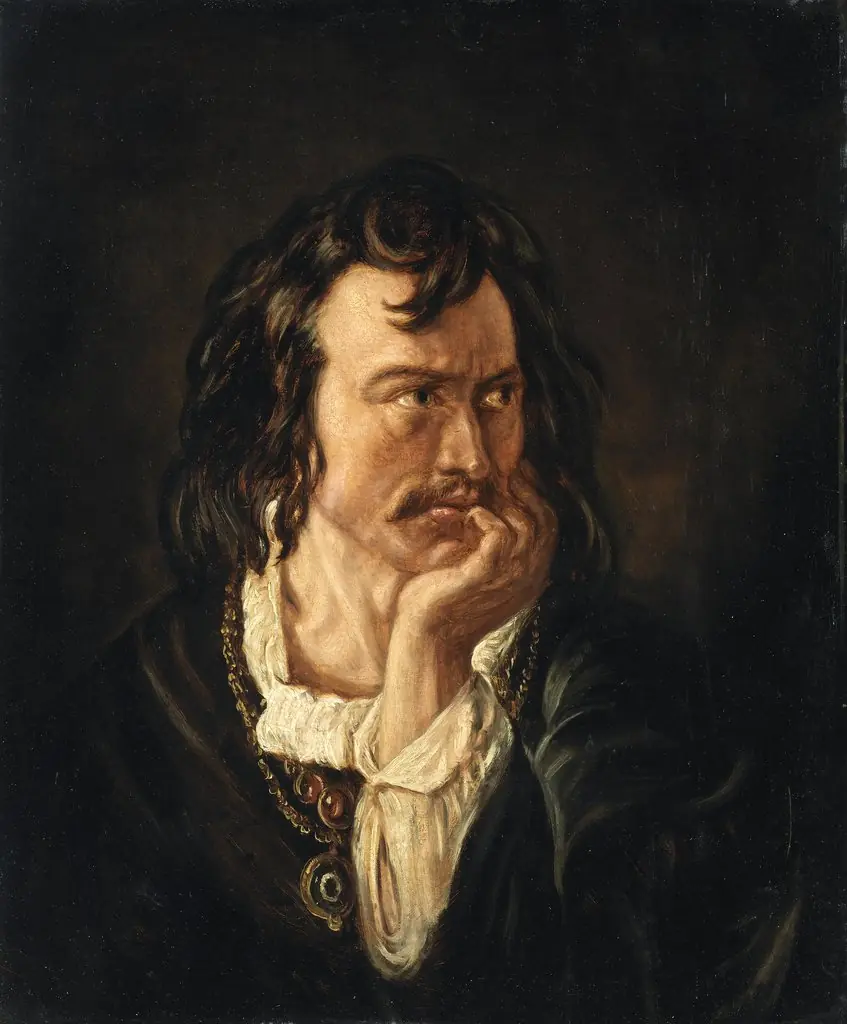 Portrait of Edmund Kean (1787-1833), Actor, as Hamlet
 Sir Stephen Richard Glynne, 9th Bart, M.P.
 Self-Portrait
 Nicolau Ursu Horia
 Edmund Kean (1787–1833), as Sir Giles Overreach in 'A New Way to Pay Old Debts' by Philip Massinger