Artwork
Rest on the Flight into Egypt
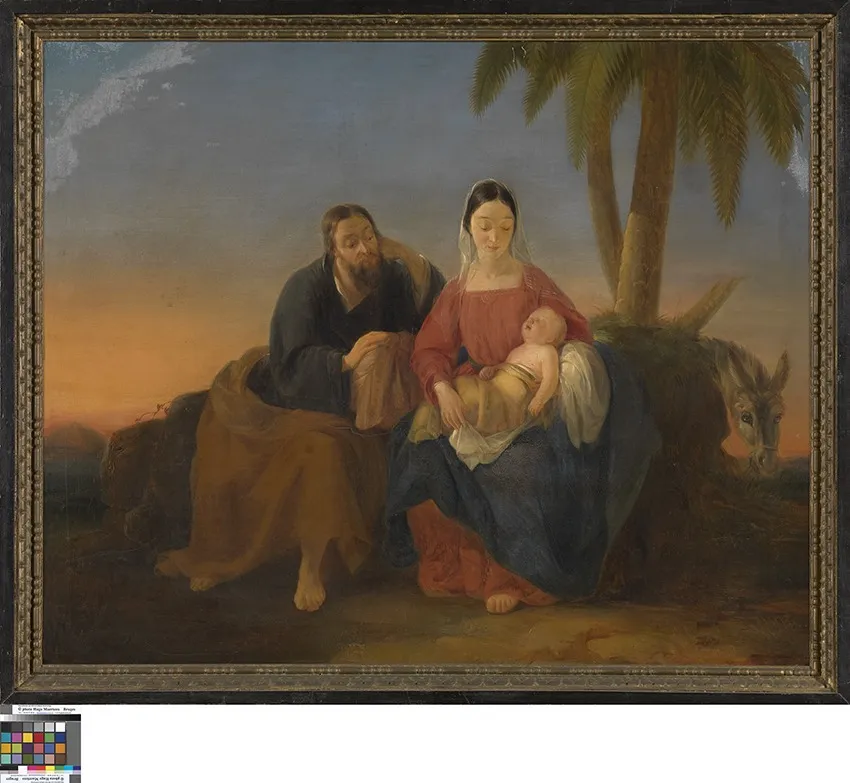
Rest on the Flight into Egypt is an oil painting by the Neoclassicist artist Henry Jean Becquet. It dates from 1812 and is held in the collection of the Groeningemuseum.
About this work
Overview
Rest on the Flight into Egypt is an oil painting by Henry Jean Becquet, dated to 1812.
Rest on the Flight into Egypt is an oil painting by Henry Jean Becquet, dated to 1812. The work measures 86 by 106 and belongs to the religious genre. It is currently held in the Groeningemuseum in Bruges. The painting depicts the Holy Family pausing during their biblical journey, a subject that allowed artists to explore humanized, intimate moments within a sacred narrative. Becquet's rendition presents the figures in a serene landscape bathed in warm sunset tones, contributing to the long artistic tradition of this apocryphal episode.
Subject & Meaning
The artwork illustrates Mary, Joseph, the Christ Child, and a donkey resting during their flight into Egypt. In Becquet's composition, the central Virgin wears a red dress with blue outer garments and a white headcloth, holding the swaddled infant across her lap, while a bearded Joseph sits to the left, raising a hand near his face. The donkey stands behind them beside a palm tree. The broader iconographic tradition of this subject often incorporates apocryphal legends, such as the miracle of the palm tree bending down to provide fruit, or Joseph offering grapes, which symbolize the Eucharist and Christ's sacrificial blood. While the New Testament provides no details of a rest, medieval accounts embellished the journey, and artists frequently used the theme to depict the Virgin breastfeeding, connecting to the Virgo Lactans tradition, or to show Joseph actively providing for the family, emphasizing his protective role.
Technique & Style
Executed in oil paint, the composition arranges three seated figures across a horizontal foreground. The palette relies on deep blues, warm reds, browns, and golden yellows. A low horizon features warm orange and yellow tones suggesting a sunset, which transitions upward to a pale blue sky with soft clouds. Light falls evenly across the figures from the left, creating soft shadows. The brushwork appears smooth with blended transitions, particularly visible in the rendering of the sky and flesh tones. This even illumination and carefully arranged foreground create a calm, balanced atmosphere typical of the subject's treatment in religious art.
History & Provenance
Henry Jean Becquet created the painting in 1812. The work is part of the collection of the Groeningemuseum in Bruges. While the specific commission and early ownership chain for Becquet's painting are not detailed in the available records, the broader subject of the Rest on the Flight into Egypt has a rich provenance history in other notable examples. For instance, a related painting by Jacques Stella entered the Spanish Royal Collection, appearing in the inventory of Felipe V at La Granja in 1746 and later in the inventories of Carlos III at Aranjuez in 1794, before eventually entering the Museo del Prado. Similarly, a version by Gerard David changed hands among prominent collectors, including Rodolphe Kann and J. Pierpont Morgan, before being gifted to the National Gallery of Art in Washington in 1937.
Context
The subject of the Rest on the Flight into Egypt did not develop until the second half of the fourteenth century, emerging from earlier depictions of the legend of the palm tree. The earliest known depiction is a panel in the Grabow Altarpiece by Meister Bertram from around 1379. The subject was primarily found north of the Alps until 1500 and was usually made for wealthy homes rather than churches. During the Counter-Reformation, the subject's legitimacy remained defensible because the necessity of the Holy Family resting was undeniable, even as the Church disapproved of more miraculous accretions. This shift suited Counter-Reformation drives to promote down-to-earth realism and elevate the role of Saint Joseph. In Early Netherlandish painting around 1500, the Virgin and Child often dominated the composition, with Joseph and the donkey pushed into the middle distance, though later artists like Gerard David began to integrate the figures more harmoniously into their surroundings using receding diagonals and pyramidal motifs.
Legacy
The Rest on the Flight into Egypt remained a highly popular subject in Christian art, eventually overtaking the original scene of the family on the road in popularity by the late sixteenth century. As landscape painting increased in prestige, the theme provided a legitimate framework for expansive natural settings, allowing artists to depict the Holy Family within detailed environments. The compositional formulas developed in the early sixteenth century, such as the central placement of the Virgin and Child with Joseph providing food in the foreground or background, were widely copied and adapted. Paintings produced by the large Bruges workshop of Adriaen Isenbrandt and others using transfer from copies of drawings helped disseminate these compositional types, ensuring the subject's enduring presence in European visual culture.
Artist & collection

- Rest on the Flight into Egypt
 Rest on the Flight to Egypt
 The Light of the World
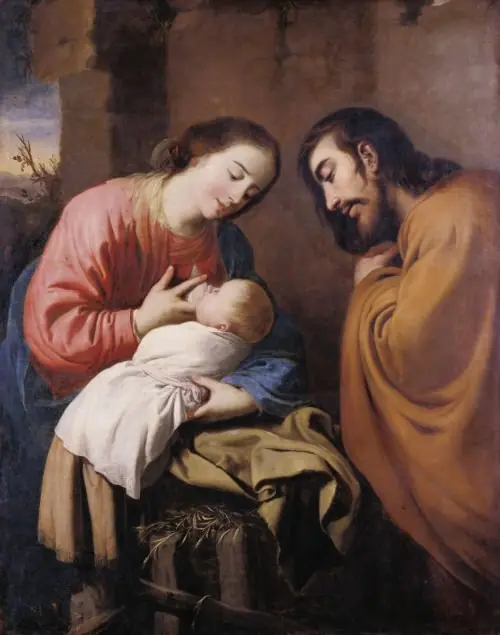 The Holy Family
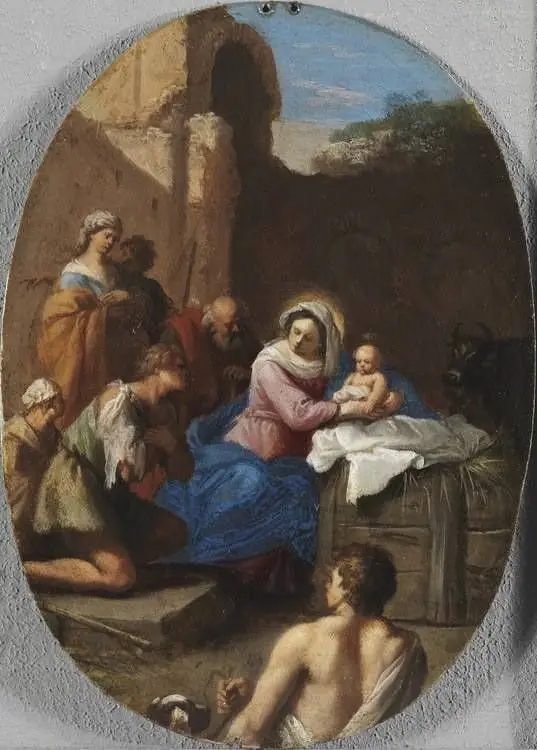 Anbetung der Hirten (zugeschrieben)
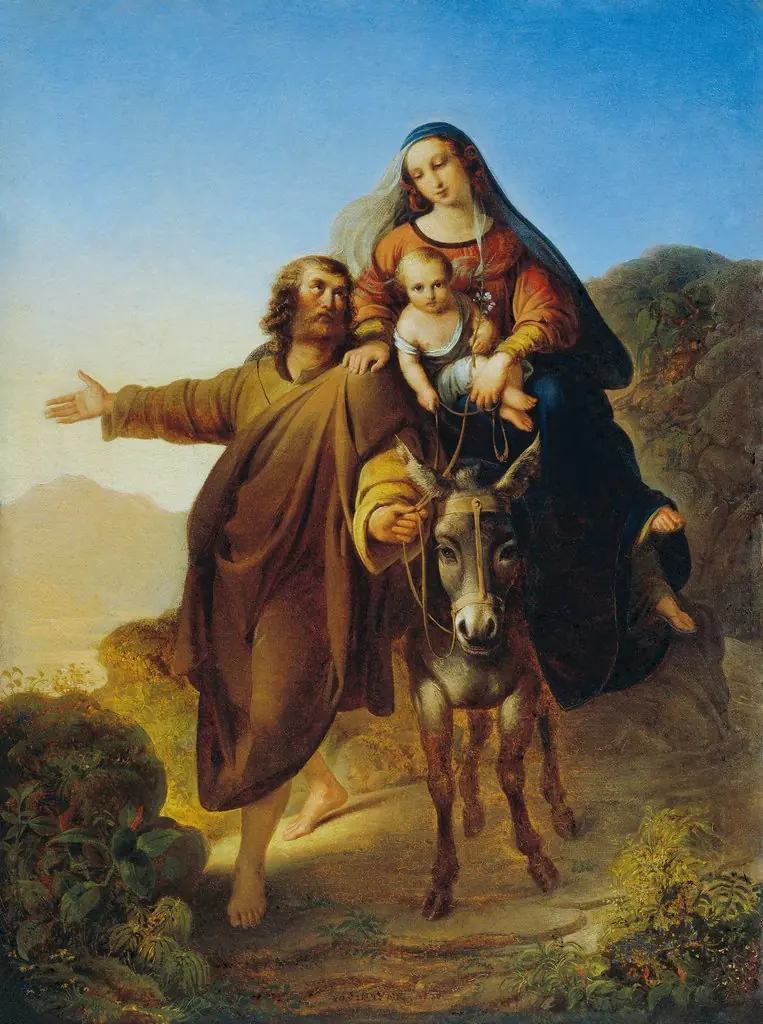 Flight into Egypt
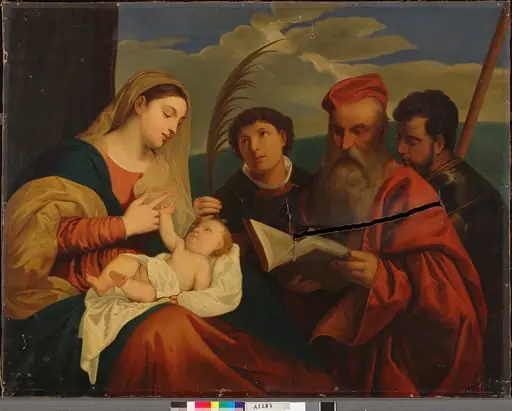 Neitsyt Maria lapsen kanssa sekä pyhäät Stefanus, Hieronymus ja Mauritius, kopio Tizianin (Tiziano Vecellio) mukaan
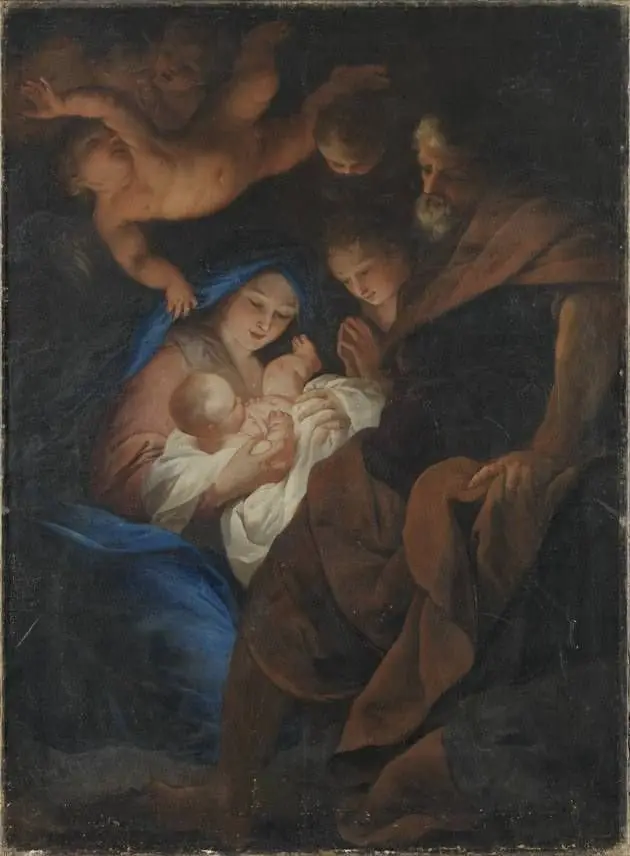 Geburt Christi
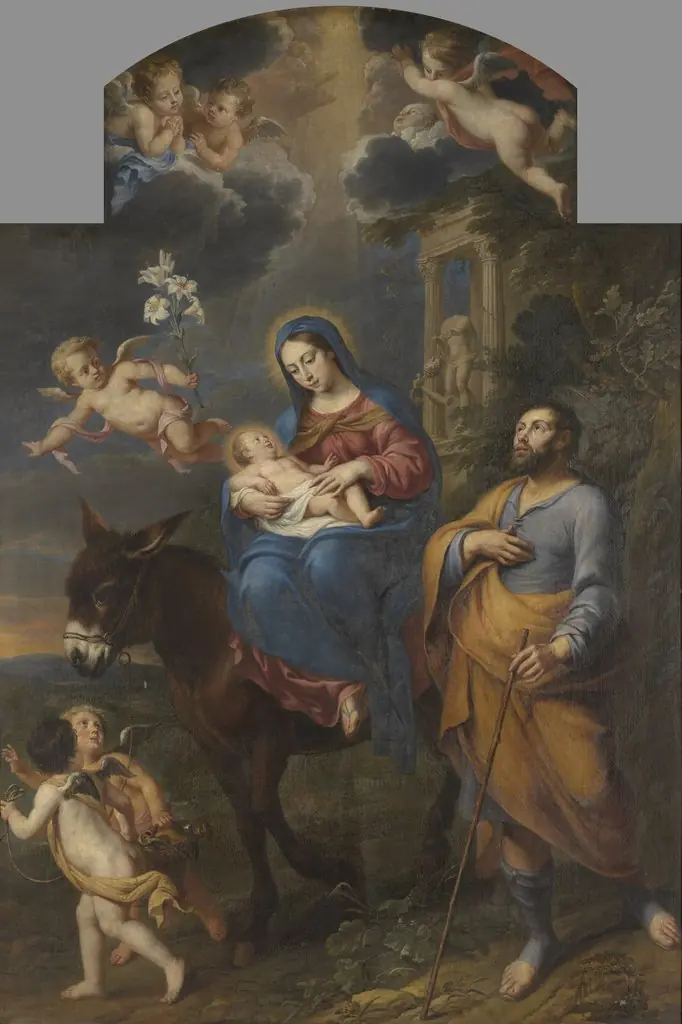 The Flight into Egypt
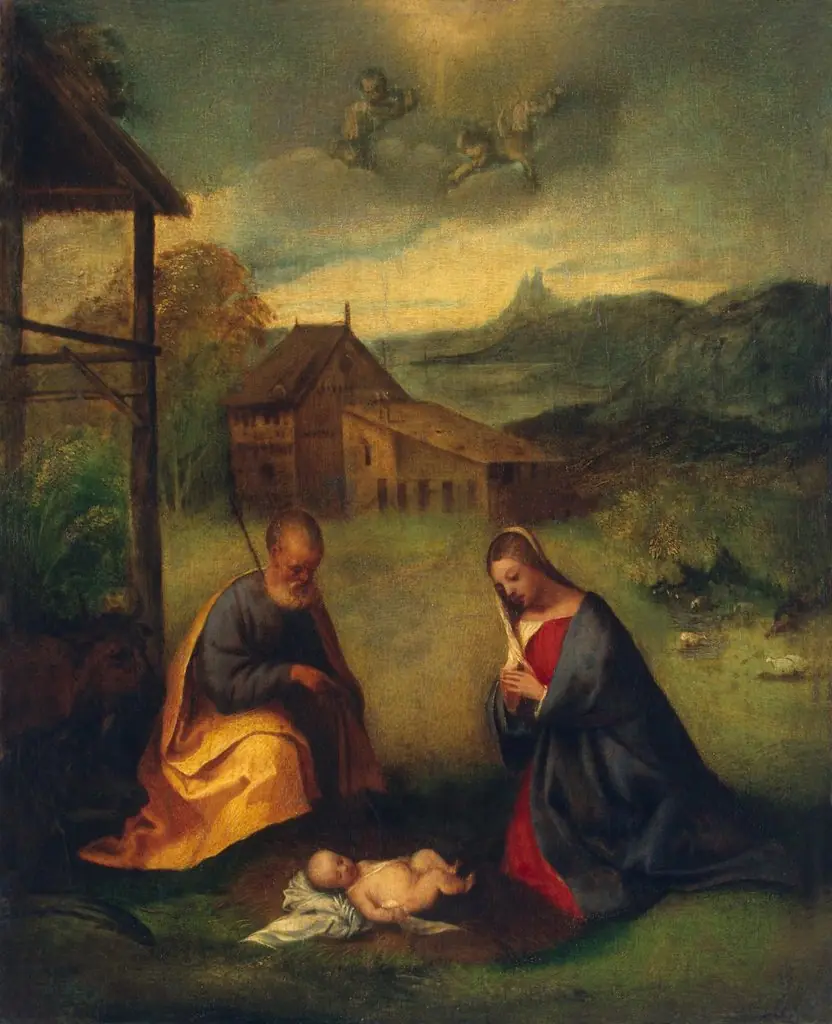 Adoration of the Christ Child
 The Adoration of the Shepherds
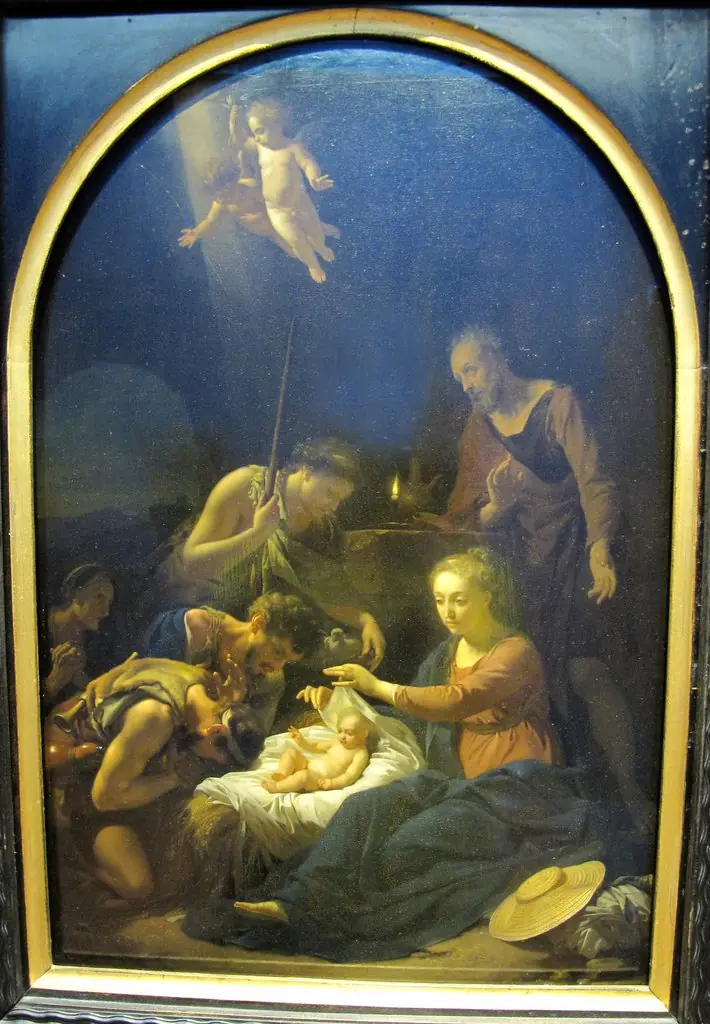 The adoration of the shepherds