Artwork
The Skating Minister
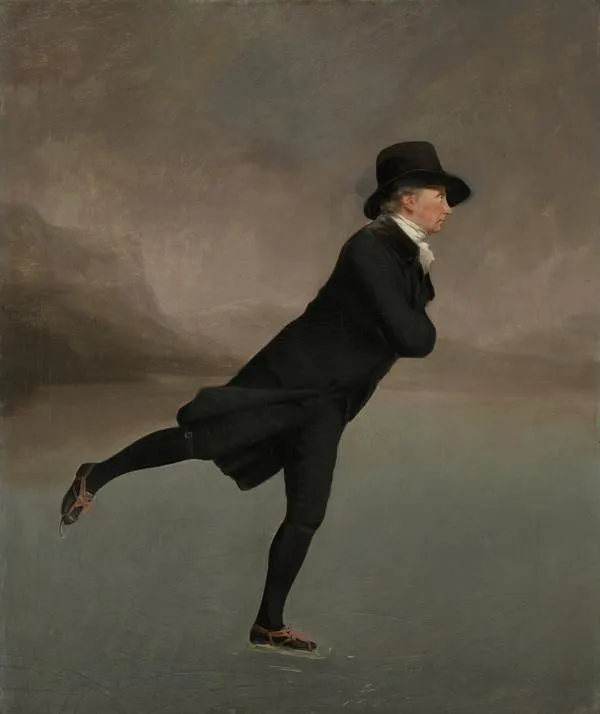
The Skating Minister is an oil painting by the British Romanticist artist Henry Raeburn. It dates from 1798 and is held in the collection of the Scottish National Gallery.
About this work
Overview
5 cm, the work depicts the Reverend Robert Walker, a Church of Scotland minister, in mid-motion on the ice.
The Reverend Robert Walker Skating on Duddingston Loch, universally known by its shorter title The Skating Minister, is an oil on canvas portrait painted around 1795 and now held in the Scottish National Gallery in Edinburgh. Measuring 76.2 by 63.5 cm, the work depicts the Reverend Robert Walker, a Church of Scotland minister, in mid-motion on the ice. Long attributed to Sir Henry Raeburn, Scotland's leading portraitist of the Scottish Enlightenment, the painting's authorship has been debated since 2005, with some scholars proposing the French artist Henri-Pierre Danloux as the possible creator. Unsung for over a century and a half, the painting has since become one of Scotland's most recognizable images and an icon of Scottish culture, emblematic of the Scottish Enlightenment's blend of intellectual rigor and worldly engagement.
Subject & Meaning
The painting portrays the Reverend Robert Walker (1755-1808), minister of Canongate Kirk in Edinburgh, captured in the dynamic act of ice skating. Walker is shown in strict profile, his body angled forward with right leg extended behind him, arms folded across his chest in what skating manuals of the period described as the proper attitude for genteel rolling. He wears the full formal attire of a clergyman: black top hat, black coat, black breeches, and black stockings, with only a white cravat at his neck providing contrast against the monochrome ensemble. The setting is Duddingston Loch, near Edinburgh, where the Edinburgh Skating Club, the world's first figure skating club, convened when conditions permitted. The club's demanding entrance requirement, that members skate a circle on one foot, appears to be the moment depicted. Walker's Dutch childhood, spent in Rotterdam where his father served the Scots Kirk, likely accounts for his skating proficiency and may inform the painting's subtle evocation of Dutch genre traditions. The image carries a gentle humor in its juxtaposition of clerical dignity with athletic exertion, while the stark contrast between the minister's dark silhouette and the pale, vaporous wilderness behind him has been interpreted as suggesting a romantic temperament beneath the surface of propriety.
Technique & Style
The Skating Minister is executed in oil on canvas with a restrained palette dominated by blacks, grays, and soft browns, relieved only by the white of the cravat. The composition is striking for its radical simplicity: a single figure isolated in a vast expanse of empty space, the background reduced to muted atmospheric tones suggesting a cloudy sky above a flat, pale gray ice field. The handling is notably bifurcated, the figure tightly drawn and smoothly painted with careful attention to the fall of fabric, while the background is more freely handled. Light falls evenly without strong shadows, creating the silhouette effect that defines the work's visual impact. Particular technical finesse is evident in the details of the skate straps, with their filigree buckles and pink ribbons, and in the rendering of the skate marks on the ice, executed in liquid grayish white over a darker dried underlayer, the furrows' edges tipped with purer white to simulate the froth of ice thrown aside by the blade. This combination of precise observation with broad, simplified masses represents a departure from Raeburn's typical portraiture and aligns the work with Romantic sensibilities, though its authorship remains contested.
History & Provenance
The painting was created around 1795, likely as a personal commission or gift from the artist to his friend; Raeburn later served as a trustee of Walker's estate upon the minister's death in 1808. The work descended through Walker's family: first to his widow Jean, then to their daughter Magdalen, then to her daughter Magdalen Scougall, and finally to Walker's great-granddaughter Beatrix Scott in Boscombe, Hampshire. In March 1914, Beatrix offered the painting at Christie's, hoping for 1,000 guineas, but it failed to sell. In 1926, she sold it privately for £700 to Lucy Hume of Bournemouth, who sent it to Christie's in London in 1949. This 1949 sale marked the painting's first reproduction and its discovery by Ellis Waterhouse, director of the National Gallery of Scotland, who acquired it for the nation for £525. The accession number is NG 2112. The work remained obscure even after acquisition, omitted from the National Gallery of Scotland's 1972 collection survey Pictures for Scotland. Its fame grew after its 1973 appearance on a commemorative stamp marking the 150th anniversary of Raeburn's death, and expanded through its use in advertising the 1997 Raeburn exhibition at the National Portrait Gallery, London, and its inclusion in the 1998 Pintura británica exhibition at the Museo del Prado, Madrid.
Context
The Skating Minister occupies a singular position within Scottish art history, painted during the Scottish Enlightenment yet remaining virtually unknown until the mid-twentieth century. Its emergence from obscurity has paralleled its elevation to cultural symbol. The attribution to Henry Raeburn, while long standard, has been treated with caution by the National Gallery of Scotland since 1949; early catalogues noted it had no parallel in Raeburn's work, and by 1989 the museum guide described it as a puzzle painting, untypical in style and dimensions, with the possibility that it was not by Raeburn at all. The debate intensified in March 2005 when Stephen Lloyd, curator at the Scottish National Portrait Gallery, publicly proposed Henri-Pierre Danloux as the probable author. The gallery altered its label accordingly, sparking widespread discussion in Scotland, where the painting's national significance made the attribution question a matter of public concern. Supporters of the Danloux attribution cite his presence in Edinburgh during the 1790s and perceived stylistic affinities, while defenders of the traditional attribution, including former National Portrait Gallery director Duncan Thomson, maintain the case for Raeburn. The painting's unique character, whatever its authorship, reflects the intersection of Scottish Enlightenment culture, Dutch sporting tradition, and emerging Romantic sensibility in its celebration of individual poise within nature.
Legacy
Since its rediscovery, The Skating Minister has achieved extraordinary cultural penetration, becoming what the Scottish National Gallery itself describes as one of Scotland's best-known paintings and an icon of Scottish culture. Its imagery has been widely disseminated through reproduction on commemorative stamps, exhibition posters, museum souvenirs, and official Scottish Parliament Christmas cards in 2005. The painting's fame illustrates how a work can be transformed from private obscurity to public emblem through institutional acquisition and mass reproduction. The ongoing attribution debate has itself become part of the work's significance, reflecting tensions between connoisseurial tradition and technical analysis, and between national pride and scholarly rigor. The painting endures as a touchstone for discussions of Scottish identity, the Scottish Enlightenment, and the place of sport and leisure in art, its image instantly recognizable even to viewers unfamiliar with its contested authorship or its subject's biography. Its residence in the Scottish National Gallery ensures continued visibility, while its reproduction on countless commercial products has made it perhaps the most widely circulated image in Scottish visual culture.
Artist & collection
Artist
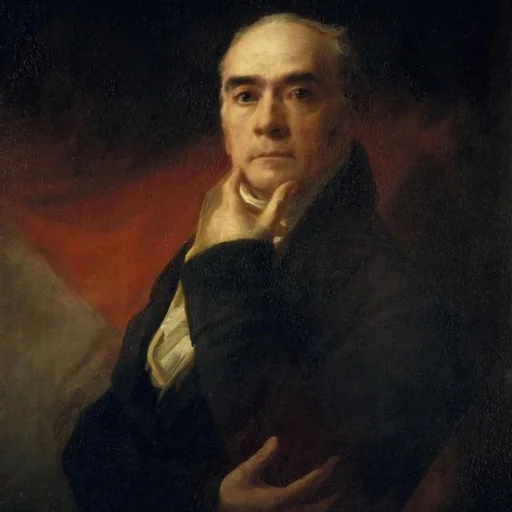
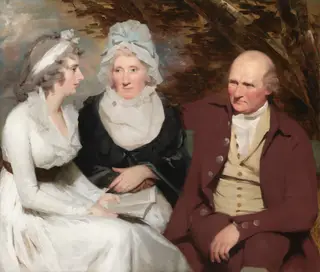
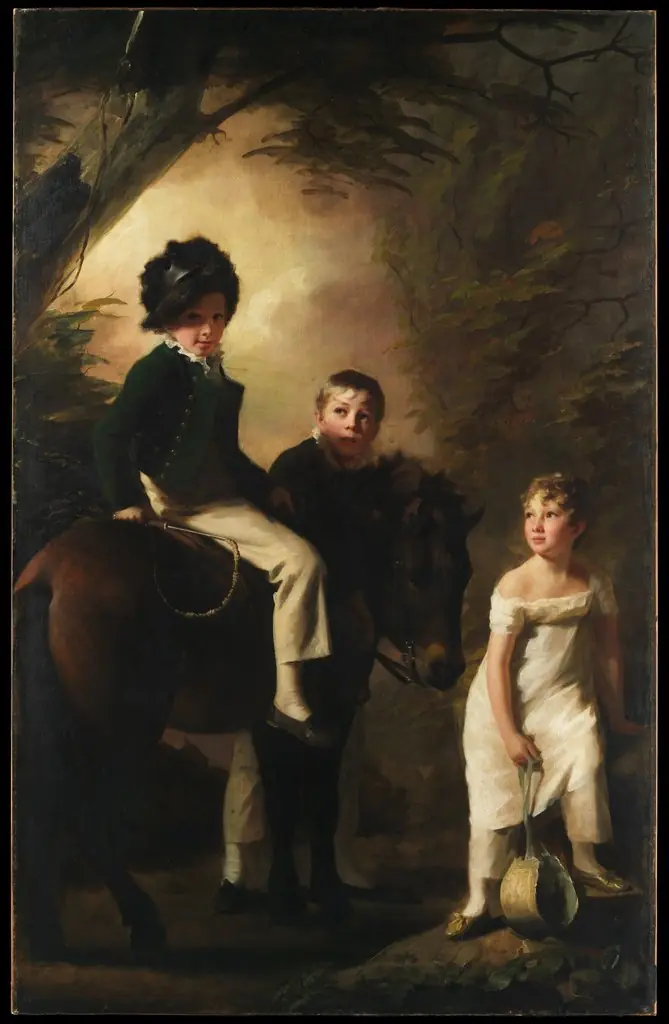
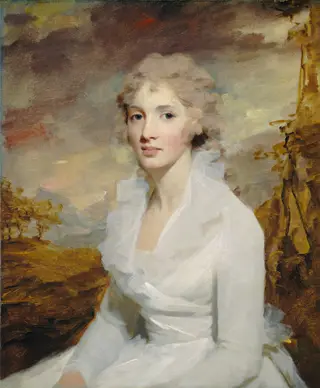
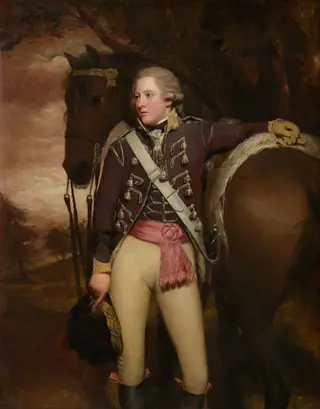
Sir Henry Raeburn (; 4 March 1756 – 8 July 1823) was a Scottish portrait painter. He served as Portrait Painter to King George IV in Scotland.

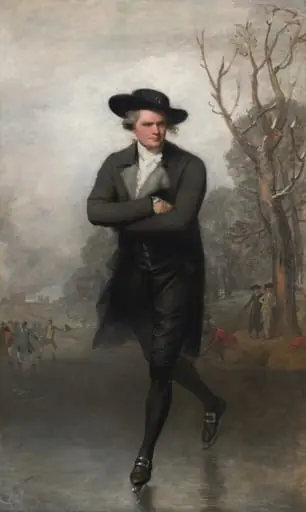
- The Skater (Portrait of William Grant)
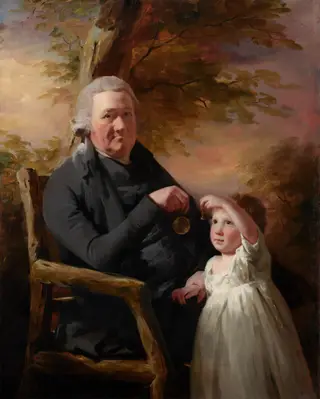
 John Musters
 Portrætskitse. Maleren N.A. Abildgaard (?).
 The Curlers
 Skaters on the Serpentine in Hyde Park
 Portrætskitse. Maleren N.A. Abildgaard (?).
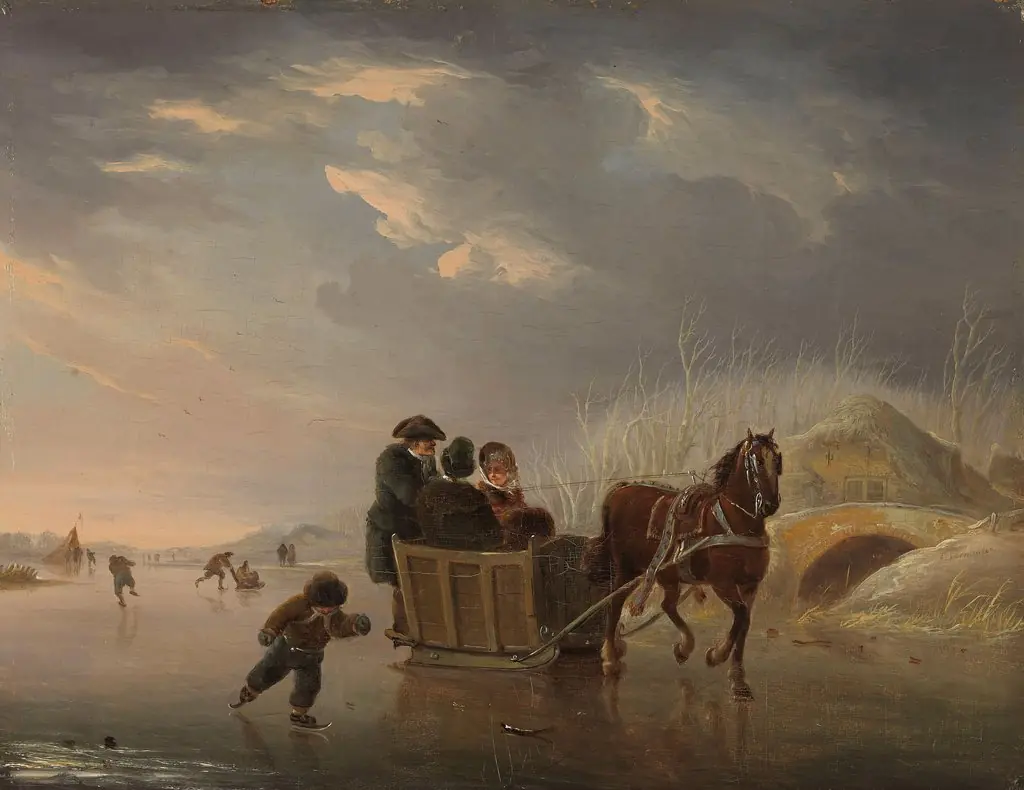 Winter Scene (Horse-Sleigh on the Ice)
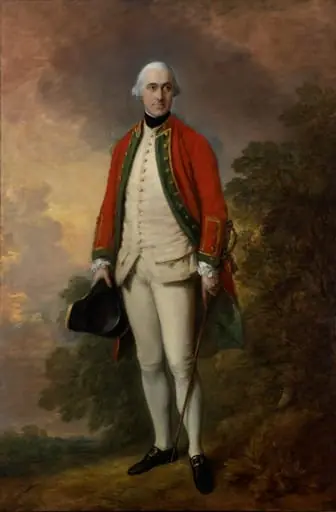 Portrait of George Pitt, First Baron Rivers
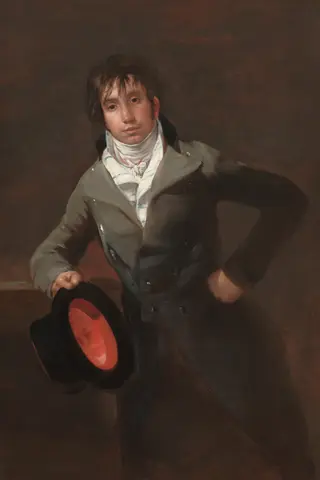 Bartolomé Sureda y Miserol
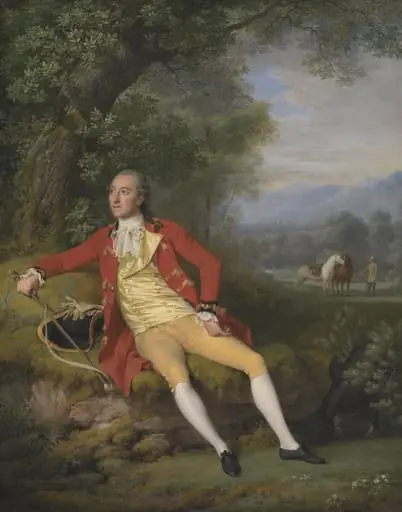 Portrait of an Envoy to the French and English Courts
 Portrait of George Pitt, First Baron Rivers
 On the Ice