Artwork
Le Pont Neuf
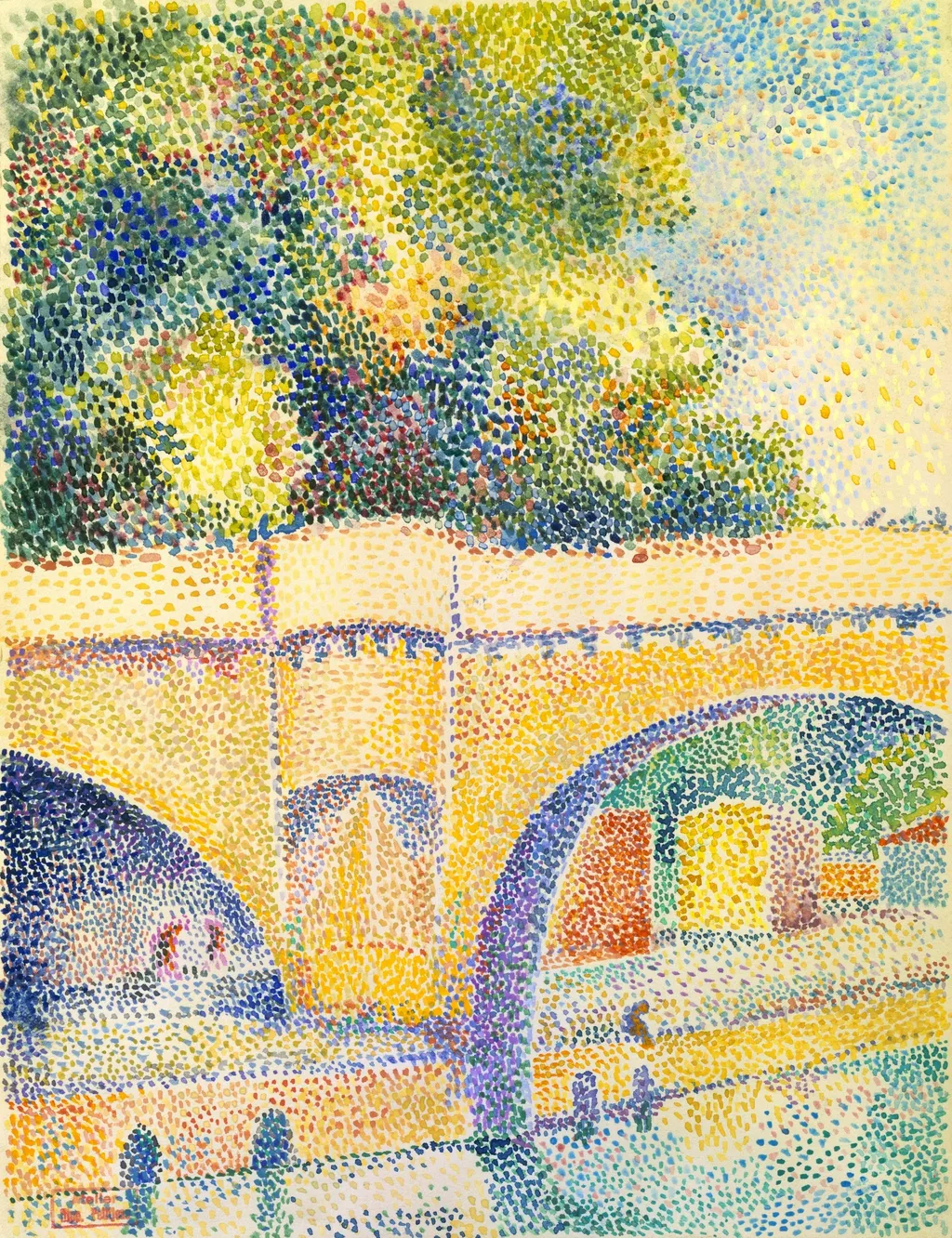
Le Pont Neuf is an unspecified painting by the Pointillist artist Hippolyte Petitjean. It dates from 1912 and is held in the collection of the Metropolitan Museum of Art.
About this work
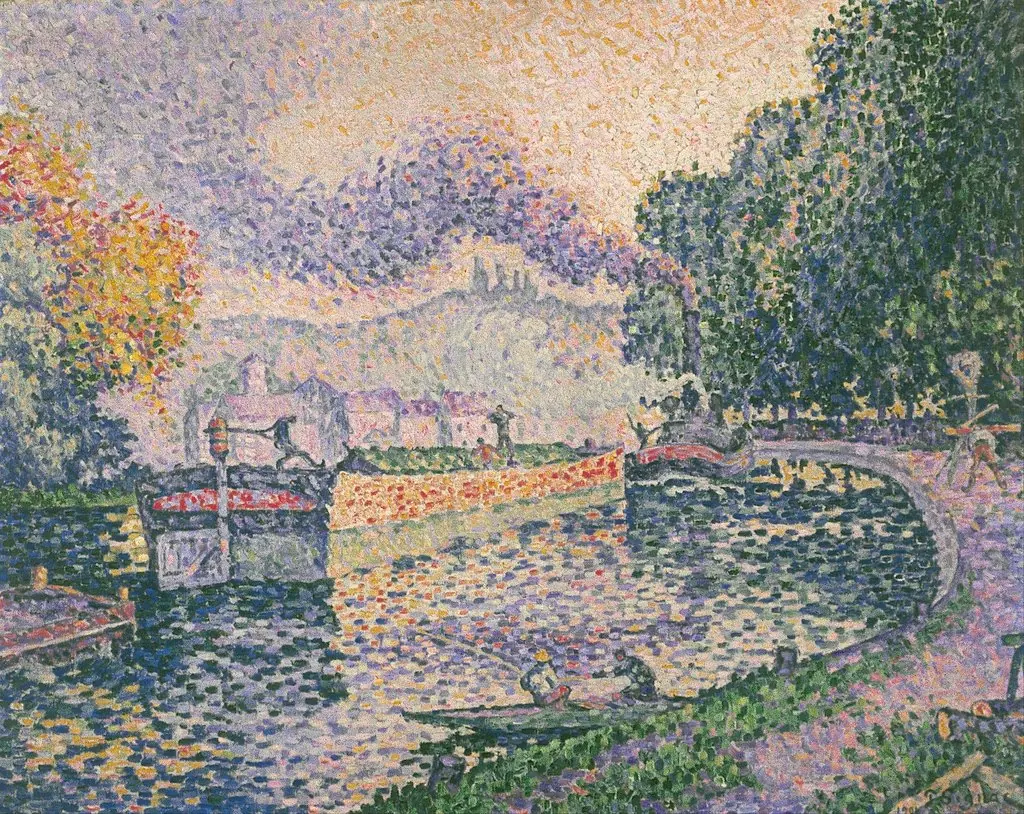
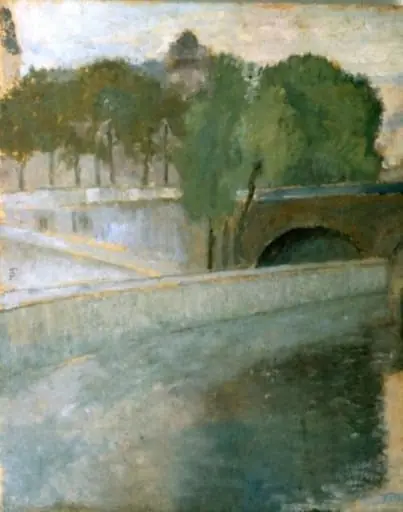
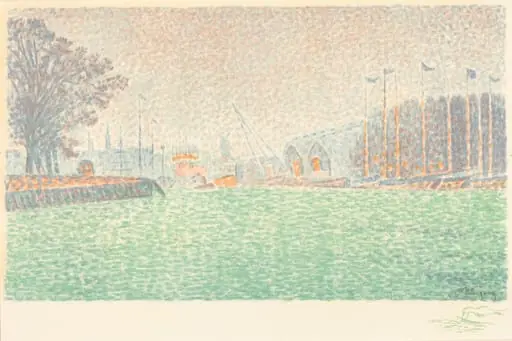
The Pont Neuf spans a river, a single tree at its left, the whole scene built from small dots of color in the pointillist manner against a blue, lightly clouded sky. Hippolyte Petitjean worked blues, greens, and yellows into a sense of depth in 1912, the dotted surface seeming to vibrate with movement and energy.
Subject & Meaning
The inclusion of the tree introduces a natural element that softens the urban atmosphere, suggesting a harmonious coexistence between nature and the city.
The painting Le Pont Neuf (1912) by Hippolyte Petitjean portrays the historic Parisian bridge spanning the Seine, accompanied by a solitary tree and the river's flow. By rendering this well-known urban landmark, the work engages with the city's architectural heritage while emphasizing early twentieth-century notions of modernity and continuity. The inclusion of the tree introduces a natural element that softens the urban atmosphere, suggesting a harmonious coexistence between nature and the city.
The image functions as a visual meditation on Parisian identity, reflecting early twentieth-century artistic interest in everyday cityscapes.
History & Provenance
The work was created in 1912 by Hippolyte Petitjean. It was acquired by Robert Lehman, whose collection later formed the core of the Robert Lehman Collection at the Metropolitan Museum of Art in New York. The painting entered the museum's holdings upon Lehman's bequest in 1969, where it remains.
The painting depicts the Pont Neuf, the Seine, and surrounding trees, and measures approximately 63.5 x 48.3 cm.
Legacy
Hippolyte Petitjean's 1912 painting Le Pont Neuf is part of the Metropolitan Museum of Art's Robert Lehman Collection. Its depiction of the Pont Neuf and the Seine captures a specific urban view of Paris in the early twentieth century, offering an example of Neo-Impressionist engagement with the Parisian cityscape.
Overview
Hippolyte Petitjean, a French Post-Impressionist, created Le Pont Neuf in 1912, employing the distinctive pointillist method. This painting captures the historic Pont Neuf bridge in Paris, spanning the Seine River, with a prominent tree framing the left side of the composition. The artwork exemplifies Petitjean's commitment to the precise application of small, distinct color dots, a technique he embraced during his career. It is currently housed in The Metropolitan Museum of Art.
Technique & Style
Petitjean executed Le Pont Neuf using pointillism, a technique characterized by applying small, unmixed dots of color directly to the canvas. These individual specks optically blend when viewed from a distance, creating luminous hues and forms. The artist utilized a palette rich in blues, greens, and yellows to convey depth and atmosphere.
This methodical application imbues the surface with a visual texture, contributing to a sense of vibrancy within the scene.
Own this work as a print
Artist & collection
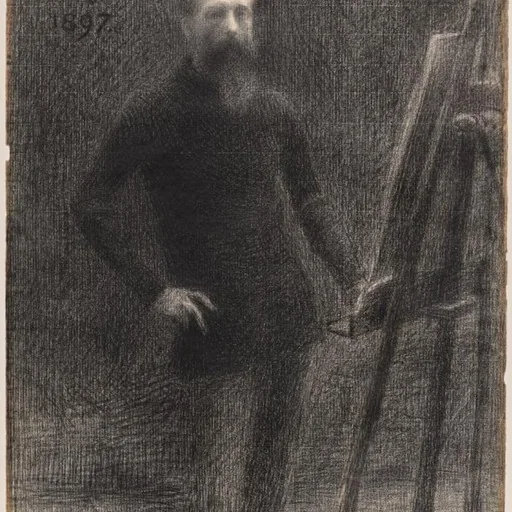
Artist
Hippolyte Petitjean (French pronunciation:; 11 September 1854, Mâcon – 18 September 1929, Paris) was a French Post-Impressionist painter who practiced the technique of pointillism.