Artwork
Plate 36: Two Spotted Hounds
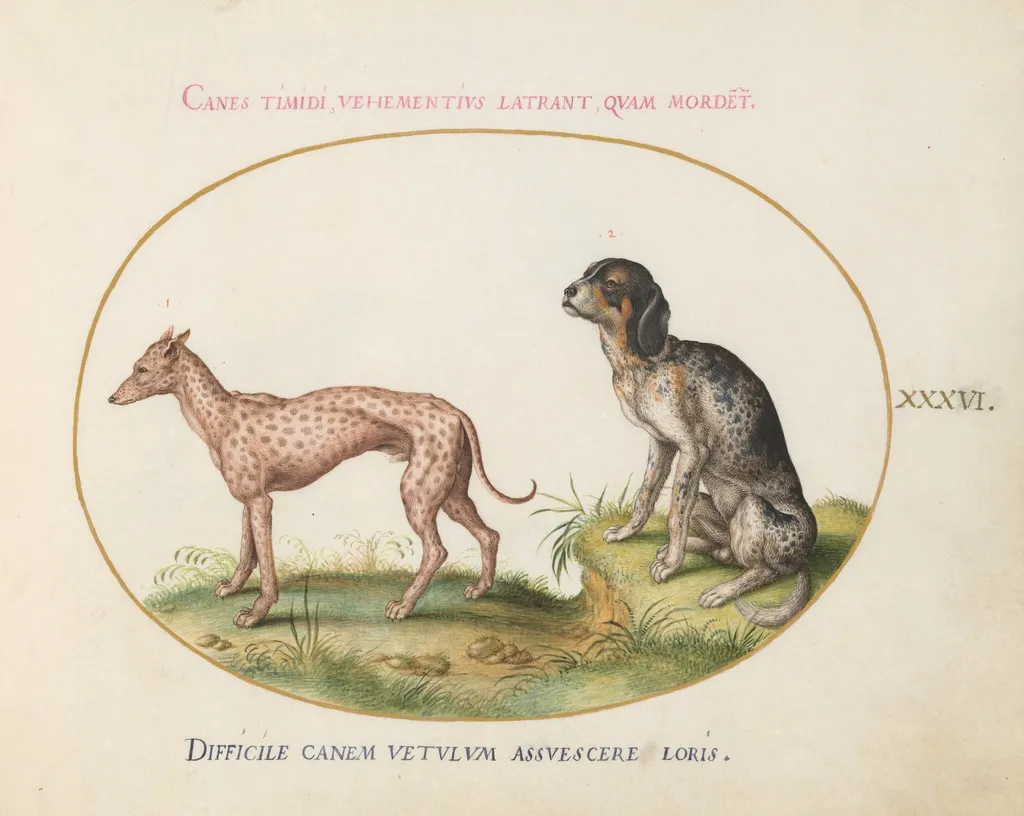
Plate 36: Two Spotted Hounds is a gouache drawing by the Renaissance artist Joris Hoefnagel. It dates from 1594 and is held in the collection of the National Gallery of Art.
- Inscription
- Inscribed:upper center in light red ink: CANES TIMIDI, VEHEMENTIVS LATRANT, QVAM MORDE[N]T (Frightened dogs bark the loudest); center right in black ink: XXXVI; animals in image numbered .1. and .2., in red ink; lower center in black ink: DIFFICILE CANEM VETVLVM ASSVESCERE LORIS. (It is hard to accustom an old dog to a leash) Facing page: upper center in brown ink: Acer odoratu sequitur Canis o[m/n]ia naso (With its keen nose, a dog follows every scent); lower center in brown ink: Non anis ancupibus monstrat, qua parte petatur: / Non docet infestos, currere cerva Canes.
About this work
Overview
Plate 36: Two Spotted Hounds is a watercolor and gold paint drawing on parchment created by Joris Hoefnagel around 1594.
Subject & Meaning
The drawing depicts two spotted dogs standing and sitting on a grassy patch, rendered with attention to their coats and alert expressions. Latin text at the top likely provides a description of the animals.
Technique & Style
Hoefnagel's precise and detailed study of the dogs reflects his background as a natural history illustrator and manuscript illuminator. The use of gold paint and a circular frame adds to the work's decorative quality.
Context
As a Flemish artist working in the late 16th century, Hoefnagel's work contributed to the development of natural subject painting in northern Europe.
Own this work as a print
Artist & collection

Artist
Joris Hoefnagel or Georg Hoefnagel (1542 – 24 July 1601) was a Flemish painter, printmaker, miniaturist, draftsman and merchant.

 Forum Vulcani: The Hot Springs at Pozzuoli
 Plate 76: Insects with a Pink and Cream Columbine
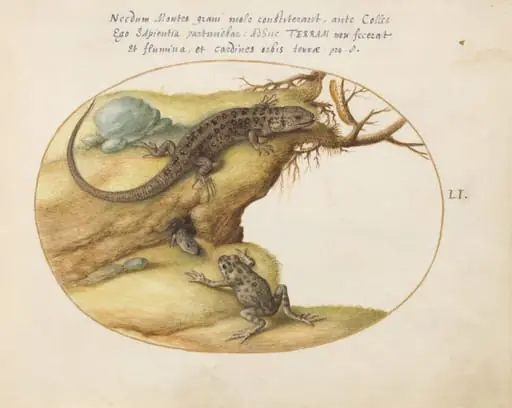 Plate 51: Two Sand Lizards, a Common Parsley Frog(?), and a Caterpillar
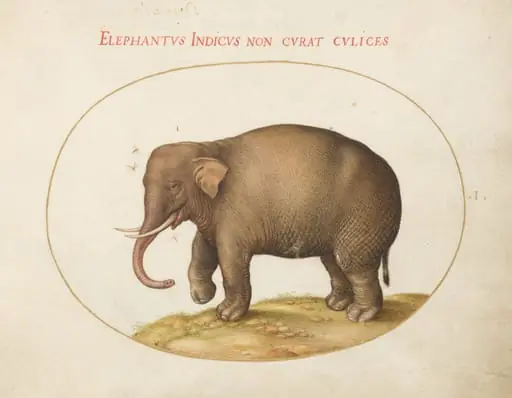 Plate 1: Elephant with Insects
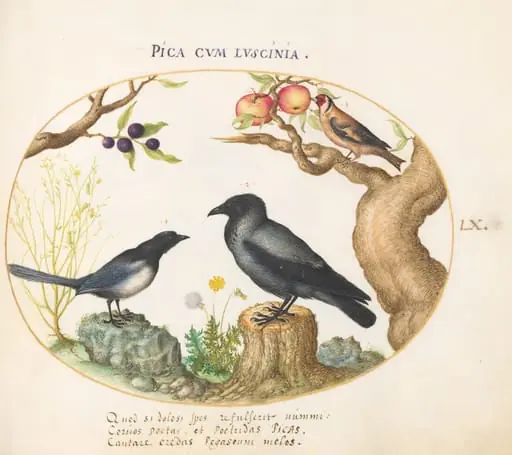 Plate 60: Magpie, Crow, and Goldfinch
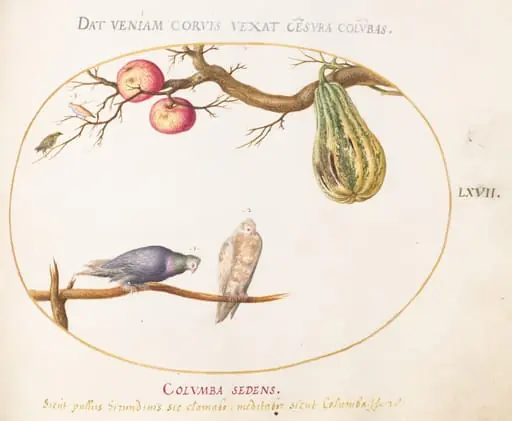 Plate 67: Two Doves beneath a Gourd and Apples
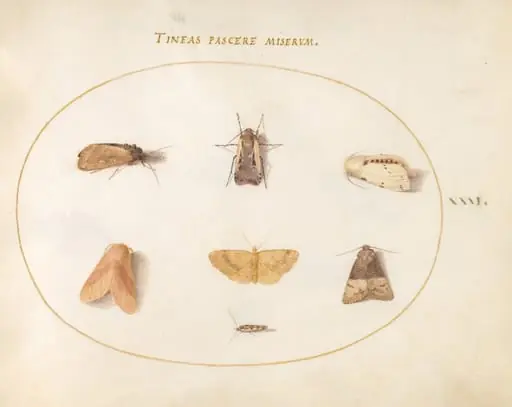 Plate 31: Seven Moths
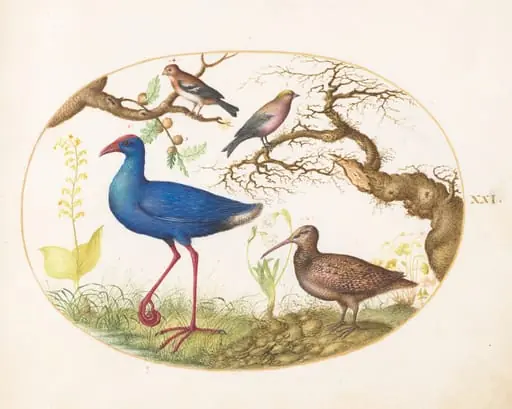 Plate 21: Swamp Hen and Woodcock with a Streaked Rosefinch, a Finch, and Oak Galls
- Plate 35: A Hound and a Water Spaniel
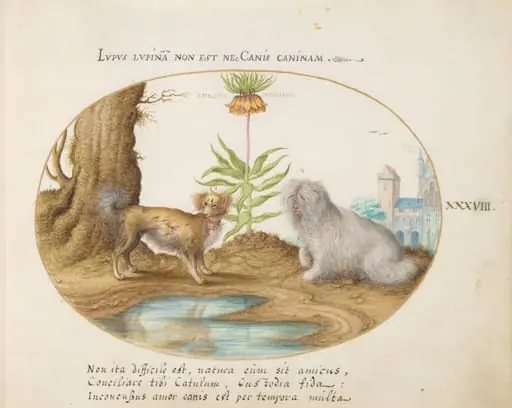 Plate 38: Two Small Dogs with a Crown Imperial
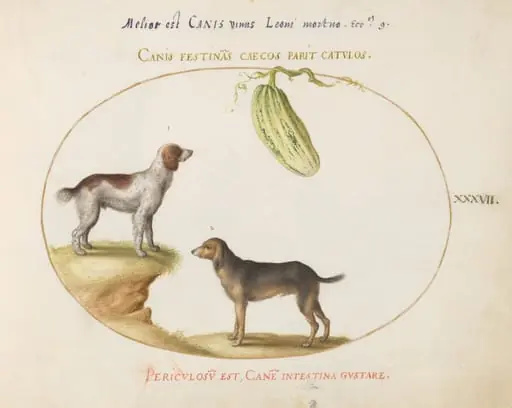 Plate 37: Two Spaniels with a Gourd
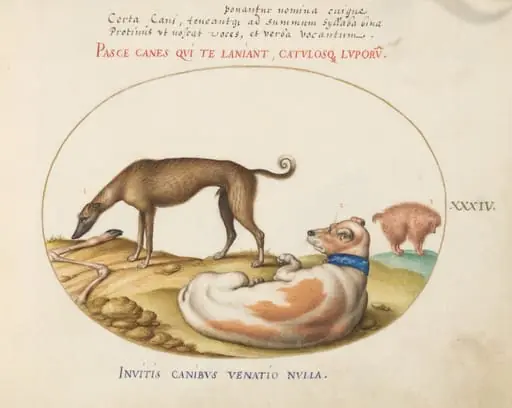 Plate 34: Three Dogs, Including a "Mimick"
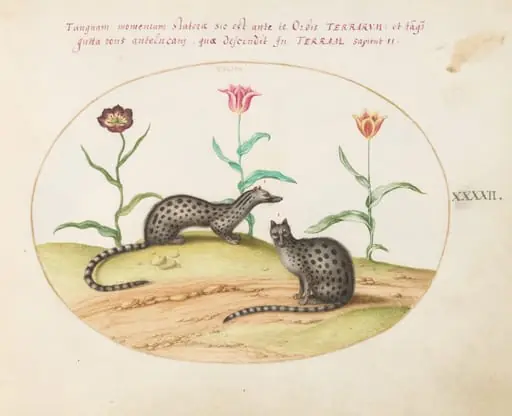 Plate 42: Two Genets or Civet Cats with Tulips
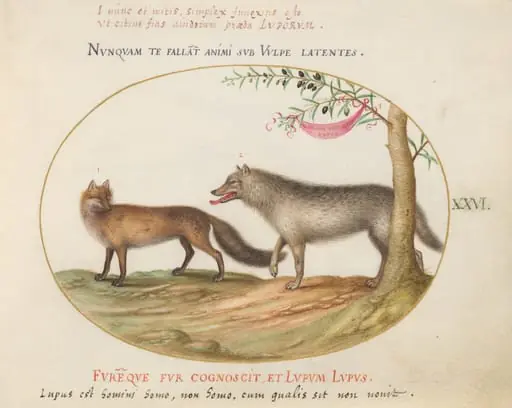 Plate 26: A Red Fox and a Wolf
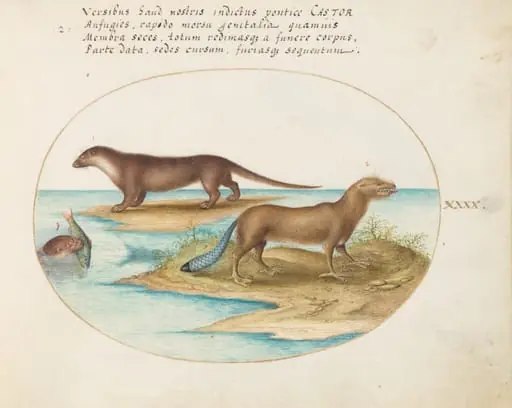 Plate 40: Two Otters and a Beaver
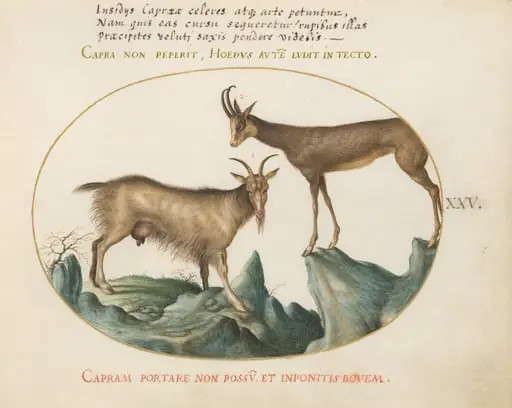 Plate 25: Two Wild Goats
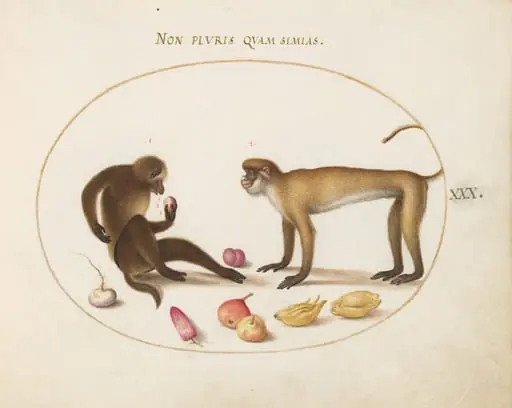 Plate 30: Two Monkeys
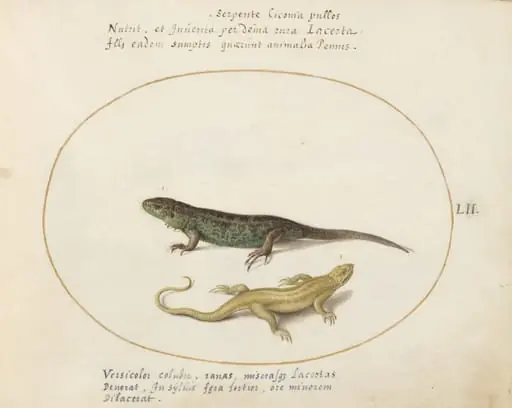 Plate 52: Two Sand Lizards