Artwork
Plate 52: Two Sand Lizards
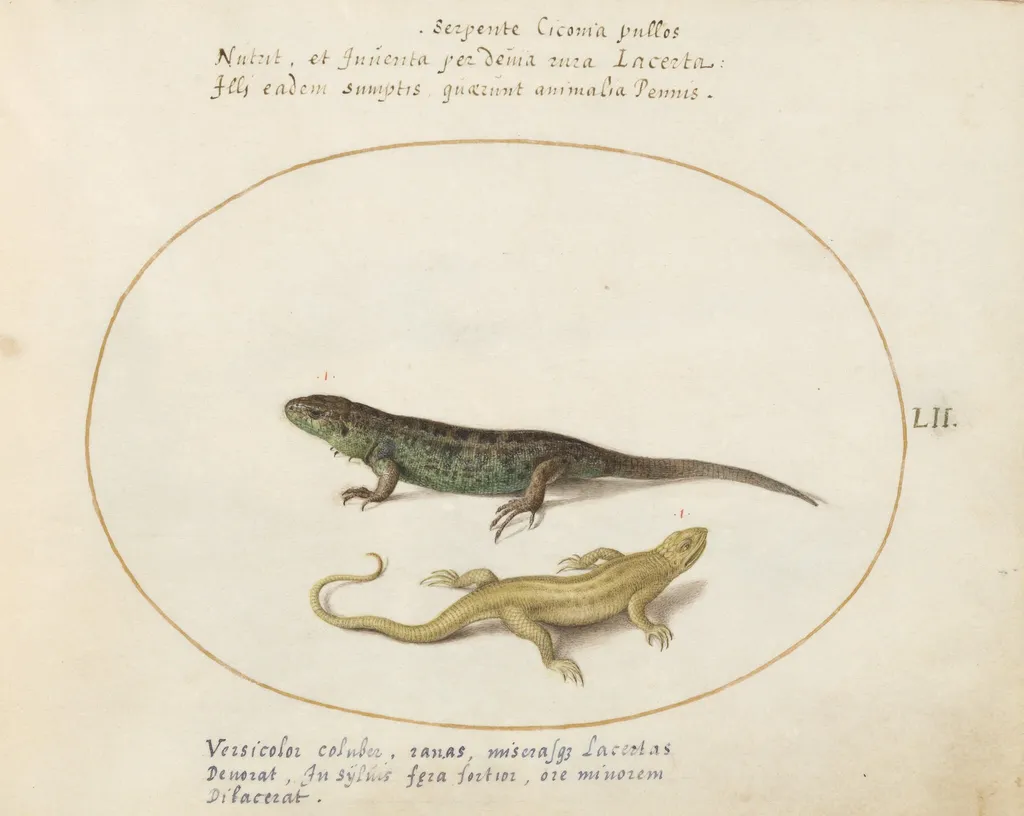
Plate 52: Two Sand Lizards is a gouache drawing by the Renaissance artist Joris Hoefnagel. It dates from 1594 and is held in the collection of the National Gallery of Art.
- Inscription
- Inscribed:upper center in brown ink: .Serpente Ciconia pullos / Nutrit, et Inventa per devia rura Lacerta: / Illi eadem sumptis, quaerunt animalia Pennis. (“The stork feeds its young with the snake and with the lizard found in distant country. When they are fledged, they seek out the same animals [on the lizard].)” (trans. Vignau-Wilberg 1994, 73).; right center in brown/black ink: LII.; animals in image numbered .1., in red ink; lower center in blue/black ink: Versicolor coluber, ranas, miserasq[ue] Lacertas / Devorat, In sylvis foera fortior, ore minorem / Dilacerat. (“The colorful snake devours frogs and wretched lizards; in the woods the wild beast, being stronger, tears the smaller beast to shreds.”) (trans. Vignau-Wilberg 1994, 64) Facing page: upper center in brown ink: Sed cunctas species animantum nemo notavit:/ Atq[ue] sonos ideo dicere quis poterit?; lower center in violet ink: Auxilium meum a Domino: qui fecit / Coelum et TERRAM. ps.120. (“My help comes from the Lord, who made heaven and earth.” Psalms 120:2) (Latin Vulgate Bible)
About this work
Overview
Plate 52: Two Sand Lizards is a watercolor and gold paint work on parchment created by Joris Hoefnagel around 1594. It exemplifies the artist's skill in naturalistic illustration and his contribution to the development of detailed, observational art.
Subject & Meaning
The work depicts two sand lizards, one green and one yellow, set against a plain white background, surrounded by a thin gold circle. The lizards are rendered in meticulous detail, capturing the texture of their skin and subtle shading that conveys depth.
Technique & Style
Hoefnagel's use of watercolor and gold paint showcases his technical proficiency. The gold paint adds a luxurious touch, while the watercolor allows for delicate, detailed rendering of the lizards. The artist's attention to detail reflects his background in natural history illustration and manuscript illumination.
History & Provenance
As one of the last manuscript illuminators, Hoefnagel brought his expertise to the emerging genre of floral still-life painting in northern Europe. Created around 1594, Plate 52: Two Sand Lizards is a product of this transitional period in the artist's career.
Own this work as a print
Artist & collection

Artist
Joris Hoefnagel or Georg Hoefnagel (1542 – 24 July 1601) was a Flemish painter, printmaker, miniaturist, draftsman and merchant.

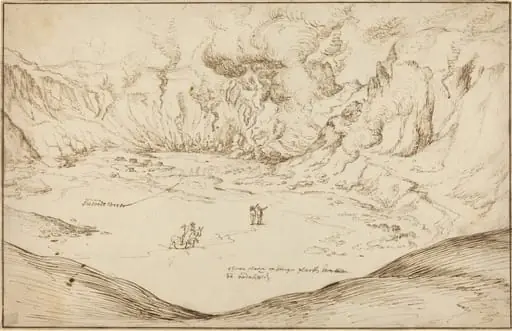 Forum Vulcani: The Hot Springs at Pozzuoli
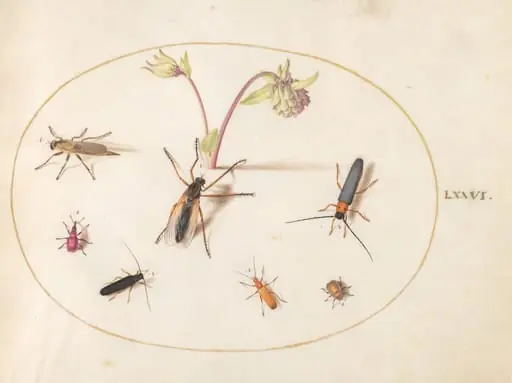 Plate 76: Insects with a Pink and Cream Columbine
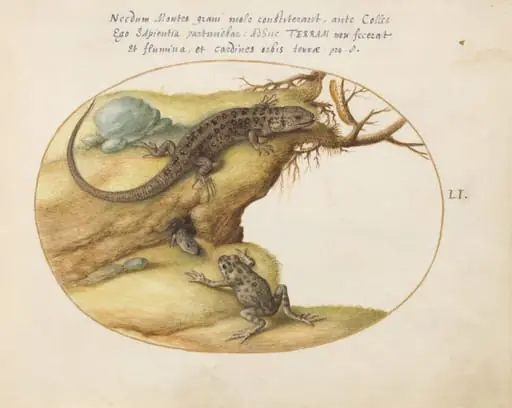
- Plate 51: Two Sand Lizards, a Common Parsley Frog(?), and a Caterpillar
 Plate 1: Elephant with Insects
 Plate 60: Magpie, Crow, and Goldfinch
 Plate 67: Two Doves beneath a Gourd and Apples
 Plate 31: Seven Moths
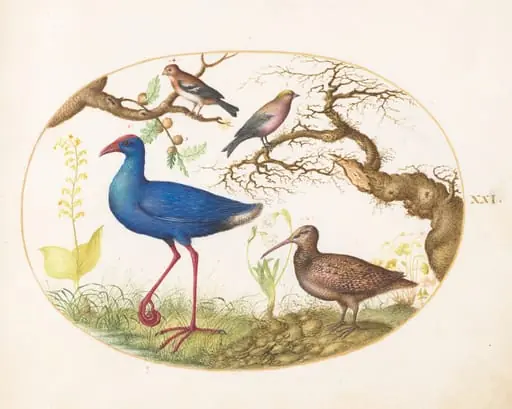 Plate 21: Swamp Hen and Woodcock with a Streaked Rosefinch, a Finch, and Oak Galls
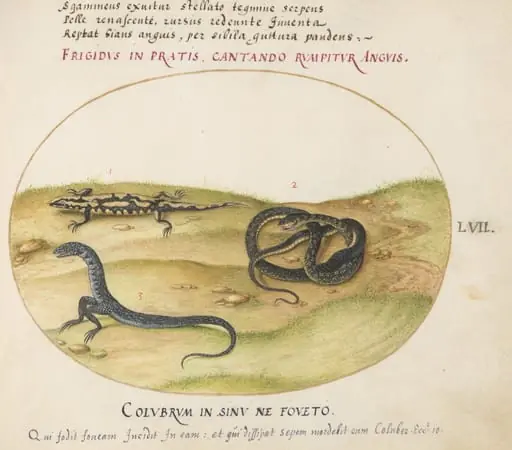 Plate 57: A Snake, a Fire Salamander, and a Snakelike Creature with Two Legs
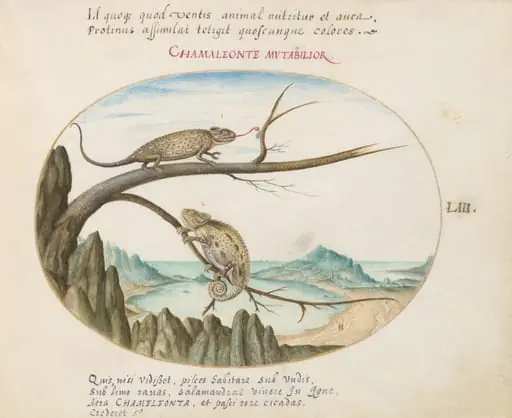 Plate 53: Two Common or Mediterranean Chameleons above San Sebastián, Spain
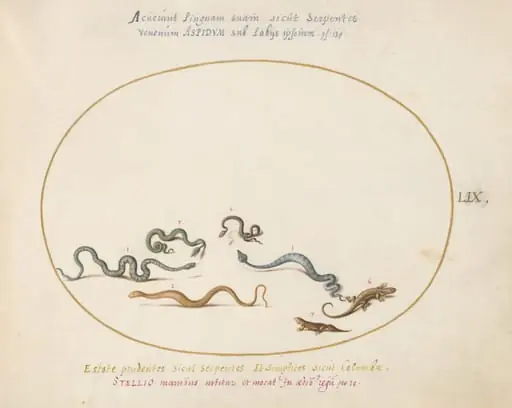 Plate 59: Snakes and a Lizard
 Lizard
 Plate 50: A Crocodile, a Hippopotomus, a Land Crocodile or Tegu Lizard(?), and a Crocodile or Spiny-Tailed Lizard with a Papyrus Plant
 The Lyon Lizard (Lacerta 6-lineata)
 Plate 60: Four Small Snakes
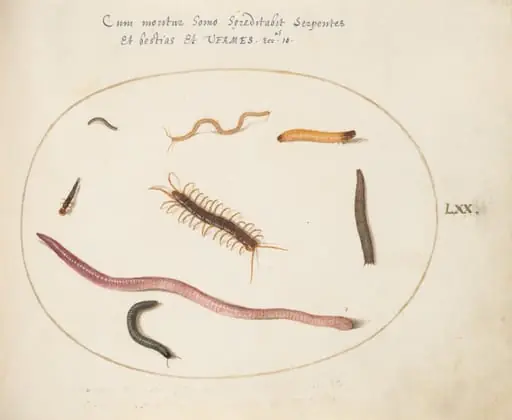 Plate 70: Worm, Centipede, Millipede, and Other Long Creatures
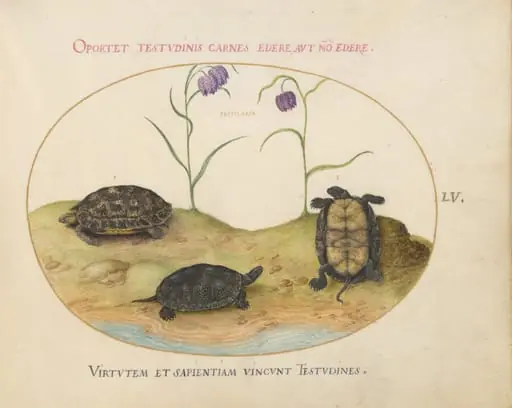 Plate 55: A Hermann's or Greek Tortoise, Two European Pond Turtles, and Two Fritillaria
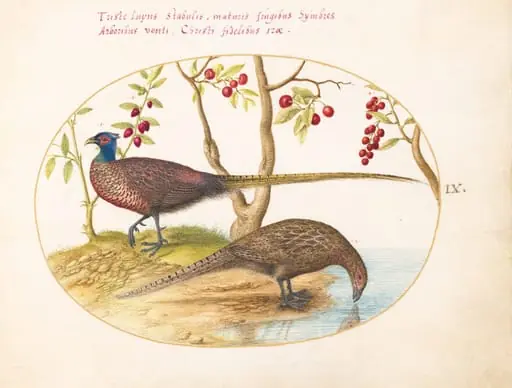 Plate 9: Two Pheasants with Fruiting Plants
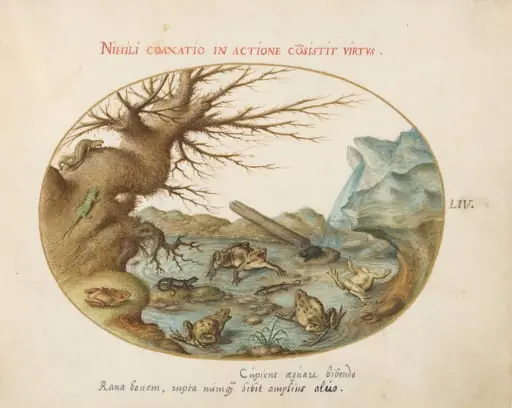 Plate 54: Frogs, Lizards, and Salamanders(?) in a Landscape