Artwork
Plate 58: Asps and Vipers
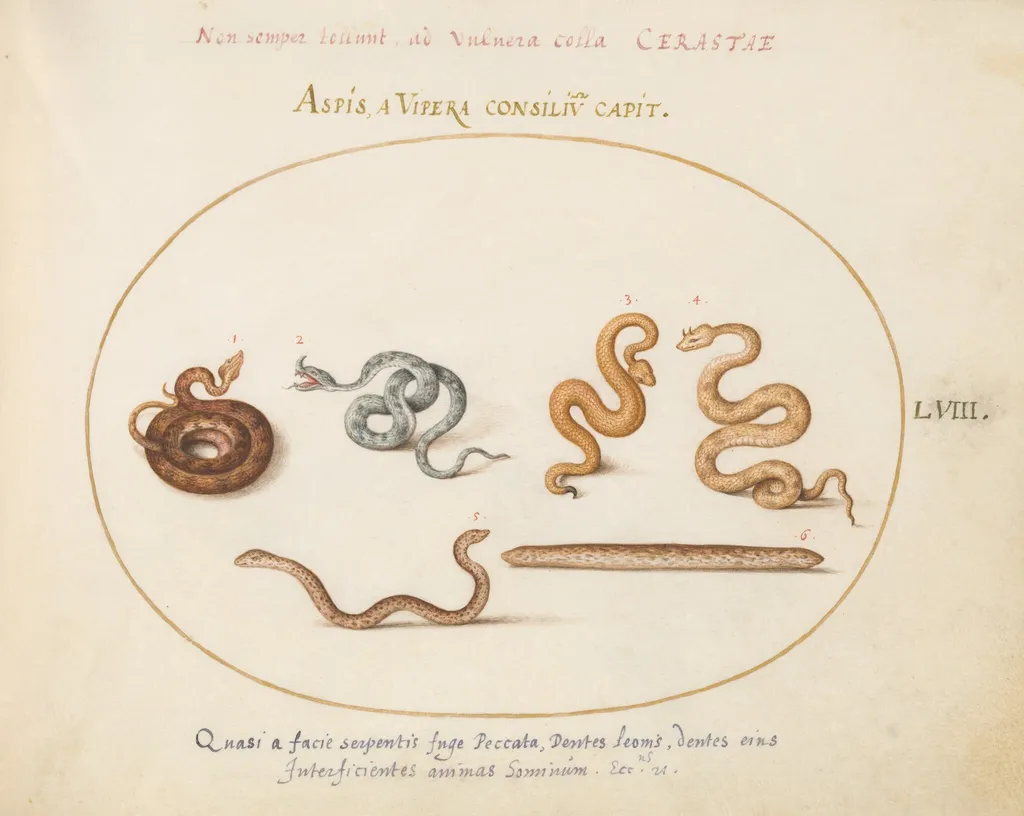
Plate 58: Asps and Vipers is a gouache drawing by the Renaissance artist Joris Hoefnagel. It dates from 1594 and is held in the collection of the National Gallery of Art.
- Inscription
- Inscribed:upper center in red ink: Non semper tollunt, ad vulnera colla CERASTAE; upper center in (gold?): ASPIS, A VIPERA CONSILIV[M] CAPIT.; center right in brown ink: LVIII; animals in image numbered .1., .2., .3., .4., 5., and .6., in red ink; lower center in black/violet: Quasi a facie serpentis fuge Peccata, Dentes leonis, dentes eius / Interficientes animas hominum.Ecc[us].21. (“Flee from sin as from the face of a serpent: the teeth are as the teeth of a lion, slaying the souls of man.” Ecclesiasticus 21: 2 and 3) (Latin Vulgate Bible) Facing page: upper center in brown ink: Qui legitis flores et humi nascentia fragra: / Frigidus, o pueri, fugite hinc latet Anguis in herba.; lower center in brown ink: Parva necat morsu spatiosum Vipera Taurum / A cane non magno saepe tenetur Aper.
About this work
Overview
Created circa 1594, Plate 58: Asps and Vipers is a small-scale work executed in watercolor and gold on parchment. The Flemish artist Joris Hoefnagel rendered the serpents with meticulous detail, situating the drawing within his broader corpus of natural‑history illustration.
Subject & Meaning
The image presents a pair of venomous snakes, an asp and a viper, intertwined among foliage. By focusing on these creatures, Hoefnagel highlights both their anatomical features and their symbolic associations with danger and mortality, a common theme in late‑sixteenth‑century emblematic art.
Technique & Style
Hoefnagel employed the fine brushwork of watercolor to achieve delicate shading, while the application of gold paint adds a luminous accent to the scales and background. The rendering balances scientific observation with the ornamental flourish typical of manuscript illumination.
History & Provenance
As one of the final examples of the manuscript illumination tradition, the drawing reflects Hoefnagel’s transition from courtly manuscripts to printed natural‑history volumes. The work has remained within collections of early modern drawings, tracing its ownership through several European libraries before entering its present museum context.
Context
Plate 58 contributes to the emergence of independent flora and fauna studies in northern European art. Hoefnagel’s precise yet decorative approach influenced later naturalists and artists who sought to combine empirical detail with aesthetic refinement in the depiction of the natural world.
Own this work as a print
Artist & collection

Artist
Joris Hoefnagel or Georg Hoefnagel (1542 – 24 July 1601) was a Flemish painter, printmaker, miniaturist, draftsman and merchant.

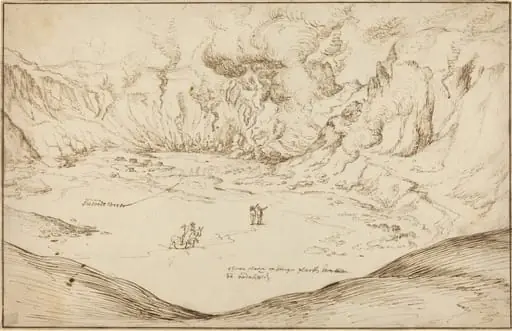 Forum Vulcani: The Hot Springs at Pozzuoli
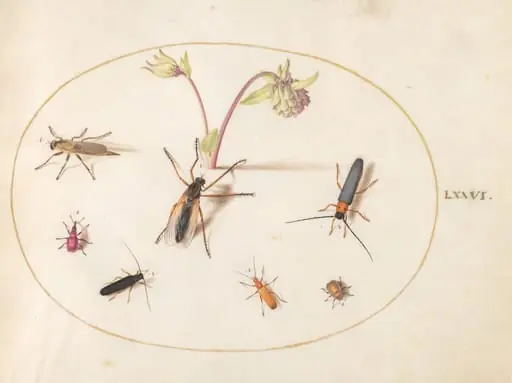 Plate 76: Insects with a Pink and Cream Columbine
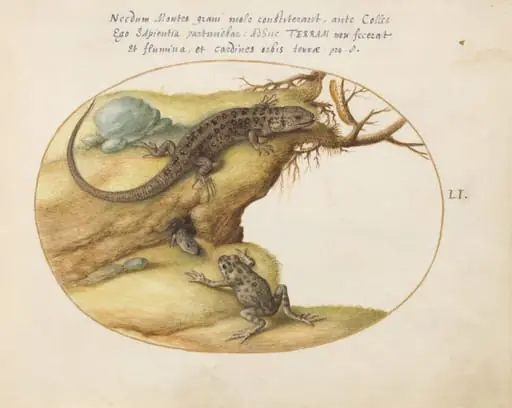 Plate 51: Two Sand Lizards, a Common Parsley Frog(?), and a Caterpillar
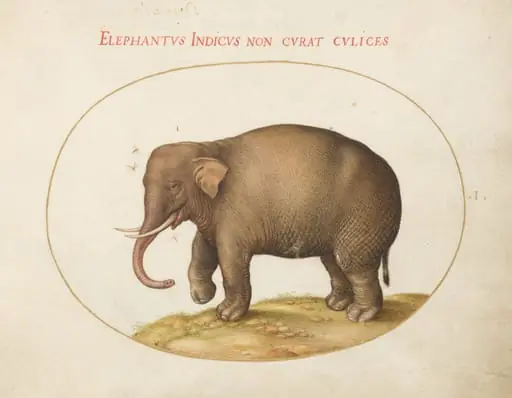 Plate 1: Elephant with Insects
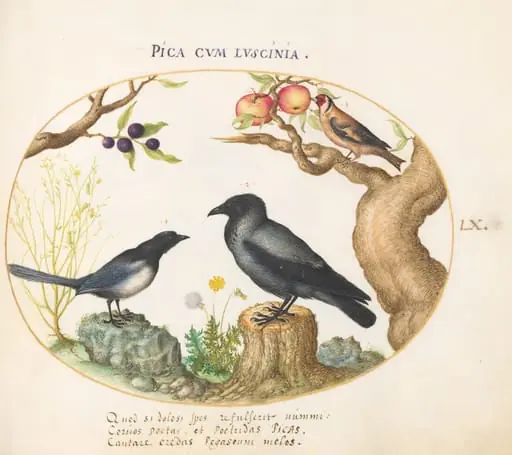 Plate 60: Magpie, Crow, and Goldfinch
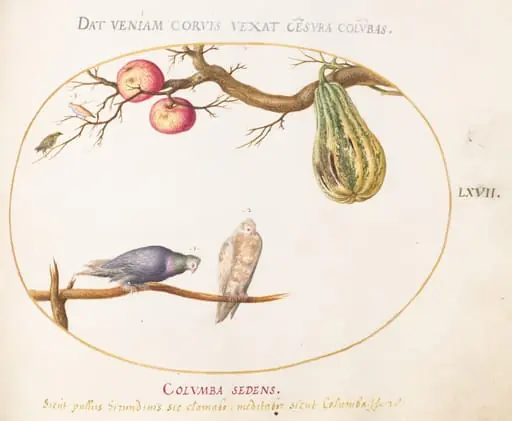 Plate 67: Two Doves beneath a Gourd and Apples
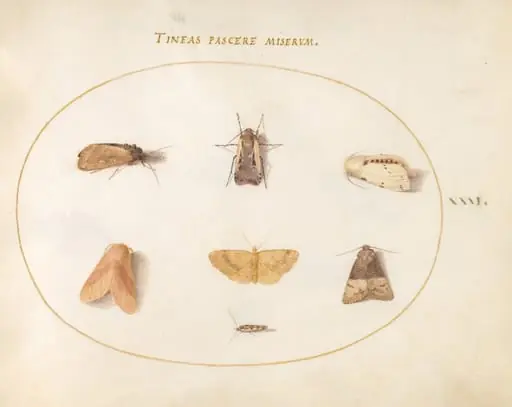 Plate 31: Seven Moths
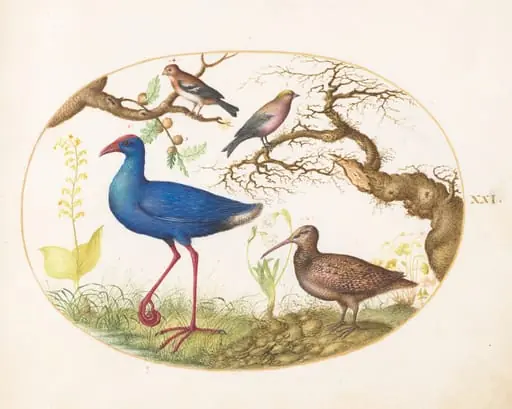 Plate 21: Swamp Hen and Woodcock with a Streaked Rosefinch, a Finch, and Oak Galls
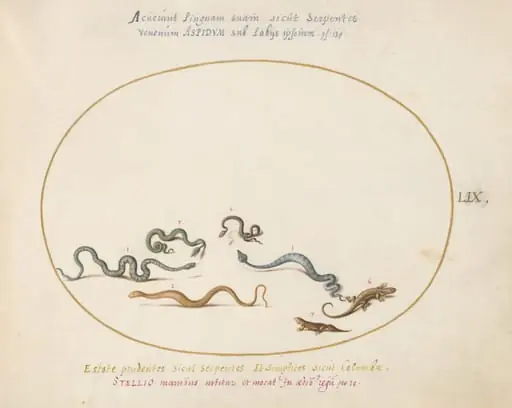
- Plate 59: Snakes and a Lizard
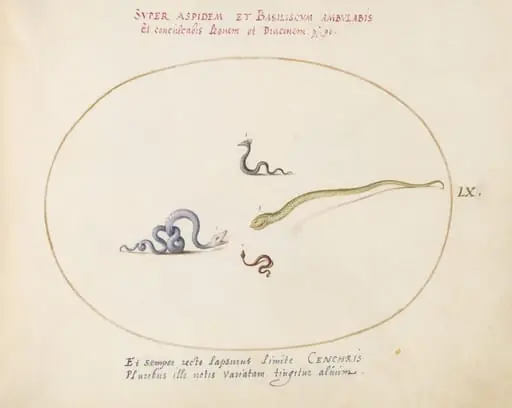 Plate 60: Four Small Snakes
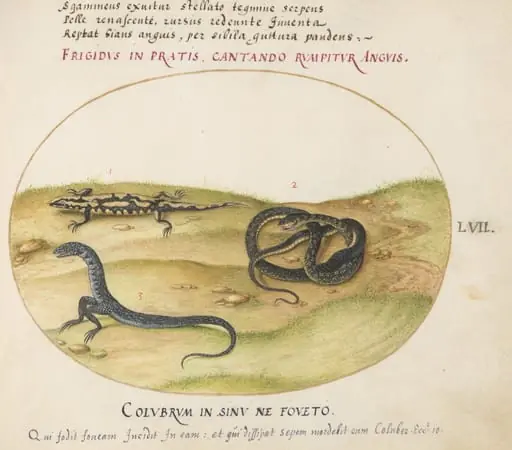 Plate 57: A Snake, a Fire Salamander, and a Snakelike Creature with Two Legs
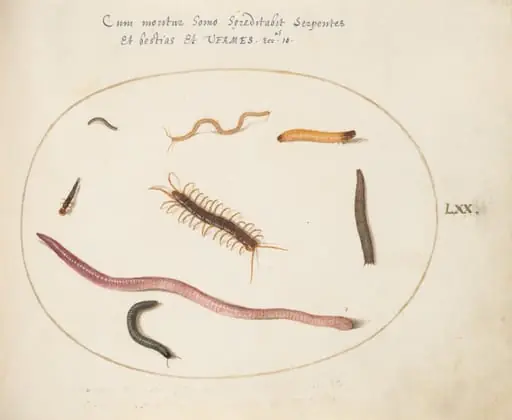 Plate 70: Worm, Centipede, Millipede, and Other Long Creatures
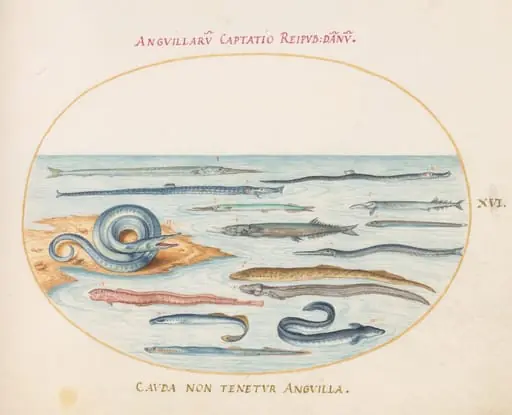 Plate 16: Eels, Pipefish, and Needlefish
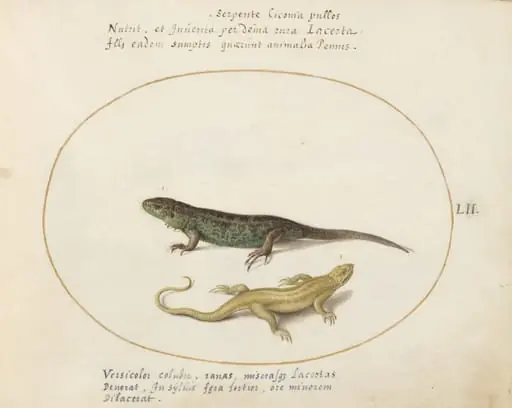 Plate 52: Two Sand Lizards
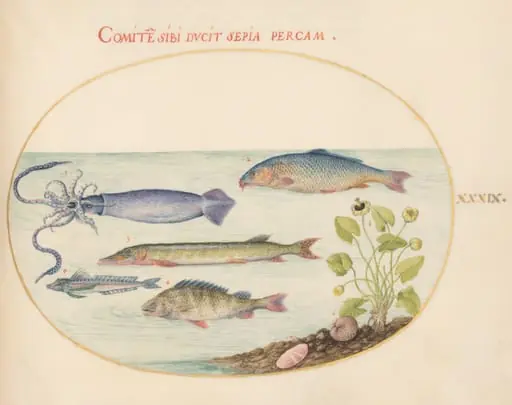 Plate 39: Squid, Gurnard, Pike, and Other Fish
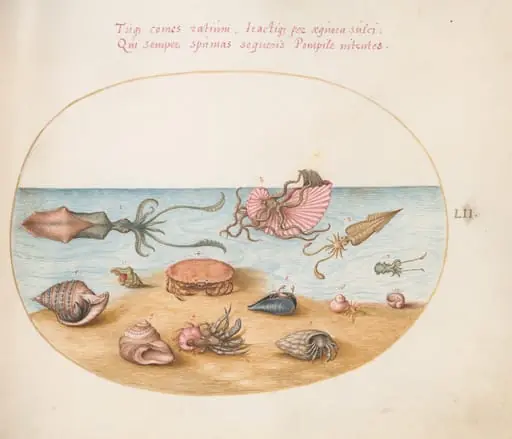 Plate 52: An Argonaut, Squid, Hermit Crabs, Shells, and a Crab
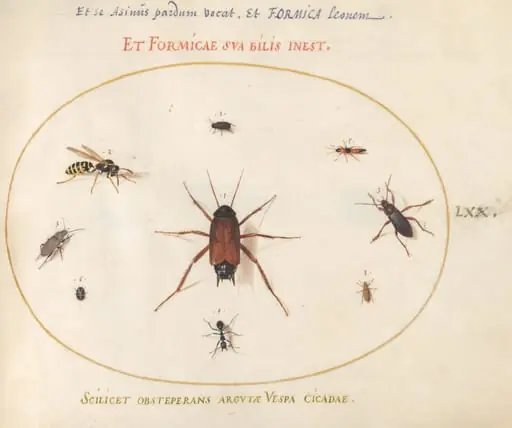 Plate 70: A Roach Surrounded by Insects
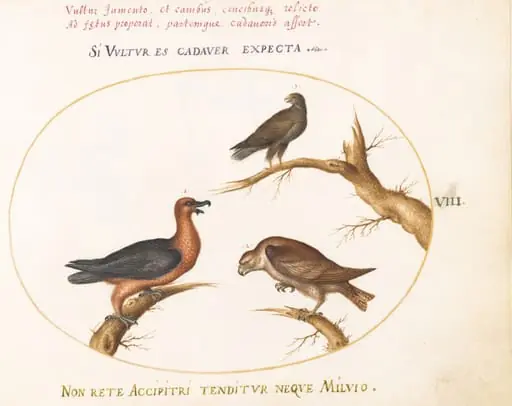 Plate 8: Bearded Vulture with Two Birds of Prey