Artwork
Plate 61: Blue Crow(?), Jackdaw, Chickadee or Tit, and Other Birds
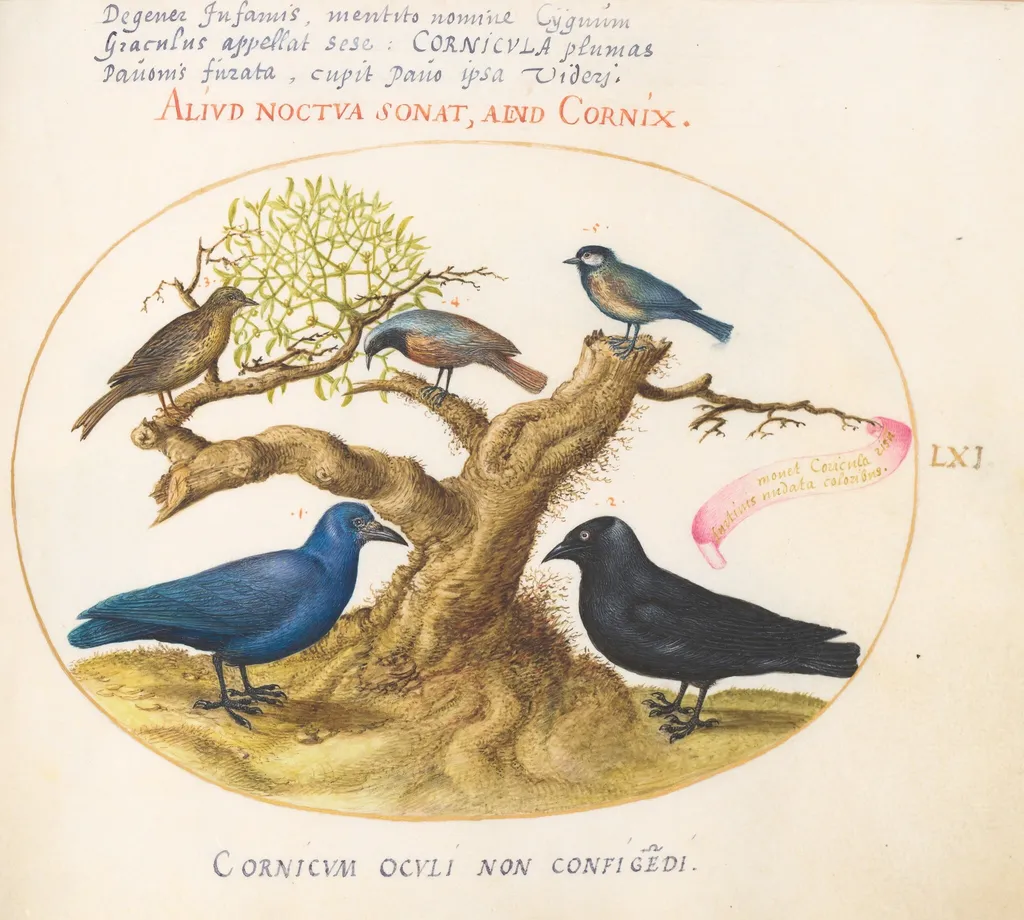
Plate 61: Blue Crow(?), Jackdaw, Chickadee or Tit, and Other Birds is a gouache drawing by the Renaissance artist Joris Hoefnagel. It dates from 1594 and is held in the collection of the National Gallery of Art. Created around 1594, Plate 61: Blue Crow(?
- Inscription
- Inscribed:Upper center in blue/black ink: Degener Infamis, mentito nomine Cygnum / Graculus appellat sese: CORNICVLA plumas / pavonis furata, cupit pavo ipsa videri. / in red ink: ALIVD NOCTVA SONAT, ALIVD CORNIX.; center right in (gold?): LXI; birds in image numbered .1., .2., .3., .4., and .5., in red ink; on banner/scroll at center right of image in (gold?): moveat cornicula risum / furtiuis nudata coloribus.; lower center in blue/black ink: CORNICVLVM OCVLI NON CONFIGE[N]DI. Facing page: upper center in black ink: Vinere Cornices multos dicuntur in annos. / cur nos angusta conditione sumus?; lower center in black ink: Neve domum fabricans, linquas mutila[m]q[ue] rude[m]q[ue], / Ne fors insideat, cornicans garrula Cornix.
About this work
Overview
Created around 1594, Plate 61: Blue Crow(?), Jackdaw, Chickadee or Tit, and Other Birds is a watercolor and gold paint drawing on parchment by Joris Hoefnagel, a Flemish artist renowned for natural history illustrations and manuscript illumination.
Subject & Meaning
The piece depicts five birds of varied species perched on bare branches and a mound of dirt, set against a simple gold background with scattered green leaves. The subjects are rendered with a near-scientific precision, reflecting Hoefnagel’s detailed approach to natural history.
Technique & Style
Hoefnagel employed watercolor and gold paint on parchment, achieving a delicate, luminous effect. The birds are painted in a palette of bright blues, blacks, and earthy browns, with careful attention to the textures and forms of the natural subjects.
History & Provenance
Part of Hoefnagel’s late 16th-century work focusing on topography and natural subjects, this piece contributes to his legacy in influencing northern European still-life painting and detailed flora and fauna depiction.
Context
Within the broader artistic landscape, Plate 61 exemplifies the Flemish contribution to natural history illustration during the late Renaissance, where scientific observation began to merge with artistic practice.
Legacy
This work reflects Hoefnagel’s impact on the development of naturalistic representation in art, bridging scientific accuracy with aesthetic appeal, a hallmark of his contributions to European artistic and scientific discourse.
Own this work as a print
Artist & collection

Artist
Joris Hoefnagel or Georg Hoefnagel (1542 – 24 July 1601) was a Flemish painter, printmaker, miniaturist, draftsman and merchant.

 Forum Vulcani: The Hot Springs at Pozzuoli
 Plate 76: Insects with a Pink and Cream Columbine
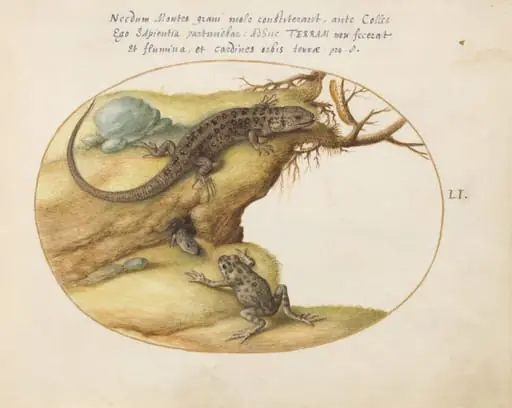 Plate 51: Two Sand Lizards, a Common Parsley Frog(?), and a Caterpillar
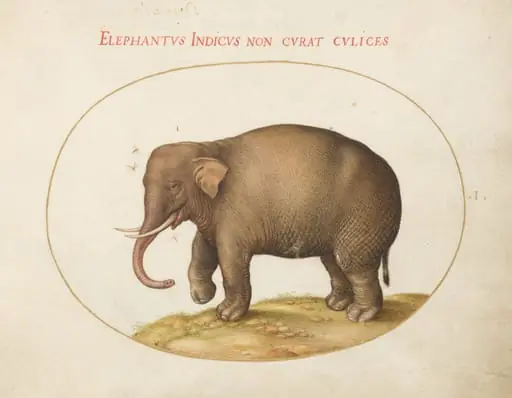 Plate 1: Elephant with Insects
- Plate 60: Magpie, Crow, and Goldfinch
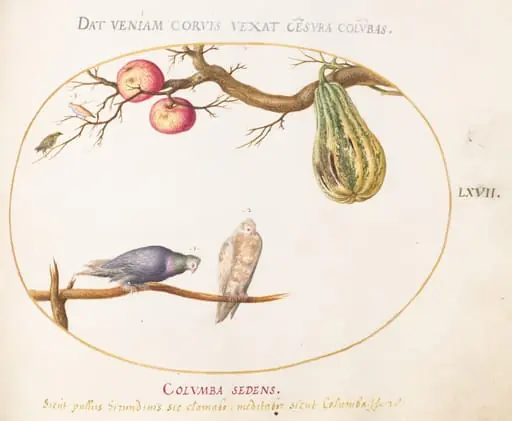 Plate 67: Two Doves beneath a Gourd and Apples
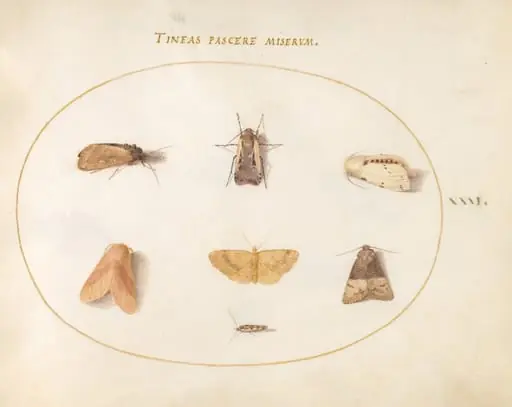 Plate 31: Seven Moths
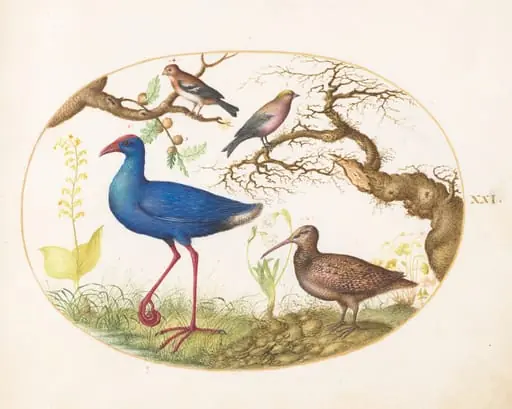 Plate 21: Swamp Hen and Woodcock with a Streaked Rosefinch, a Finch, and Oak Galls
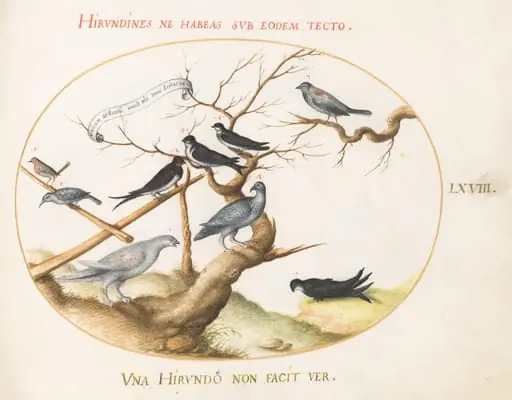 Plate 68: A Ptarmigan, Swallows, and Other Birds
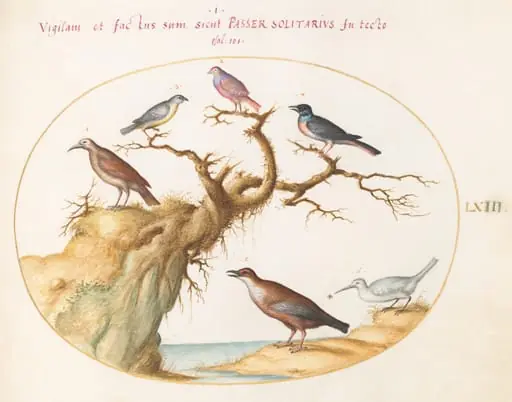 Plate 63: Six Small Birds, Including a Bluethroat and a Cuckoo(?)
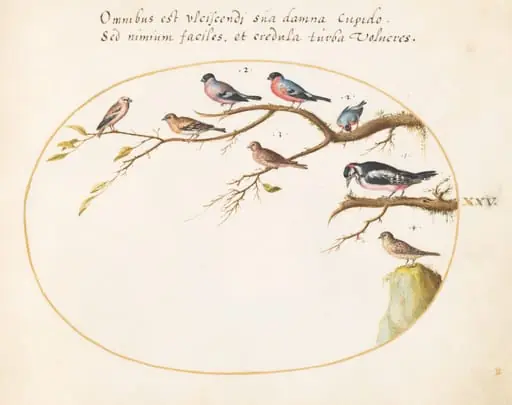 Plate 25: Great Spotted Woodpecker, Bullfinches, Sparrows, and Other Birds
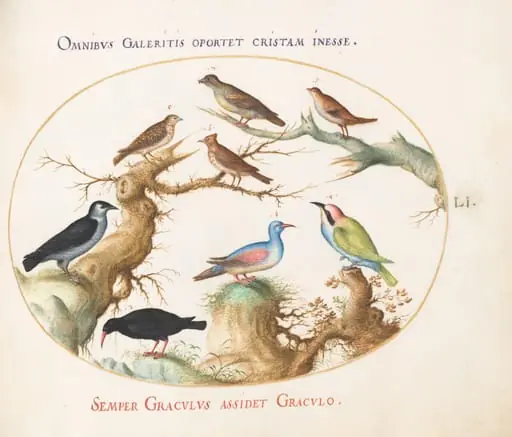 Plate 51: Crossbeak, Chough, Bee-Eater, and Other Birds
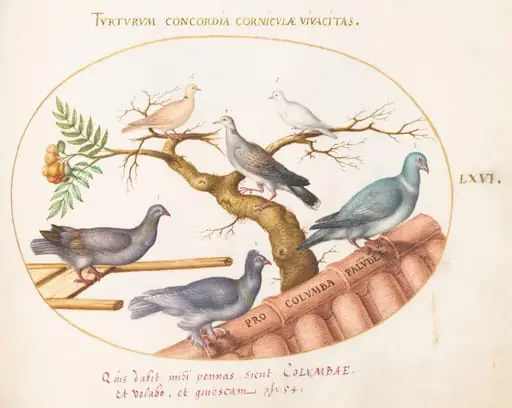 Plate 66: Doves and Pigeons
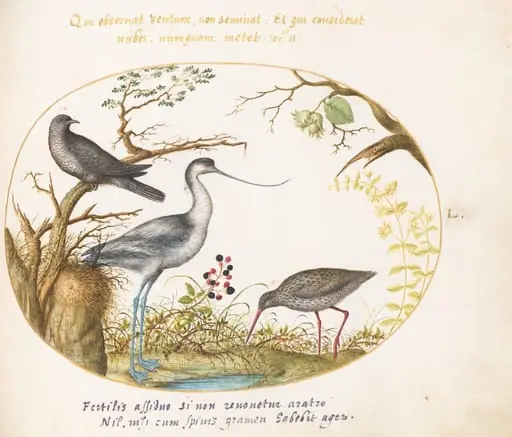 Plate 50: An Avocet with Two Other Birds
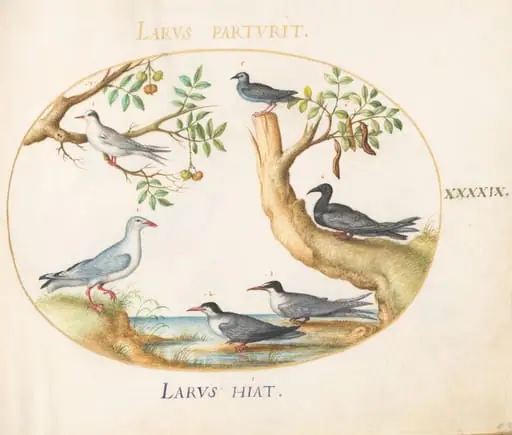 Plate 49: Gulls with a Carob Tree and a Pistachio Tree(?)
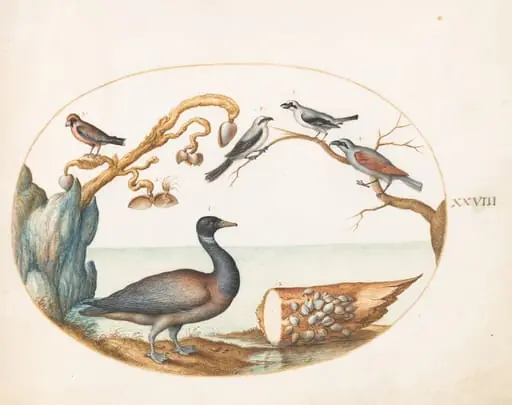 Plate 28: Barnacle Goose with Shrikes and Other Birds
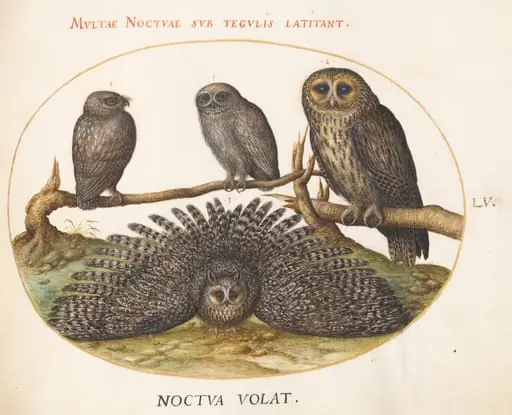 Plate 55: A Tawny Owl, an Eagle Owl, and Two other Owls
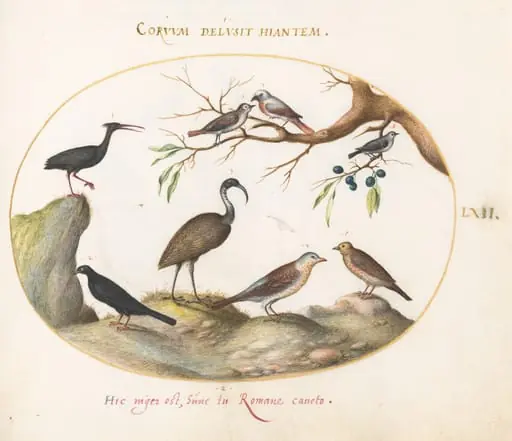 Plate 62: Northern Bald Ibis and Glossy Ibis with Other Birds
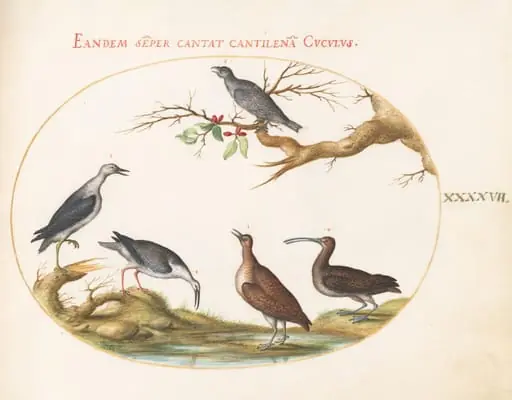 Plate 47: Shore Birds with a Perching Bird