Artwork
Plate 66: Doves and Pigeons
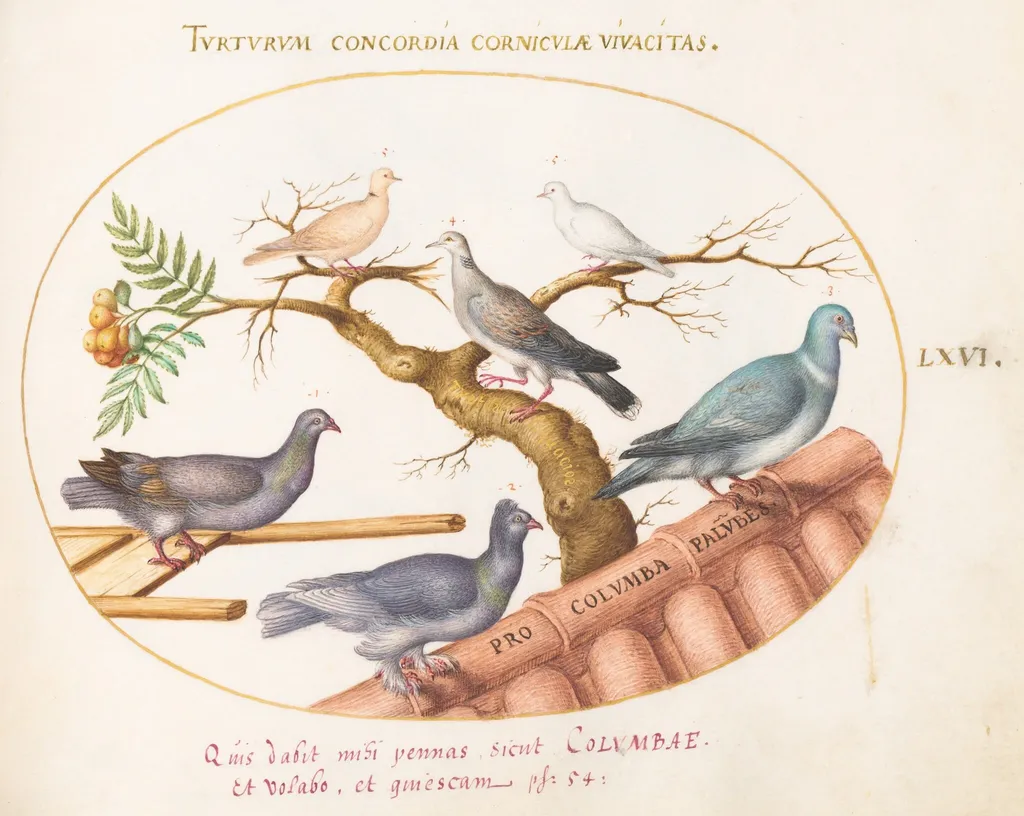
Plate 66: Doves and Pigeons is a gouache drawing by the Renaissance artist Joris Hoefnagel. It dates from 1594 and is held in the collection of the National Gallery of Art.
- Inscription
- Inscribed:upper center in (gold?): TVRTVRVM CONCORDIA CORNICVLAE VIVACITAS.; center right in (gold?): LXVI.; birds in image numbered .1., .2., .3., .4., .5., and .6., in red ink; on tree branch in image, in (gold?): Turture loquacior.; on roof tiles at right in image, in black ink: PRO COLVMBA PALV[M]BES.; lower center in red/violet ink: Quis dabit mihi pennas sicut COLVMBAE. / et volabo, et quiescam. ps: 54: (“Who will give me wings like a dove, and I will fly and be at rest?” Psalms 54:7) (Latin Vulgate Bible)
About this work
Overview
Plate 66: Doves and Pigeons is a watercolor and gold paint drawing on parchment created by Joris Hoefnagel around 1594. It is a representative example of the artist's work in natural history illustration.
Subject & Meaning
The drawing depicts six doves and pigeons perched on branches and rocks within a gold-edged circular border. The birds are labeled 'Columba Palumbes' and are shown in various colors, some with red leg bands, against a simple tree background with leaves and fruit.
Technique & Style
Hoefnagel's detailed and scientifically informed approach to depicting natural subjects is evident in the work. The use of watercolor and gold paint on parchment reflects his background in manuscript illumination, combining artistic skill with observational accuracy.
Context
This work is part of Hoefnagel's broader engagement with natural history illustration and ornamental design, contributing to the development of floral still-life painting as a distinct genre in northern Europe.
Own this work as a print
Artist & collection

Artist
Joris Hoefnagel or Georg Hoefnagel (1542 – 24 July 1601) was a Flemish painter, printmaker, miniaturist, draftsman and merchant.

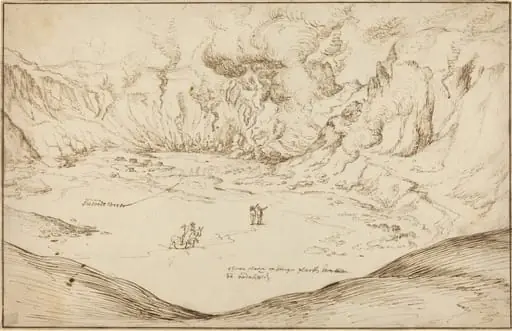 Forum Vulcani: The Hot Springs at Pozzuoli
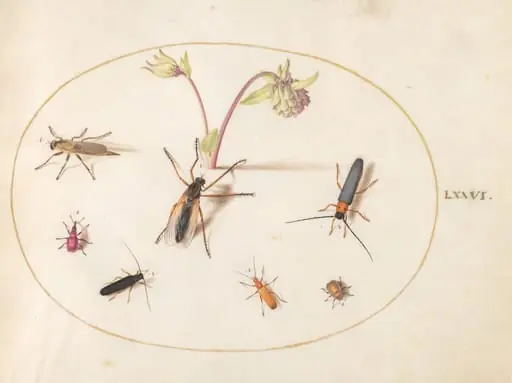 Plate 76: Insects with a Pink and Cream Columbine
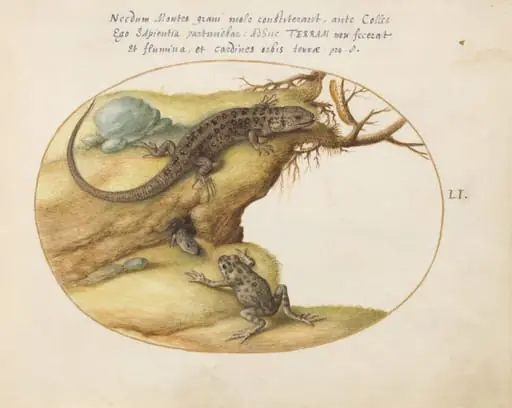 Plate 51: Two Sand Lizards, a Common Parsley Frog(?), and a Caterpillar
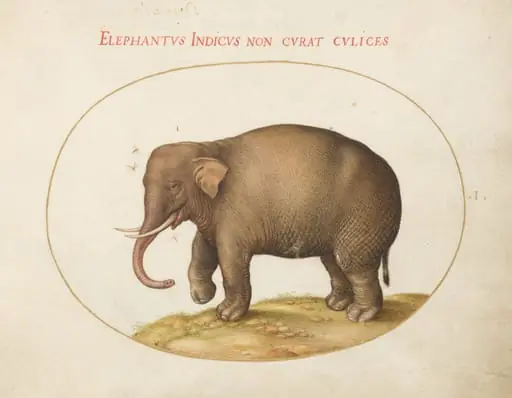 Plate 1: Elephant with Insects
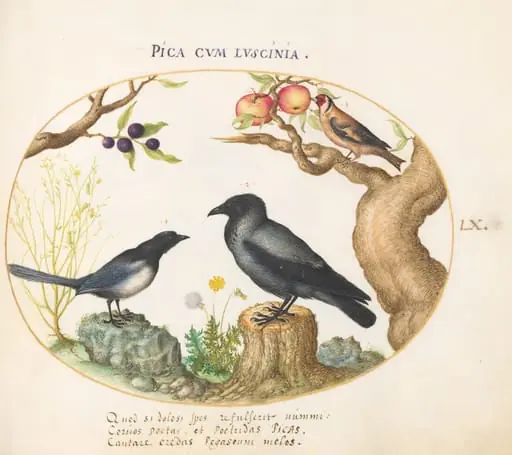 Plate 60: Magpie, Crow, and Goldfinch
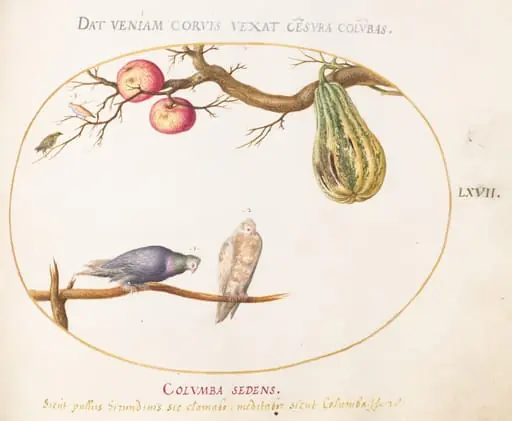 Plate 67: Two Doves beneath a Gourd and Apples
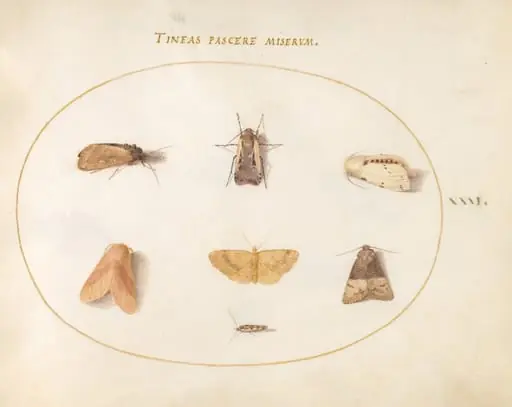 Plate 31: Seven Moths
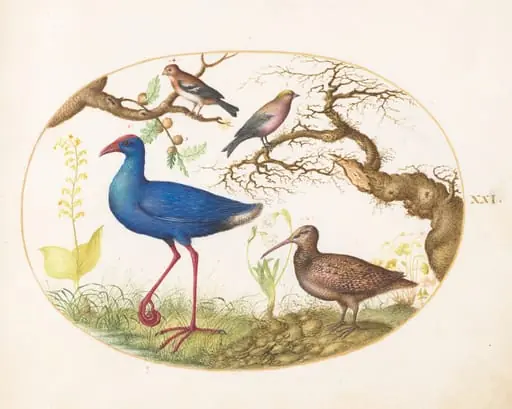 Plate 21: Swamp Hen and Woodcock with a Streaked Rosefinch, a Finch, and Oak Galls
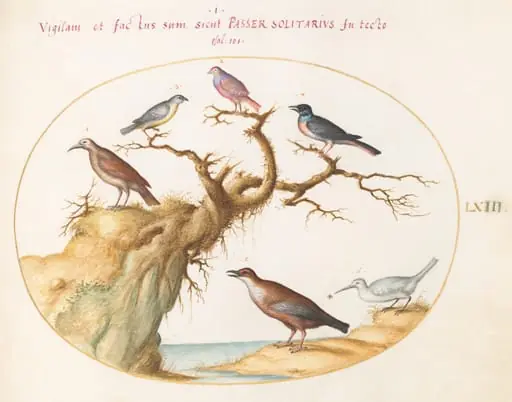
- Plate 63: Six Small Birds, Including a Bluethroat and a Cuckoo(?)
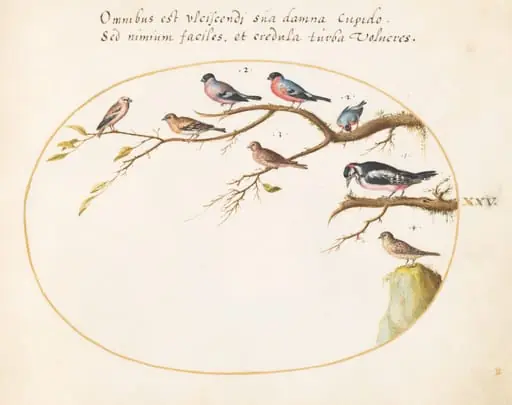 Plate 25: Great Spotted Woodpecker, Bullfinches, Sparrows, and Other Birds
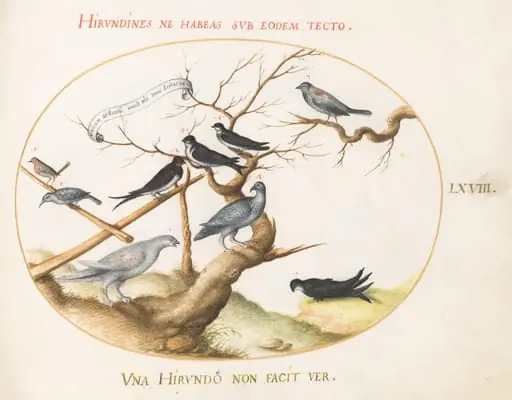 Plate 68: A Ptarmigan, Swallows, and Other Birds
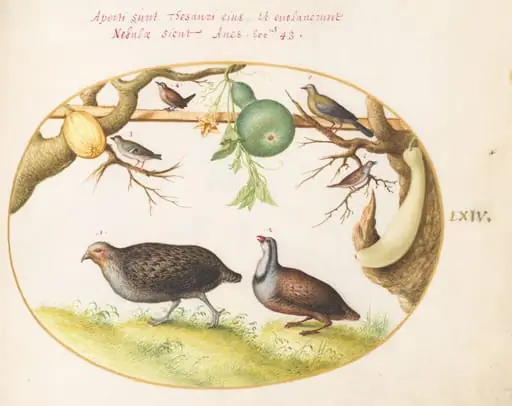 Plate 64: Two Partridges, a Wren, and Other Birds
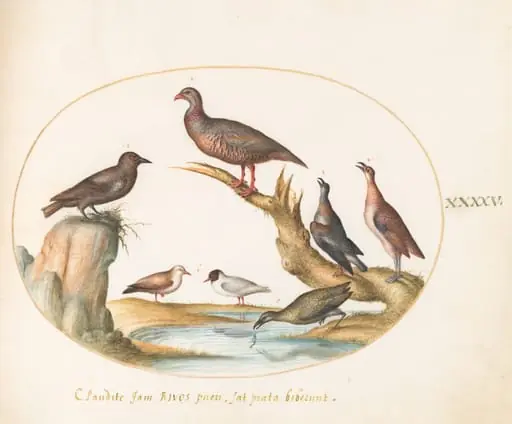 Plate 45: Spotted Nutcracker and Shore Birds
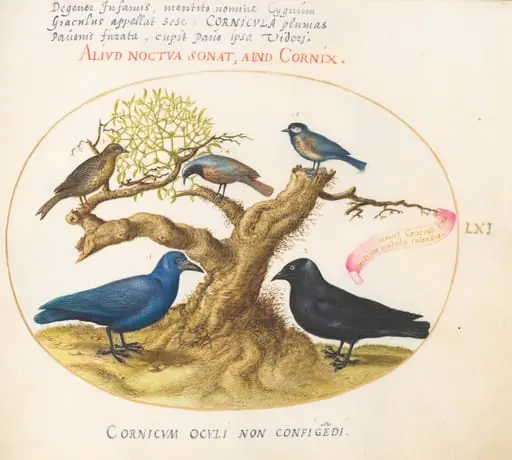 Plate 61: Blue Crow(?), Jackdaw, Chickadee or Tit, and Other Birds
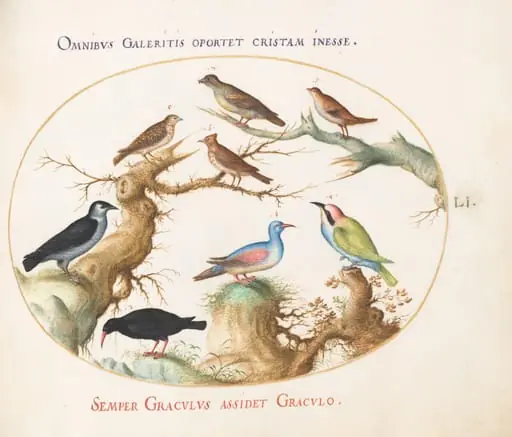 Plate 51: Crossbeak, Chough, Bee-Eater, and Other Birds
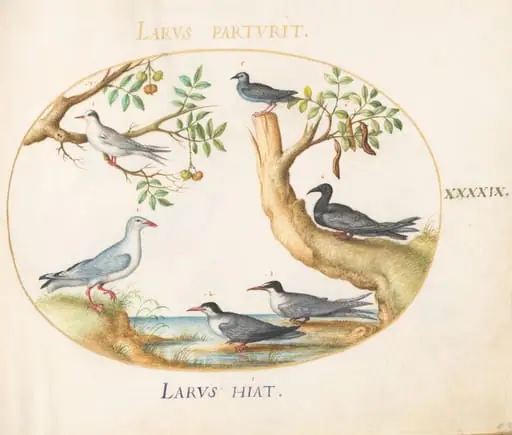 Plate 49: Gulls with a Carob Tree and a Pistachio Tree(?)
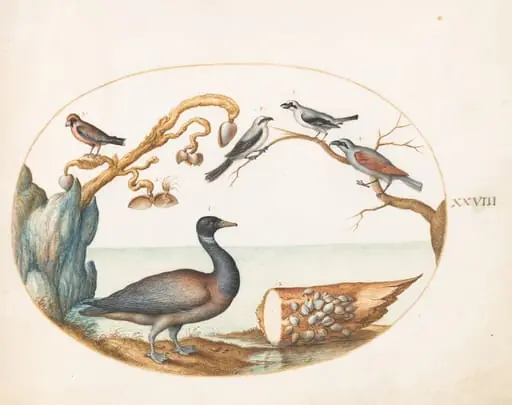 Plate 28: Barnacle Goose with Shrikes and Other Birds
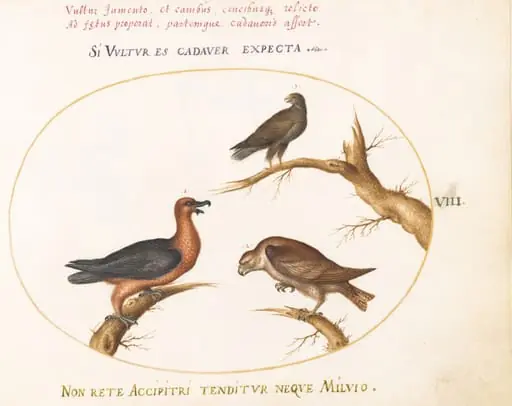 Plate 8: Bearded Vulture with Two Birds of Prey