Artwork
Plate 9: A Great White(?) Shark, Two Seals, and Two Fish
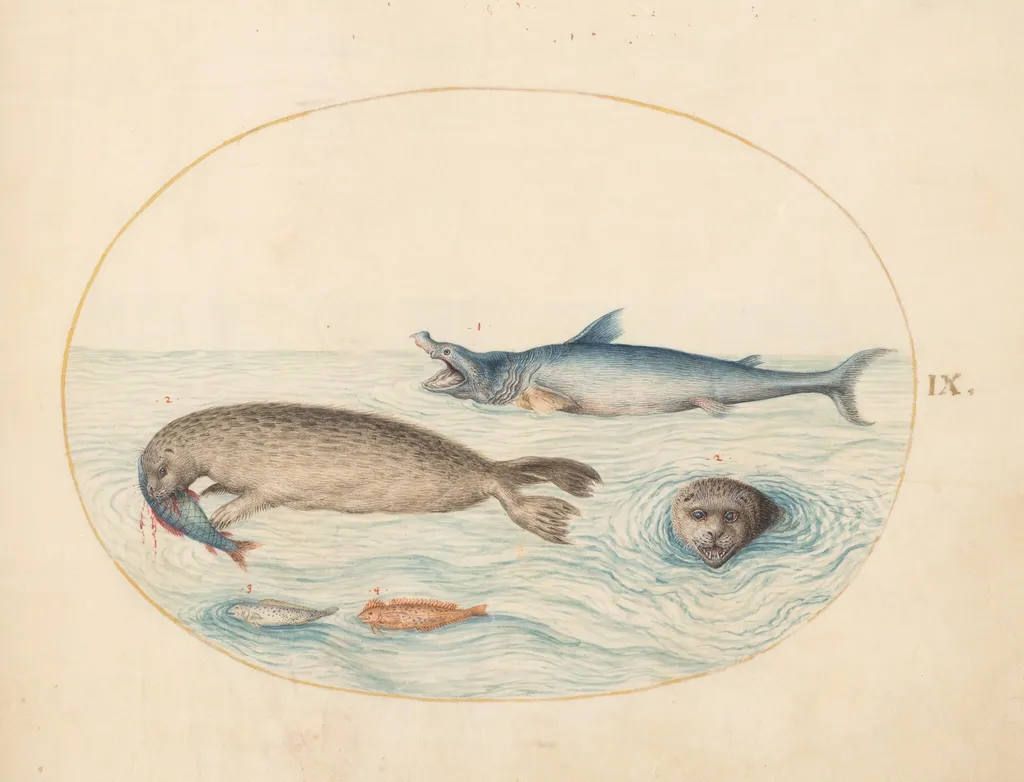
Plate 9: A Great White(?) Shark, Two Seals, and Two Fish is a gouache drawing by the Renaissance artist Joris Hoefnagel. It dates from 1594 and is held in the collection of the National Gallery of Art. Plate 9: A Great White(?
- Inscription
- Inscribed:Creatures in image numbered .1., 2., .3., and .4. in red ink; center right in brown ink: IX. Facing page: upper center in red ink: Iubilate in conspectu regis domini: Moveatur MARE et / Plenitudo eius: orbis terraru[m] et qui habitat in eo. ps.97. (“Make a joyful noise before the Lord our king; let the sea be moved and the fulness thereof: the world and they that dwell therein.” Psalms 97:6 and 7) (Latin Vulgate Bible); lower center in black ink: Qui convertit MARE in aridam, in flumine / pertransibunt pede, ibi laetabimur in ipso / ps: 65. (“Who turns the sea into dry land, in the river they shall pass on foot: there shall we rejoice him.” Psalms 65:6) (Latin Vulgate Bible)
About this work
Overview
Plate 9: A Great White(?) Shark, Two Seals, and Two Fish is a watercolor and gold paint drawing on parchment created by Joris Hoefnagel around 1594. It exemplifies the artist's skill in natural history illustration and manuscript illumination.
Subject & Meaning
The drawing depicts a shark, two seals, and two fish in a gold-framed underwater scene. One seal grasps a fish, while the other floats with its head above water. The shark's open mouth suggests potential interaction, but its intent is ambiguous.
Technique & Style
Hoefnagel employed watercolor and gold paint on parchment to achieve a delicate, luminous effect. The use of soft watercolors and gold accents creates a sense of depth and subtlety in the underwater scene.
History & Provenance
Joris Hoefnagel was a Flemish painter and draftsman active in the late 16th century. As one of the last manuscript illuminators, he contributed to the development of topographical drawing and floral still-life painting in northern Europe.
Context
This work reflects Hoefnagel's interest in detailed observational studies of natural subjects, characteristic of his natural history illustrations.
Own this work as a print
Artist & collection

Artist
Joris Hoefnagel or Georg Hoefnagel (1542 – 24 July 1601) was a Flemish painter, printmaker, miniaturist, draftsman and merchant.

 Forum Vulcani: The Hot Springs at Pozzuoli
 Plate 76: Insects with a Pink and Cream Columbine
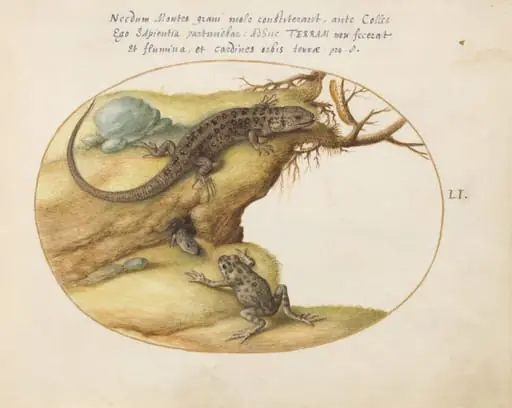 Plate 51: Two Sand Lizards, a Common Parsley Frog(?), and a Caterpillar
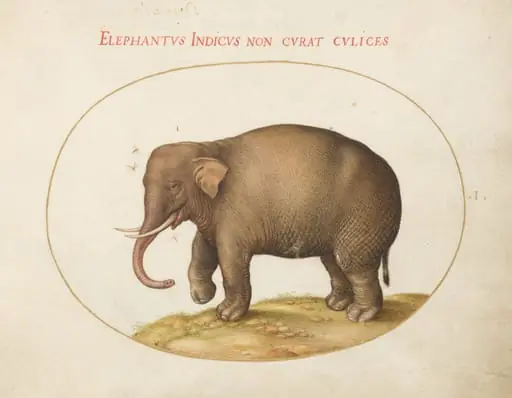 Plate 1: Elephant with Insects
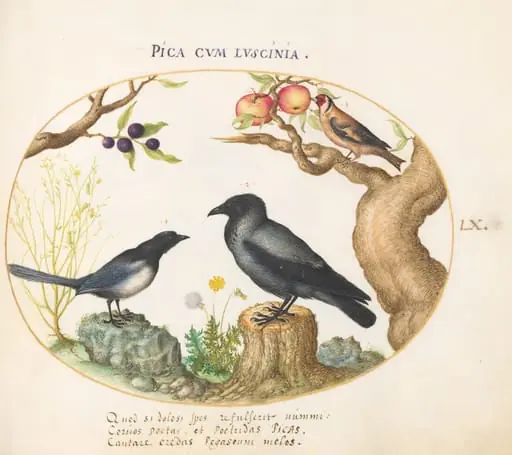 Plate 60: Magpie, Crow, and Goldfinch
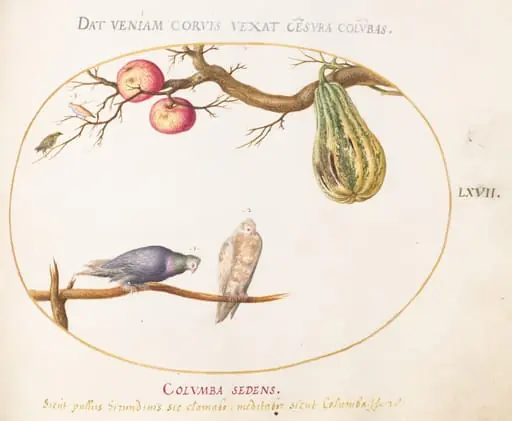 Plate 67: Two Doves beneath a Gourd and Apples
 Plate 31: Seven Moths
 Plate 21: Swamp Hen and Woodcock with a Streaked Rosefinch, a Finch, and Oak Galls
- Plate 13: Two Stingrays, an Anglerfish, a Monkfish(?) and an Angel Shark
 Plate 10: Nine Sharks
 Plate 42: Nine Fish
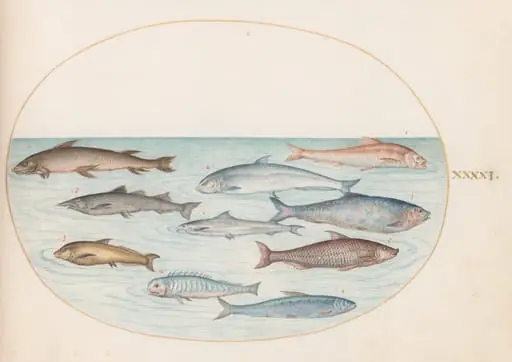 Plate 41: Whitefish(?) and Other Fish
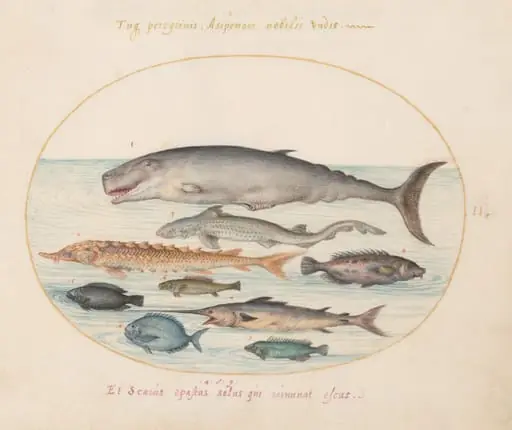 Plate 2: Sperm Whale, Sturgeon, Shark, and Other Fish
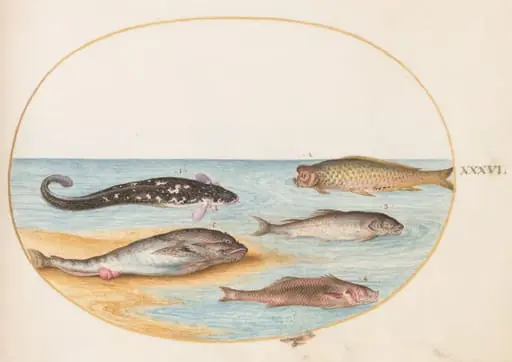 Plate 36: Five Fish, Including Carp(?)
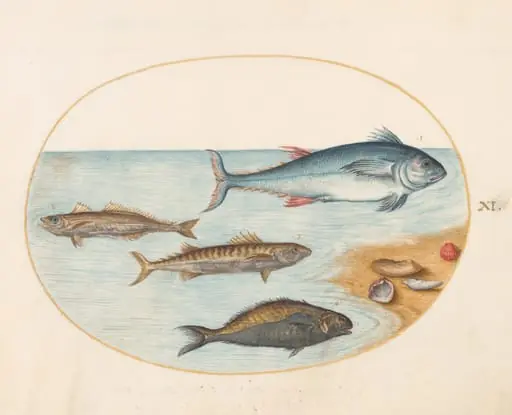 Plate 11: Four Fish and Shells
 Plate 40: Salmon, Trout, and Freshwater(?) Fish
 Plate 43: Fifteen Fish
 Plate 8: A Dolphin, Two Seals, a Brethmechin, and Shells
 Plate 39: Squid, Gurnard, Pike, and Other Fish
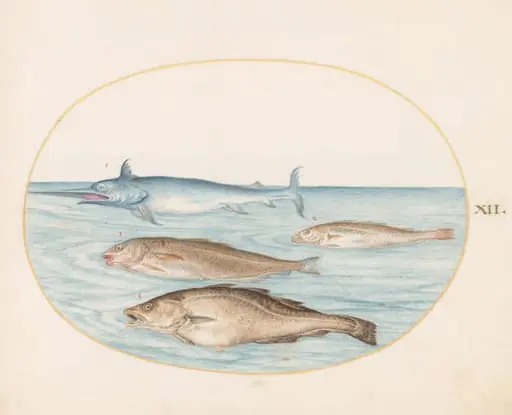 Plate 12: A Swordfish and Three Other Fish