Artwork
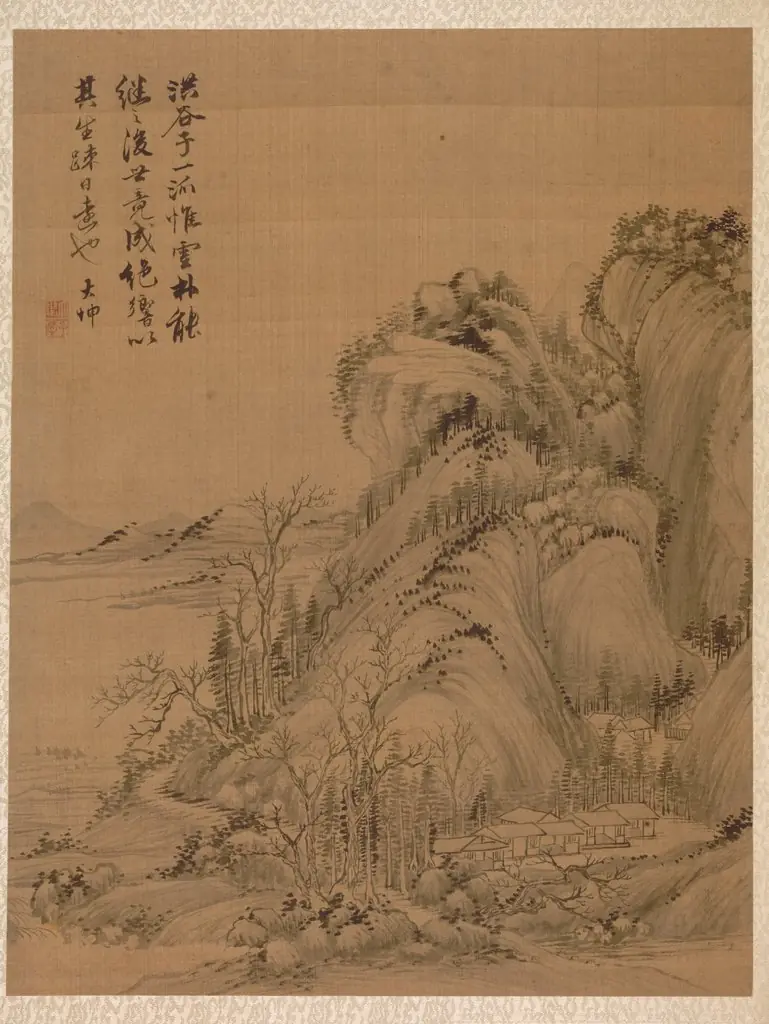
清 倣弘仁 幽谷泉聲圖 軸|The Sound of Spring in a Lonely Valley
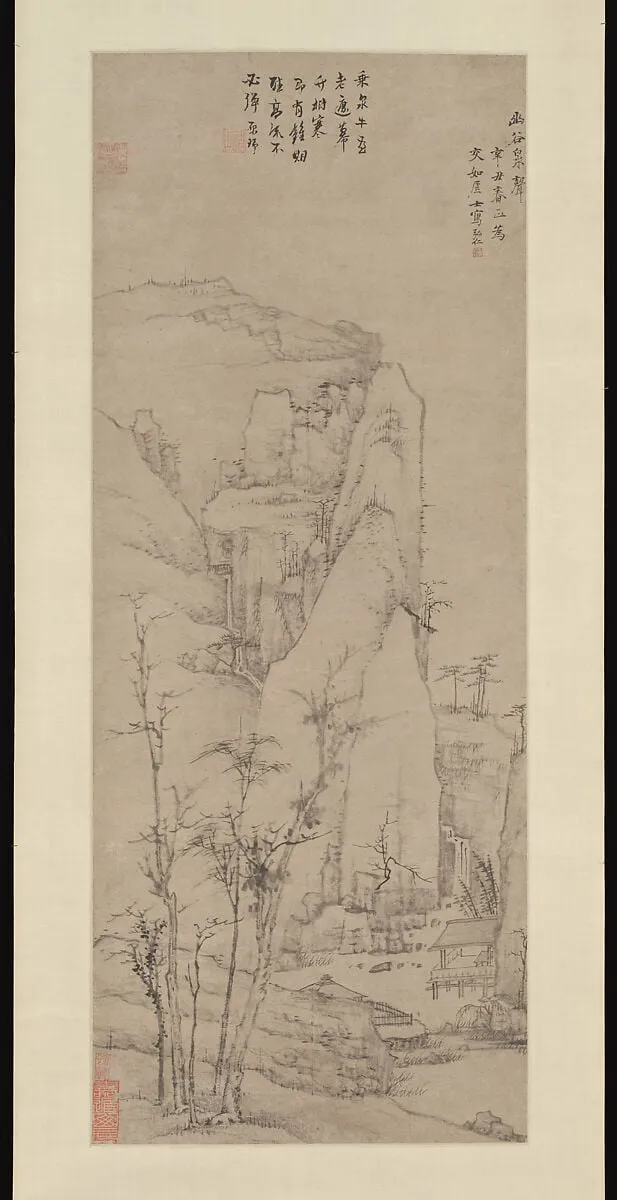
清 倣弘仁 幽谷泉聲圖 軸|The Sound of Spring in a Lonely Valley is an ink painting by the Baroque artist Hongren. It dates from 1661 and is held in the collection of the Metropolitan Museum of Art.
About this work
He was a Buddhist monk who refused to serve the new rulers, so he lived in the mountains and painted quiet places like this one.
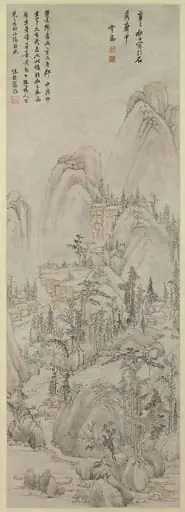
You see a tall, narrow scroll of ink on paper: a steep mountain valley, a waterfall, and a single hut tucked into the rocks.
Hongren painted this in 1661, after the fall of the Ming dynasty. He was a Buddhist monk who refused to serve the new rulers, so he lived in the mountains and painted quiet places like this one. The ink is so dry it looks like the paper itself is thirsty.
To see how other Chinese artists painted empty valleys, look up the subject landscape painting.
Subject & Meaning
The painting, titled The Sound of Spring in a Lonely Valley, portrays a solitary valley landscape rendered in ink on paper as a hanging scroll. Created in 1661 in China, it exemplifies the Chinese landscape painting genre, emphasizing natural scenery over figural narrative. The work’s subject is a quiet, spring‑filled valley, a setting that in Chinese artistic tradition often conveys themes of seclusion, renewal, and harmony with nature.
By evoking the auditory impression of spring within an isolated space, the piece suggests a contemplative meditation on the subtle sounds and visual stillness of the natural world.
Technique & Style
Created in 1661, this work is executed as a hanging scroll on paper using ink. Classified as a landscape painting, the piece demonstrates the formal qualities associated with the style of Hongren, though the specific hand is attributed to an unidentified artist imitating his approach. The medium relies on the traditional application of ink on a paper support, a common handling technique for Chinese scroll paintings of the Qing dynasty.
The composition depicts a landscape scene, adhering to the genre conventions of the era. The physical format as a hanging scroll suggests it was designed for vertical display, consistent with the presentation methods for such artworks in the collection of the Metropolitan Museum of Art.
History & Provenance
Created in 1661 by the monk‑painter Hongren, The Sound of Spring in a Lonely Valley is a hanging scroll executed in ink on paper. The work entered the collection of the Metropolitan Museum of Art, where it is presently housed; the museum’s records list its inception as 1661 and note that it was made in China. No earlier owners, commissions, or subsequent transfers are documented in the available sources, so the known provenance begins with its acquisition by the Met and continues to the present.
Overview
The hanging scroll titled "The Sound of Spring in a Lonely Valley" was created by the artist Hongren in 1661. Executed with ink on paper, this painting exemplifies the landscape genre prevalent in China. It presents a vertical composition depicting a secluded mountain environment, characteristic of the artist's work during a period of significant political upheaval.
Context
Created shortly after the collapse of the Ming dynasty in 1644, this work reflects the profound political and personal shifts of the era. Hongren, a former scholar who became a Buddhist monk, deliberately withdrew from society following the Manchu conquest. His choice to live in the remote mountains and depict such isolated landscapes was a form of silent protest and a personal expression of loyalty to the fallen dynasty.
Artist & collection

![Daoist Retreat in Mountain and Stream (Landscape after Ni Zan [1301–1374]), by Lu Zhi](https://artifactworldgallery.com/img/lu-zhi--daoist-retreat-in-mountain-and-stream-landscape-after-ni-zan--a798050b065ab200-w320.webp)