Artwork
清 王翬 倣李成雪霽圖 軸|Snow Clearing: Landscape after Li Cheng
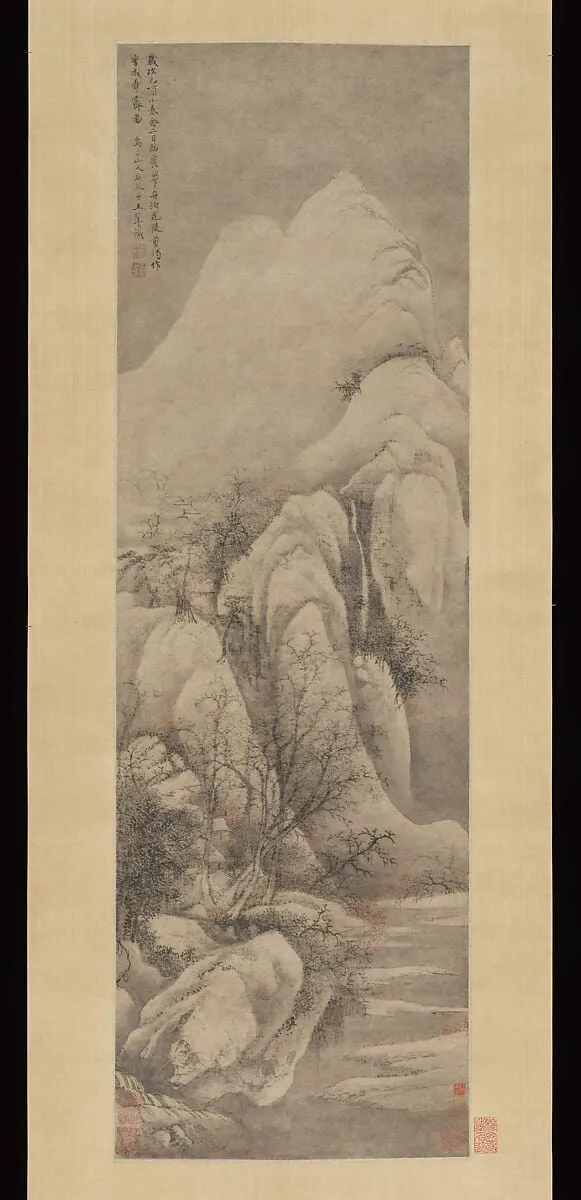
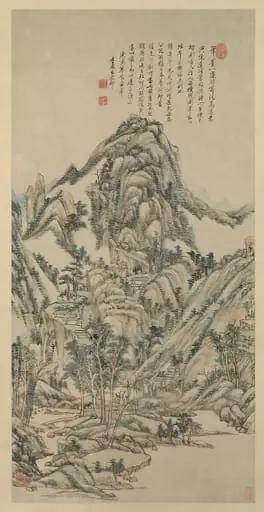
清 王翬 倣李成雪霽圖 軸|Snow Clearing: Landscape after Li Cheng is an ink painting by the Baroque artist Wang Hui. It dates from 1669 and is held in the collection of the Metropolitan Museum of Art.
About this work
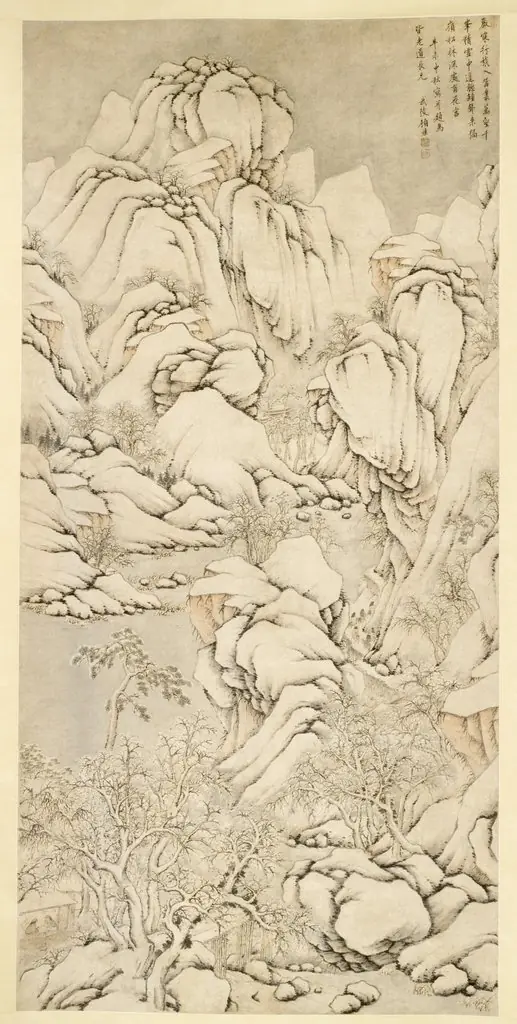
A tall scroll in ink: bare trees, misty mountains, and a thin layer of snow clinging to every branch and roof. Wang Hui painted it in 1669 after a style some 500 years older, by Li Cheng, who never signed his own work. The ink fades softly into the paper, as if the snow were still melting.
Technique & Style
Painted in 1669, the work belongs to Wang Hui's mature period of synthesizing classical models.
Snow Clearing: Landscape after Li Cheng is executed as a hanging scroll in ink and color on paper, a traditional Chinese format suited to vertical landscape compositions. Wang Hui's handling reflects the orthodox lineage he inherited, particularly the manner of Li Cheng, whose monumental snow landscapes are evoked through layered ink washes and pale tonalities to suggest atmospheric depth and wintry light. The brushwork organizes towering mountain forms and snow-laden terrain into a structured, recession-driven composition, balancing dense textured passages with expansive blank areas that read as snow-covered ground and sky.
Painted in 1669, the work belongs to Wang Hui's mature period of synthesizing classical models. The paper support and hanging-scroll mounting are consistent with standard seventeenth-century Chinese practice, and the piece remains in the collection of the Metropolitan Museum of Art.
History & Provenance
The hanging scroll Snow Clearing: Landscape after Li Cheng was created by the Chinese artist Wang Hui in 1669, in ink and color on paper. Classified as a landscape, it depicts snow-covered mountains and represents Wang Hui's engagement with the stylistic legacy of the earlier master Li Cheng. The work was made in China and is held in the collection of the Metropolitan Museum of Art in New York.
The specific commission details or chain of ownership prior to its arrival are not detailed in the available records, which do not specify an accession number or document any exhibition history.
Legacy
Snow Clearing: Landscape after Li Cheng, painted by Wang Hui in 1669, is a hanging scroll in ink and color on paper that reinterprets the manner of the earlier master Li Cheng in a snow-covered mountain scene. As part of the Metropolitan Museum of Art's collection, it stands as an example of Qing-dynasty landscape painting and of Wang Hui's synthesis of classical landscape conventions.
Overview
Painted in 1669, 'Snow Clearing: Landscape after Li Cheng' is a hanging scroll by the Qing dynasty master Wang Hui, executed in ink and color on paper. The work depicts a winter landscape characterized by bare, gnarled trees and mist-shrouded mountains, with a delicate layer of snow accentuating branches and rooftops. As the title indicates, this piece is a deliberate imitation of the style of Li Cheng, a seminal Northern Song painter whose original works were rarely signed and increasingly rare by the 17th century.
Wang Hui, a leading figure of the Orthodox School, utilized this homage to demonstrate his technical mastery of ancient brushwork and compositional principles. The composition balances dense, textured foreground elements with atmospheric, fading distance, capturing the quiet stillness of a snow-clearing scene. This painting exemplifies Wang Hui's early career focus on synthesizing past traditions, a practice that would define his later reputation as a synthesizer of the Chinese landscape tradition.
By reinterpreting Li Cheng's aesthetic, Wang Hui not only preserved the quiet mood of the Song dynasty but also asserted the continuity of the literati painting lineage during the Qing era.
Subject & Meaning
The scroll captures a tranquil winter moment, depicting a landscape where a recent snowfall has settled gently. Bare tree branches and distant mountain peaks are veiled in mist, while a delicate layer of snow adheres to every surface, including rooftops. The composition evokes a profound sense of quietude and stillness, reflecting the serene aftermath suggested by the title, "Snow Clearing," as the landscape emerges from a fresh blanket of white.
Context
Painted in 1669, this work by Wang Hui is a deliberate engagement with the artistic heritage of the Song dynasty painter Li Cheng, whose style flourished approximately five centuries earlier. Li Cheng was known for not signing his works, making his artistic legacy somewhat elusive. By creating this interpretation, Wang Hui not only paid homage to a revered predecessor but also ensured the enduring presence of the distinctive quiet mood and aesthetic principles associated with Li Cheng's influential, yet often anonymous, oeuvre.
Artist & collection


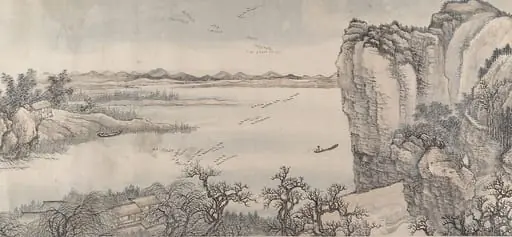 清 王翬 倣巨然燕文貴山水圖 卷|Landscape in the Style of Juran and Yan Wengui
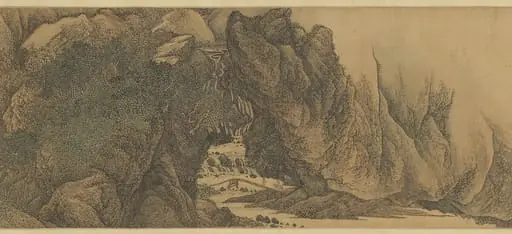 清 王翬 太行山色圖 卷|The Colors of Mount Taihang
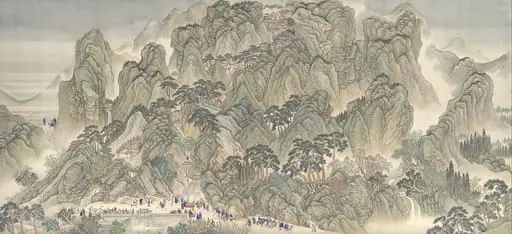 清 王翬等 康熙南巡圖 (卷三: 濟南至泰山) 卷|The Kangxi Emperor's Southern Inspection Tour, Scroll Three: Ji'nan to Mount Tai
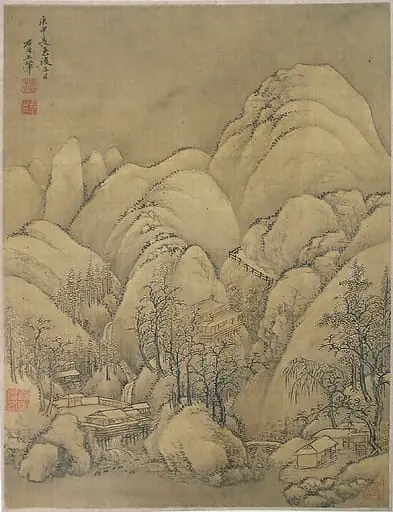 清 佚名 倣王翬 倣李成山水圖 軸|Landscape after Li Cheng
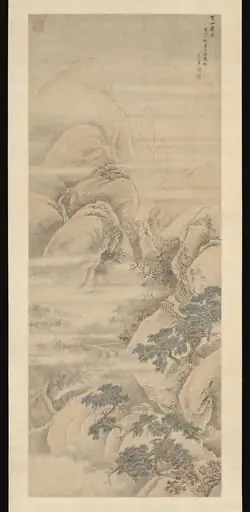 清 (傳)王翬 雪景山水圖 軸|Snowscape
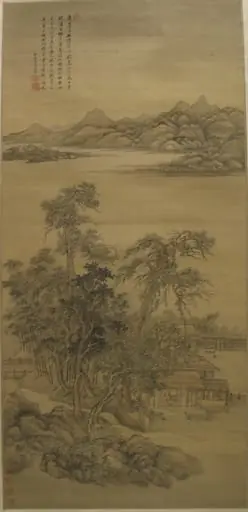 清 佚名 倣王翬 倣李公麟草堂圖 軸|Landscape in the Style of Li Gonglin
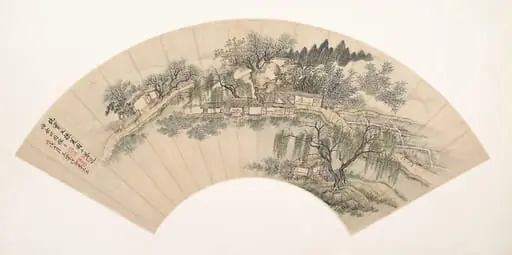 清 佚名 倣王翬 倣仇實父採菱圖 扇|Gathering Water Chestnuts
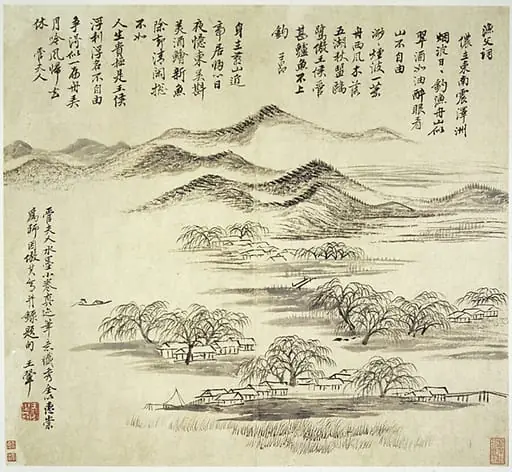 王翬、楊晉、顧昉、王雲、徐玫 仿古山水圖 冊 紙本|Landscapes after old masters