Artwork
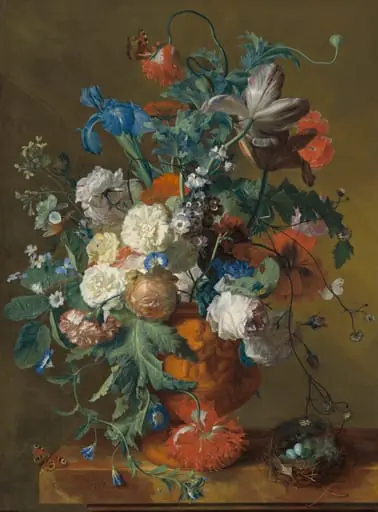
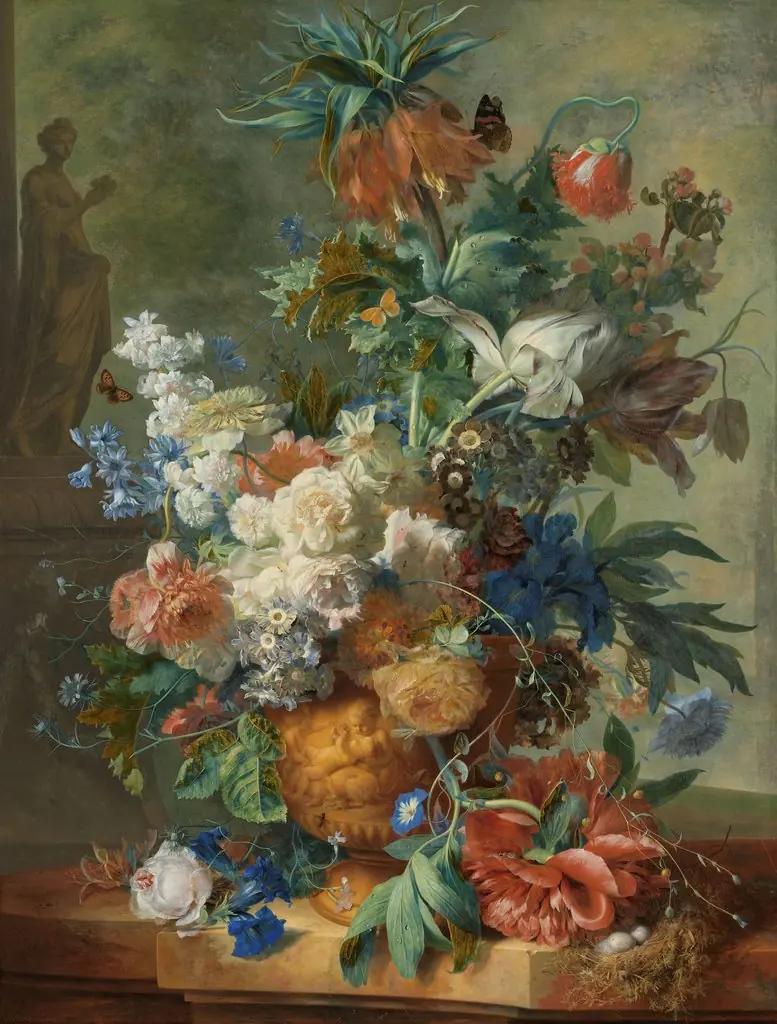
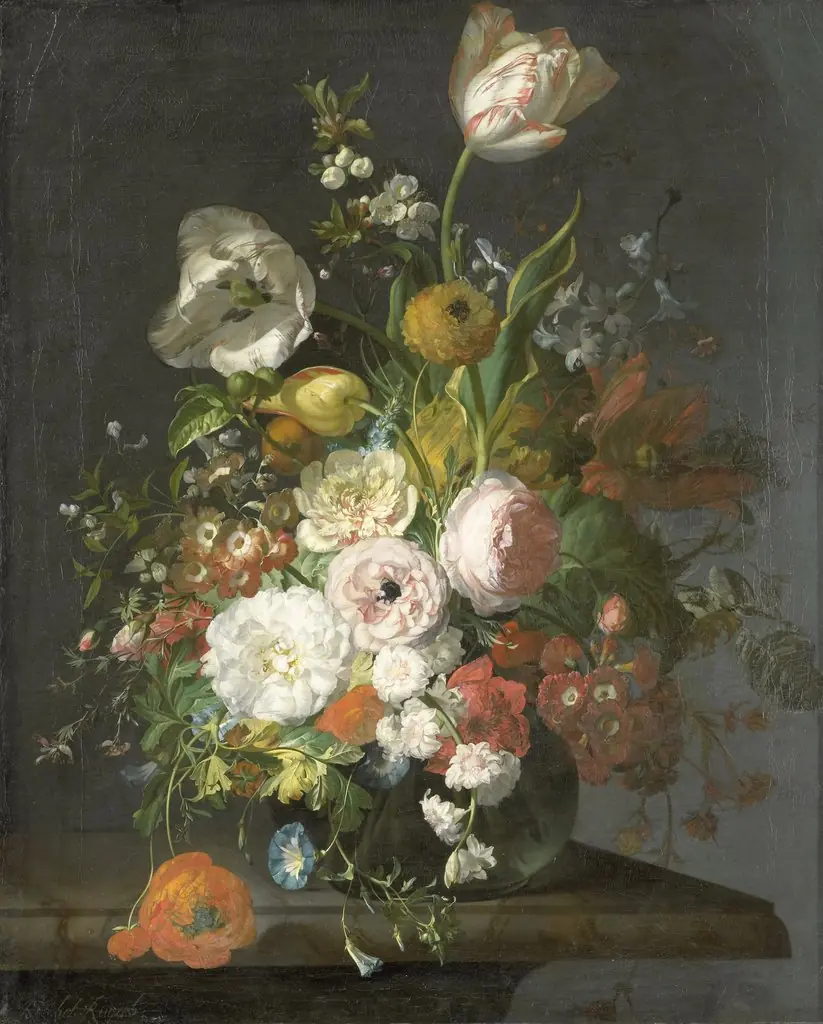
Flower still life in a terracotta vase, for two columns and a park landscape with a statue of Venus
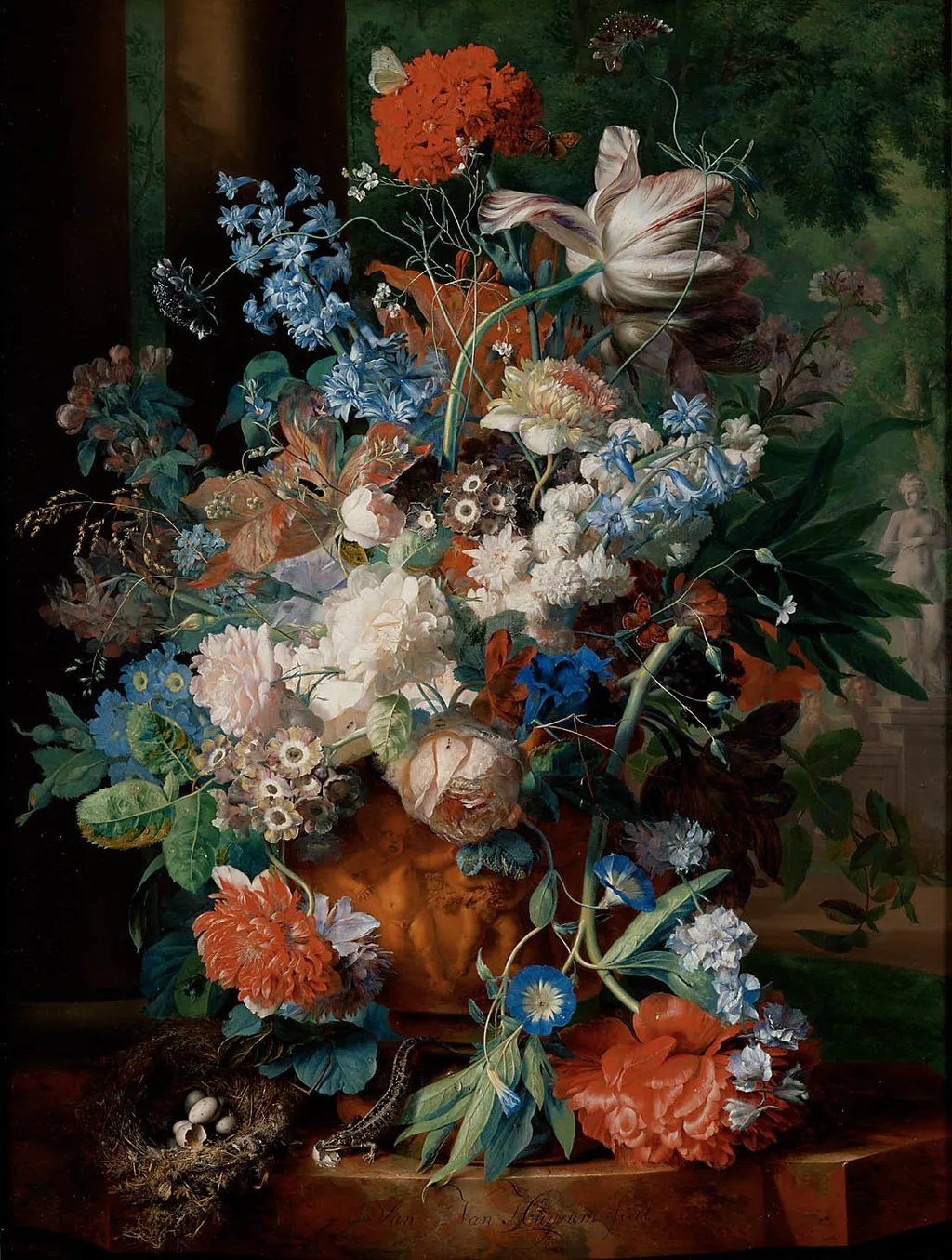
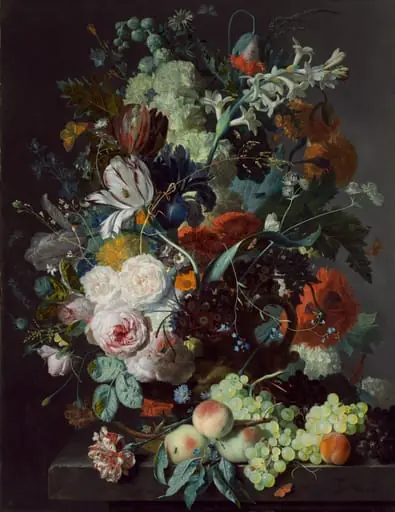
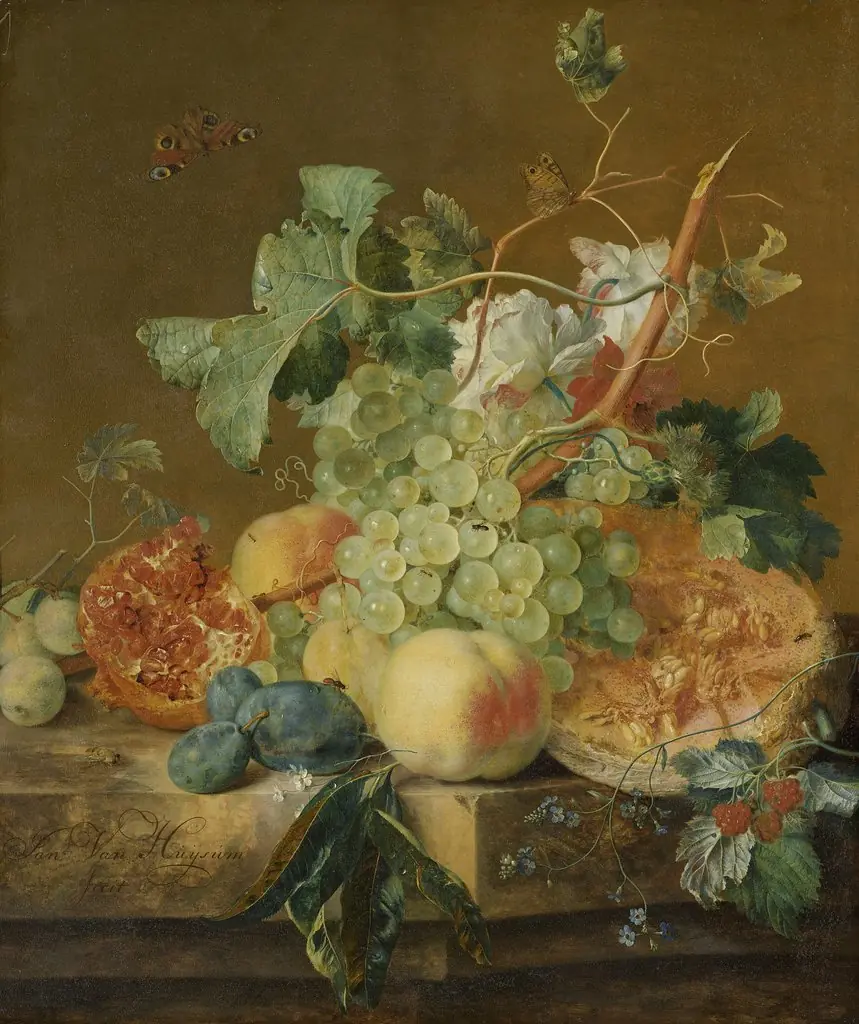
Flower still life in a terracotta vase, for two columns and a park landscape with a statue of Venus is an unspecified painting by the Rococo painting artist Jan van Huysum. It dates from 1723 and is held in the collection of the Kunsthistorisches Museum.
About this work
Overview
The painting reflects the Dutch tradition of combining natural detail with symbolic depth, executed with precision characteristic of van Huysum’s style.
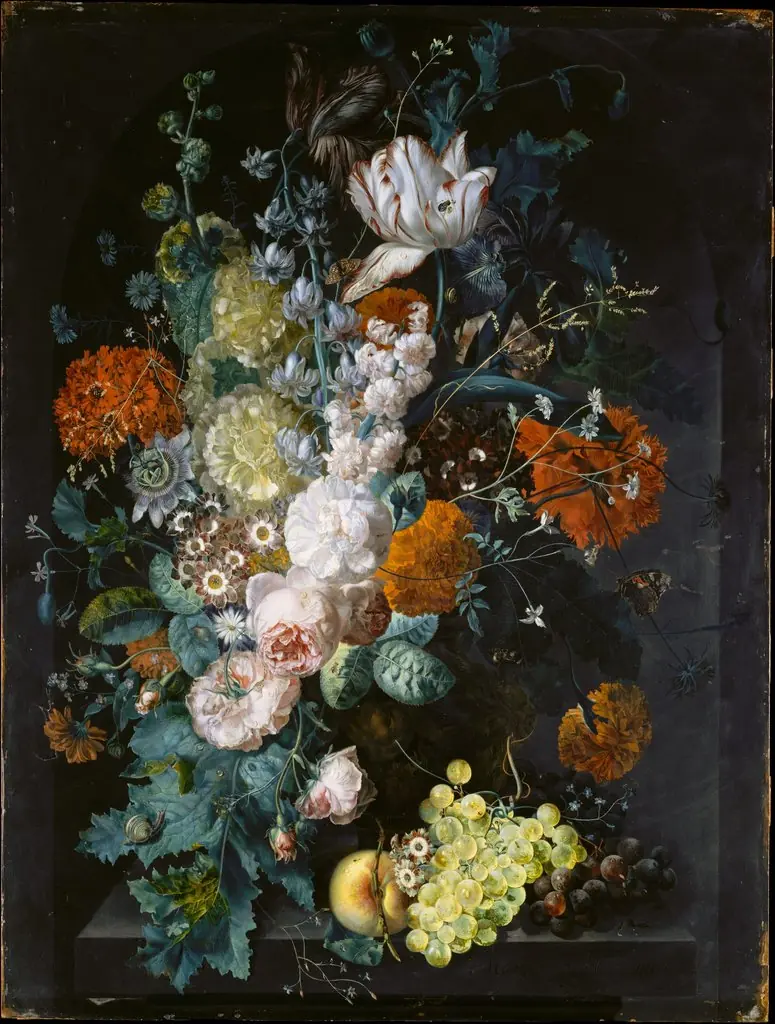
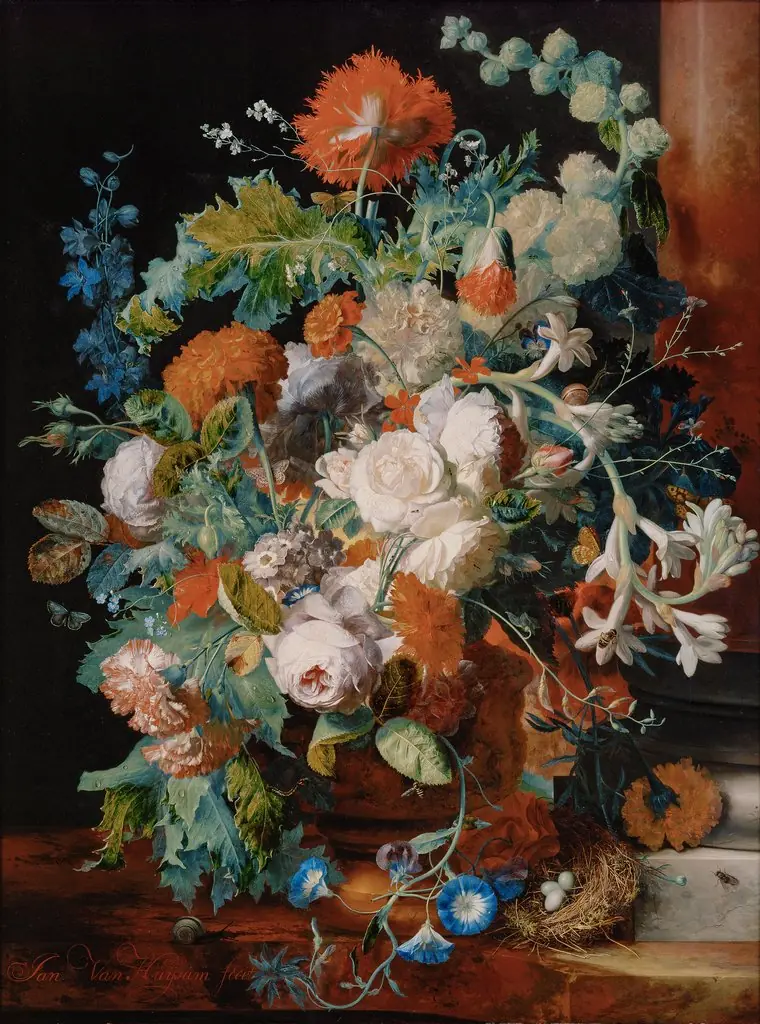
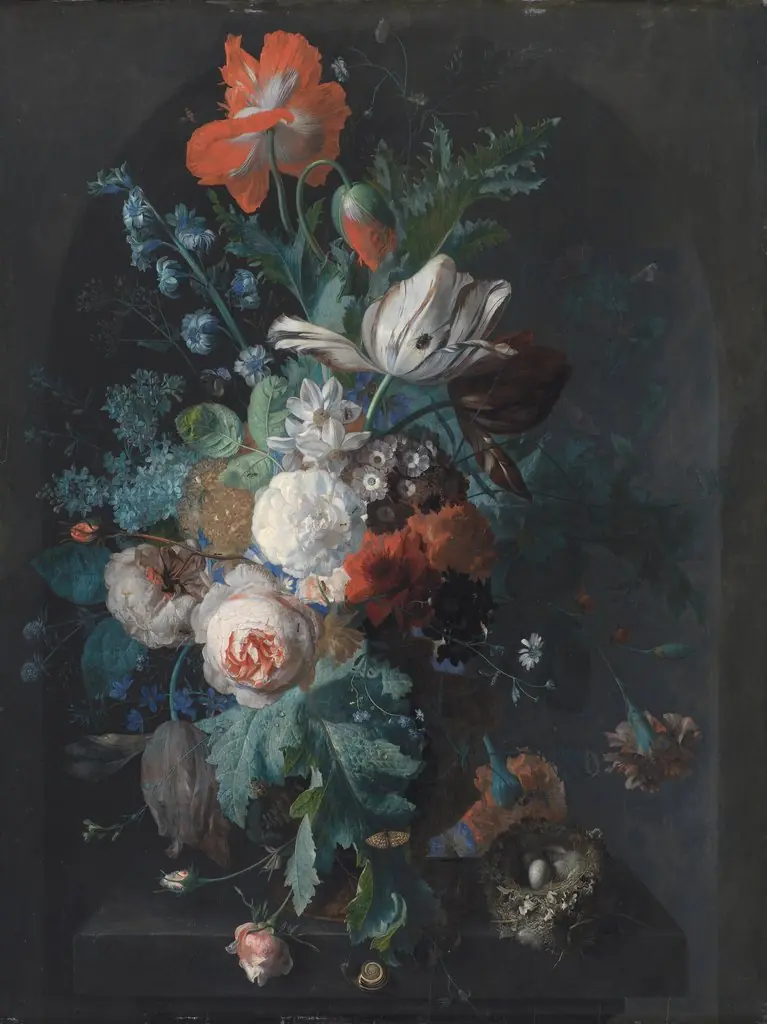
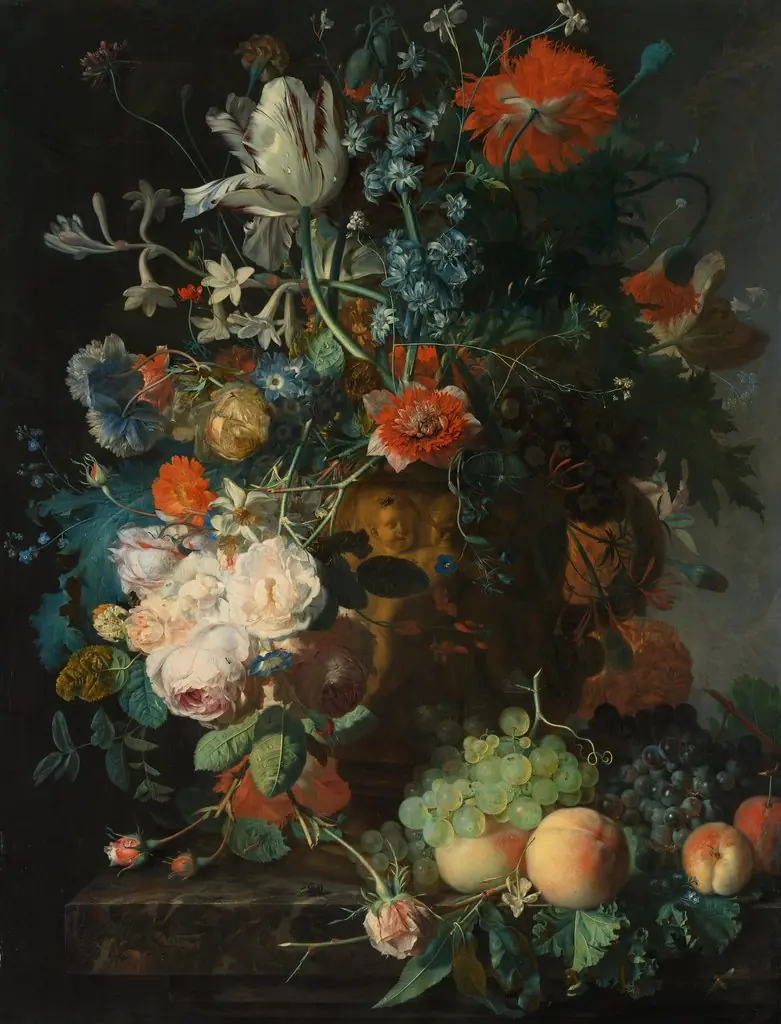
Painted in 1723 by Jan van Huysum, this work merges a lush floral arrangement with a distant landscape, creating a layered composition that bridges still life and scenery. The terracotta vase, positioned on a windowsill, overflows with blossoms, while behind it, classical architecture and a statue of Venus emerge from a shaded garden. The painting reflects the Dutch tradition of combining natural detail with symbolic depth, executed with precision characteristic of van Huysum’s style.
Subject & Meaning
The bouquet, rich in color and texture, includes both vibrant blooms and signs of decay, suggesting the passage of time. The statue of Venus, partially visible through the foliage, evokes classical ideals of beauty and fertility, while the eggshells on the sill hint at transience. Together, these elements form a quiet meditation on nature’s cycles, blending earthly abundance with mythological allusion without overt moralizing.
Technique & Style
Van Huysum employed fine brushwork to render individual petals, dewdrops, and wilting leaves with near-scientific accuracy. The flowers are painted with luminous pigments, their tones softened by subtle gradations of light. The background landscape is rendered with looser strokes, creating spatial depth.
The dark curtain frames the scene like a stage, directing focus to the vase while enhancing the illusion of depth and realism.
History & Provenance
The painting entered the Kunsthistorisches Museum’s collection in Vienna, where it remains today. It was likely acquired during the 18th or early 19th century, as part of broader European interest in Dutch Golden Age still lifes. Van Huysum’s reputation as a leading floral painter ensured his works were sought after by collectors, and this piece exemplifies the refined taste of his patrons.
Context
In early 18th-century Holland, still life painting remained a respected genre, often reflecting scientific curiosity and bourgeois values. Van Huysum’s integration of classical motifs into domestic scenes aligned with contemporary tastes for refined, intellectual art. His work stood apart from more austere predecessors by embracing ornamental richness, yet retained the meticulous observation valued in Dutch art.
Legacy
Van Huysum’s influence extended beyond his lifetime, shaping later floral painters in both the Netherlands and France. His ability to merge naturalism with symbolic elements became a model for combining observation with poetic suggestion. While his style was later overshadowed by Romanticism, his technical precision continues to be studied as a benchmark in the history of still life painting.
Artist & collection

Artist
Jan van Huysum (or Jan van Huijsum) (15 April 1682 – 8 February 1749) is the most notable member of the Van Huysum family of artists working in Dutch Golden Age of the 17th and 18th centuries; "by common consent, Jan…