Dutch Golden Age
A republic of merchants, a canvas of ordinary miracles, seen through the lens of Western collections.
What you'll explore
The lessons
-
The Merchant's Gaze
From the in-app quiz
-
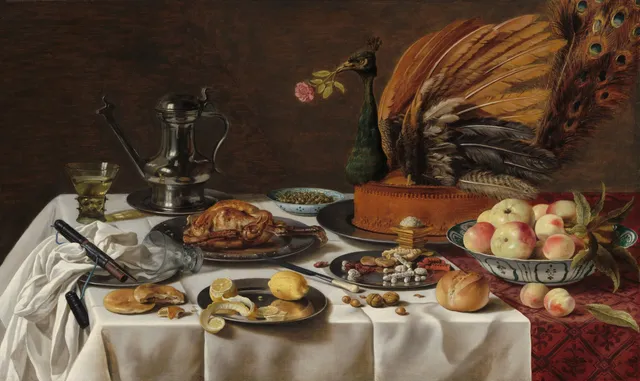
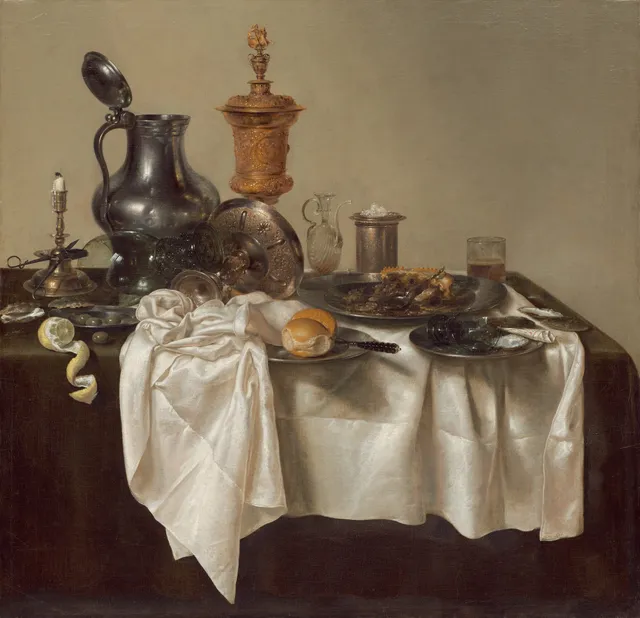
Look closely at the table in Heda's 'Banquet Piece with Mince Pie.' Which object serves as a reminder that earthly pleasures are fleeting?
Banquet Piece with Mince Pie , Willem Claesz Heda - A human skull resting on the table
- An hourglass with sand running out
- None of these vanitas symbols are present Answer
- A wilting flower in a vase
Heda focuses on the beauty of the present moment here. Unlike some of his contemporaries, he does not include a skull or hourglass in this specific banquet scene.
-
Which artist, known for his precise clarity and work in Haarlem, painted the 'Banquet Piece with Mince Pie'?
- Pieter Claesz
- Willem Claesz Heda Answer
- Jan Davidsz. de Heem
- Frans Hals
Willem Claesz Heda is the master of this specific 1635 banquet piece, celebrated for his monochromatic palette and precise depiction of light.
-
-
The Vanitas Code
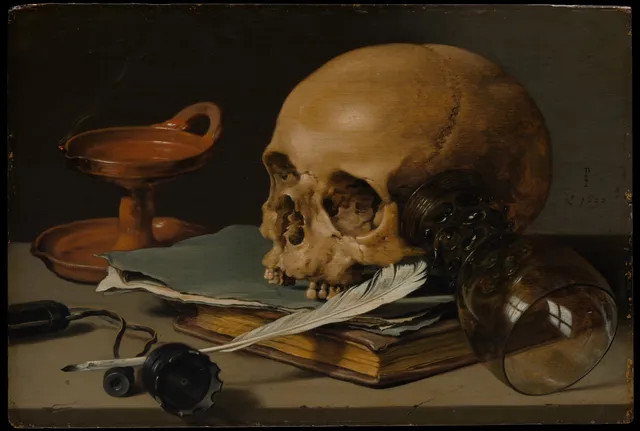 Still Life with a Skull and a Writing Quill Pieter Claesz
 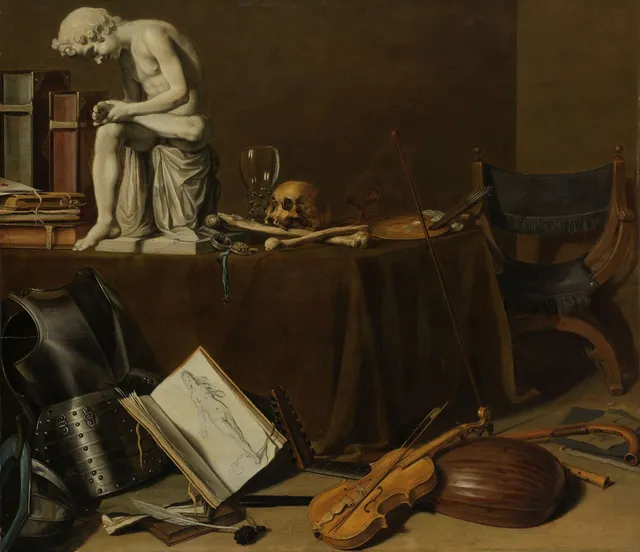 Vanitas Still Life with the Spinario Pieter Claesz
 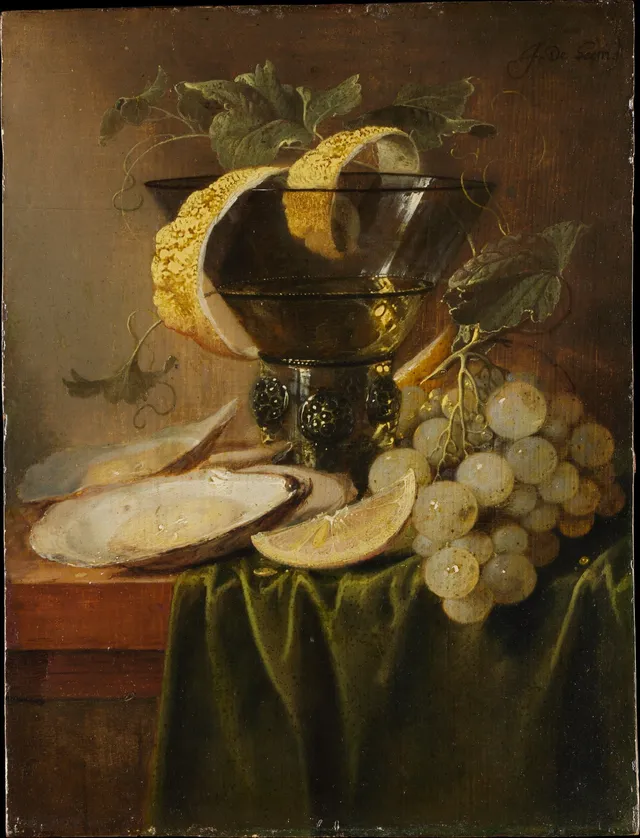 Still Life with a Glass and Oysters Jan Davidsz. de Heem
 From the in-app quiz
-
In Pieter Claesz's "Still Life with a Skull and a Writing Quill," which object serves as the primary memento mori?
Still Life with a Skull and a Writing Quill , Pieter Claesz - The tipped glass
- The writing quill
- The skull Answer
- The half-peeled lemon
The skull is the traditional symbol of mortality, reminding the viewer that death comes for everyone. It anchors the painting's message that life is short, regardless of how rich or busy we may be.
-
Which artist and painting includes a writing quill to symbolize the futility of human endeavor?
Pieter Claesz's "Still Life with a Skull and a Writing Quill" features the quill specifically to show that even our intellectual pursuits and writings are temporary. The other works listed focus on banquets, different vanitas symbols, or oysters without this specific pairing.
-
-
Light in the Interior
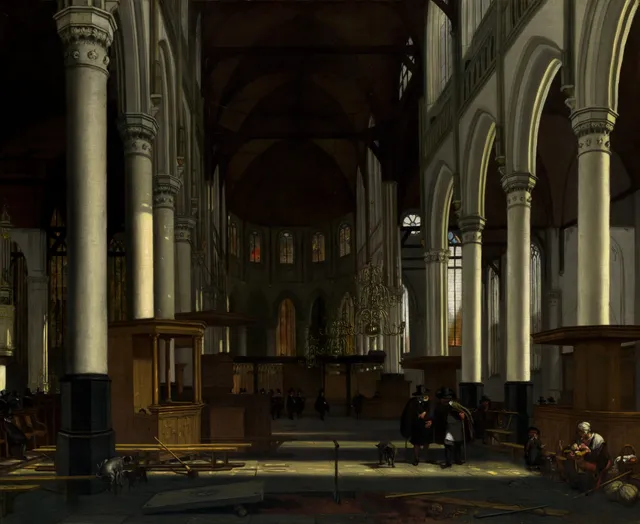 The Interior of the Oude Kerk, Amsterdam Emanuel de Witte
 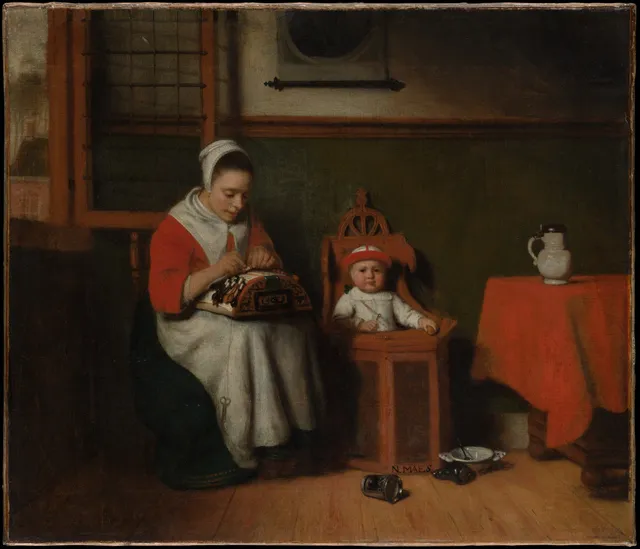 The Lacemaker Nicolaes Maes
 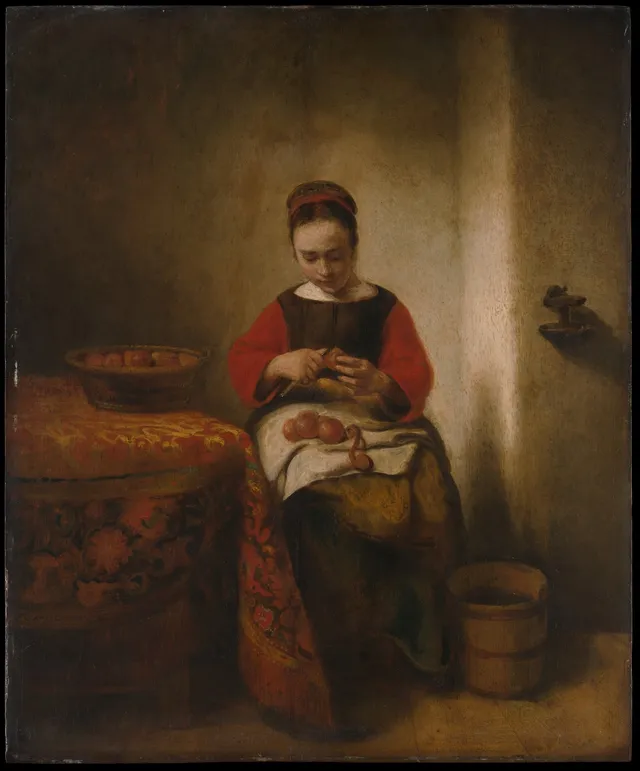 Young Woman Peeling Apples Nicolaes Maes
 From the in-app quiz
-
Which artist created the atmospheric perspective seen in the church interior, guiding the eye down the long nave?
- Nicolaes Maes
- Emanuel de Witte Answer
- Jan Steen
- Willem Claesz Heda
Emanuel de Witte is the master of these church interiors, using light and perspective to create a sense of vast, quiet space.
-
Identify the painting where a specific beam of light reveals a woman peeling apples.
Correct. In 'Young Woman Peeling Apples' by Nicolaes Maes, the light is focused precisely on the fruit and the woman's hands, highlighting her quiet concentration.
-
-
The Quiet Portrait
From the in-app quiz
-
Which painting features a figure traditionally identified as 'Flora' by the master of light and shadow?
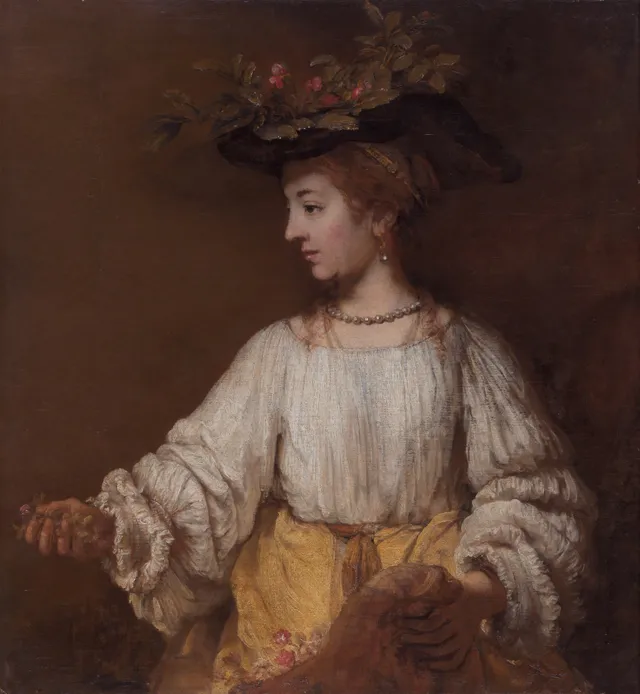 Flora Rembrandt van Rijn Answer
 You have found Rembrandt's 'Flora,' the 1654 oil painting where the artist captures the goddess with a human, gentle presence.
-
Which artist was long misattributed to Frans Hals but is now recognized as a master in her own right?
- Judith Leyster Answer
- Nicolaes Maes
- Jan Davidsz. de Heem
- Petrus Christus
Correct. Judith Leyster's talent was once overshadowed by her association with Frans Hals, but today she stands as a celebrated master of the era.
-
-
Land and Water
From the in-app quiz
-
Which painting features a prominent windmill against a dramatic, cloud-filled sky?
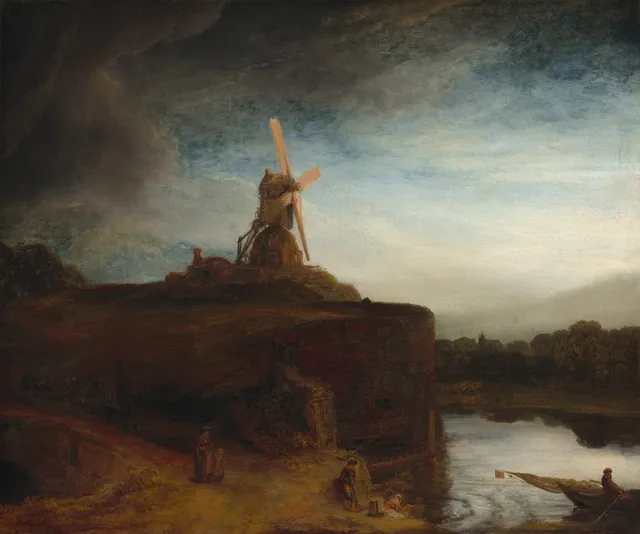 The Mill Rembrandt van Rijn Answer
 Correct. Rembrandt's "The Mill" is defined by its low horizon and the large, silhouetted windmill set against a brooding sky.
-
Identify the artist known for his sweeping landscapes of the Dutch countryside.
- Jan van Scorel
- Jacob van Ruisdael Answer
- Nicolaes Maes
- Willem Claesz Heda
Exactly right. Jacob van Ruisdael is celebrated for his grand, sweeping views of the Dutch countryside, often featuring dense forests and dramatic skies.
-
-
The Market and the Feast
From the in-app quiz
-
Which artist is famous for painting chaotic scenes that often hide a moral warning?
- Pieter de Hooch
- Jan Steen Answer
- Jan van Goyen
Jan Steen is celebrated for his lively, disorderly scenes that frequently contain a humorous moral lesson, often summarized by the phrase 'a Jan Steen household.'
-
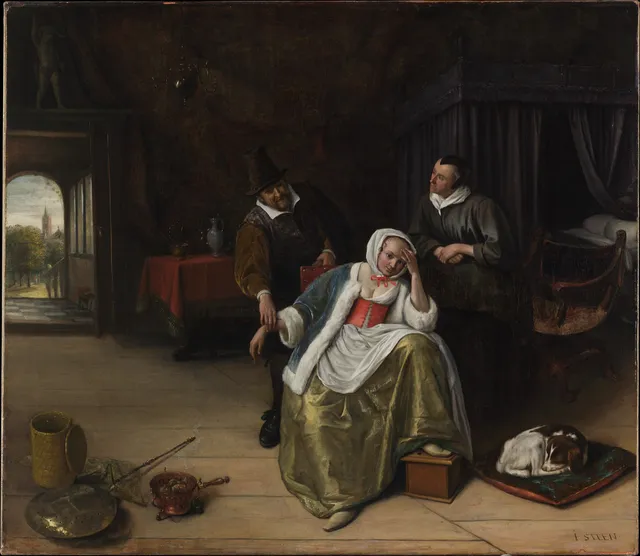
Identify the painting depicting a group of physicians in a humorous, disorderly setting.
This is the correct work by Jan Steen, where the medical setting is transformed into a scene of comic confusion and human folly.
-
-
The Flower Painter's Legacy
From the in-app quiz
-
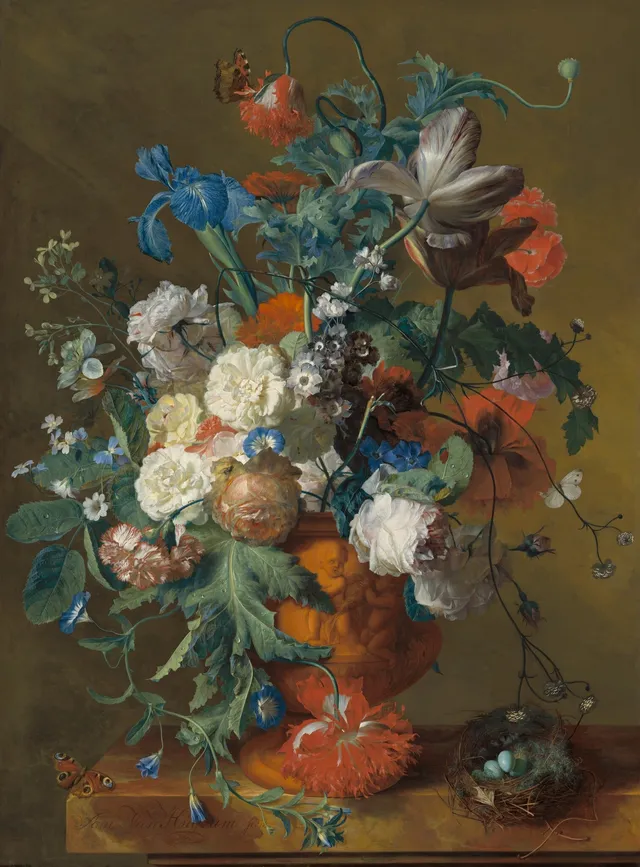
Which artist is celebrated for his later, highly detailed flower paintings featuring classical urns?
- Jan van Huysum Answer
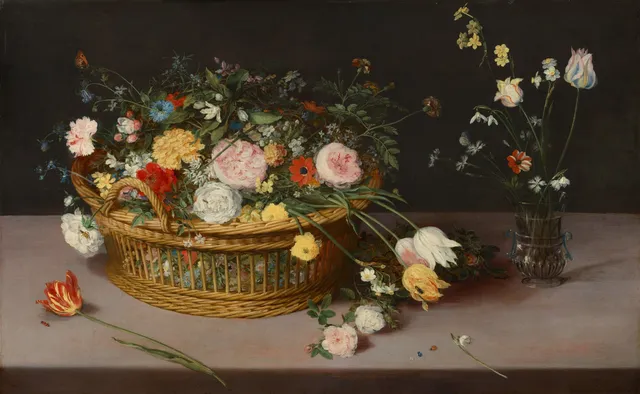
- Jan Brueghel the Elder
- Pieter Claesz
- Willem Claesz Heda
Jan van Huysum is the artist known for his later, incredibly detailed works like 'Flowers in an Urn', where he perfected the arrangement of blooms in classical vessels.
-
Identify the painting that features a vase of flowers with a butterfly perched nearby.
That is 'Flowers in an Urn' by Jan van Huysum, where a butterfly rests delicately among the blooms, adding a touch of life and symbolism to the composition.
-
-
Where to Meet the Art
From the in-app quiz
-
Which city is home to the Rijksmuseum, a primary repository for the masterpieces of this era?
- Amsterdam Answer
- Delft
- Rotterdam
- The Hague
Amsterdam is home to the Rijksmuseum, which houses an extensive collection of Dutch Golden Age art, including works by Rembrandt and Vermeer.
-
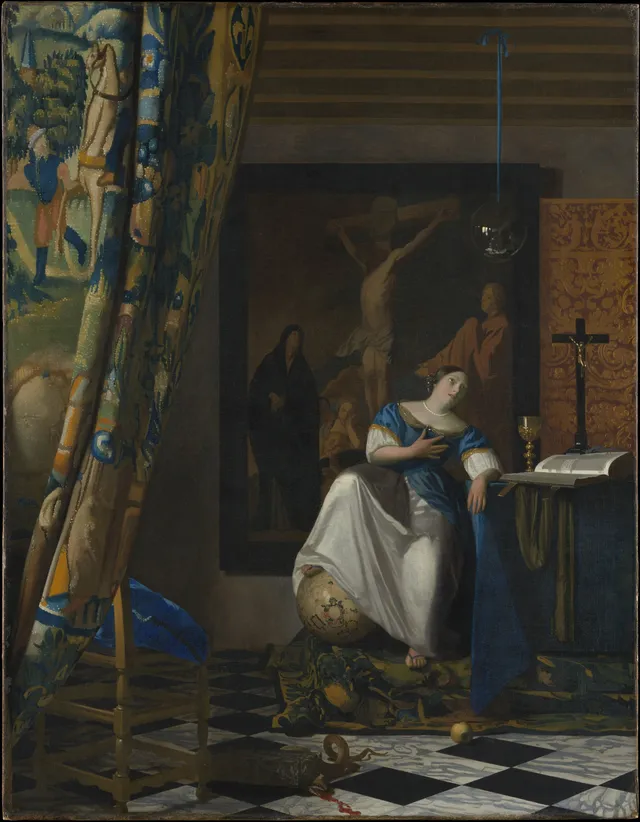
Identify the painting that offers a rare glimpse of religious symbolism in this Protestant context.
Vermeer’s 'Allegory of the Catholic Faith' is unique for its explicit Catholic symbolism, a rare subject in the predominantly Protestant Dutch Republic of the 17th century.
-