Artwork
Christ Presented to the People (Ecce Homo)
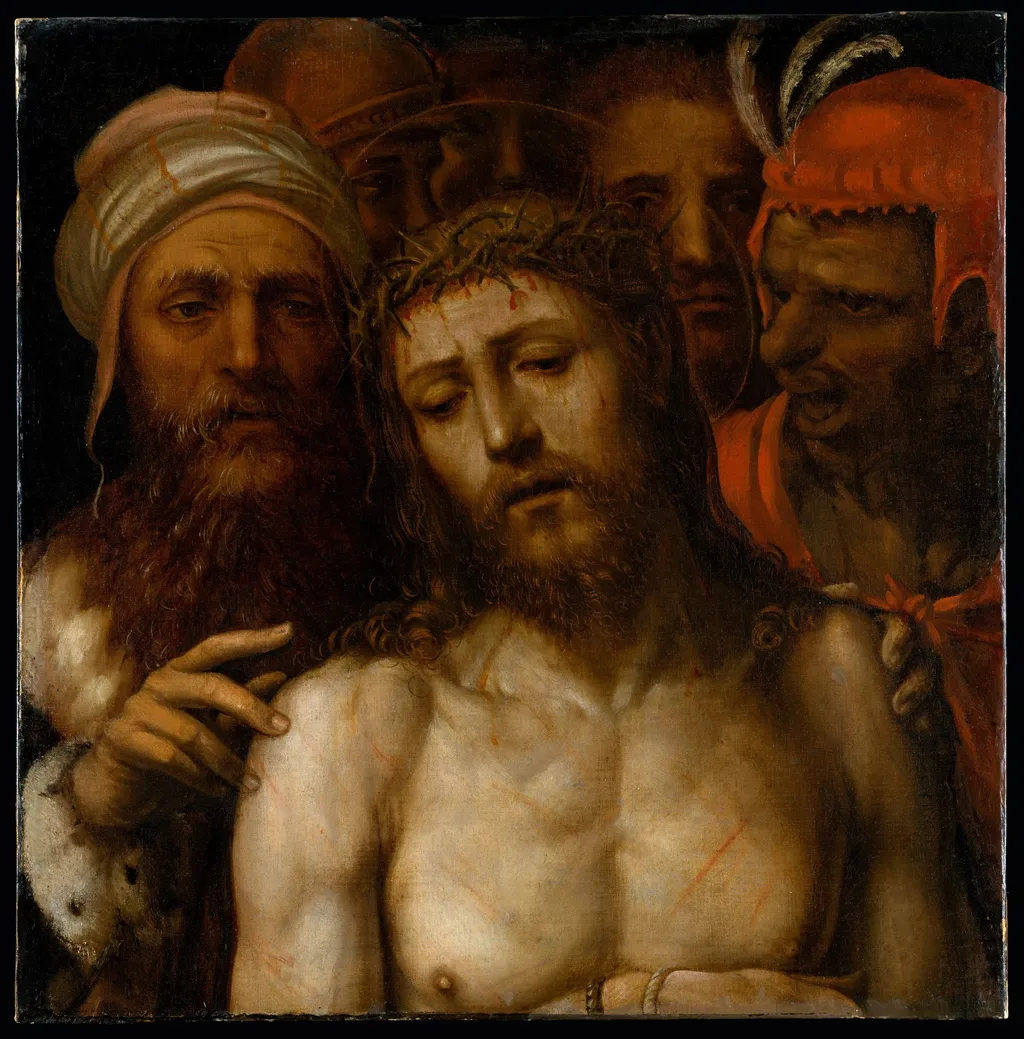
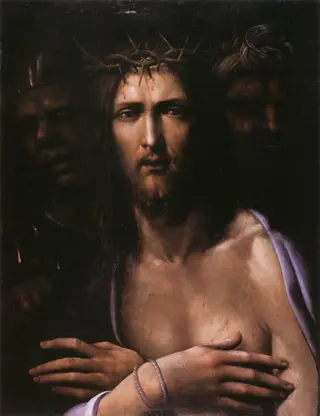
Christ Presented to the People (Ecce Homo) is an oil painting by the Mannerist artist Il Sodoma. It dates from 1544 and is held in the collection of the Metropolitan Museum of Art.
About this work
Subject & Meaning
These elements transform the standard Passion narrative into a work reflecting 16th-century geopolitical anxieties and contemporary social perceptions.
The painting depicts the biblical moment from John 19:5 where Pontius Pilate presents a bound, crowned, and bleeding Christ to the crowd, uttering "Ecce homo" (behold the man). Iconographically, the work diverges from strict historical accuracy by dressing Pilate in vaguely orientalizing Middle Eastern attire rather than Roman garb, a choice scholars interpret as a reference to the expanding Ottoman Empire and its conflicts with Christian Europe. To Christ's right stands a Black African figure, which carries layered symbolism: it may allude to the Arab slave trade and Muslim domination of Africa, or it may continue a European artistic tradition associating Black Africans with executioners, given the scene's proximity to the Crucifixion.
These elements transform the standard Passion narrative into a work reflecting 16th-century geopolitical anxieties and contemporary social perceptions.
Technique & Style
The work is executed in oil on canvas, measuring roughly 60 cm by 59 cm and dated to 1544. It was painted by Giovanni Antonio Bazzi, known as Il Sodoma, using conventional Renaissance oil techniques on a rectangular canvas support. The composition shows a bound, crowned Christ centrally positioned, presented by Pontius Pilate to a gathered crowd; Pilate is rendered in vaguely orientalizing dress, a reference to contemporary Ottoman influence.
A Black African figure stands at Christ's right, likely alluding to the slave trade and contemporary associations of black figures with executioners. The handling of light and color emphasizes the blood and crown, creating a stark, dramatic narrative within the religious genre.
History & Provenance
Christ Presented to the People is an oil-on-canvas work by the Italian painter Giovanni Antonio Bazzi, known as Il Sodoma, dated to 1544. Scholars, including those at the Metropolitan Museum of Art, have situated the painting within the closing decade of the artist's career, dating it to between 1540 and 1549, which makes it one of his late works. The painting was not recognized as an autograph work by Il Sodoma until the mid-19th century, having previously been lost to correct attribution or confused with other hands.
The work's frame is itself a historical artifact, carved in Siena in 1540, though some of its gilding may have been added later in the 19th century. The painting is now held in the collection of the Metropolitan Museum of Art.
Overview
This mid-16th-century oil painting, Christ Presented to the People (Ecce Homo), is the work of Italian artist Giovanni Antonio Bazzi, commonly known as Il Sodoma. Rendered on canvas, the composition depicts a pivotal biblical moment: Pontius Pilate's presentation of Jesus Christ to the crowd, accompanied by the declaration, "Behold the man." The artwork is presently held within the collection of the Metropolitan Museum of Art.
Own this work as a print
Artist & collection

Artist
Il Sodoma (1477 – 14 February 1549) was the name given to the Italian Renaissance painter Giovanni Antonio Bazzi.


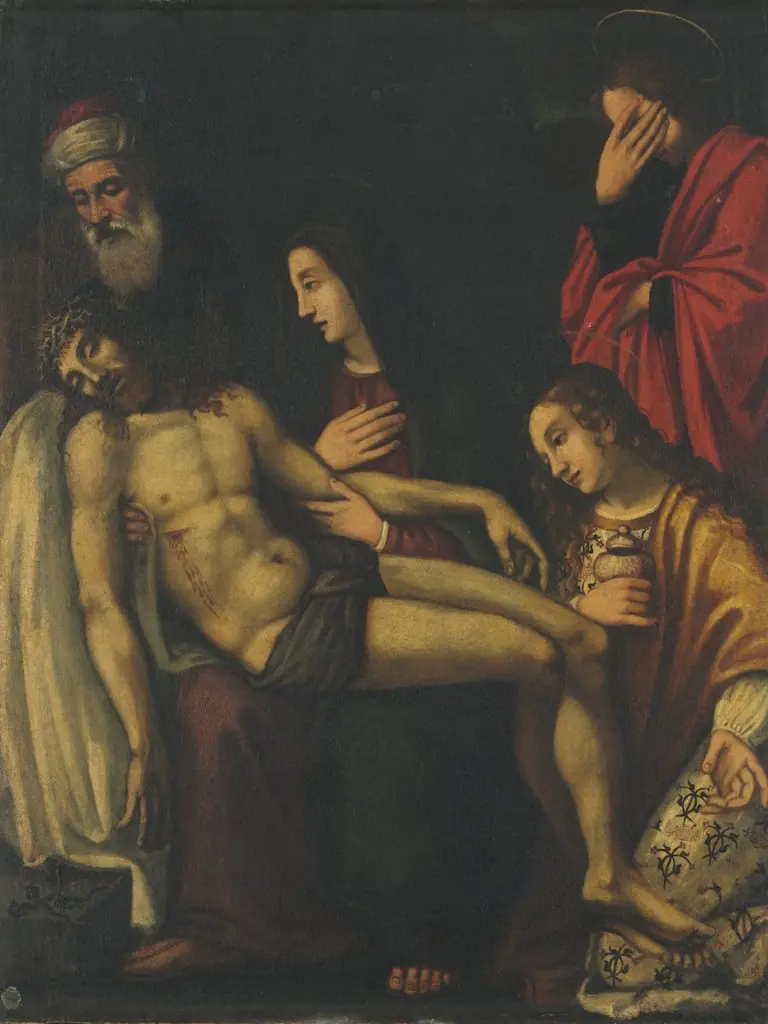 Pietà
Pietà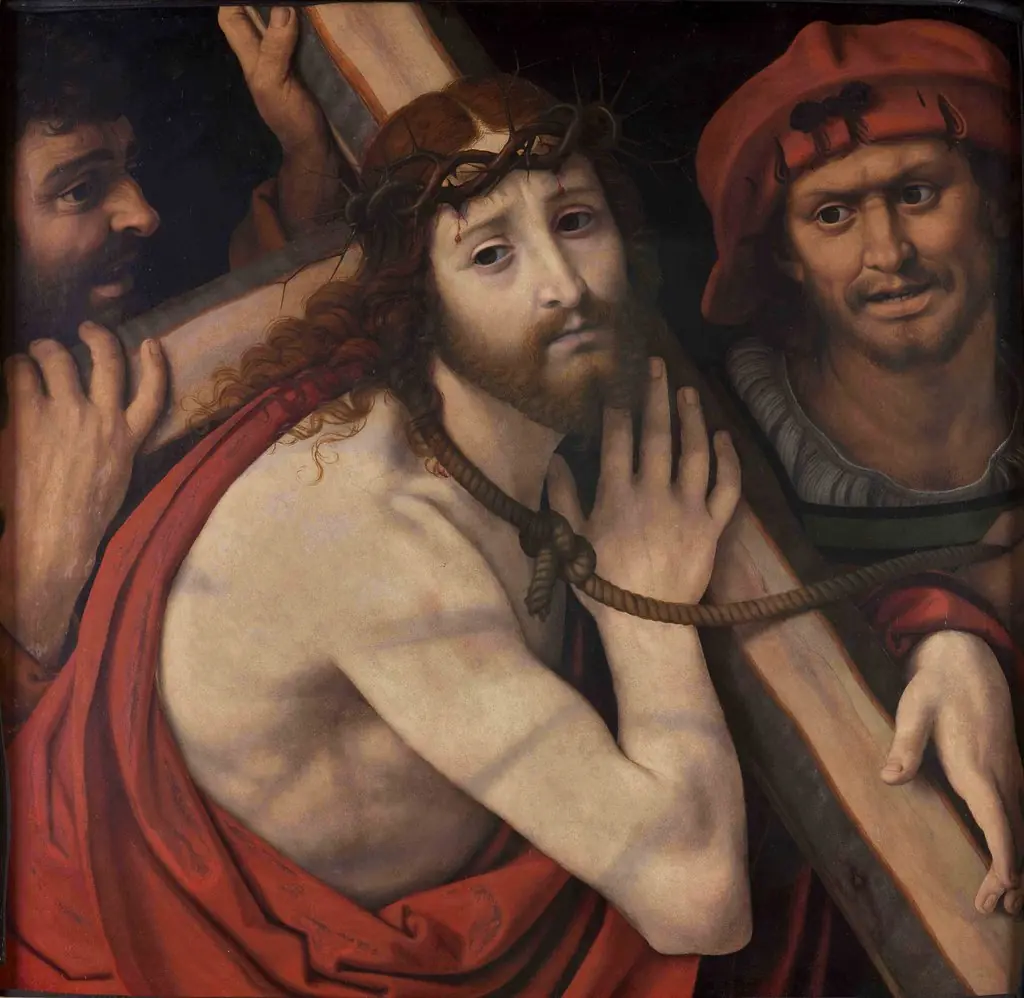 Christ carrying the Cross
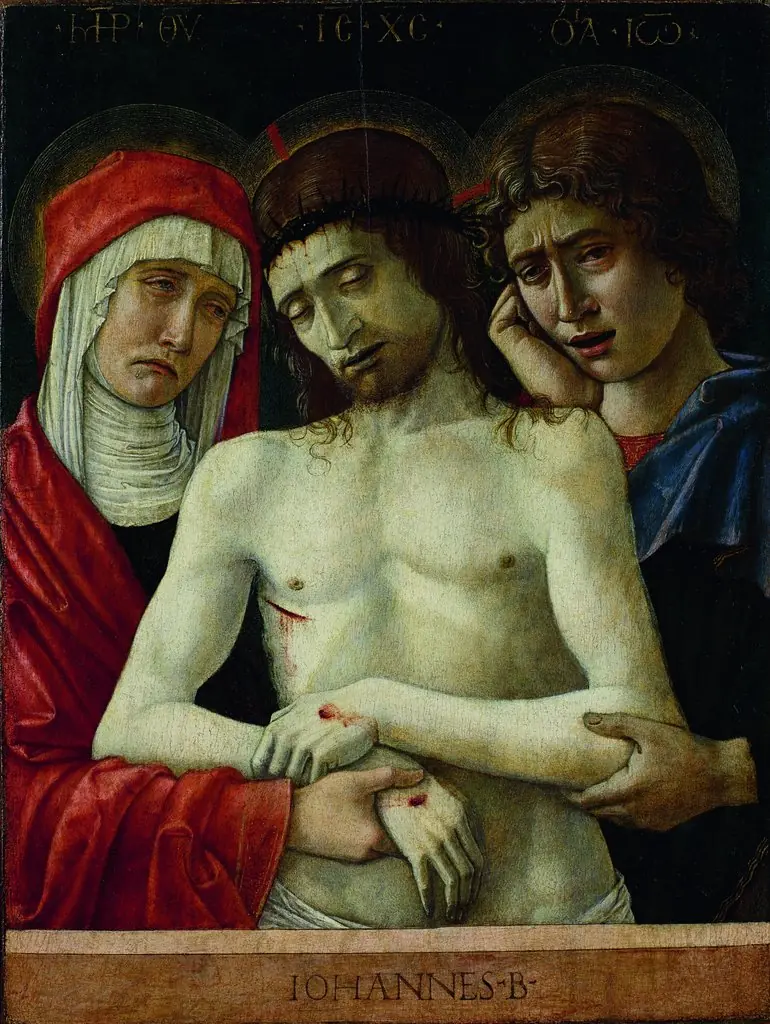 Pietà with Madonna and St. John the Evangelist
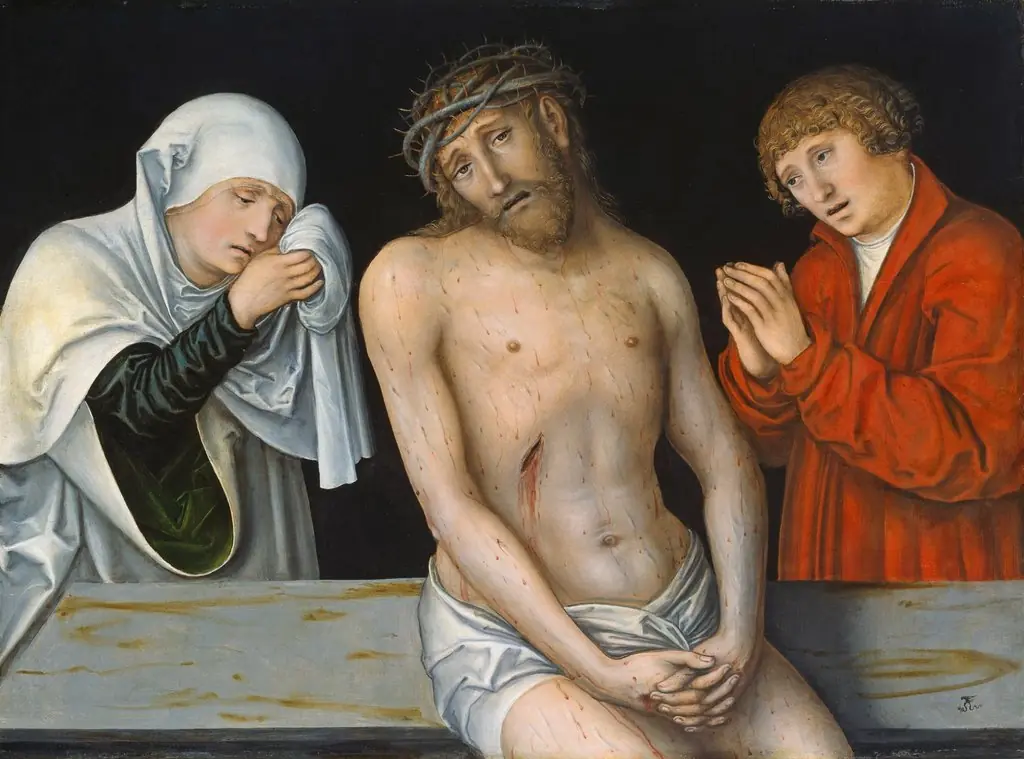 Man of Sorrows flanked by the Virgin and St John
 Pietà with Virgin and St. John
 Ecce Homo
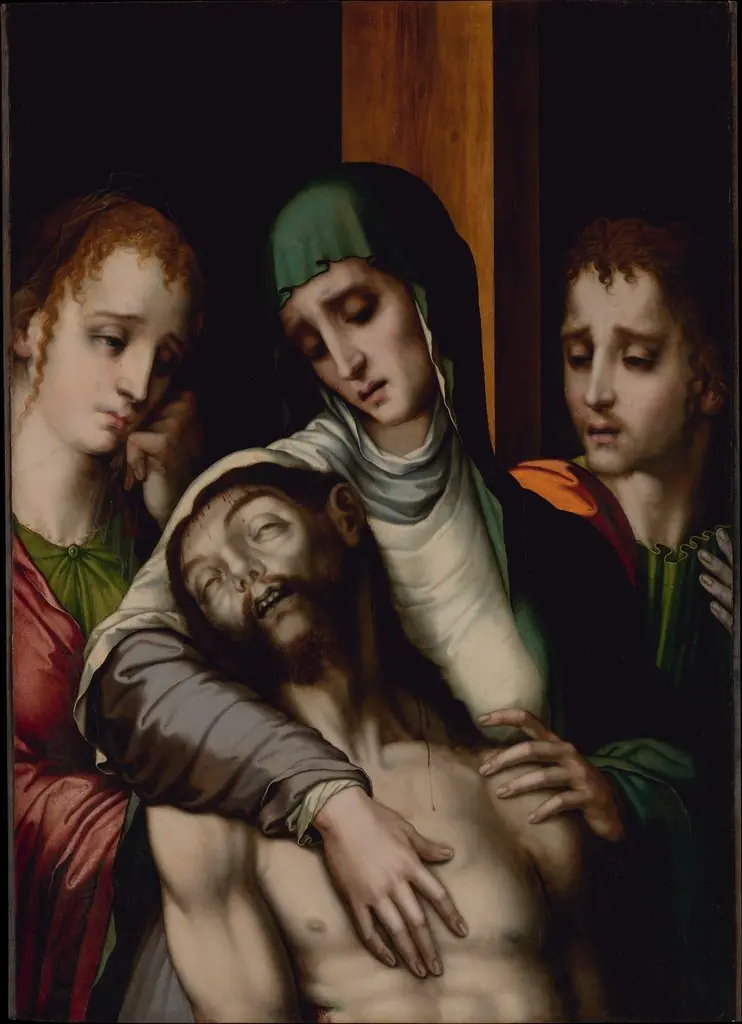 The Lamentation
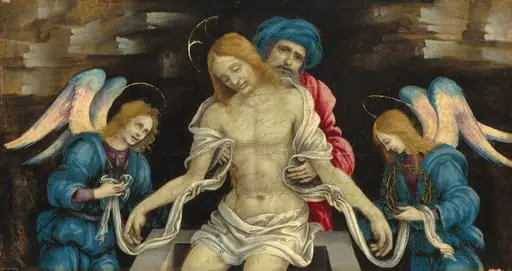 Pietà (The Dead Christ Mourned by Nicodemus and Two Angels)
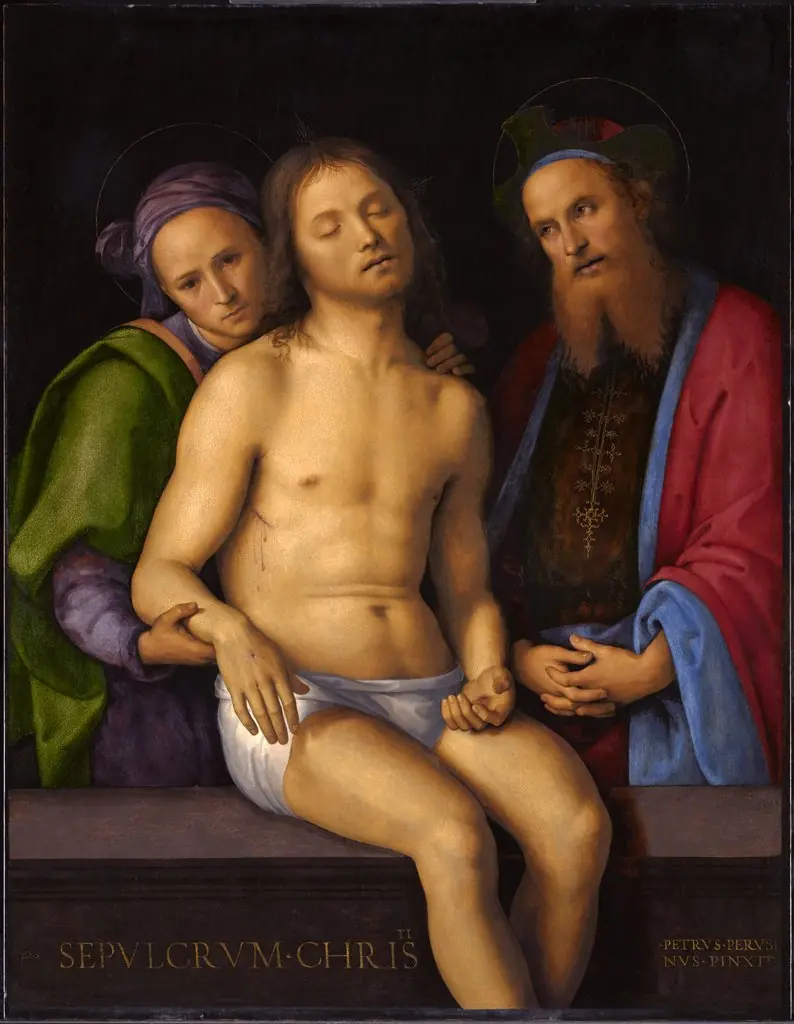 Pieta with Nicodemus and Joseph of Arimathea
 Pieta
Pieta Ecce homo
- Christ Shown to the People