Artwork
Ecce homo
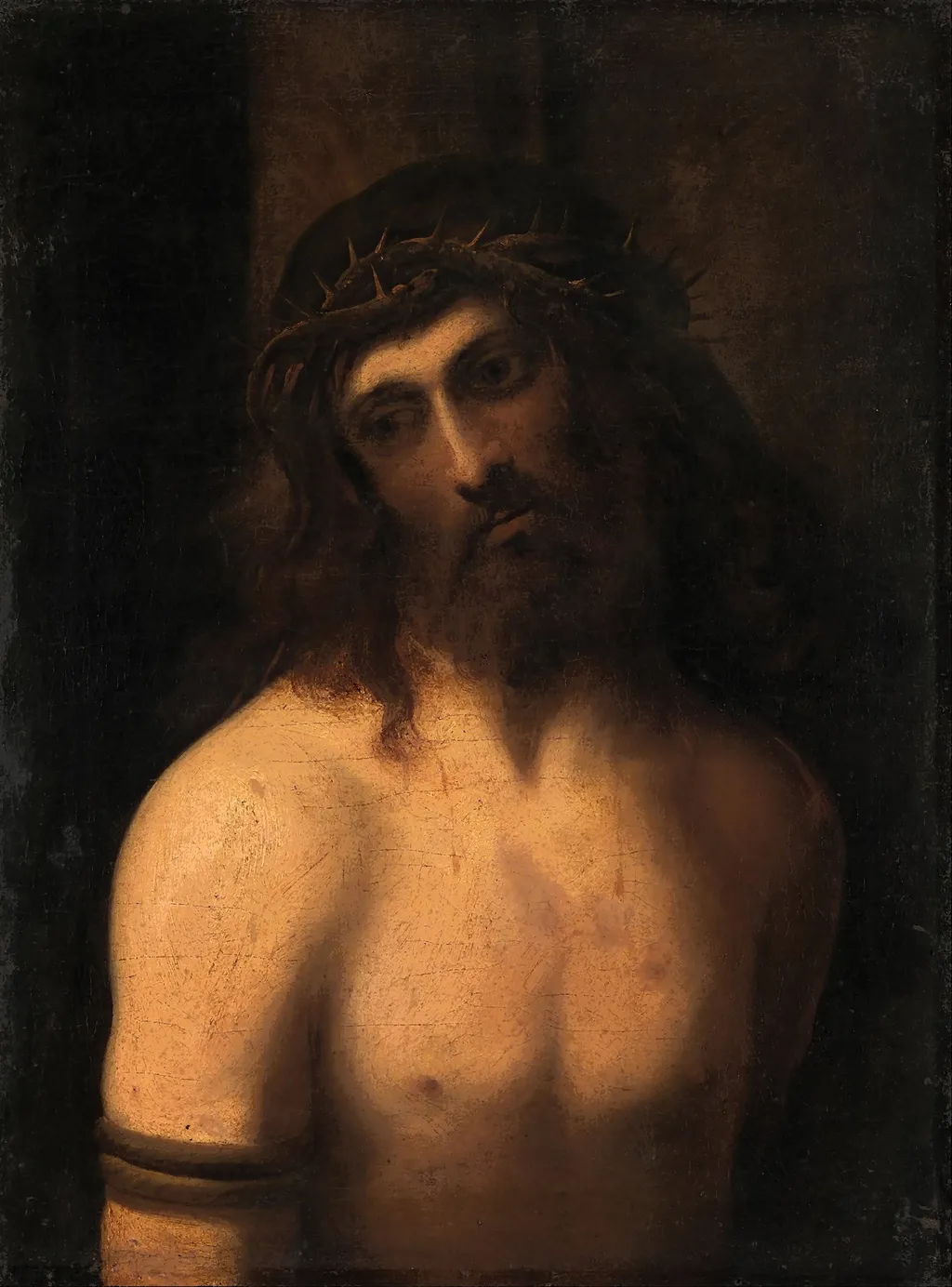
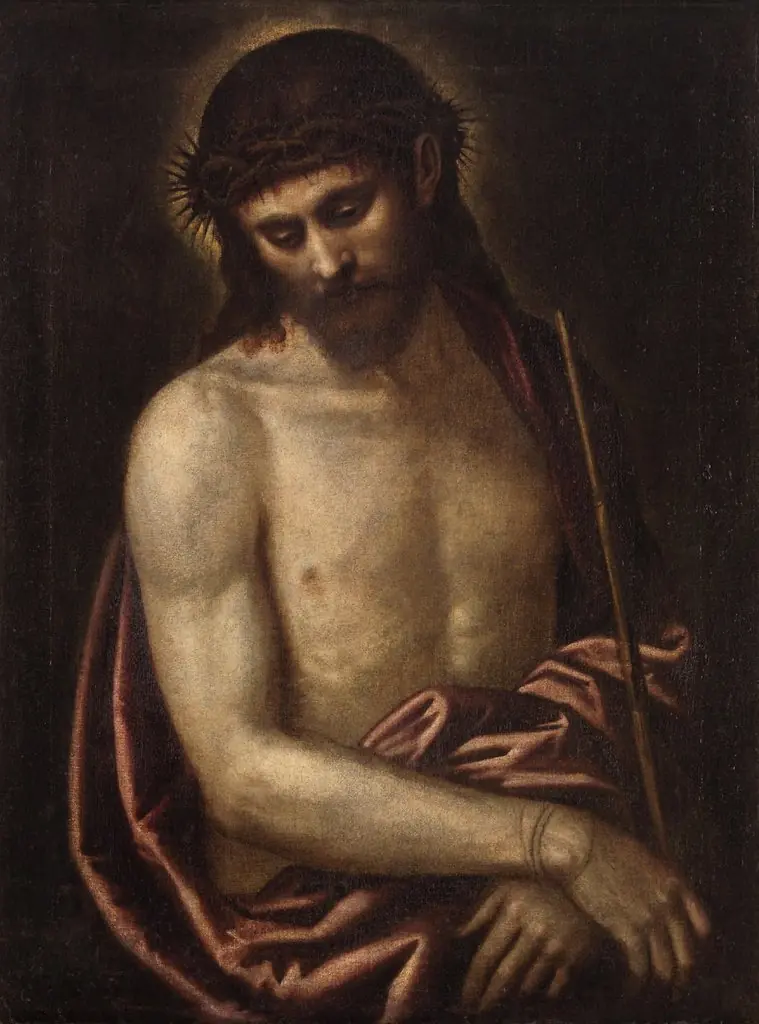
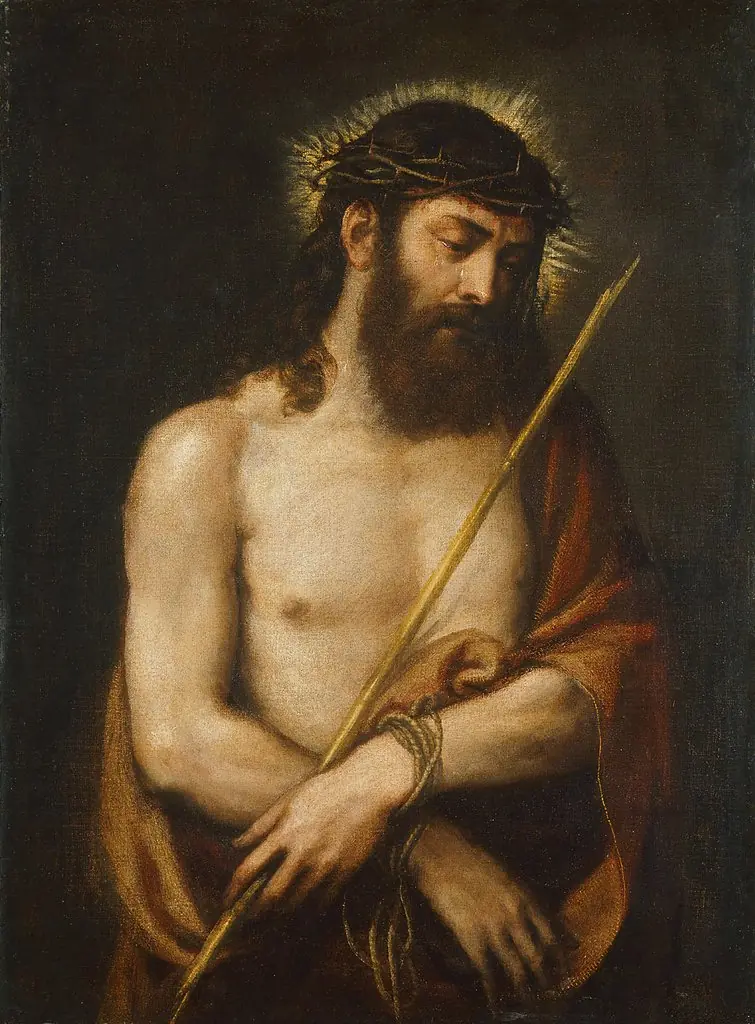
Ecce homo is an unspecified painting by the Mannerist artist Palma il Giovane. It dates from 1594 and is held in the collection of the Bavarian State Painting Collections.
About this work
Subject & Meaning
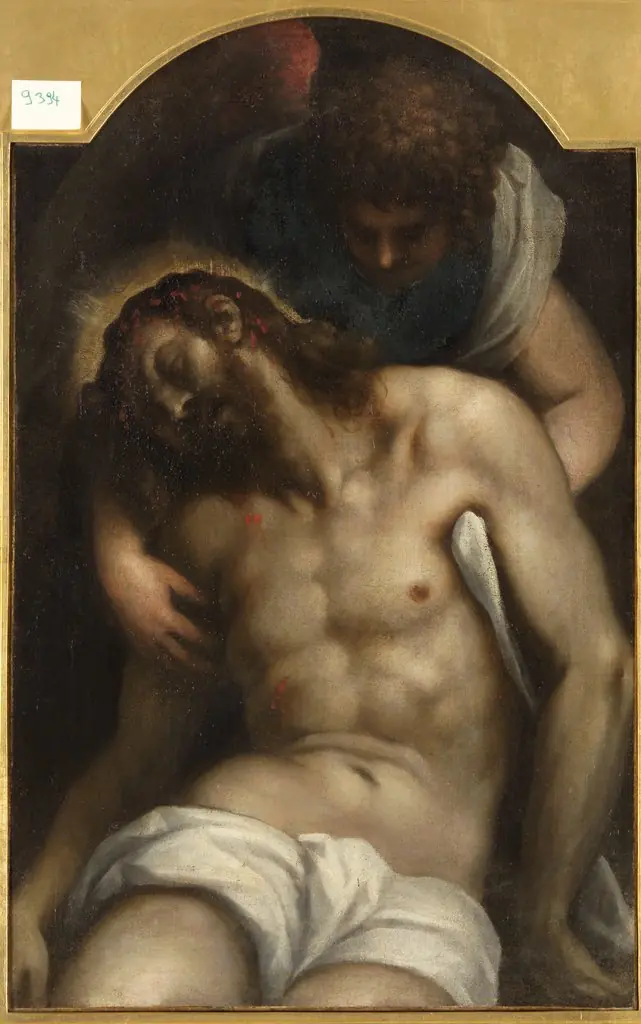
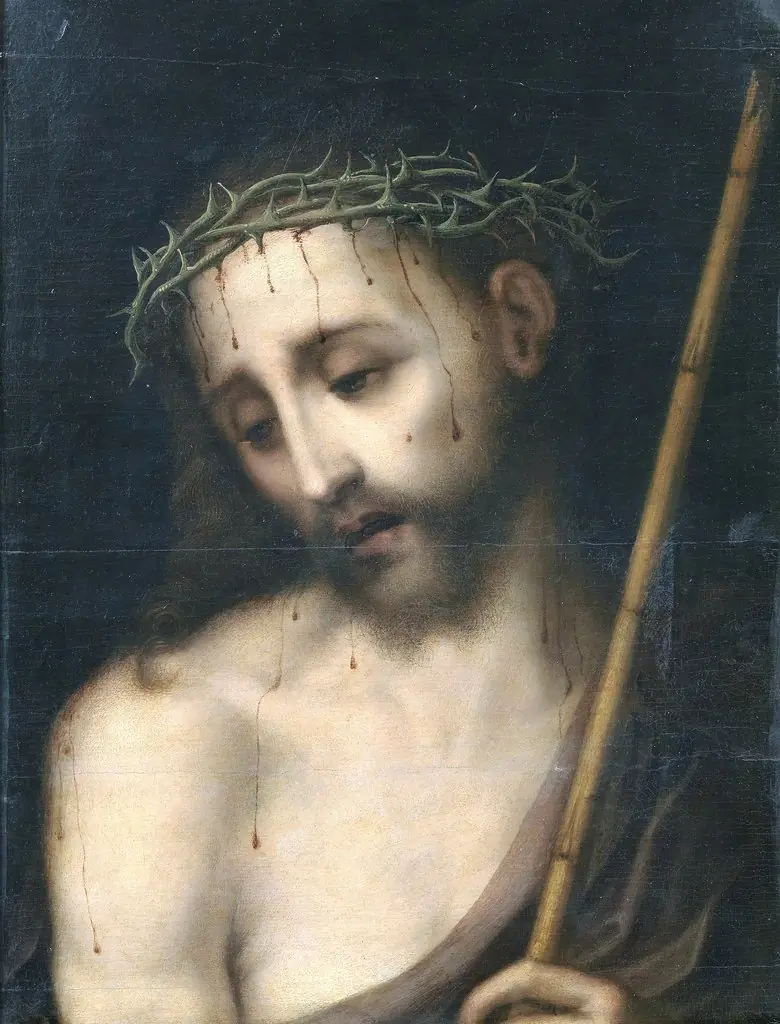
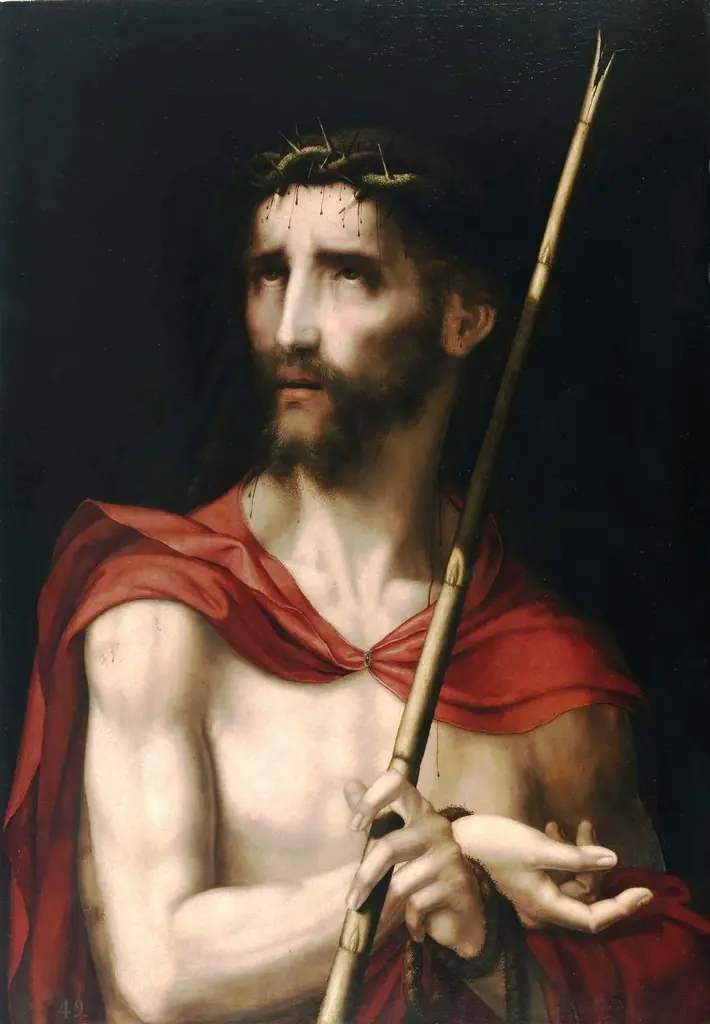
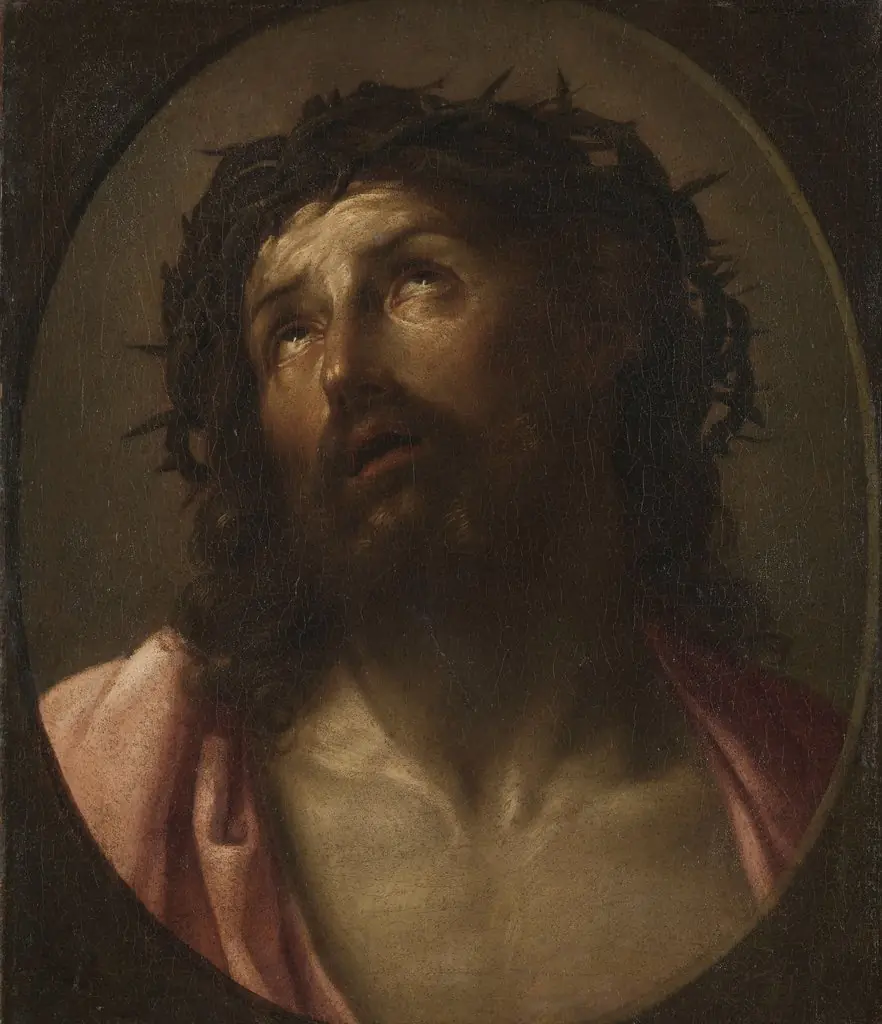
The painting depicts the biblical scene of Ecce Homo, presenting Jesus Christ as the central figure.
The painting depicts the biblical scene of Ecce Homo, presenting Jesus Christ as the central figure. The subject is explicitly characterized by the presence of a crown of thorns, a key iconographic element identifying the moment Pontius Pilate presents the scourged Christ to the crowd. As a work of religious art, the composition focuses entirely on this specific narrative episode, emphasizing the suffering and humiliation of the protagonist rather than a broader historical setting.
The imagery serves to visualize the moment of presentation described in the Gospel accounts, anchoring the work's meaning in the theological theme of Christ's passion.
Technique & Style
The painting is executed in oil on canvas, a medium typical of Venetian practice in the late sixteenth century. The composition is arranged on a rectangular support measuring approximately 60.2 cm in height and 45.7 cm in width. Palma il Giovane’s handling emphasizes fluid, luminous brushwork, aligning with the Venetian tradition of blending color and light to convey volume and texture.
The handling is broad yet precise in delineating the figure of Christ, with attention to the delicate rendering of the crown of thorns and the subtle play of light across the flesh and drapery. Stylistically, the work exemplifies late Mannerist tendencies, characterized by a restrained palette dominated by warm ochres and deep shadows, and a compositional focus on the solitary, monumental figure of Christ.
History & Provenance
The work titled Ecce homo was created by Palma il Giovane in 1586 as a religious painting. It entered the collection of the Bavarian State Painting Collections, where it remains held, though it has not been on public display. The piece depicts Jesus Christ wearing a crown of thorns, reflecting the Ecce Homo theme.
Its dimensions are 60.2 cm in height and 45.7 cm in width. The work was produced in the late 16th century, with its creation attributed to Palma il Giovane based on stylistic and documentary evidence.
The painting Ecce homo by Palma il Giovane is held in the Bavarian State Painting Collections at the Alte Pinakothek in Munich, where it remains in storage rather than on regular display. It was created in 1586 and entered the collection through the museum's holdings of works not currently exhibited. The work has not been part of any documented traveling exhibition, and its presence in the collection is recorded only through archival references to stored religious paintings.
Overview
Ecce Homo is a 1594 painting by Palma il Giovane, a prominent Venetian artist. It is a representation of Jesus Christ and is characteristic of the Mannerist style.
Own this work as a print
Artist & collection
Artist
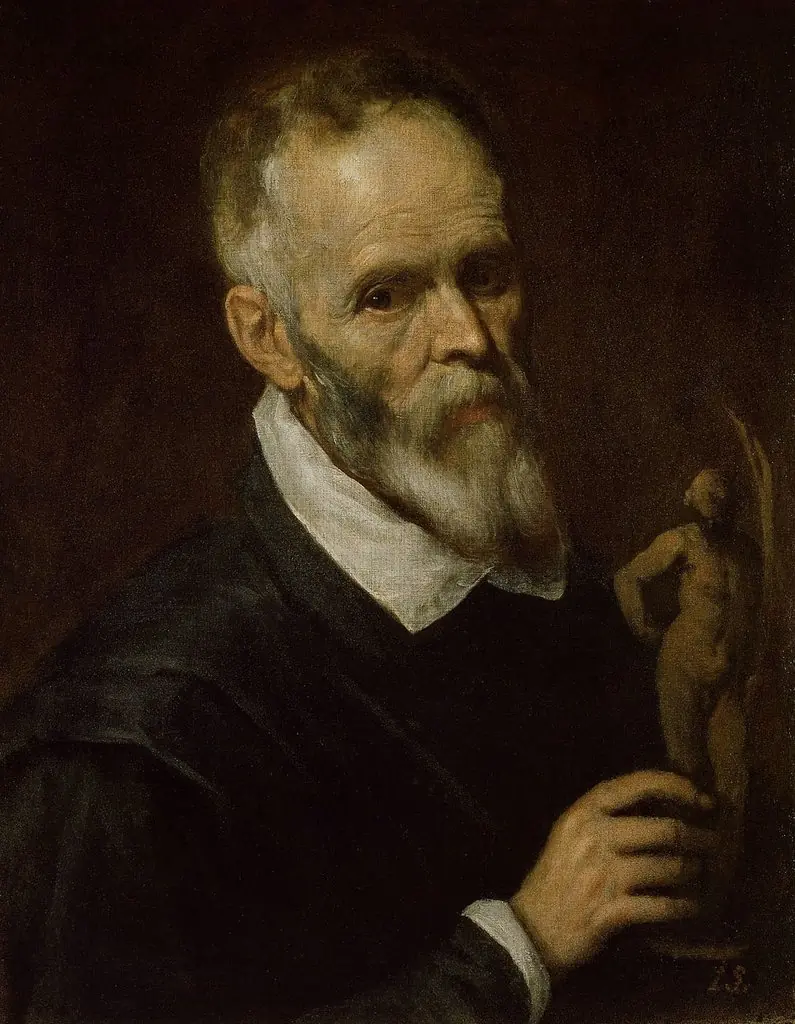
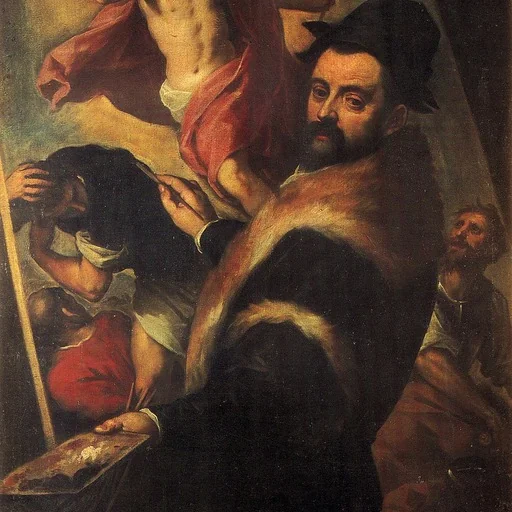
Iacopo Negretti (1548/50 – 14 October 1628), best known as Jacopo or Giacomo Palma il Giovane or simply Palma Giovane ('Young Palma'), was an Italian painter from Venice and a notable exponent of the Venetian school.