Artwork
The Holy Family
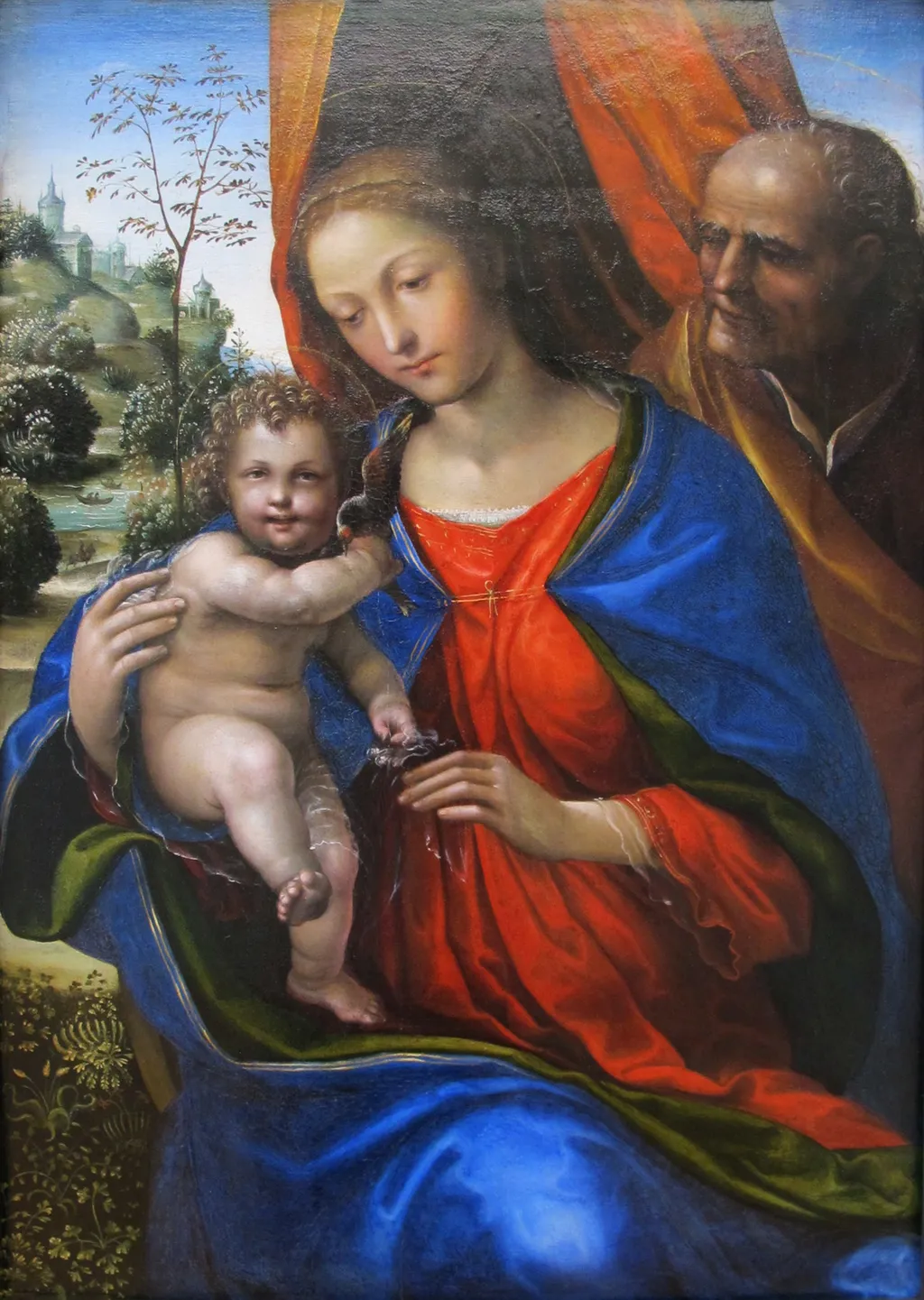
The Holy Family is an unspecified painting by the Mannerist artist Il Sodoma. It dates from 1511 and is held in the collection of the Bavarian State Painting Collections.
About this work
Subject & Meaning
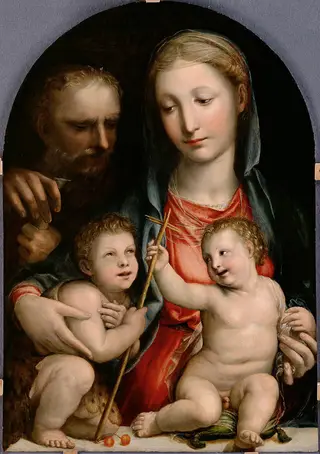
The painting depicts the traditional Christian subject of the Holy Family, centered on the figures of Mary, the Christ Child, and Joseph.
The painting depicts the traditional Christian subject of the Holy Family, centered on the figures of Mary, the Christ Child, and Joseph. As a work of religious art created by Il Sodoma in 1511, the composition focuses on this specific triad to represent the domestic and spiritual unity of the holy figures. The imagery serves as a devotional representation of the family unit central to Christian theology, adhering to the genre conventions of sacred narrative painting from the early sixteenth century.
History & Provenance
The painting known as The Holy Family was created in 1511 by the Italian artist Il Sodoma, also identified as Giovanni Antonio Bazzi. This religious work depicts the Virgin Mary, the Christ Child, and Saint Joseph. The piece is currently held within the Bavarian State Painting Collections and is housed at the Alte Pinakothek.
While the specific circumstances of its original commission and the detailed chain of ownership prior to its current museum status are not provided in the available records, the work's inception is firmly dated to the beginning of the sixteenth century.
The Holy Family by Il Sodoma is held in the collection of the Bavarian State Painting Collections. The work is located at the Alte Pinakothek in Munich. Created in 1511, this religious painting depicts Mary, the Christ Child, and Joseph.
No specific inventory number or exhibition history for this work is provided in the available sources.
Overview
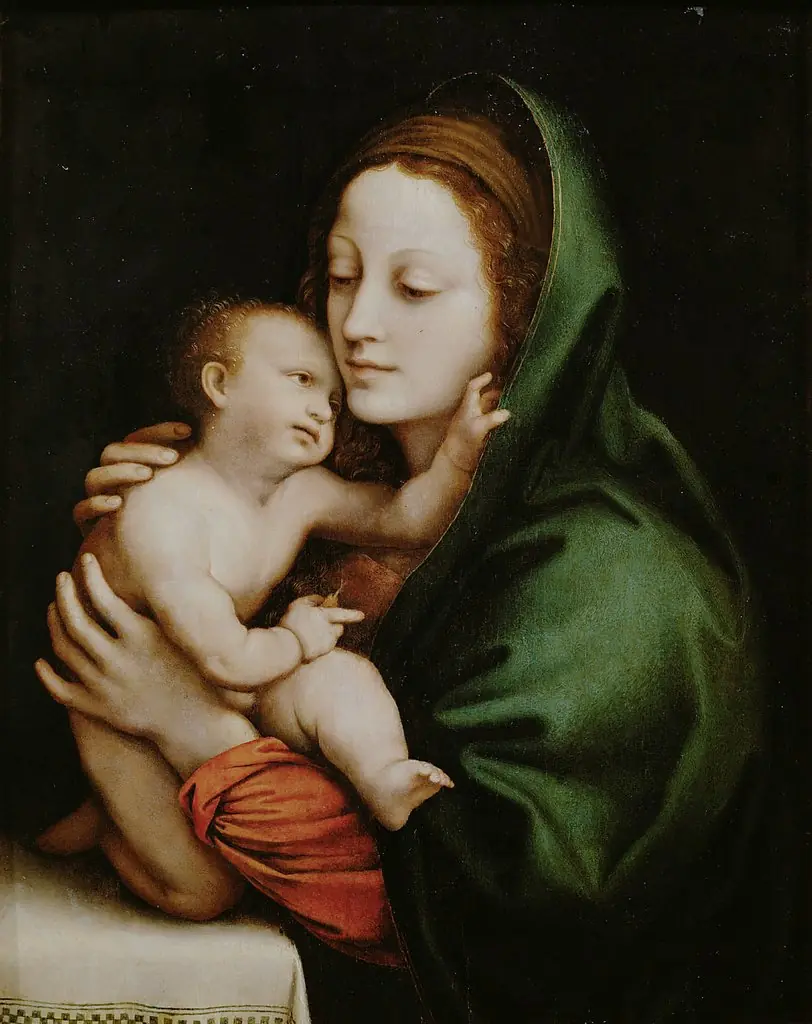
Created in 1511, The Holy Family is an oil painting by Giovanni Antonio Bazzi, known as Il Sodoma. The work presents a small group of three figures set against a muted landscape, rendered with a gentle handling of light that draws attention to the central female figure. It is part of the collection of the Alte Pinakothek in Munich.
Technique & Style
Il Sodoma combines the balanced forms of the early‑sixteenth‑century Roman High Renaissance with the decorative sensibility of his native Siena. The painting employs soft transitions between tones, a technique reminiscent of sfumato, which gives the figures a hazy, atmospheric quality. The background features a distant scene of trees and low buildings rendered in cool blues and greens, enhancing the sense of depth.
Context
Produced during a time when mannerist tendencies were emerging, the painting reflects a shift toward more expressive poses and elongated forms within the broader Renaissance framework. Il Sodoma’s synthesis of Roman classicism and Sienese ornamentation situates the work at a crossroads of regional styles, illustrating the fluid artistic exchanges of early 1500s Italy.
Own this work as a print
Artist & collection

Artist
Il Sodoma (1477 – 14 February 1549) was the name given to the Italian Renaissance painter Giovanni Antonio Bazzi.