Artwork
Marcotte d'Argenteuil
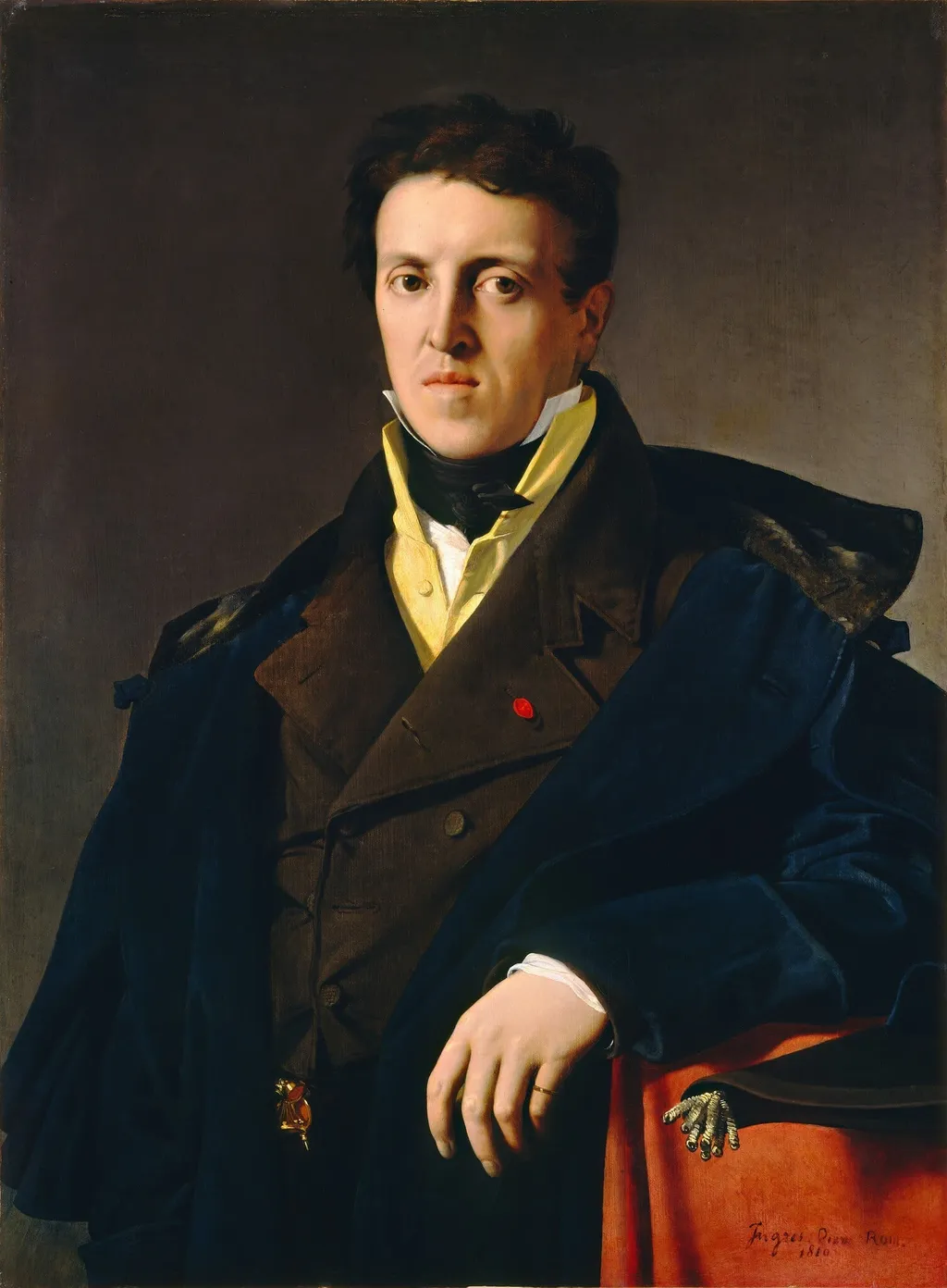
Marcotte d'Argenteuil is an oil painting by the Neoclassicist artist Jean Auguste Dominique Ingres. It dates from 1810 and is held in the collection of the National Gallery of Art.
- Inscription
- Inscribed:lower right: Ingres.Pinx.Rom. / 1810
About this work
Subject & Meaning
The work was exhibited at the Salon of 1814 and later entered the National Gallery of Art collection.
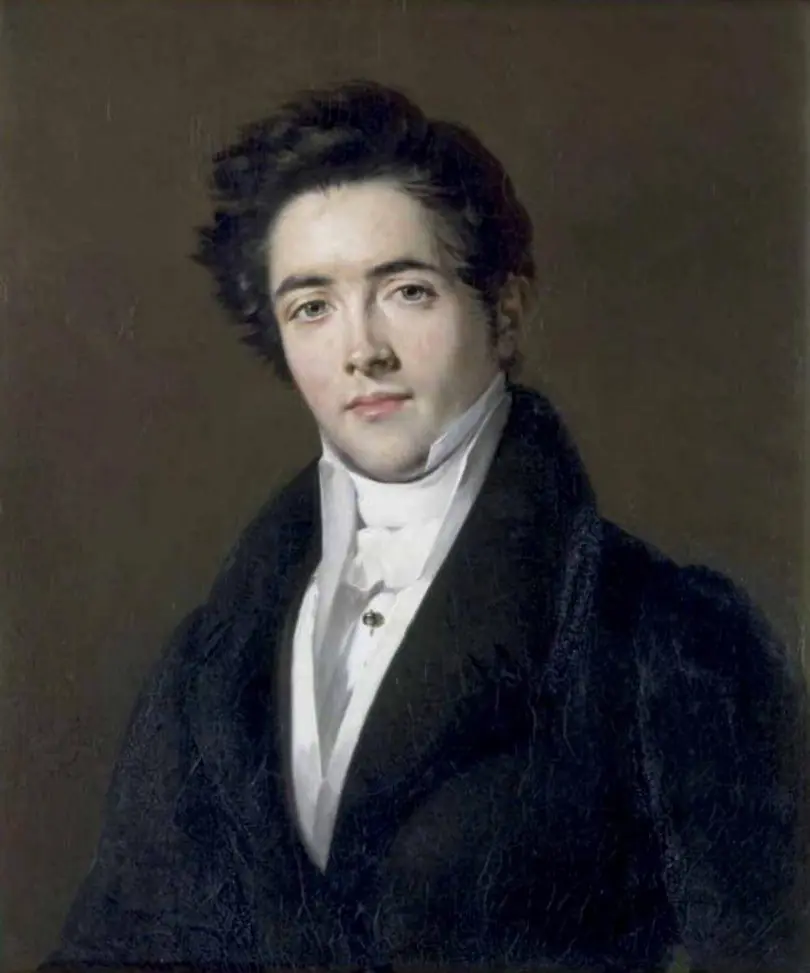
The portrait shows Charles Marcotte d'Argenteuil, a French inspector general of waters and forests in Napoleonic Rome, rendered in a stiff, formal pose that reflects his official status. He wears a blue carrick with a velvet collar, a starched white collar, and a yellow waistcoat, standing against a plain grey‑green backdrop while leaning on a table draped with a red cloth; his tightly pursed lips, stern expression, and claw‑like left hand echo the austerity of Ingres’s early self‑portraits, signaling a neoclassical emphasis on authority and patronage. The work was exhibited at the Salon of 1814 and later entered the National Gallery of Art collection.
Technique & Style
Marcotte d'Argenteuil is an oil on canvas measuring 93.7 by 69.4 cm, executed in 1810 during Ingres's first stay in Rome. Ingres signed and dated the work on the lower right, over the red cloth draped on the table. The sitter stands against a plain grey-green background, leaning against a corner of that table.
He wears a blue carrick with a cape and velvet collar over a white shirt and yellow waistcoat, with a stiff, starched white and yellow neck collar and a black multi-turn cravat. His hair is rendered slightly ruffled, and special attention is given to his claw-like left hand with long sinuous fingers, a shape echoed by the tassels protruding from the bicorne resting on the table. Art historians have observed that the sitter's stiffness recalls Ingres's own early self-portraits, particularly that of 1804.
History & Provenance
The Marcotte d’Argenteuil was commissioned by Charles-Marie-Jean-Baptiste Marcotte d’Argenteuil as a gift for his mother and painted by Ingres in 1810 during the artist’s first Roman sojourn. Ingres signed and dated the work on the lower right over the red cloth. Marcotte disliked the stern portrayal and asked Ingres to keep his displeasure private; the painting remained with him until his death in 1864.
It then passed to his son Joseph, followed by Joseph’s widow until 1922, and then to their daughter Élisabeth Pougin de la Maisonneuve until 1935. After residing in a London private collection, it was acquired by Wildenstein & Co. in an unspecified year and sold to the Samuel H. Kress Foundation in June 1949, which donated it to the National Gallery of Art, Washington, in 1952.
The painting is held by the National Gallery of Art, Washington, D.C., accessioned as 1952.2.24 after its 1952 gift from the Samuel H. Kress Foundation. It was first exhibited at the Salon of 1814. By descent it remained with the sitter’s family until 1935, then entered a private London collection, passed through Wildenstein & Co., New York, and was acquired by the Kress Foundation in June 1949 before its donation.
Context
The 1810 oil on canvas portrait of Charles Marcotte d'Argenteuil exemplifies Ingres's Roman-period neoclassicism, combining rigorous draftsmanship with a stark psychological portrait; scholars note its stiff military uniform, stern expression, and visual echo of Ingres's 1804 self‑portrait, reflecting the artist's early self‑image and patronage network [2][3][4][5]. Critical commentary has highlighted the work's severe characterization and technical mastery, situating it within Ingres's broader oeuvre of portraiture that documents early‑19th‑century French elite [3][4]. The painting remained in the Marcotte family until its 1949 sale to Samuel H. Kress and subsequent gift to the National Gallery of Art, where it is catalogued as part of the Kress Collection [3][4]
Legacy
The Marcotte d’Argenteuil has been cited as a touchstone of Ingres’s Roman-period portraiture and a paradigm of early-19th-century French Neoclassical portrait ideals. Its display at the Salon of 1814 helped consolidate Ingres’s reputation among critics and collectors, while later exhibitions, most notably Portraits by Ingres: Image of an Epoch (Metropolitan Museum of Art, 1999), cemented its status within canonical histories of the genre. Scholars such as Philip Conisbee and Robert Rosenblum have repeatedly invoked the work to illustrate Ingres’s stylistic authority and the social ascendancy of his patrons.
Its inclusion in the Samuel H. Kress Foundation’s donation to the National Gallery of Art in 1952 further entrenched its legacy in American museum culture, where it remains a reference point for discussions of Ingres’s influence on later portraitists.
Overview
Jean-Auguste-Dominique Ingres's 1810 oil on canvas, Marcotte d'Argenteuil, depicts Charles Marie Jean Baptiste Marcotte. Executed during the artist's initial period in Rome, this Neoclassical portrait captures the sitter at approximately 36 or 37 years old. Marcotte, an inspector general for Waters and Forests under Napoleonic rule, is presented with a direct gaze, reflecting the precise draftsmanship characteristic of Ingres's early work. The painting is now held by the National Gallery of Art.
Own this work as a print
Artist & collection

Artist
Jean-Auguste-Dominique Ingres was a French Neoclassical painter. Ingres was profoundly influenced by past artistic traditions and aspired to become the guardian of academic orthodoxy against the ascendant Romantic…

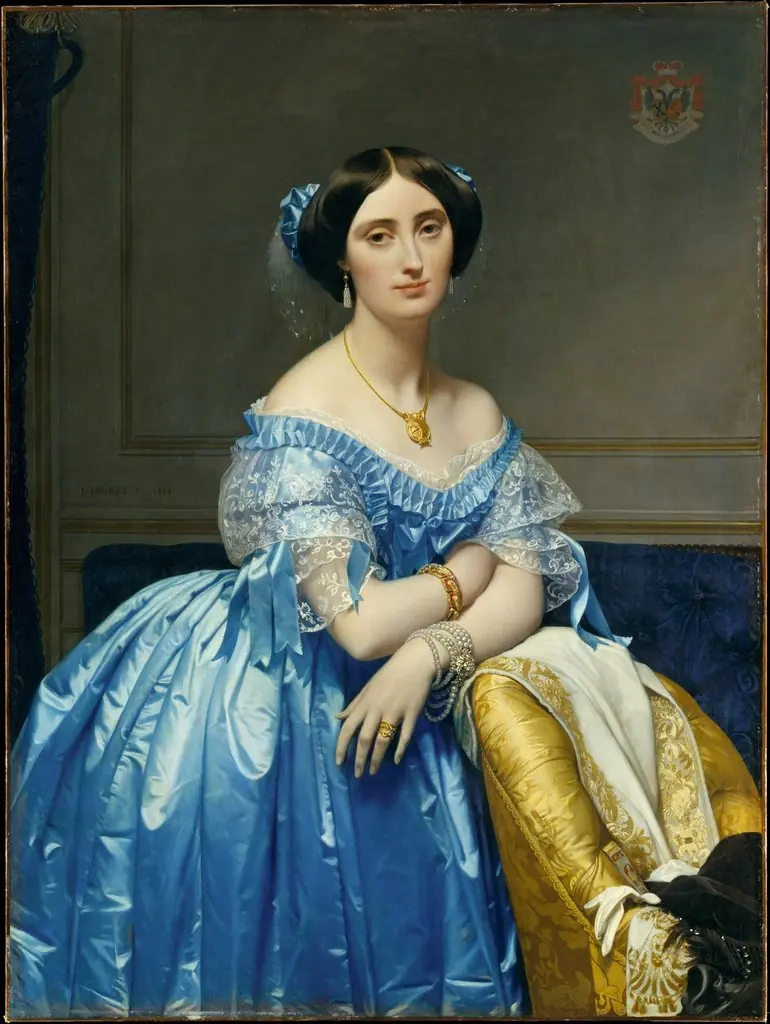 Joséphine-Éléonore-Marie-Pauline de Galard de Brassac de Béarn (1825–1860), Princesse de Broglie
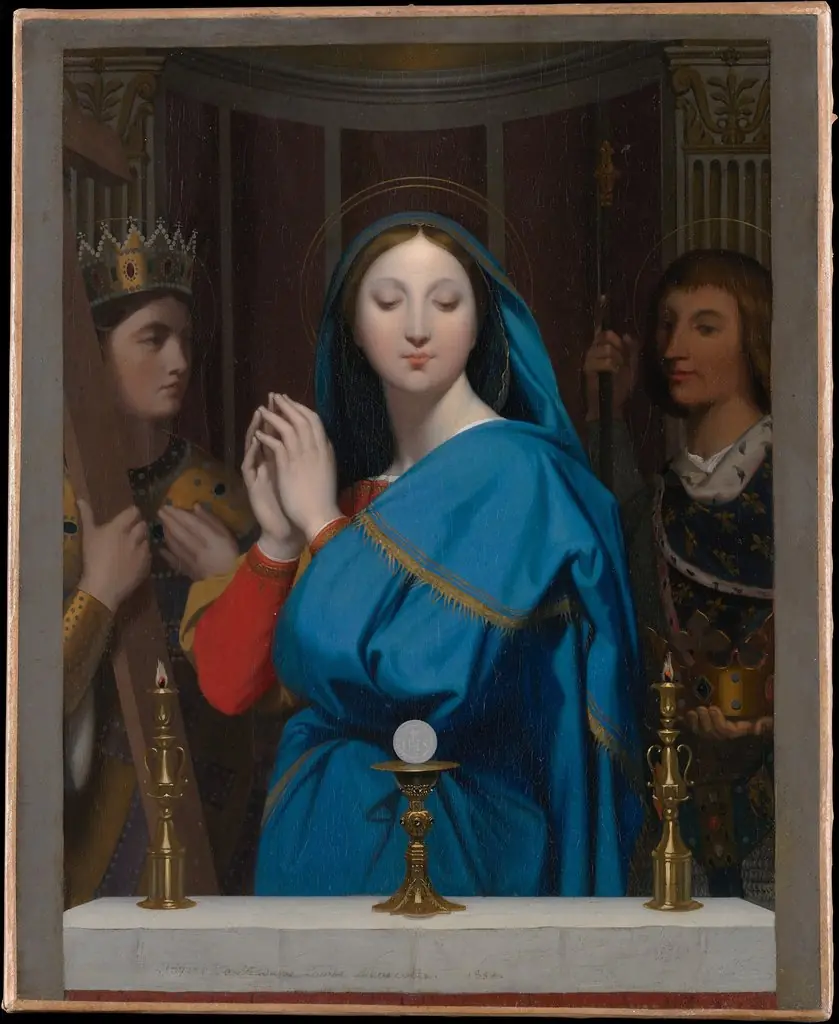 The Virgin Adoring the Host
 Pope Pius VII in the Sistine Chapel
 Aretino in the Studio of Tintoretto
 Madame Moitessier
 Jacques-Louis Leblanc (1774–1846)
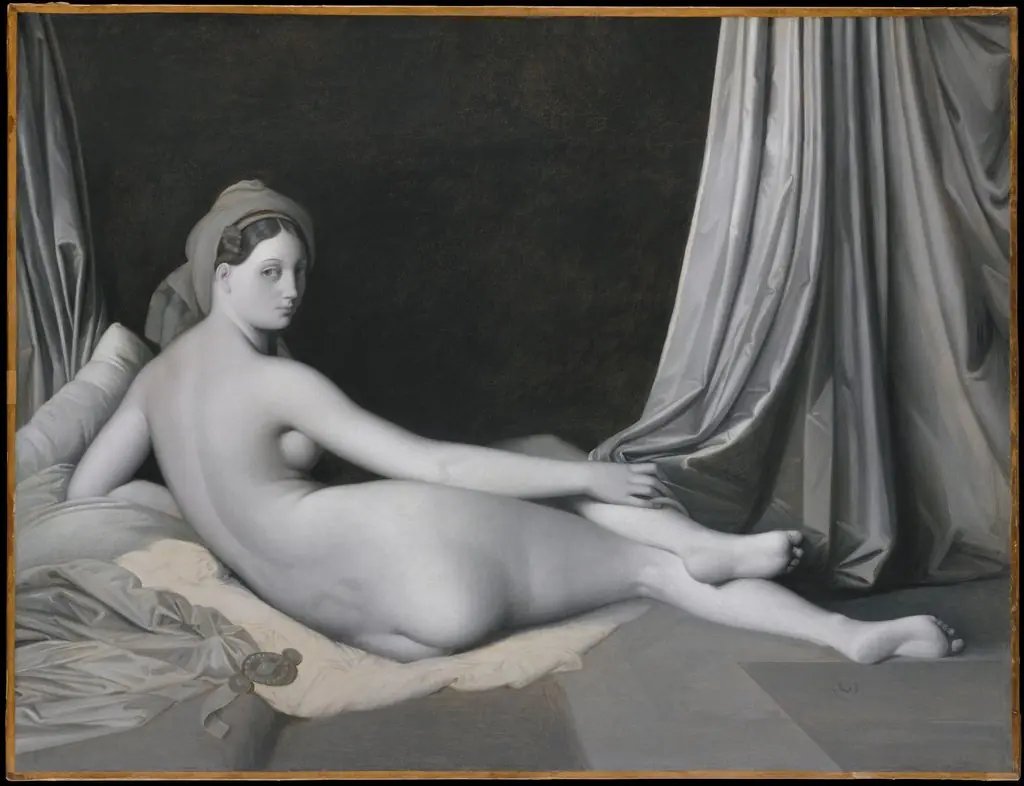 Odalisque in Grisaille
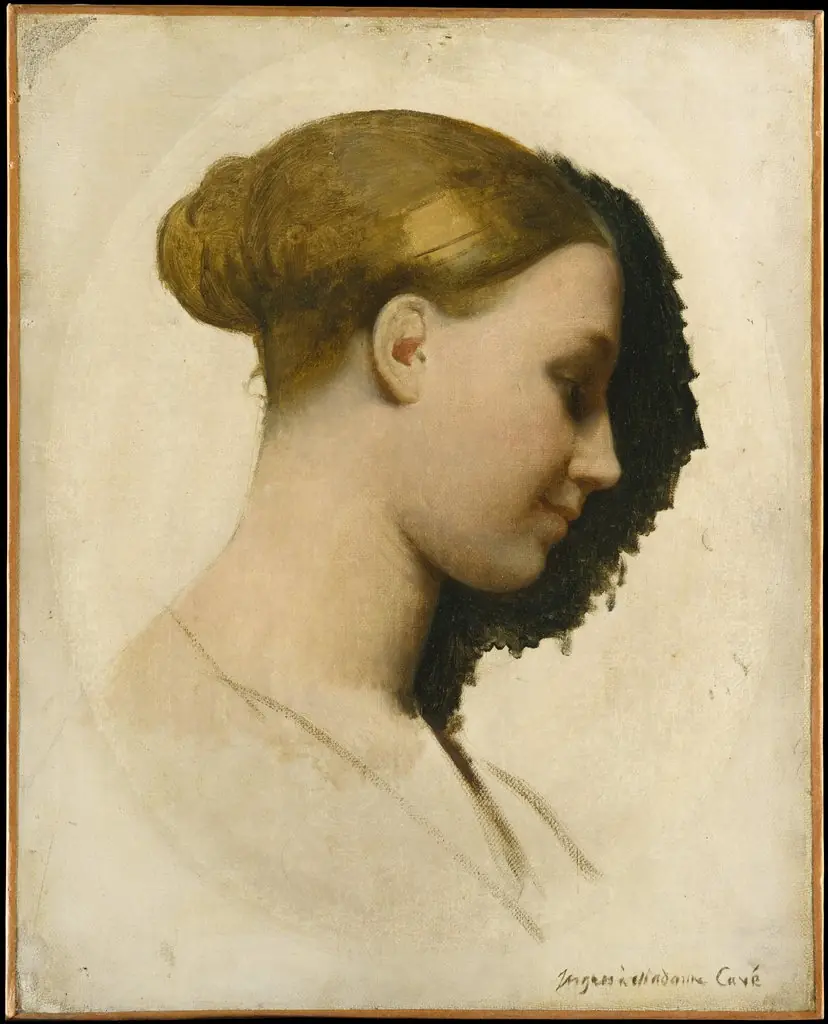 Madame Edmond Cavé (Marie-Élisabeth Blavot, born 1810)
- Portrait of Baron Joseph-Pierre Vialetès de Mortarieu
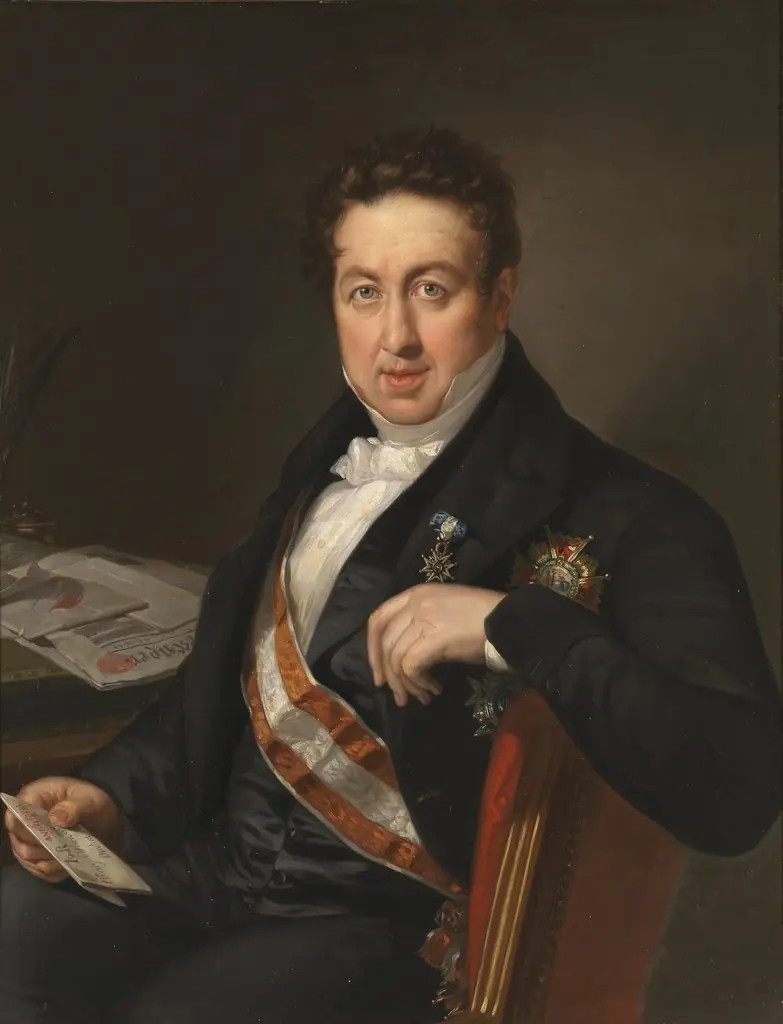 Henry O´Shea
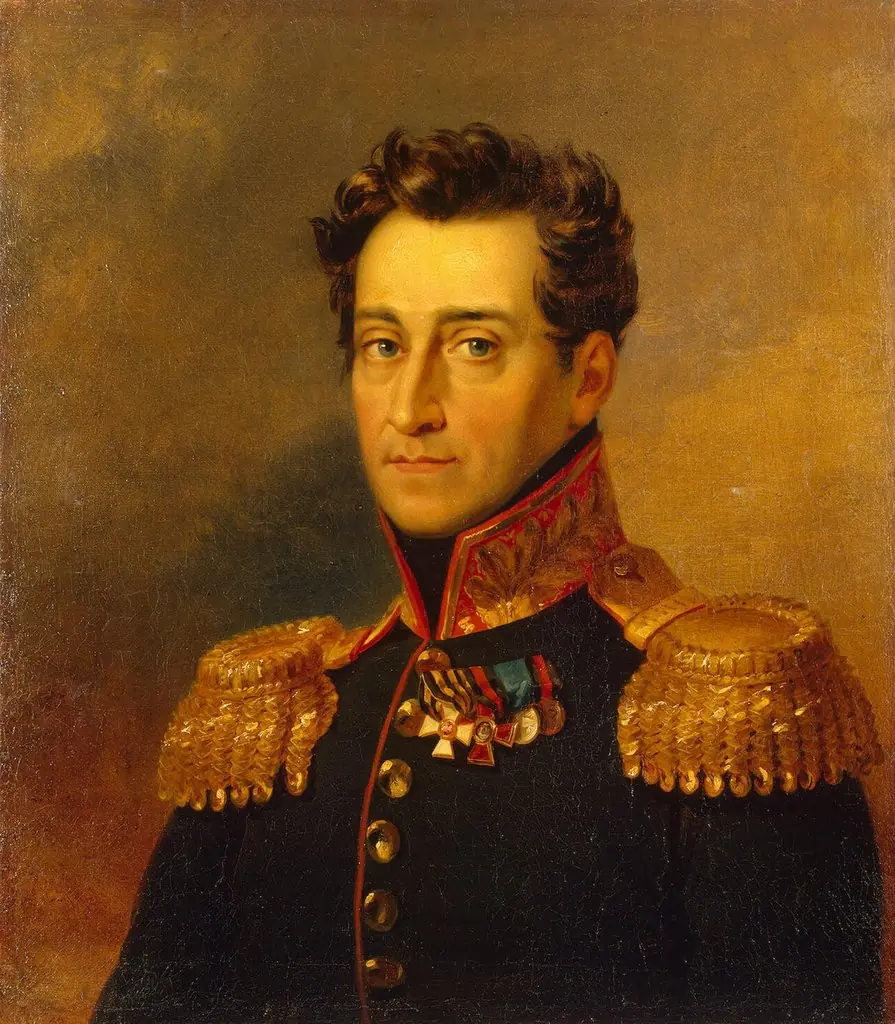 Portrait of Andrey I. Gudovich (1782-1867)
 Portrait of N. A. Okhotnikov
 Portrait of Wojciech Męciński
 David Johnston
 Porträt des Ferdinand II of the Two Sicilies (1810-1859)
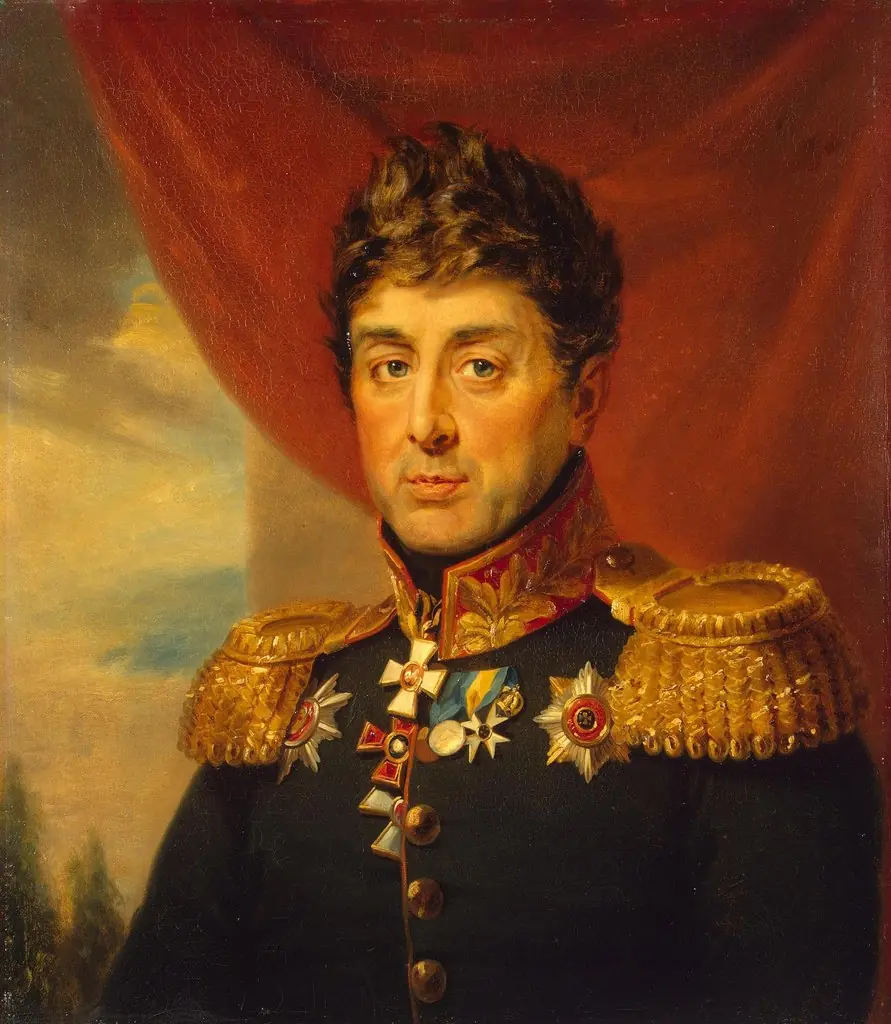 Portrait of Yevstafy Ye. Udom (1760-1836) (2nd)
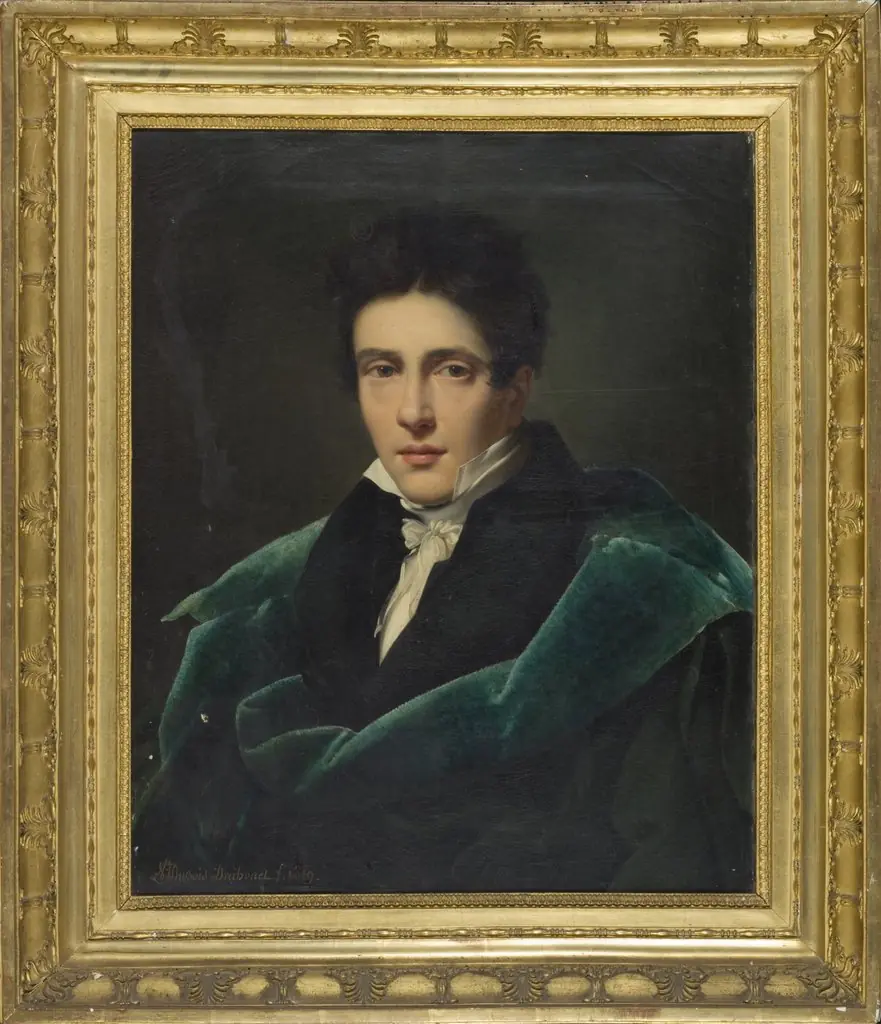 Portrait of Monsieur Gest
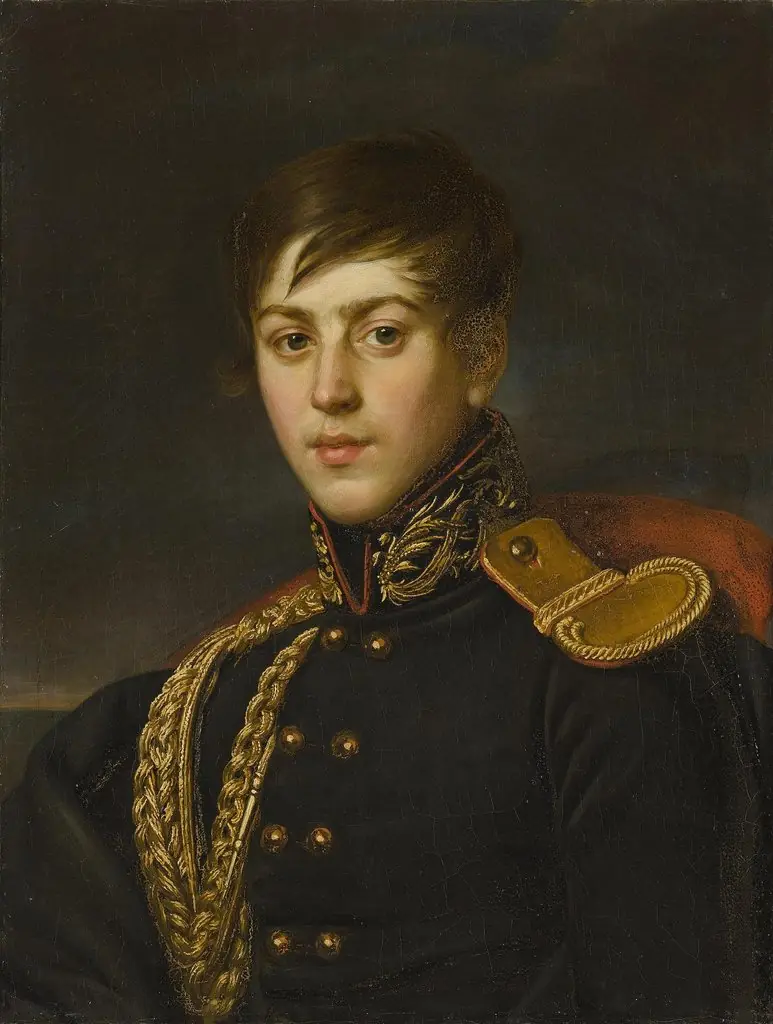 Portrait of Count Alexander Stroganov
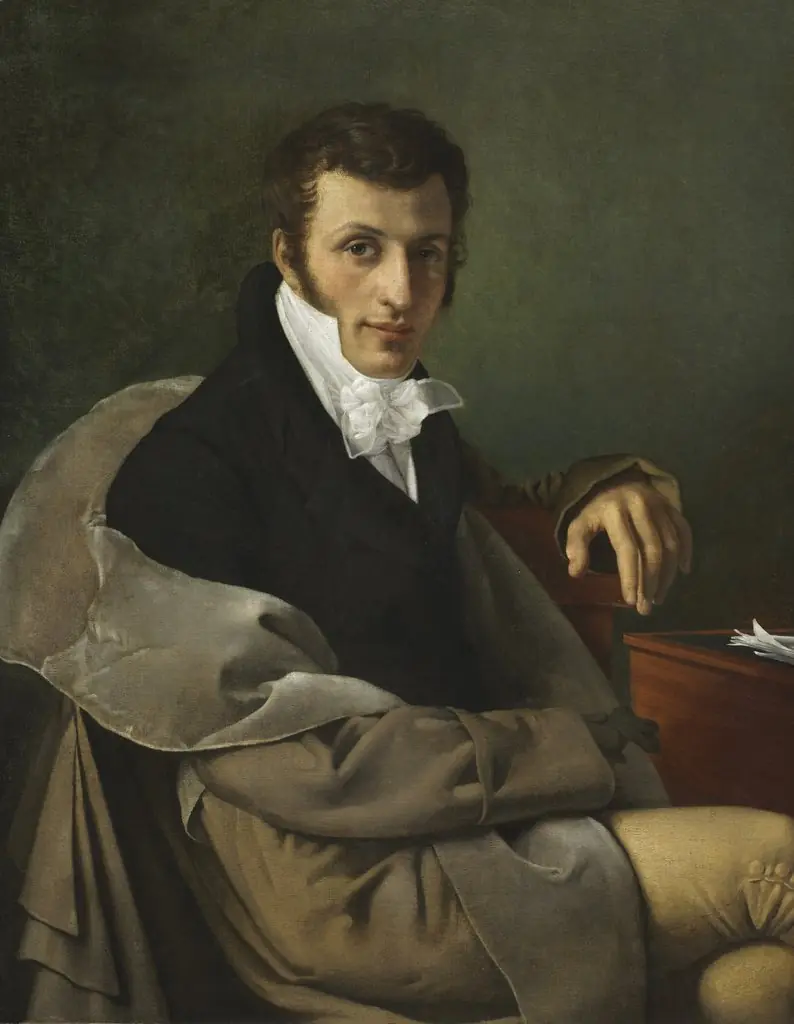 Self-Portrait
 Unknown young Frenchman