Artwork
Madame Moitessier
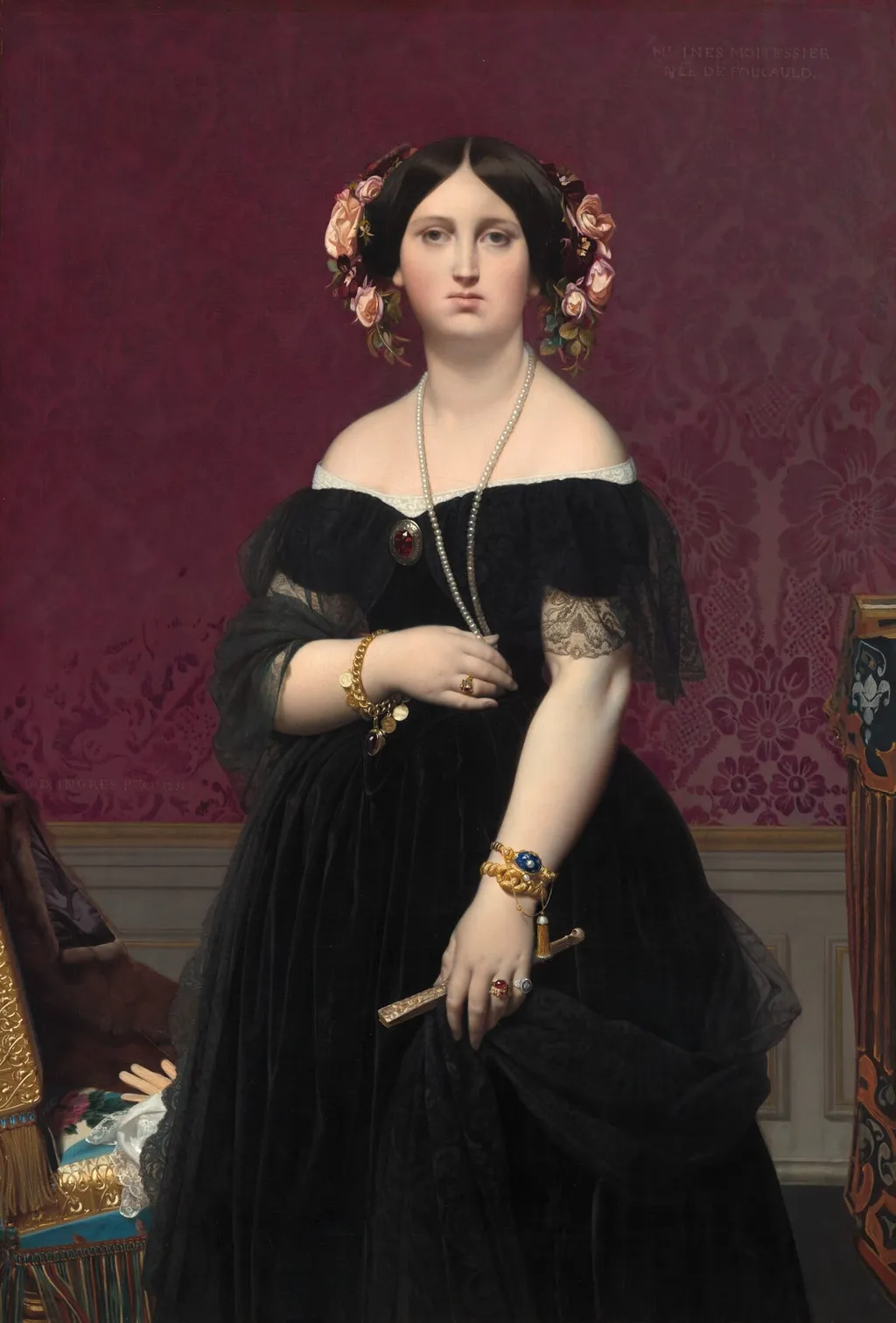
Madame Moitessier is an oil painting by the Impressionist artist Jean Auguste Dominique Ingres. It dates from 1851 and is held in the collection of the National Gallery of Art.
- Inscription
- Inscribed:lower center left: I.A.D. INGRES P.XIT ANO 1851; upper right: M.E INES MOITESSIER / NÉE DE FOUCAULD.
About this work
A woman sits in a chair in fine clothes, looking out calmly. Ingres began the portrait in 1851 and took years to finish it, a measure of the care he gave to every detail.
Subject & Meaning
The painting is a full-length standing portrait of Marie-Clotilde-Inès de Foucauld (1821–1897), wife of the Second Empire banker Paul Sigisbert Moitessier.
The painting is a full-length standing portrait of Marie-Clotilde-Inès de Foucauld (1821–1897), wife of the Second Empire banker Paul Sigisbert Moitessier. Ingres, initially reluctant to take on the commission, was persuaded to proceed after seeing the sitter, whose face particularly impressed him. The work represents her in a commanding, statuesque pose that contemporaries likened to a Roman goddess; Théophile Gautier described her as "junonesque," and Ingres rendered her imposing, with broad ivory shoulders set against a deep black gown.
Her attire and accessories carry the portrait's principal symbolic weight. She wears a black velvet and lace dress centered by a ruby, a long pearl necklace, jeweled bracelets and rings, and a golden fan, while a crown of pink flowers rests in her elaborately styled hair and a white glove lies on a chair behind her. Ingres had originally conceived the composition after a Pompeian fresco of Hercules and Telephus, in which a seated female figure (then identified as a personification of Arcadia) raises a hand to her face, but the final 1851 canvas simplified the scheme into a formal standing image.
Technique & Style
Madame Moitessier (1851) is executed in oil on canvas, a standard support for Ingres’s portraits. The work employs oil paint to render the texture of black velvet, the sparkle of gold jewelry, and the sheen of the sitter’s elaborate hairstyle, while a damask wall with strawberry pattern provides a muted backdrop. Ingres depicts the figure three‑quarters length, standing, crowned with a rose‑filled wreath, wearing a black velvet dress trimmed with a ruby, a pearl necklace, gold bracelets, a golden fan, and a white glove resting on a chair.
The composition balances severe, almost sculptural modeling of the shoulders with delicate ornamental details, creating a neoclassical formal presence.
History & Provenance
Painted in 1851 by Jean‑Auguste‑Dominique Ingres, the oil on canvas portrait depicts Marie‑Clotilde‑Inès Moitessier, née de Foucauld, wife of banker Paul Sigisbert Moitessier. Ingres was initially reluctant, but after being impressed by the sitter he accepted a commission suggested by friend Marcotte and produced a standing likeness delivered in December 1851, later refining a seated version in 1856. The work remained in the Moitessier family, passing to daughter Clothilde‑Marie‑Catherine, comtesse de Flavigny by 1911, to sister Françoise‑Camille‑Marie, vicomtesse Taillepied de Bondy by 1921, and to her son François, comte Taillepied de Bondy, before being sold in 1935 to Paul Rosenberg & Co. and in 1945 to the Samuel H. Kress Foundation, which gifted it to the National Gallery of Art in 1946.
Madame Moitessier has been held by the National Gallery of Art in Washington, D.C., since 1946, when it was given by the Samuel H. Kress Foundation, which had acquired it in 1945 through Paul Rosenberg & Co. The painting forms part of the Samuel H. Kress Collection at the NGA. Its documented exhibition history includes a 1921 showing in Paris at the Exhibition Ingres organized by the Association Franco-Américaine and the Chambre Syndicale de la Curiosité et des Beaux-Arts, where it was listed as no. 44 in the collection of the Vicomtesse Olivier de Bondy.
It was also illustrated in Henry LaPauze's 1911 study of Ingres, at that point recorded in the collection of the Comtesse de Flavigny.
Context
Painted in 1851, Madame Moitessier belongs to the Neoclassical movement and forms part of Ingres's sustained engagement with society portraiture during the Second Empire. It was his first portrait of Marie-Clotilde-Inès de Foucauld, wife of the banker Paul Sigisbert Moitessier; a second, seated portrait followed in 1856 and is now in the National Gallery, London. According to Italian-language scholarship, Ingres initially declined the commission at the suggestion of his friend Marcotte, preferring to focus on history painting, but changed his mind after seeing the sitter, whose face struck him.
He had conceived a composition inspired by a Pompeian fresco of Hercules and Telephus, but after a long interruption caused by the death of his first wife Madeleine in 1849 and the sitter's second pregnancy, he delivered in December 1851 a simpler standing portrait. The poet Théophile Gautier described the figure as "giunonesca" (Junoesque), and Ingres rendered her with the severe, monumental bearing of a Roman goddess, contrasting her black velvet gown with luminous jewelry and ivory shoulders.
Overview
Jean-Auguste-Dominique Ingres, a leading figure in French Neoclassicism, completed Madame Moitessier in 1851. This oil on canvas depicts Marie-Clotilde-Inès Moitessier, a prominent society figure, in a formal seated pose. Though Ingres often favored historical narratives, he dedicated significant attention to portraiture throughout his career, a genre in which he excelled. The painting exemplifies his meticulous draftsmanship and adherence to academic principles.
Own this work as a print
Artist & collection

Artist
Jean-Auguste-Dominique Ingres was a French Neoclassical painter. Ingres was profoundly influenced by past artistic traditions and aspired to become the guardian of academic orthodoxy against the ascendant Romantic…

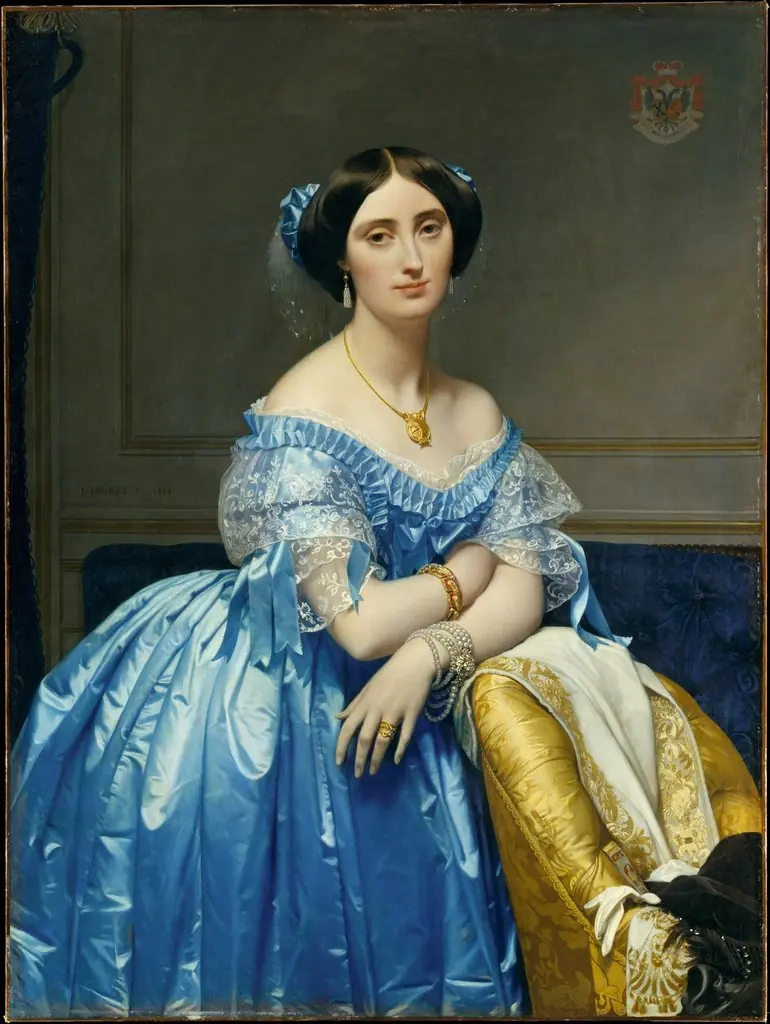 Joséphine-Éléonore-Marie-Pauline de Galard de Brassac de Béarn (1825–1860), Princesse de Broglie
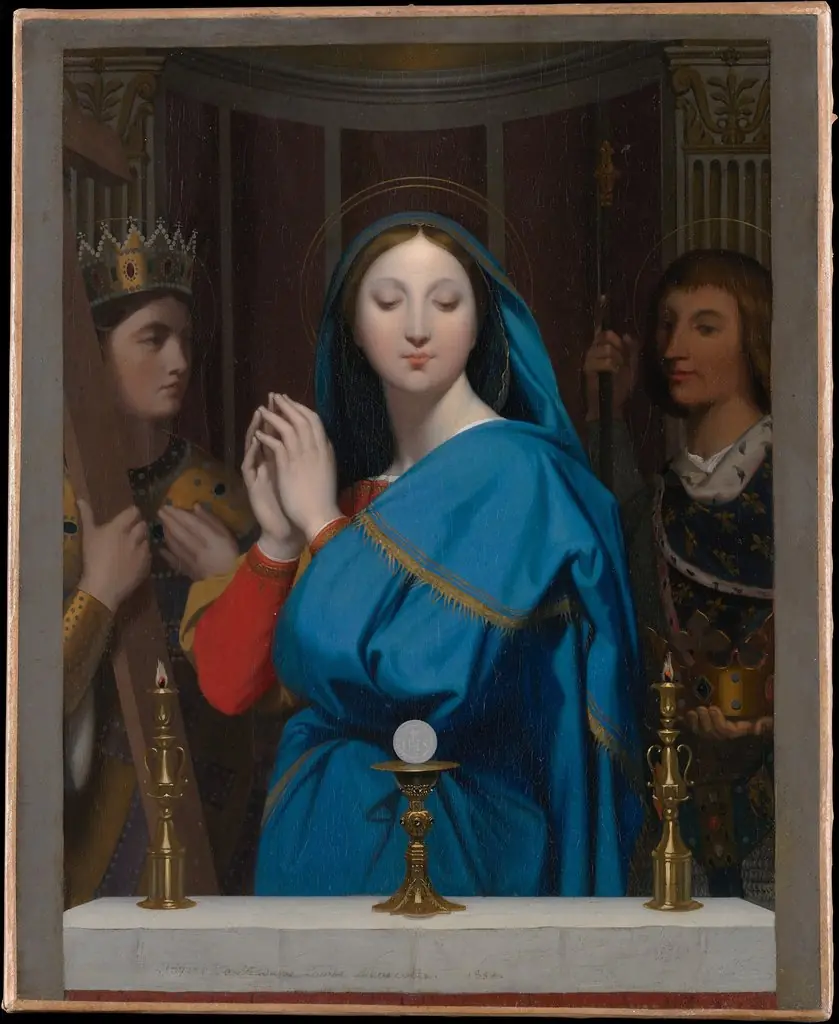 The Virgin Adoring the Host
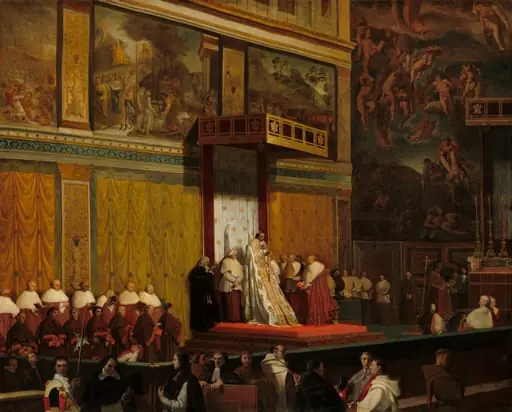 Pope Pius VII in the Sistine Chapel
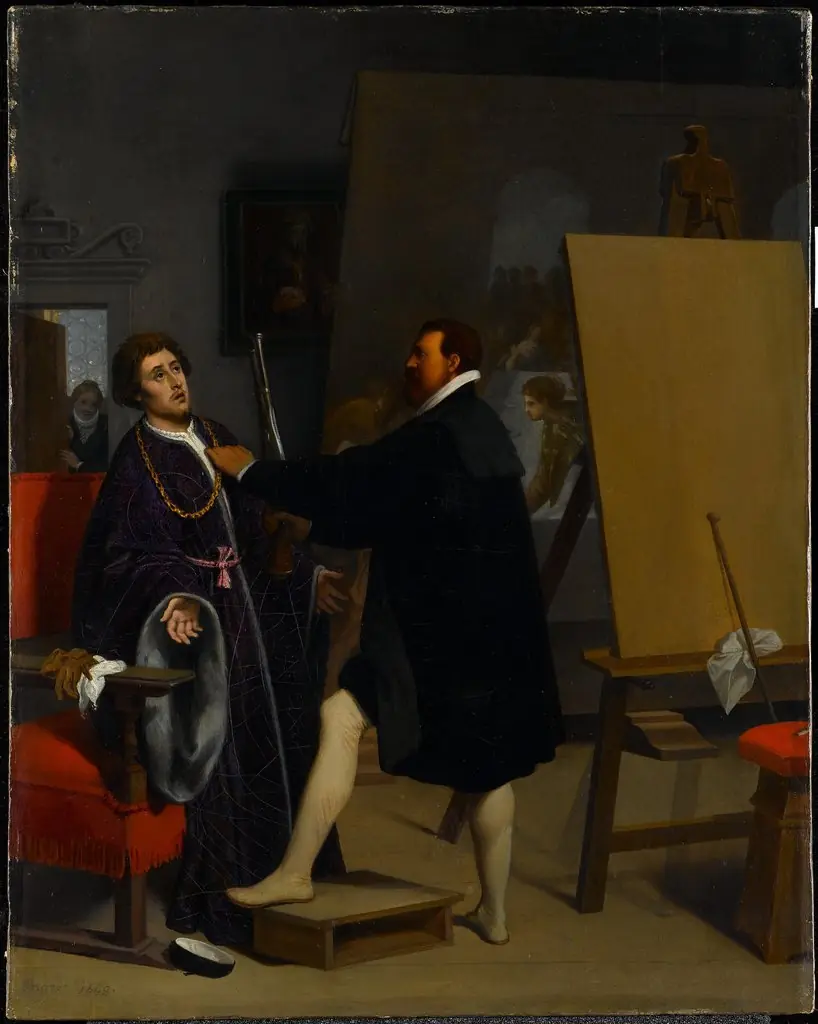 Aretino in the Studio of Tintoretto
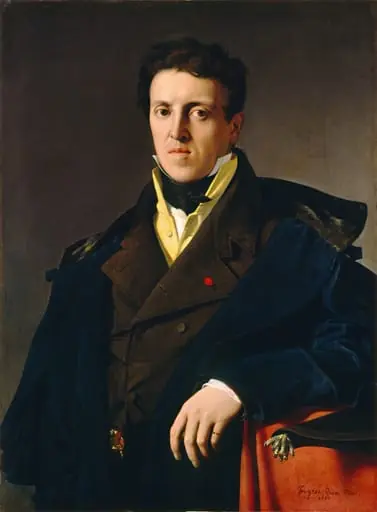 Marcotte d'Argenteuil
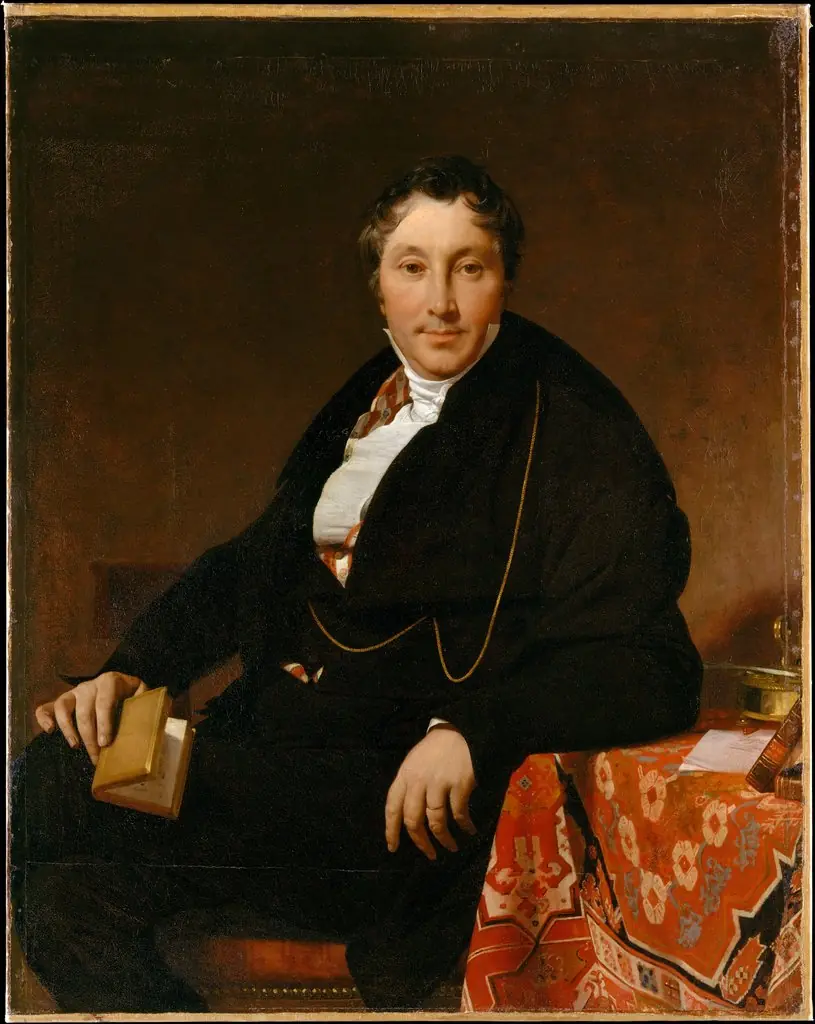 Jacques-Louis Leblanc (1774–1846)
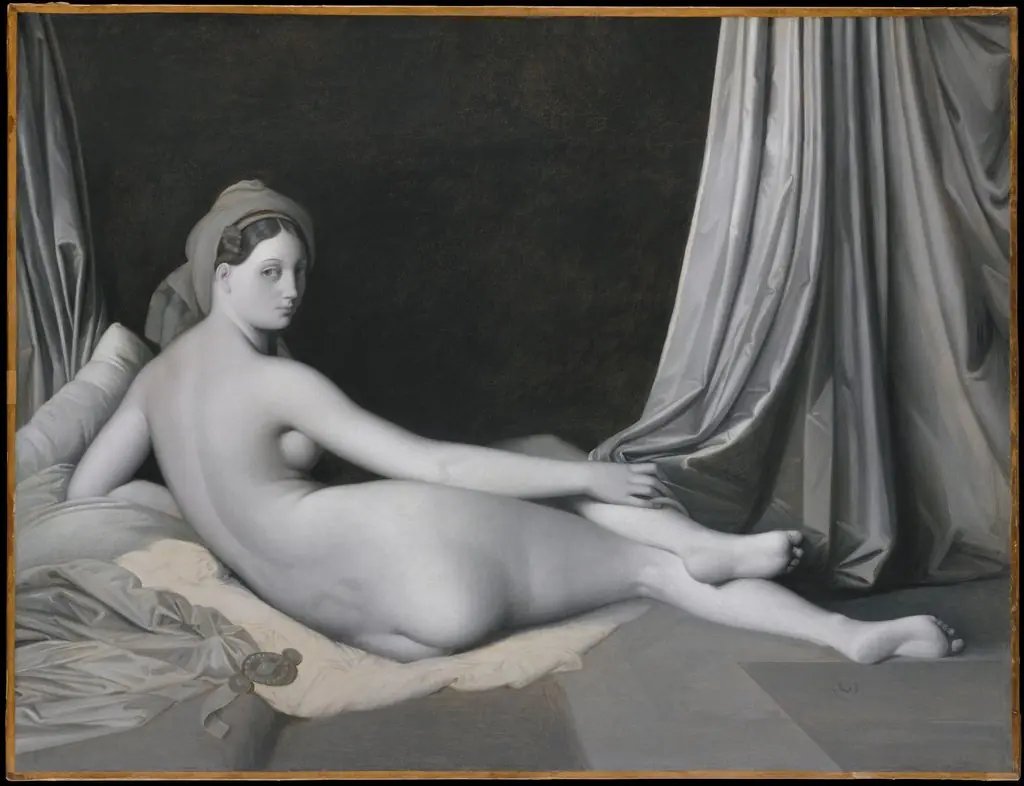 Odalisque in Grisaille
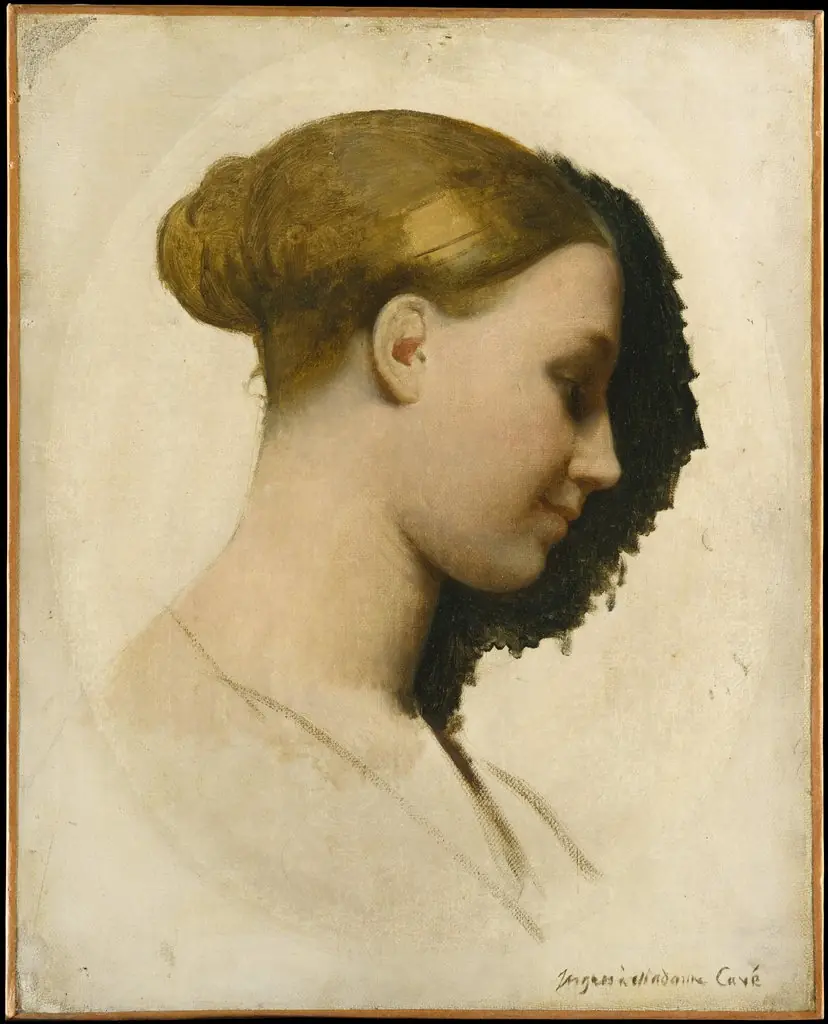 Madame Edmond Cavé (Marie-Élisabeth Blavot, born 1810)
- Josefa del Águila y Ceballos, later Marchioness of Espeja
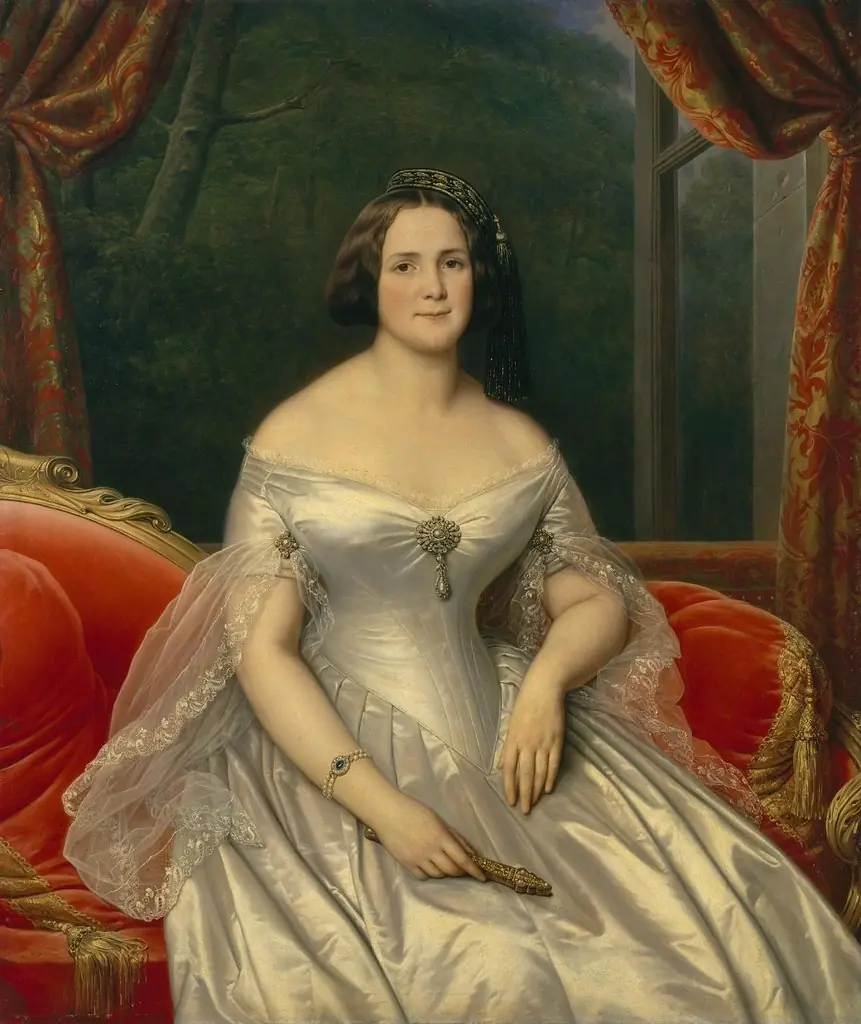 Portrait of Anna Benardaki
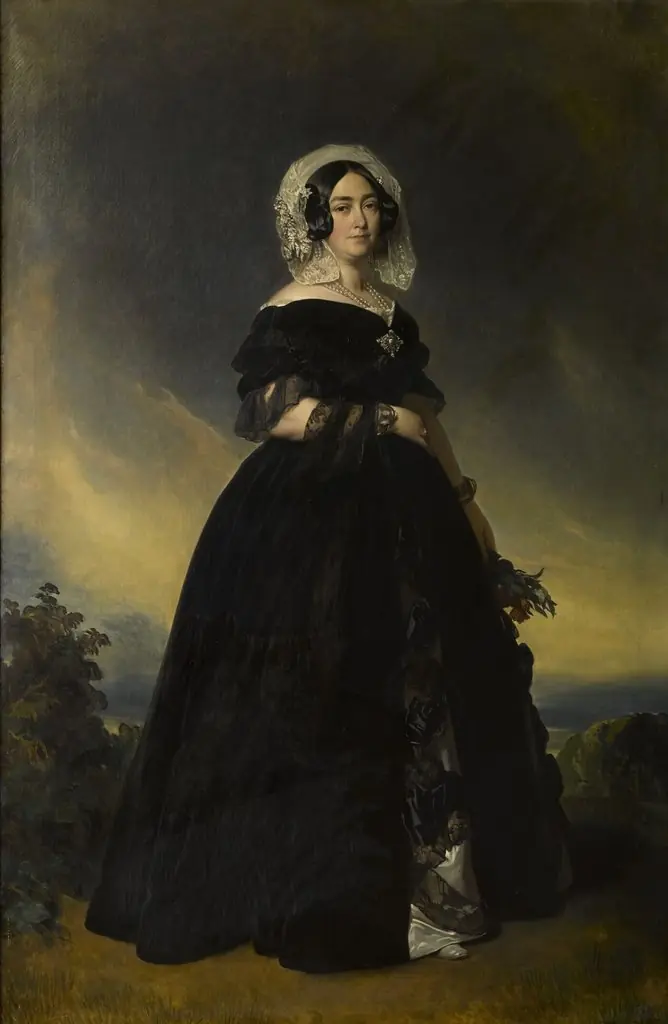 Marie Louise Victoria of Saxe-Coburg-Saafeld, Duchess of Kent (1786–1861)
 Madame Louis Antoine de Cambourg
 Portrait of Countess Yulia Samoilova
 Portrait of a Young Woman
 Female Portrait
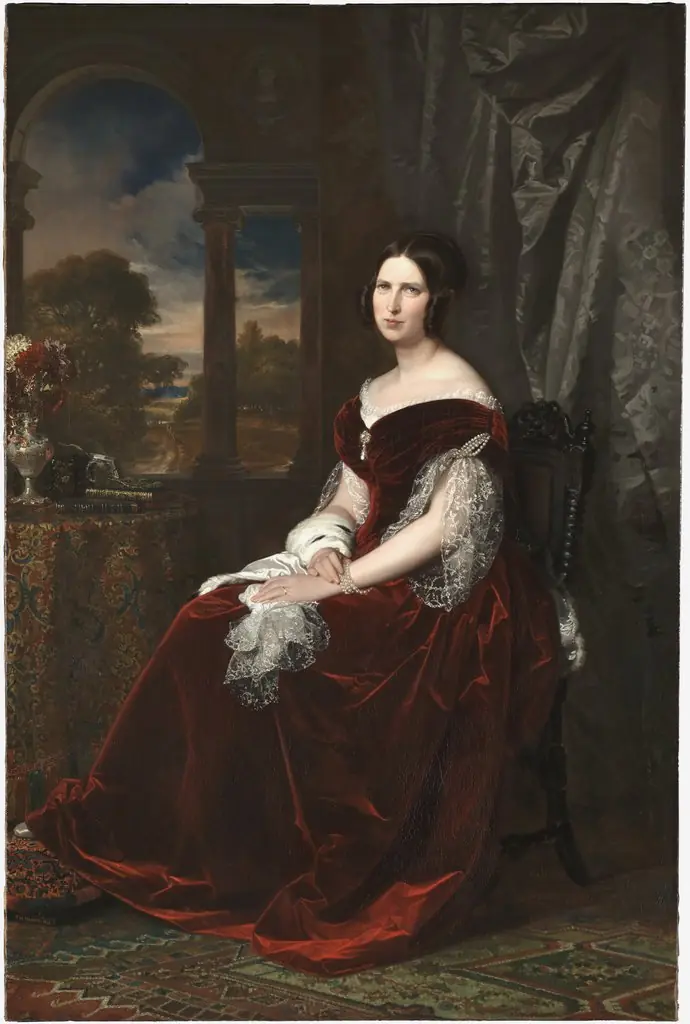 Sabina Seupham Spalding
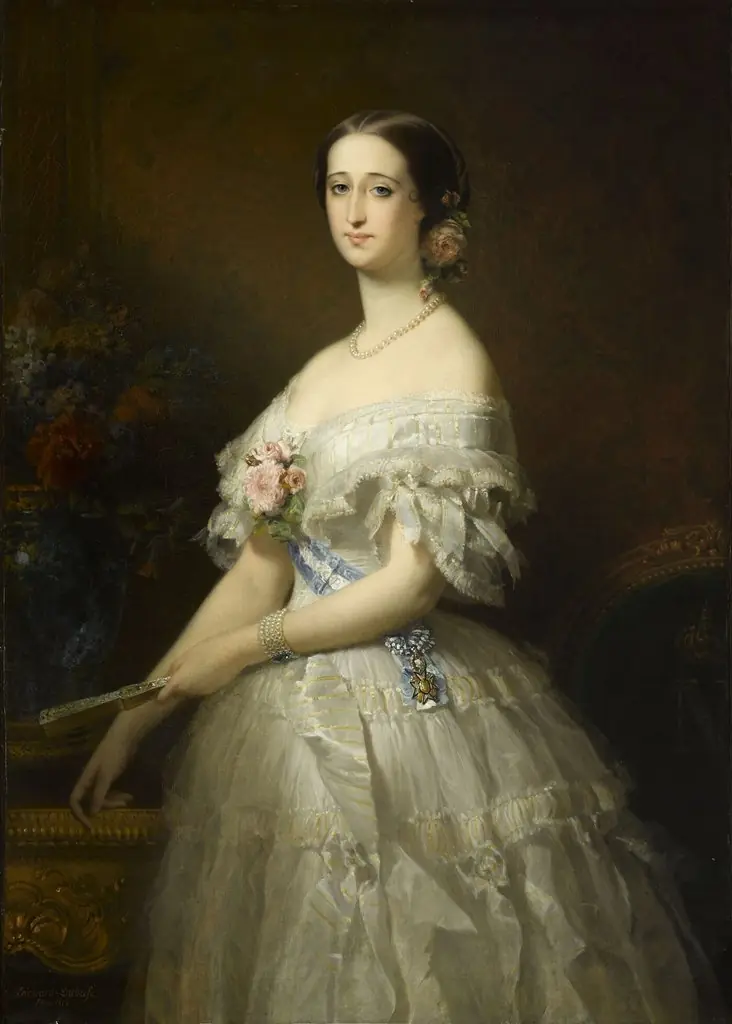 Portrait of the Empress Eugenie
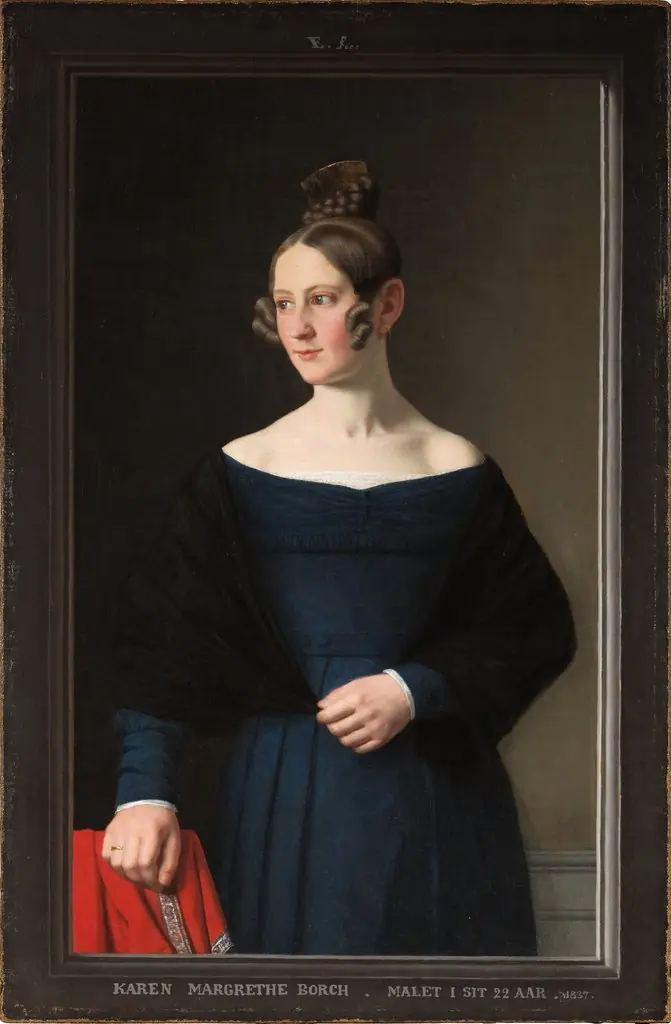 Karen Margrethe Borch
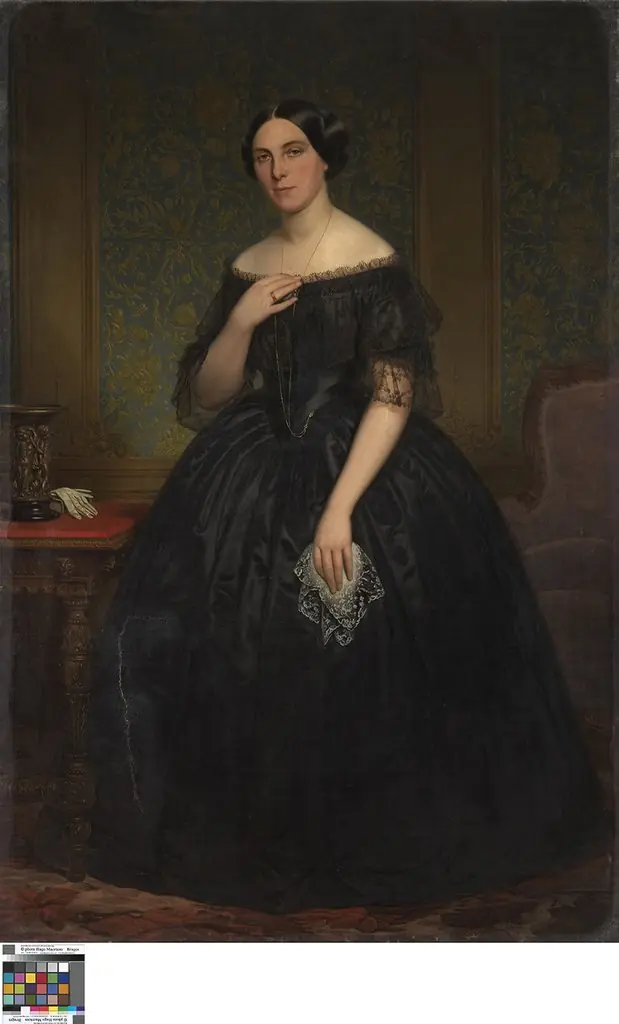 Portret van Beatrix van Herreweghe