Artwork
Fontaine de Jardin Borghese
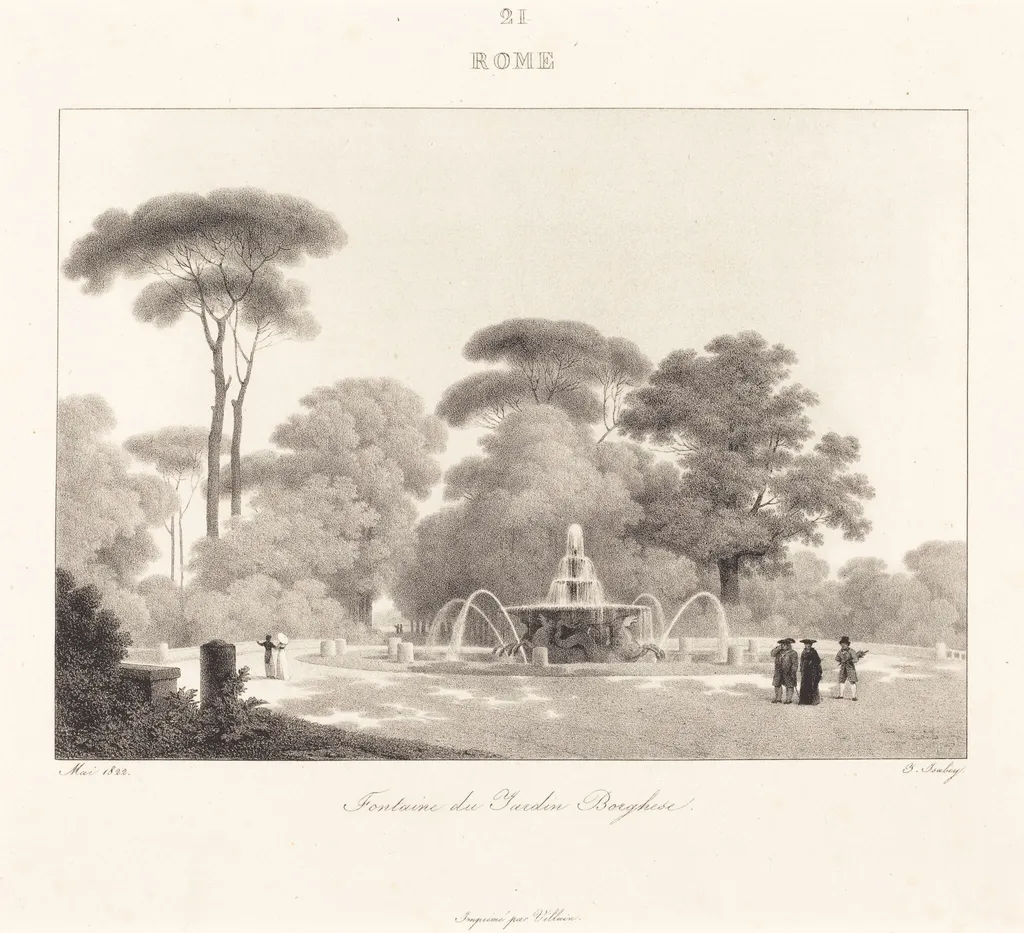
Fontaine de Jardin Borghese is an ink print by the Romanticist artist Jean-Baptiste Isabey. It dates from 1822 and is held in the collection of the National Gallery of Art.
- Inscription
- Inscribed:upper center: 21 / ROME; lower left: Mai 1822; lower right: J. Isabey; lower center: Fontaine du Jardin Borghese / Imprimé par Villain
About this work
Overview
Jean‑Baptiste Isabey’s 1822 lithograph presents a tranquil view of the Borghese Gardens in Rome, centered on a modest fountain whose water streams into a shallow basin. The composition includes slender trees with rounded crowns and a few figures in contemporary attire, creating a serene, slightly idealized landscape that reflects early 19th‑century tastes for classical scenery.
Subject & Meaning
The work captures a cultivated garden setting, emphasizing the harmony between architecture and nature typical of the Borghese estate. By focusing on a simple water feature amid mature foliage, Isabey underscores the period’s fascination with picturesque yet orderly environments, suggesting a leisurely, contemplative experience for the viewer.
Technique & Style
Executed in lithography on wove paper, the image employs a fluid, sketch‑like line that softens details and lends a dreamlike quality. Isabey’s handling of tonal variation through delicate shading demonstrates the medium’s capacity for nuanced atmospheric effects, marking an early French adoption of the lithographic process.
History & Provenance
Created during the First Empire and Restoration era, the print belongs to the initial phase of French lithography, a medium that Isabey actively promoted. While the original paper’s ownership history is not fully documented, the work has been referenced in several 19th‑century catalogues of the artist’s prints.
Own this work as a print
Artist & collection

Artist
Jean-Baptiste Isabey (French pronunciation:; 11 April 1767 – 18 April 1855) was a French artist during both the First Empire and the Restoration.








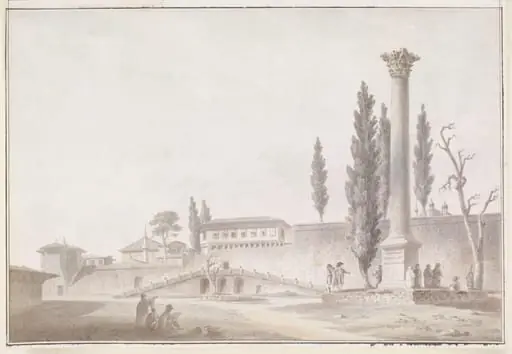
- The Gardens of the Seraglio with European visitors inspecting the Column of the Goths, Constantinople
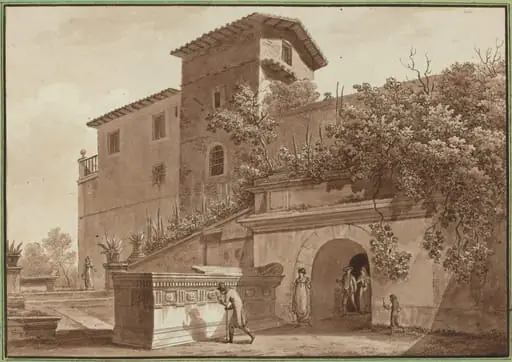 Tomb of Scipios
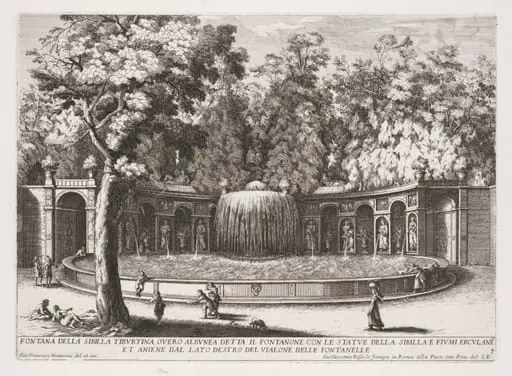 The Fountains of Rome (Le fontane di Roma), Book IV, plate 7: Fountain of the Tiburtine Sibyl (Fontana della Sibilla Tiburtina)
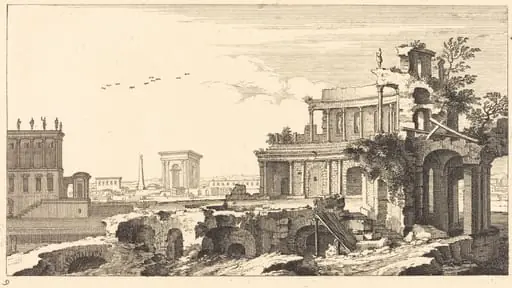 Landscape with Classical Ruins
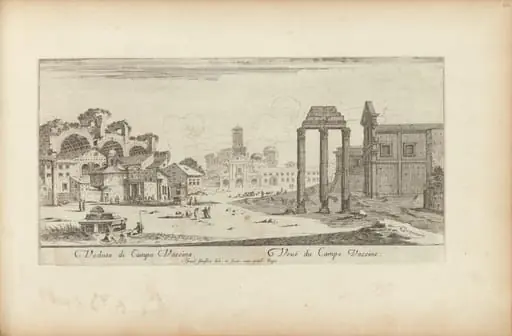 Veduta di Campo Vaccina
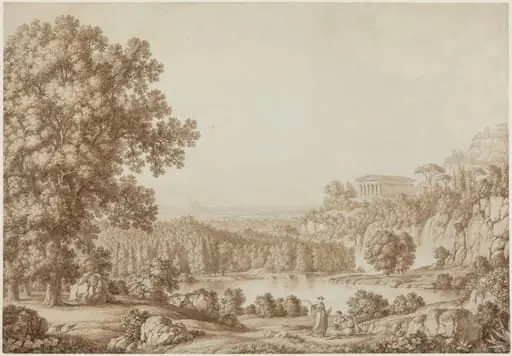 Arcadian Landscape with a Doric Temple
 La piece en action
 Untitled
 View in the Garden of a Roman Villa, with the Temple of Hercules Victor and the Temple of Portunus
 Trees Screening a House Built on Ancient Ruins
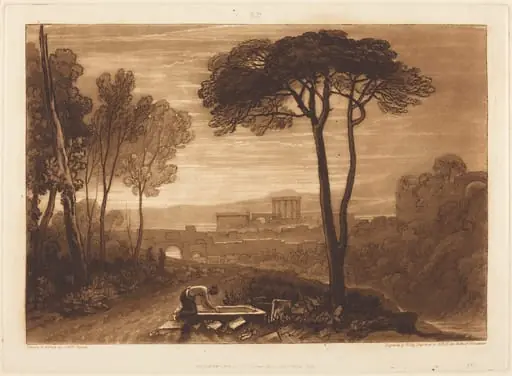 Scene in the Campagna
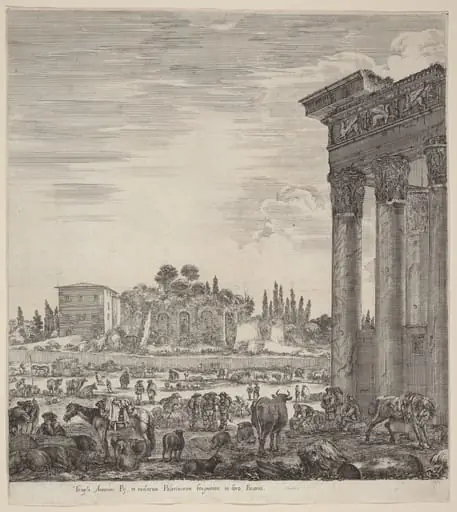 Temple of Antonius and the Campo Vaccino