Artwork
Madonna and Child with angels
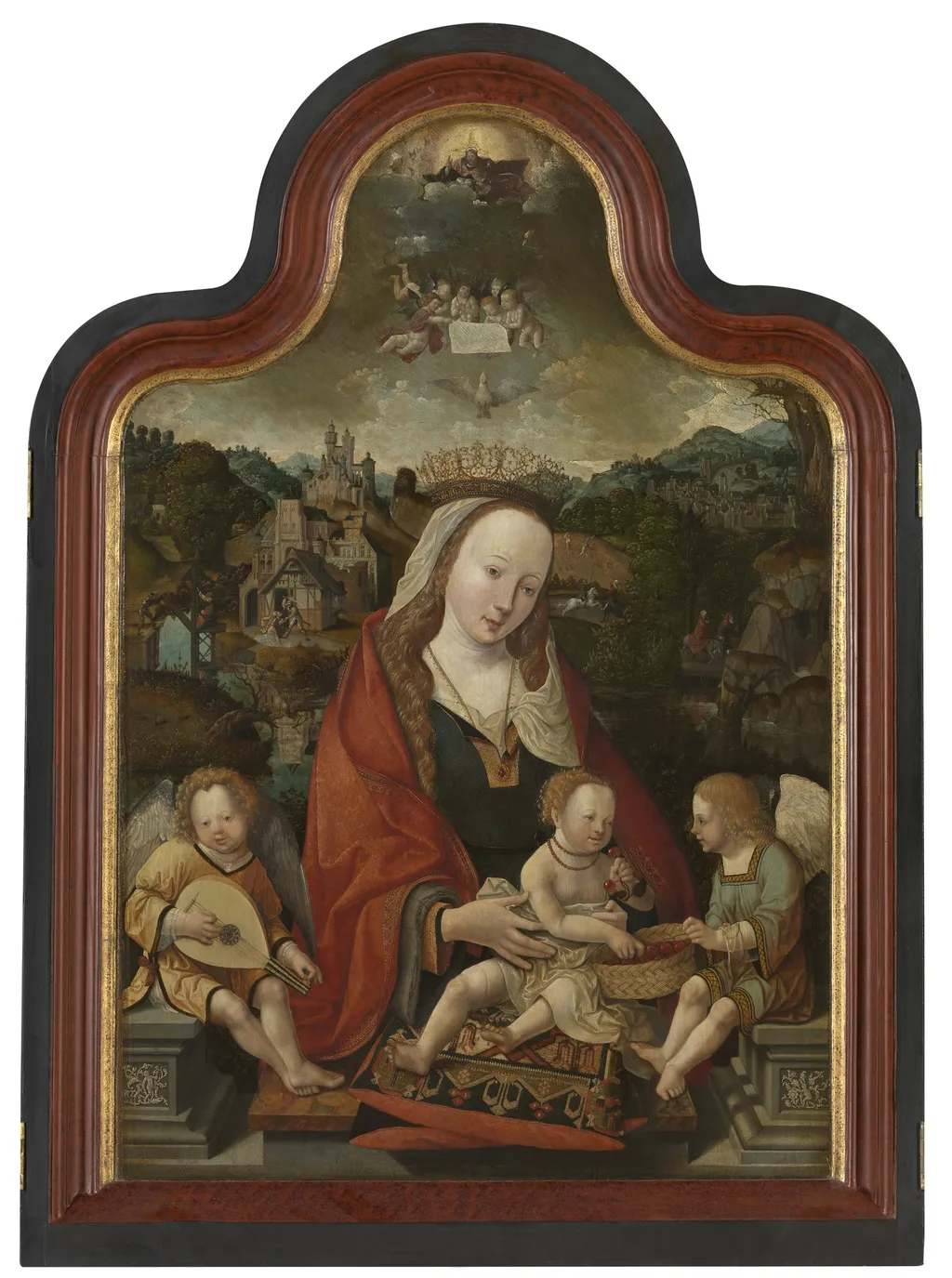
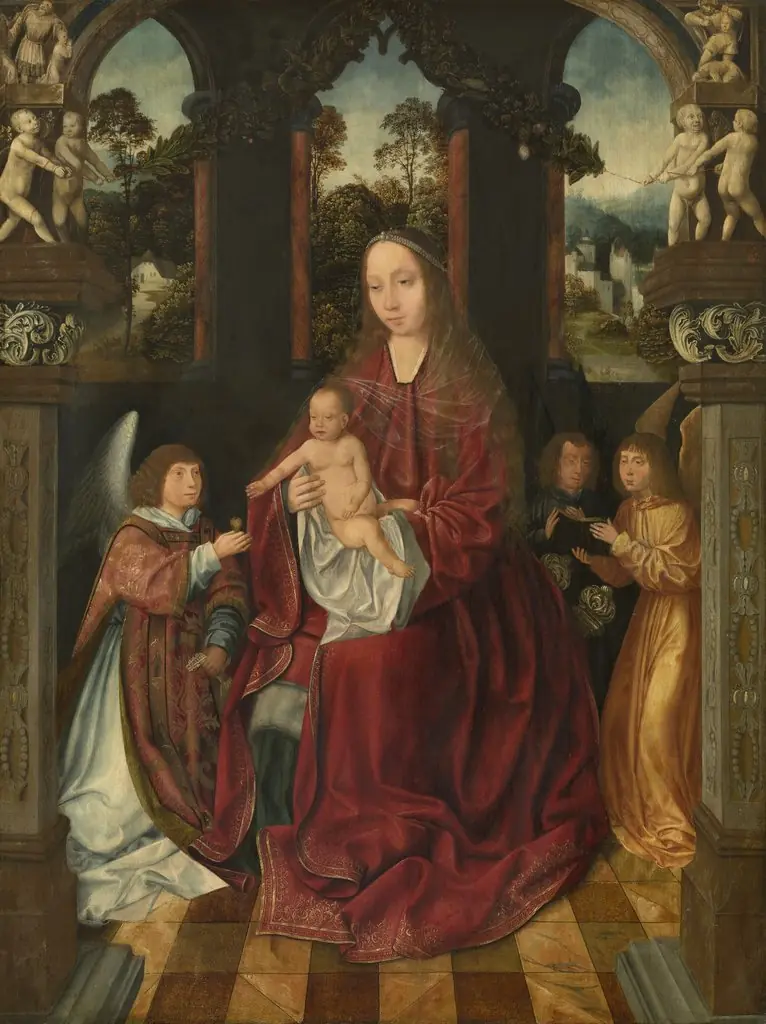
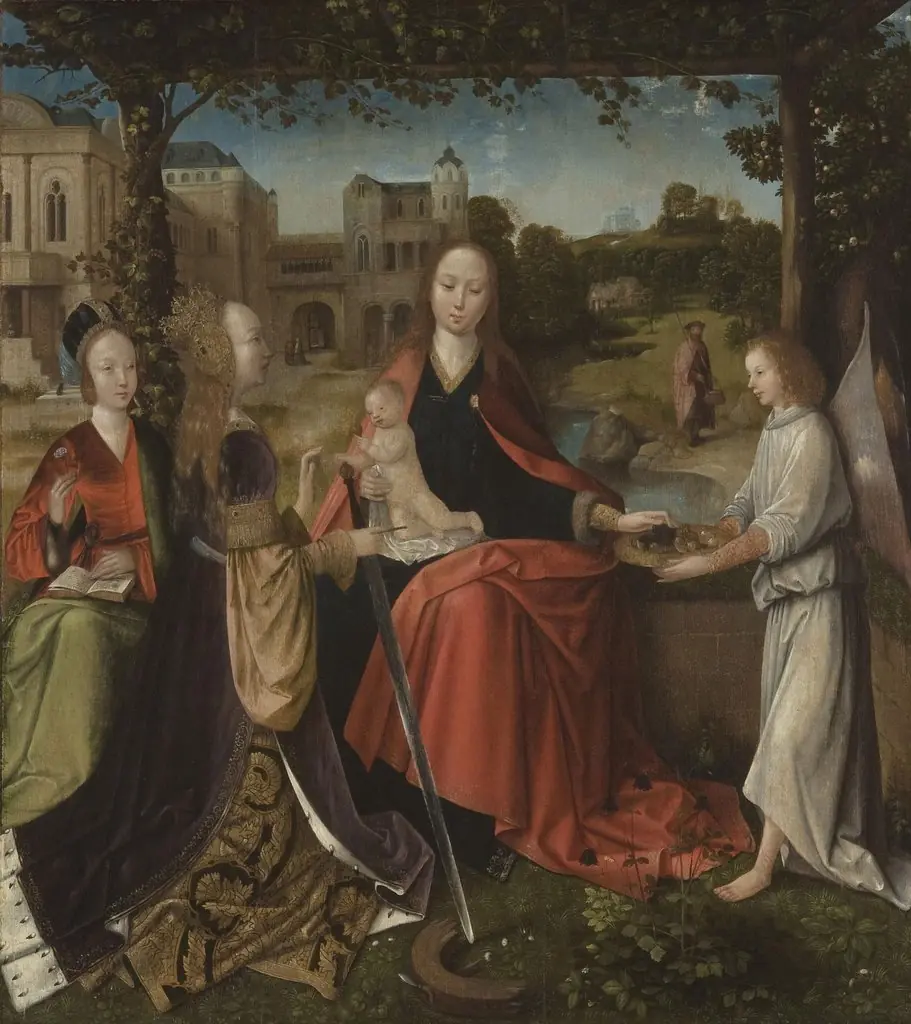
Madonna and Child with angels is an oil painting by the Northern Renaissance artist Jacob Cornelisz. van Oostsanen. It dates from 1515 and is held in the collection of the Royal Museum of Fine Arts Antwerp. Jacob Cornelisz.
About this work
Subject & Meaning
As a work of religious art, the iconography focuses on the sacred bond between mother and son, a traditional theme in Christian devotion.
Executed in 1515, this religious panel painting by Jacob Cornelisz. van Oostsanen centers on the Madonna and Child as its primary subject. The composition explicitly depicts the Virgin Mary alongside the Christ Child, accompanied by angels. As a work of religious art, the iconography focuses on the sacred bond between mother and son, a traditional theme in Christian devotion.
The presence of the angels serves to frame the holy figures, reinforcing the spiritual significance of the scene. The work represents a standard devotional image of the period, utilizing oil paint on panel to render these central figures of the faith.
Technique & Style
Created in 1515, this religious painting by Jacob Cornelisz. van Oostsanen is executed in oil paint on a panel support. The work depicts the Madonna and Child accompanied by angels, adhering to traditional iconography of the period. Physically, the composition measures 107 cm in height and 72 cm in width.
The application of oil medium on wood panel was a standard technique for Netherlandish artists of the early sixteenth century, allowing for the detailed rendering of figures and textures characteristic of the artist's style.
History & Provenance
Jacob Cornelisz. van Oostsanen created the oil painting Madonna and Child with angels in 1515. Executed on a panel measuring 107 cm by 72 cm, the work depicts the Virgin Mary, the Christ Child, and attending angels within a religious context. The piece is currently held in the collection of the Royal Museum of Fine Arts Antwerp, where it remains located.
No further details regarding its specific commission, intermediate ownership history, or provenance chain prior to its current museum residence are provided in the available records.
Context
Scholarship identifies this work as an early Netherlandish religious composition reflecting the devotional practices of the Antwerp school in the early sixteenth century. The painting's composition, featuring the Madonna and Child flanked by angels, aligns with devotional trends seen in contemporary works by Gerard David and Hugo van der Goes, situating it within the broader context of late medieval Marian imagery in the Low Countries. Its formal qualities, including the intimate scale and emphasis on tender interaction between mother and child, demonstrate a shift toward more humanized sacred narratives characteristic of the period's artistic evolution.
Legacy
The painting influenced later religious art through its composition of the Madonna and Child surrounded by angels, a motif that resurfaced in Dutch Golden Age works. Its presence in the Royal Museum of Fine Arts Antwerp has contributed to scholarly discussions of early Netherlandish painting, reinforcing the artist's reputation as a key figure in transitional Renaissance styles.
The work is frequently referenced in studies of devotional imagery, highlighting its role in shaping visual narratives of sacred subjects.
Overview
Jacob Cornelisz. van Oostsanen, an early‑16th‑century painter from Amsterdam, executed the oil work titled Madonna and Child with Angels in 1515. The composition places the Virgin Mary, draped in a red cloak, at the centre of a modest landscape, holding the infant Christ while three angels attend the scene.
Own this work as a print
Artist & collection

Artist
Jacob Cornelisz. van Oostsanen
Jacob Cornelisz van Oostsanen (before 1470 – 1533) was a Northern Netherlandish designer of woodcuts and painter.

 Madonna
 Madonna with Angels
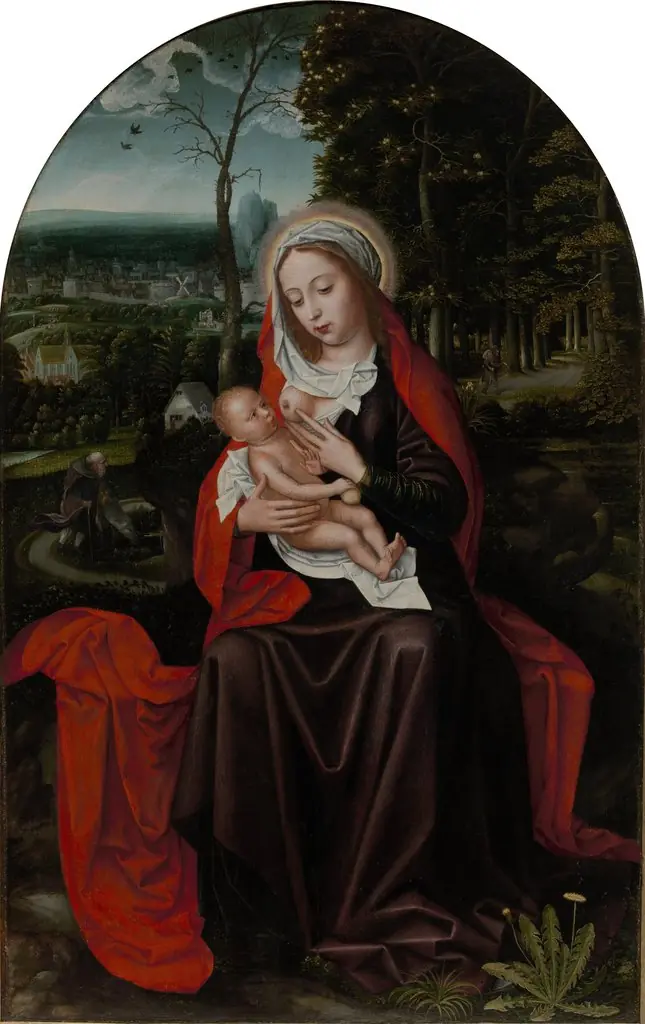 Rest on the flight into Egypt
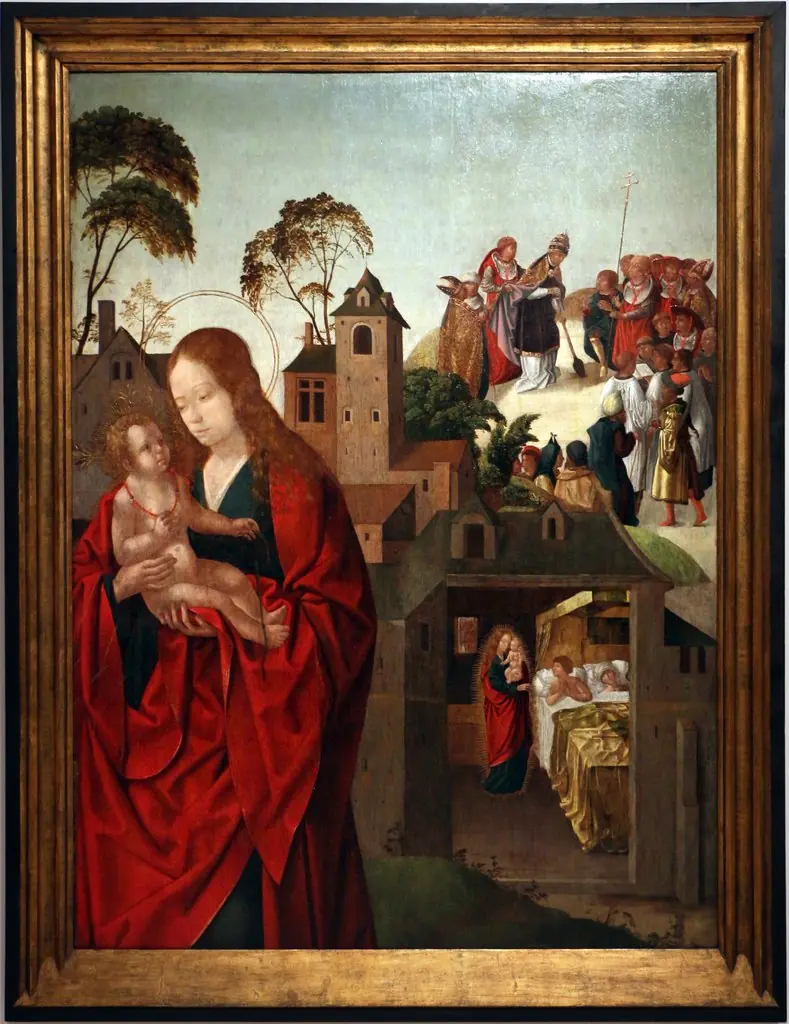 Our Lady of the Snows
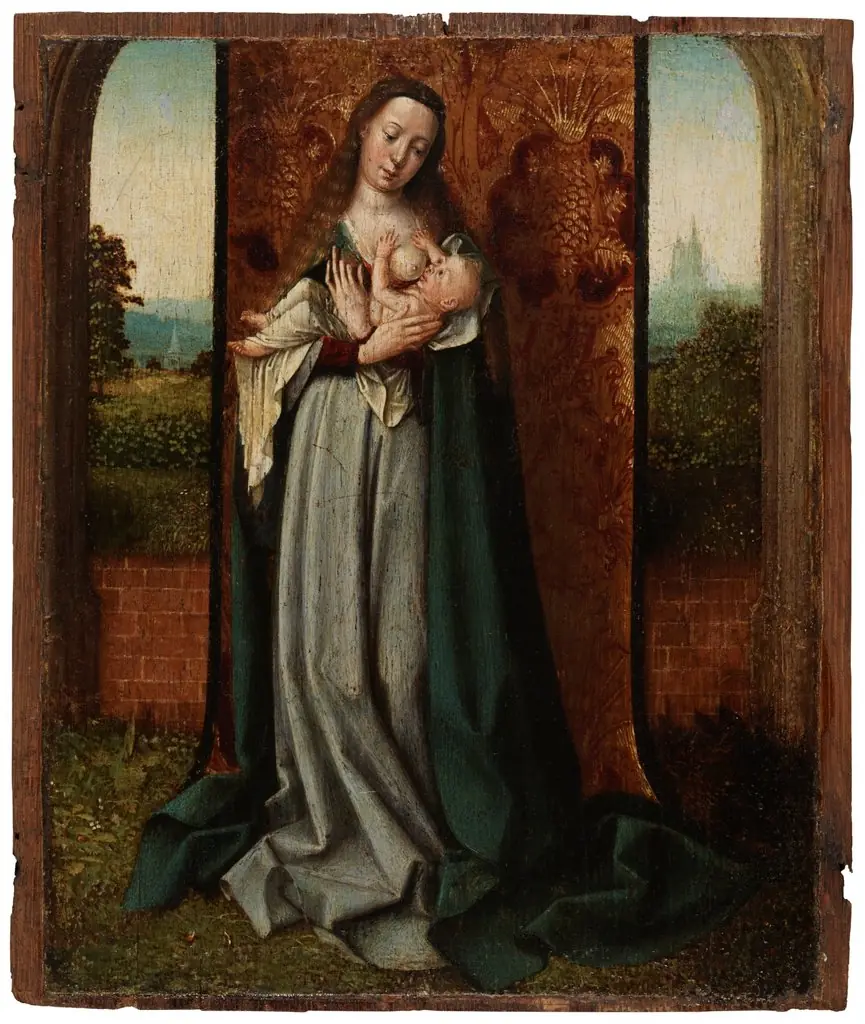 The Virgin and Child
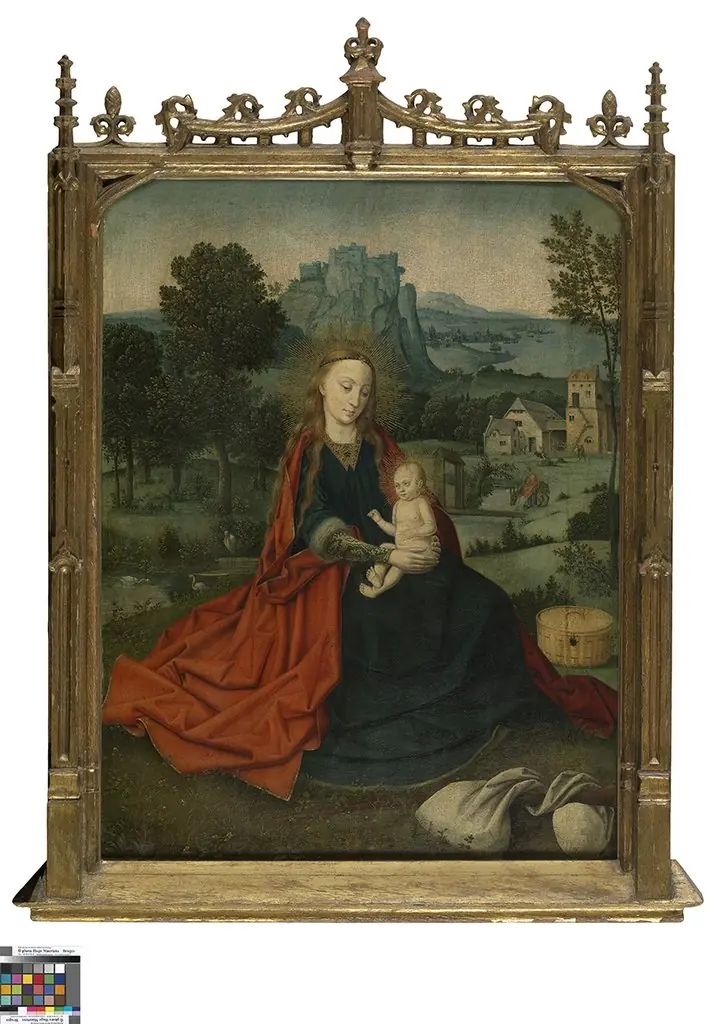 Rest on the Flight into Egypt
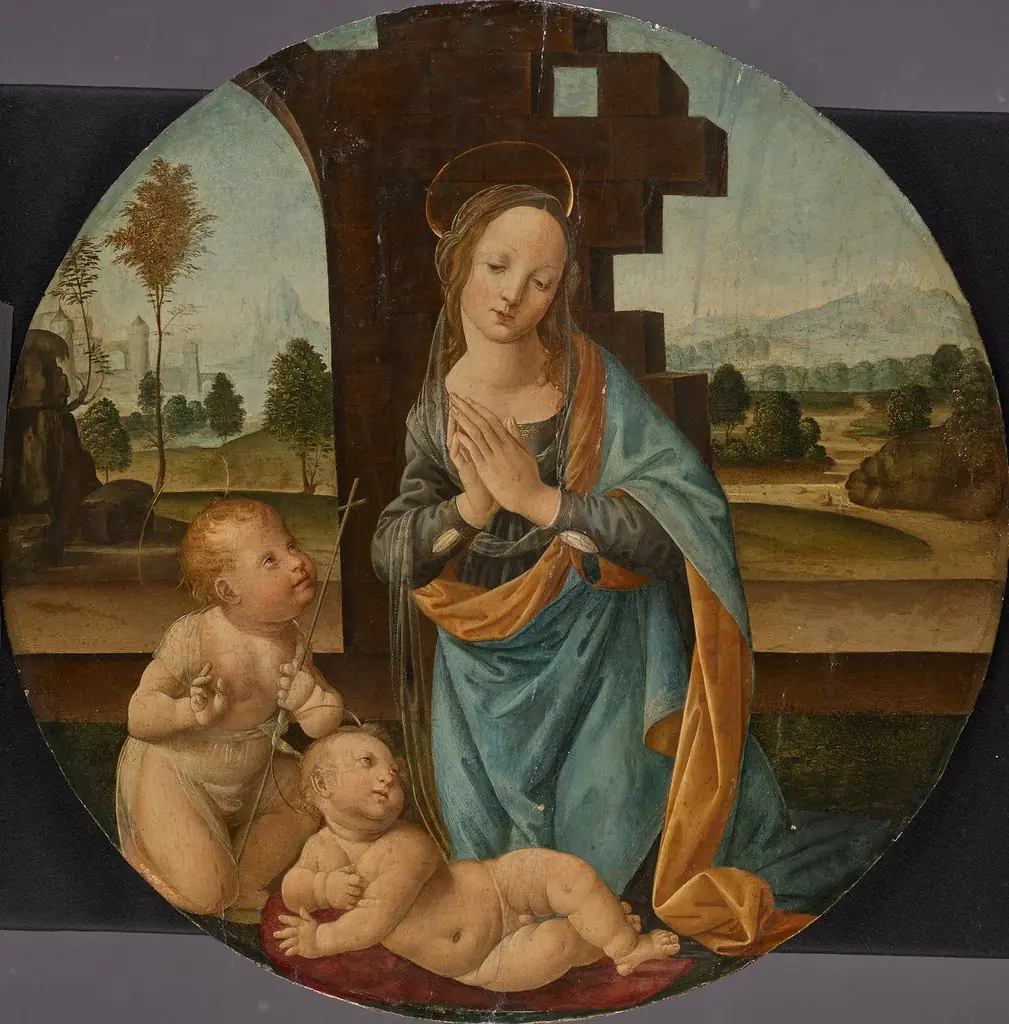 The Virgin and Child with the Young St. John
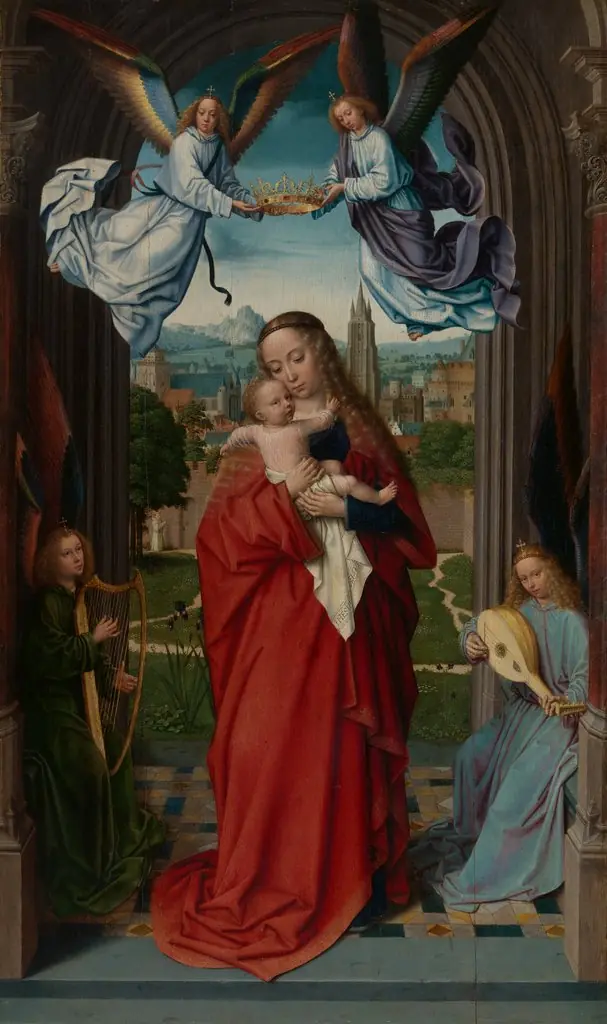 Virgin and Child with Four Angels
 Virgin and Child Holding the Cross
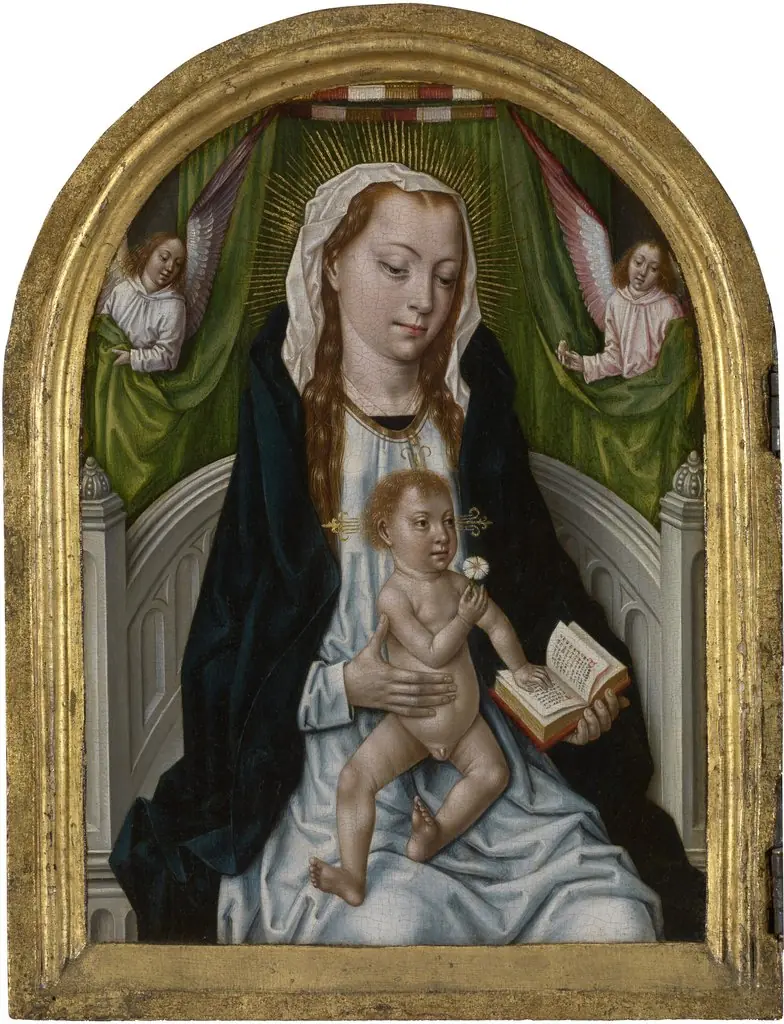 Virgin and Child with Angels
 Virgin and Child, with Saint Catherine of Alexandria, a Female Saint, and an Angel
- Madonna and Child with Angels