Artwork
Flora and Zephyr
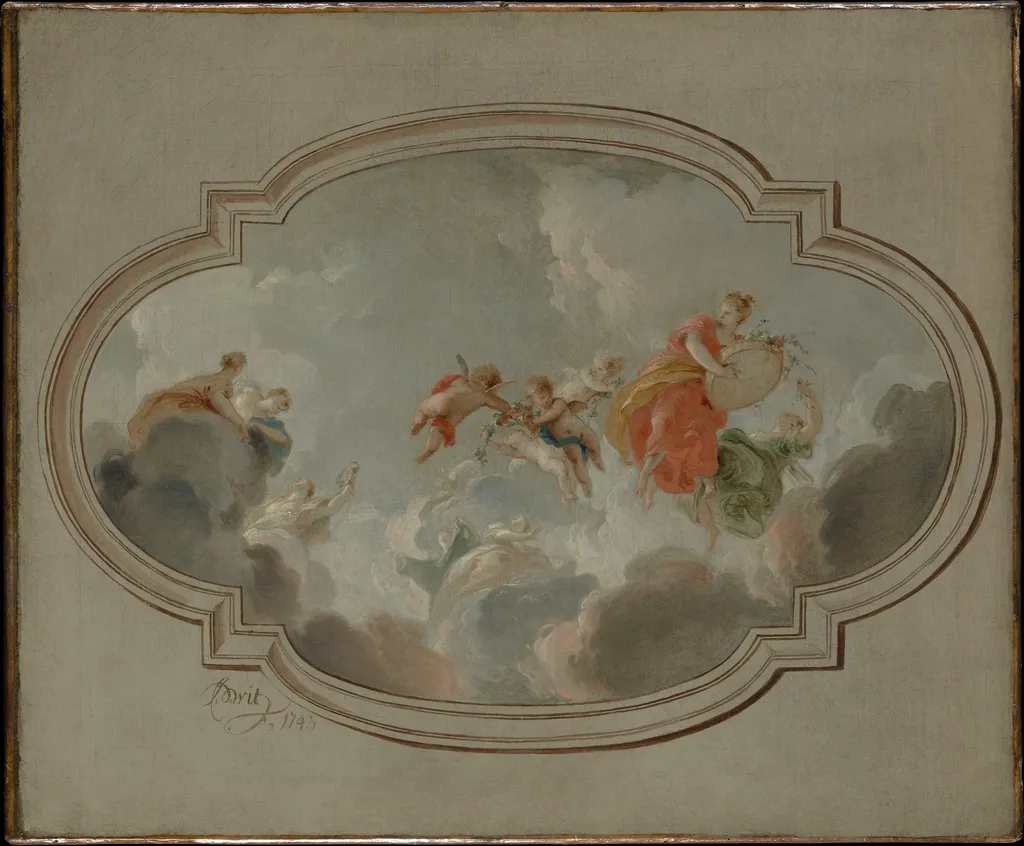
Flora and Zephyr is an oil painting by the Rococo painting artist Jacob de Wit. It dates from 1743 and is held in the collection of the Metropolitan Museum of Art.
About this work
Technique & Style
Jacob de Wit's Flora and Zephyr, executed in 1743, is an oil painting on canvas. The work measures 53 cm in height and 63.2 cm in width. Classified as a painting, the piece depicts a woman and is held in the collection of the Metropolitan Museum of Art.
The medium consists of oil paint applied to a canvas support, characteristic of the artist's technique during this period.
History & Provenance
The painting eventually entered the collection of the Metropolitan Museum of Art, where it is currently housed and displayed as part of their holdings.
Jacob de Wit executed the oil painting Flora and Zephyr in 1743. The work was created on a canvas support measuring 53 cm in height and 63.2 cm in width. While the specific circumstances of its original commission remain unrecorded in the available documentation, the piece is firmly dated to the mid-18th century based on its inception year.
The painting eventually entered the collection of the Metropolitan Museum of Art, where it is currently housed and displayed as part of their holdings.
Overview
Created in 1743, Flora and Zephyr is an oil painting by Dutch artist Jacob de Wit, whose career combined painting with interior decoration and a focus on religious subjects. The work belongs to the Rococo period and is part of the permanent collection of the Metropolitan Museum of Art in New York.
Subject & Meaning
The composition presents a mythological scene in which a woman, identified as Flora, the goddess of flowers, holds a bouquet while a gentle breeze, personified by Zephyr, circulates around her. Small, winged figures drift in the sky, reinforcing the sense of a light, airy atmosphere that celebrates nature’s renewal.
Context
Jacob de Wit is better known for ceiling and wall decorations featuring allegorical and religious motifs. Flora and Zephyr demonstrates his ability to translate that decorative sensibility onto a portable canvas, aligning with the Rococo fascination for playful mythological narratives and the era’s preference for pastel atmospheres.
Own this work as a print
Artist & collection
Artist
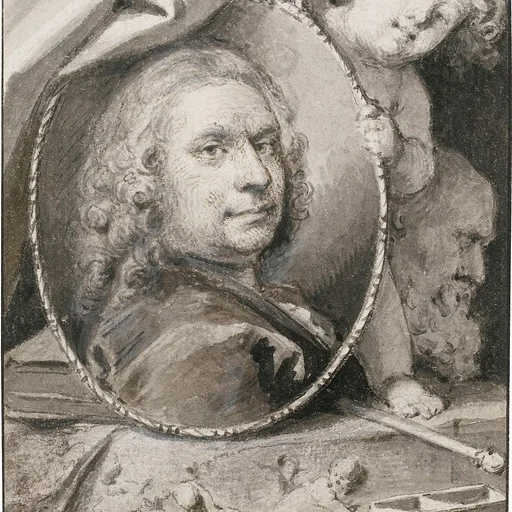
Jacob de Wit (19 December 1695 – 12 November 1754) was a Dutch painter and interior decorator. He is best known for his depictions of religious scenes.



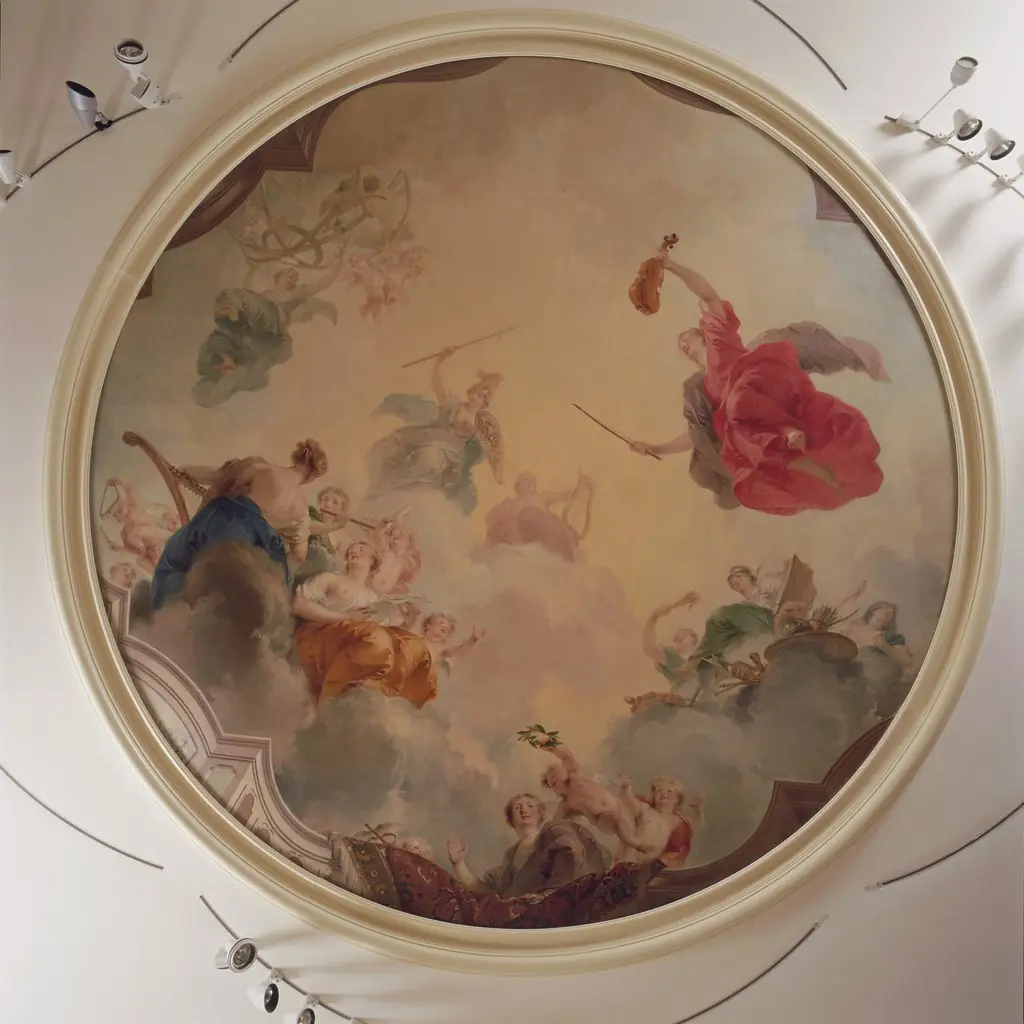
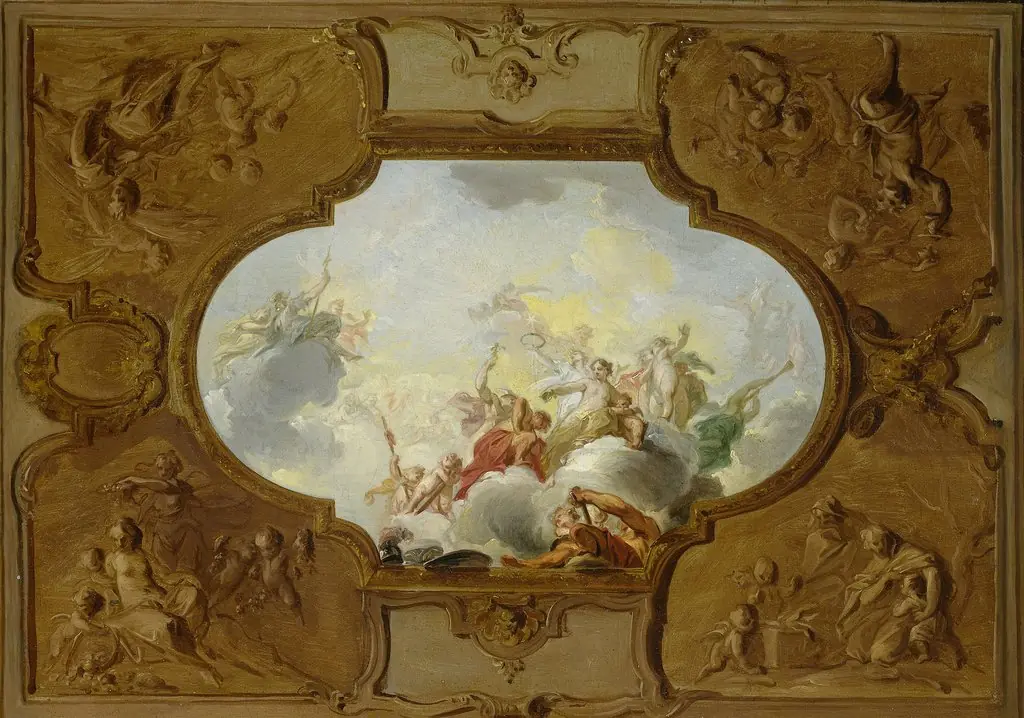 Design for a ceiling piece with Aeneas and the four seasons in the corners
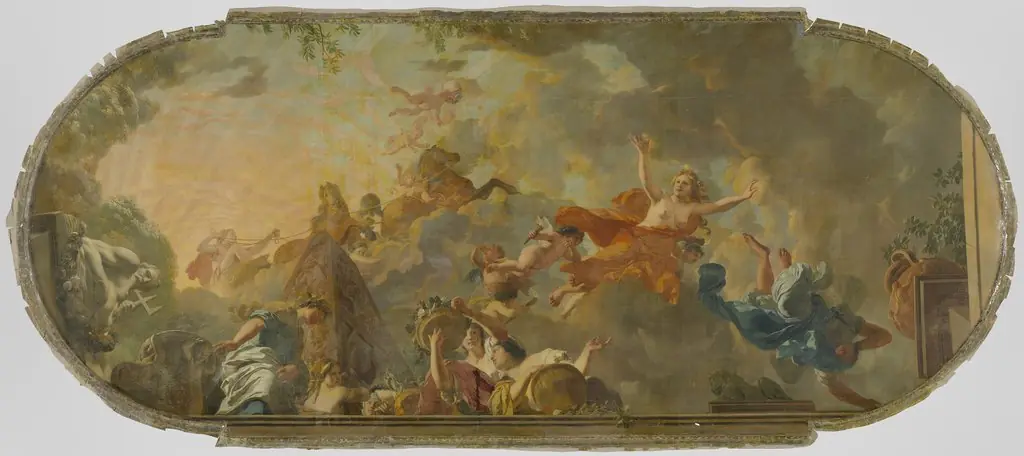 Allegory of dawn
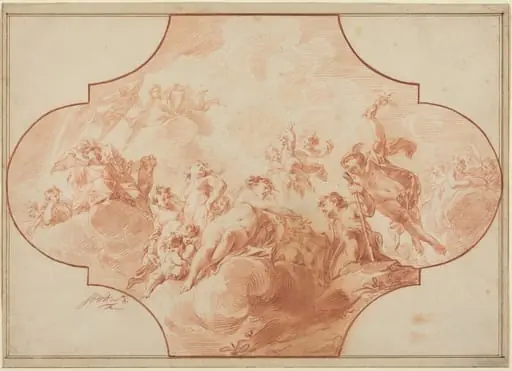 The Judgment of Paris
 Sketch for a Ceiling Fresco
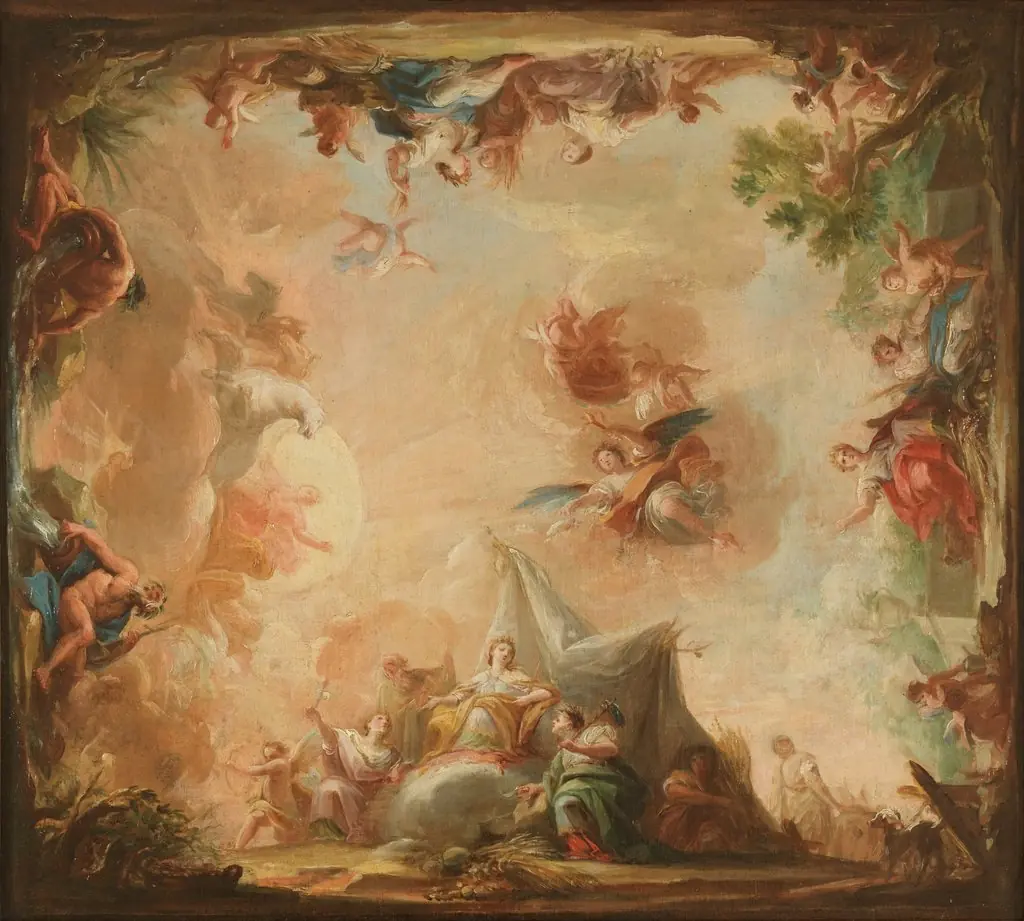 The Goddess Cybele offering her Produce to the Earth
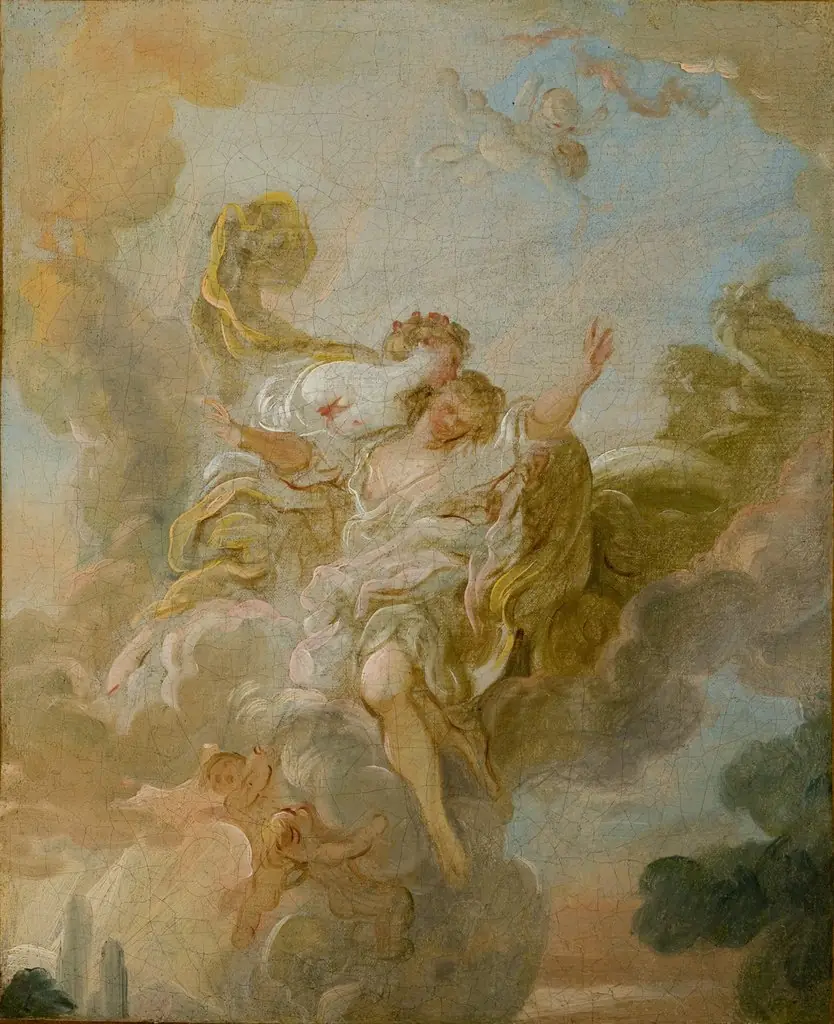 Allegorical Figures
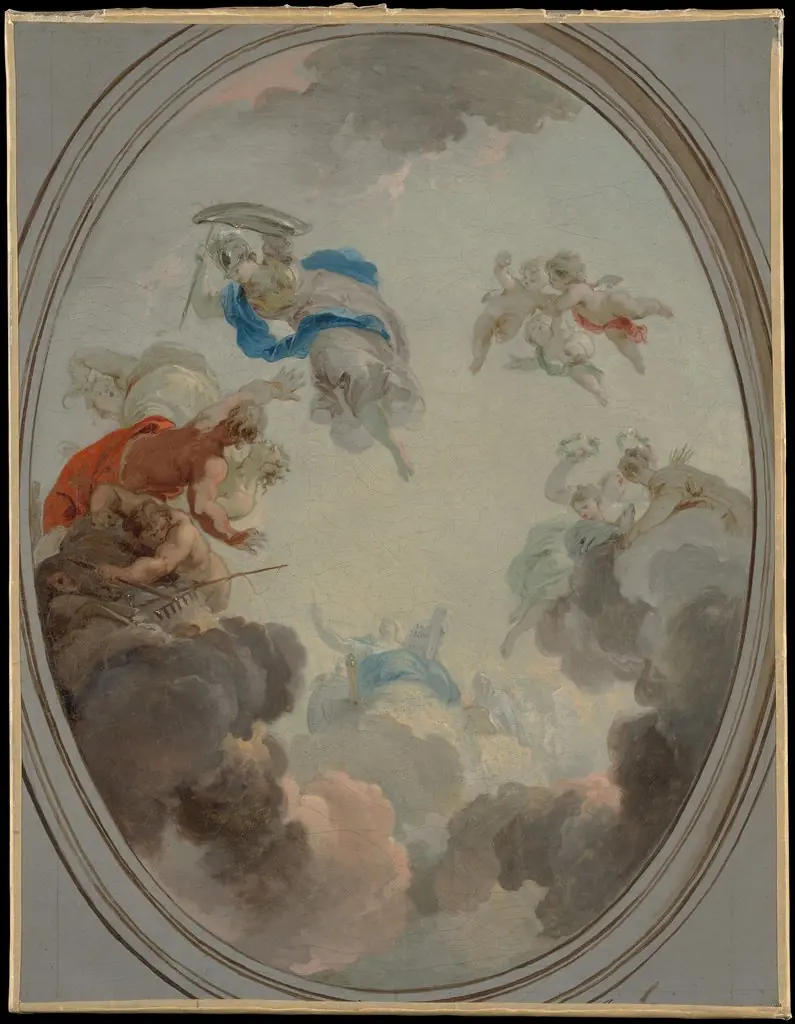
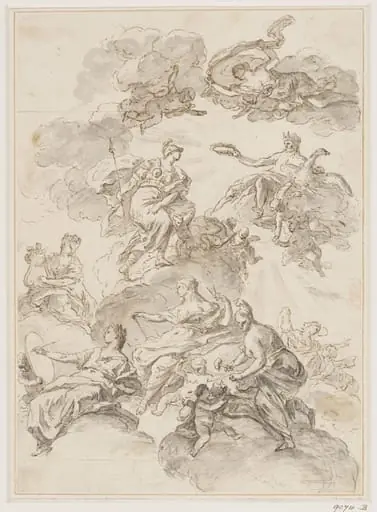 Minerva commending the arts of sculpture, architecture, painting and music to Jupiter
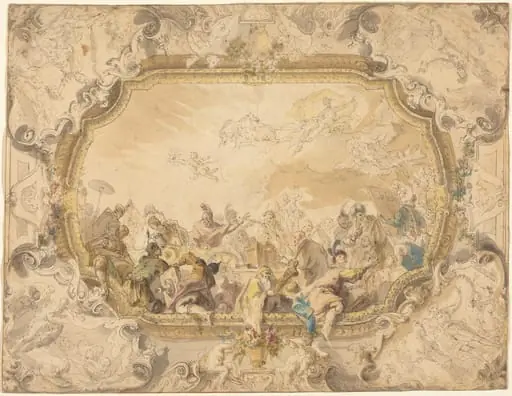 A Ceiling with Apollo Presiding over Military and Historical Learning
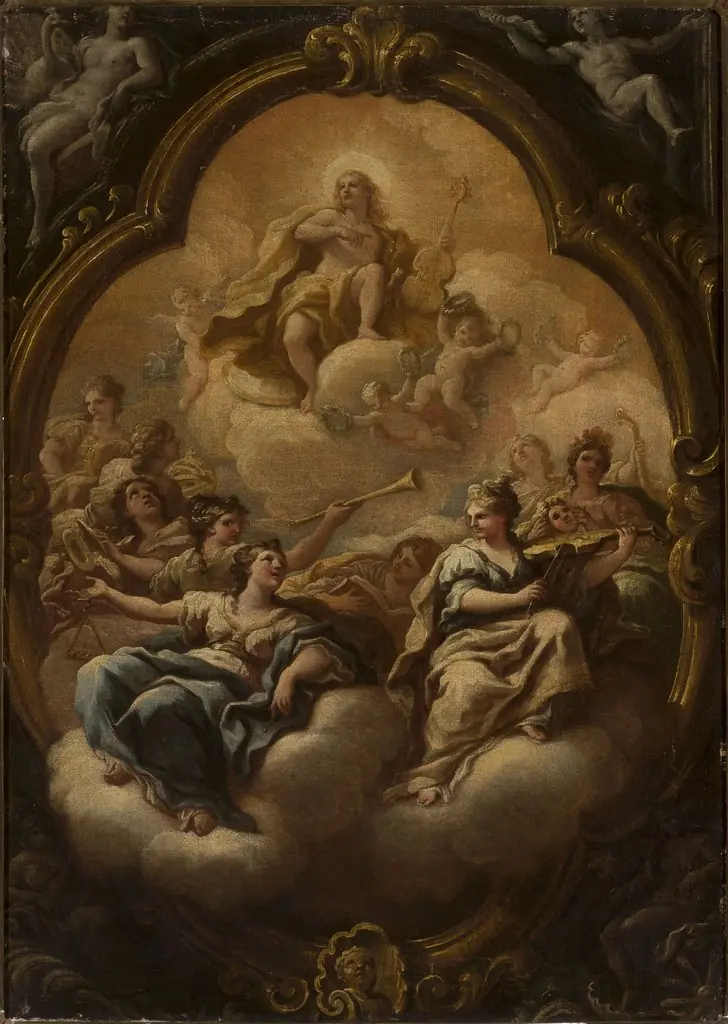 Apollo and Muses
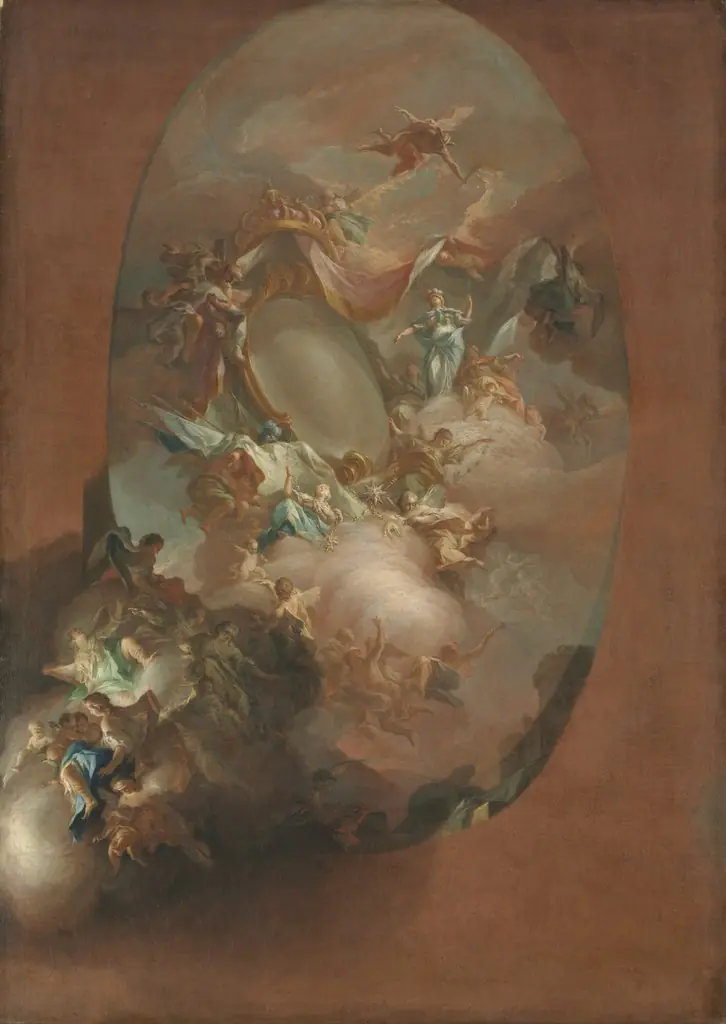 Study for "The Apotheosis of Ferdinand IV and Maria Carolina, King and Queen of Naples" (for the Palazzo dei Regi Studi, Naples)