Artwork
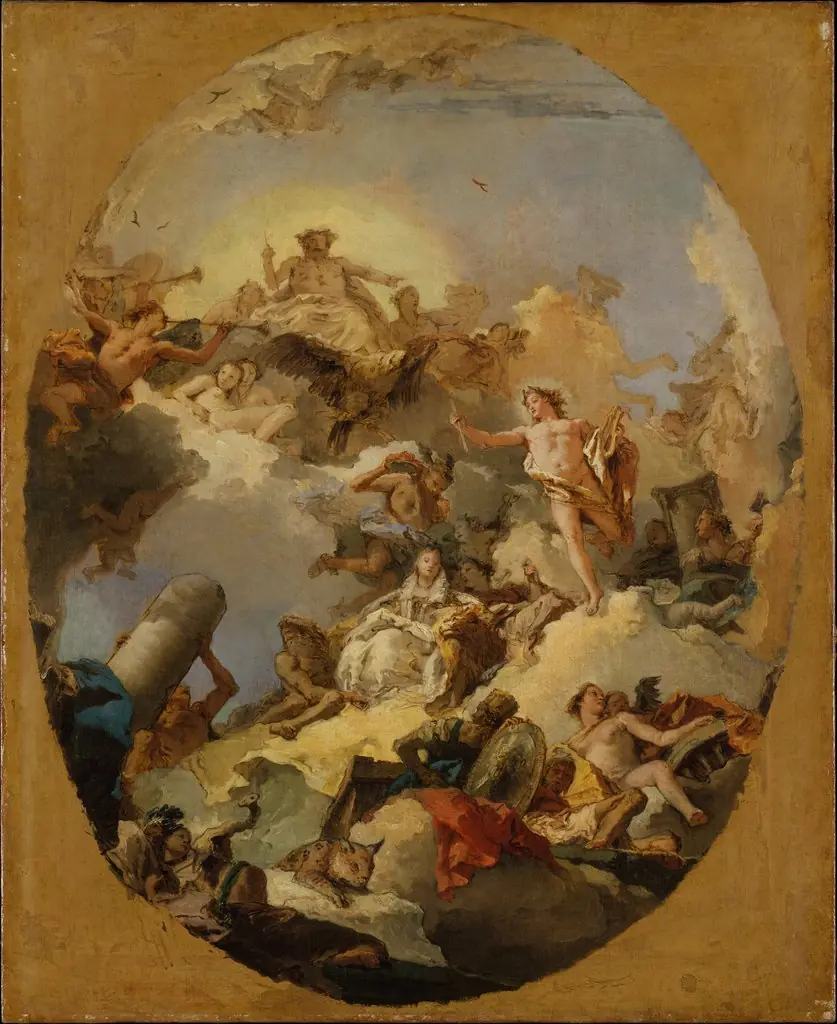
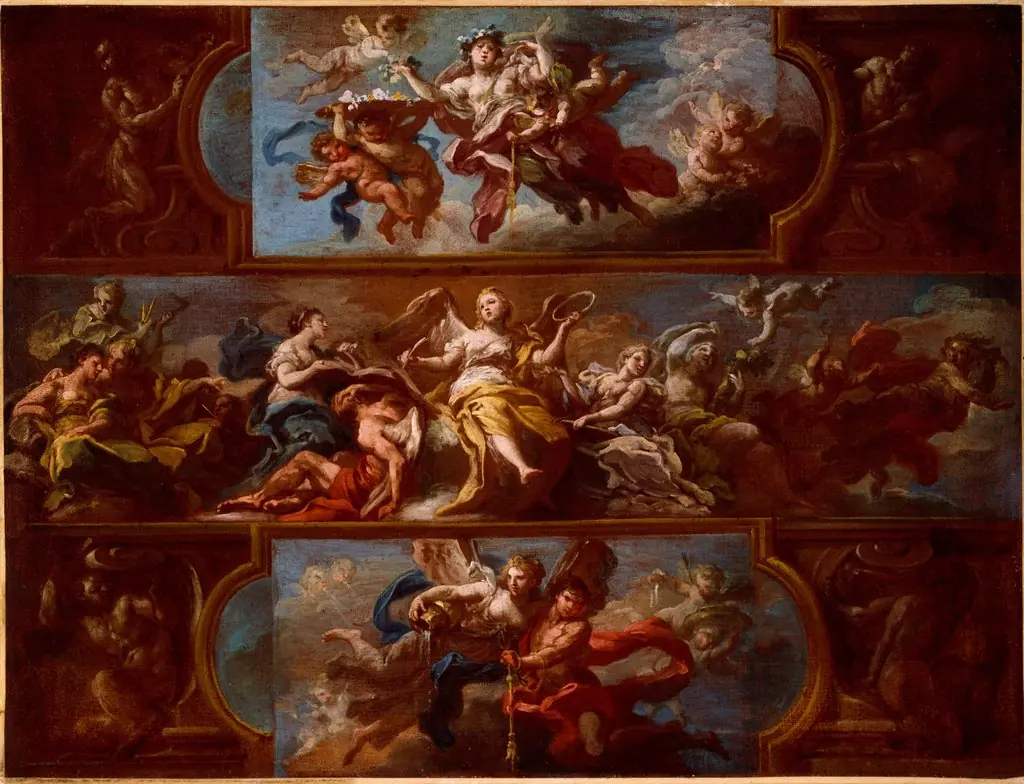
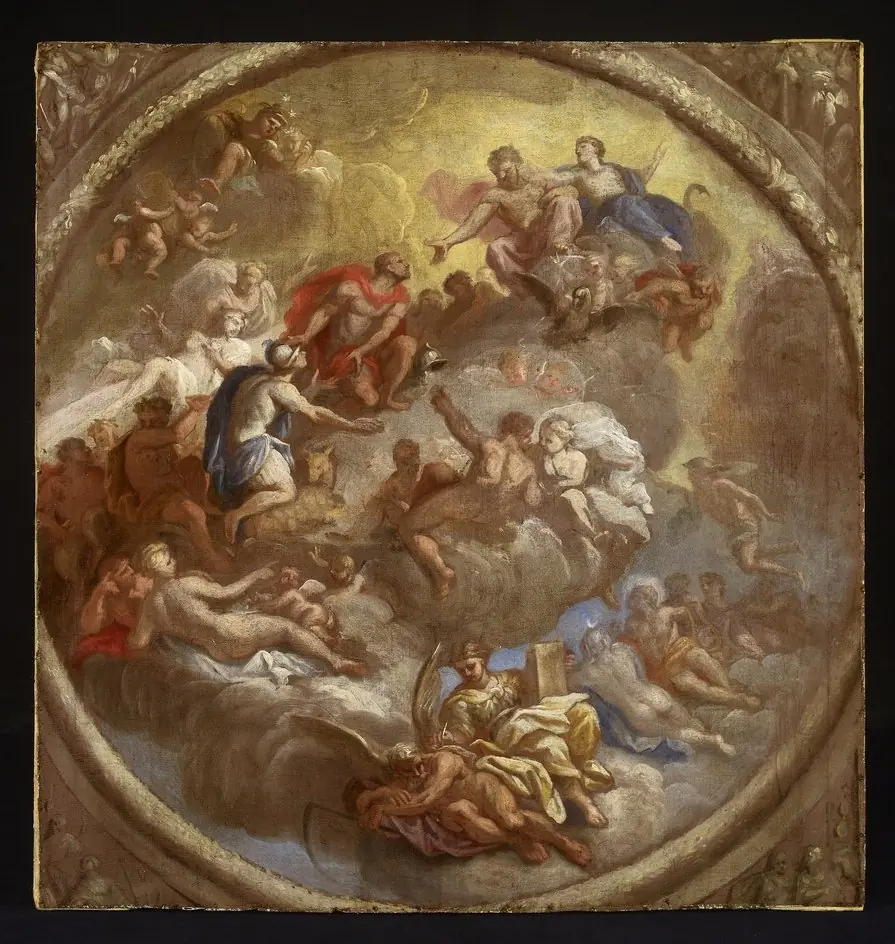
Design for a ceiling piece with Aeneas and the four seasons in the corners
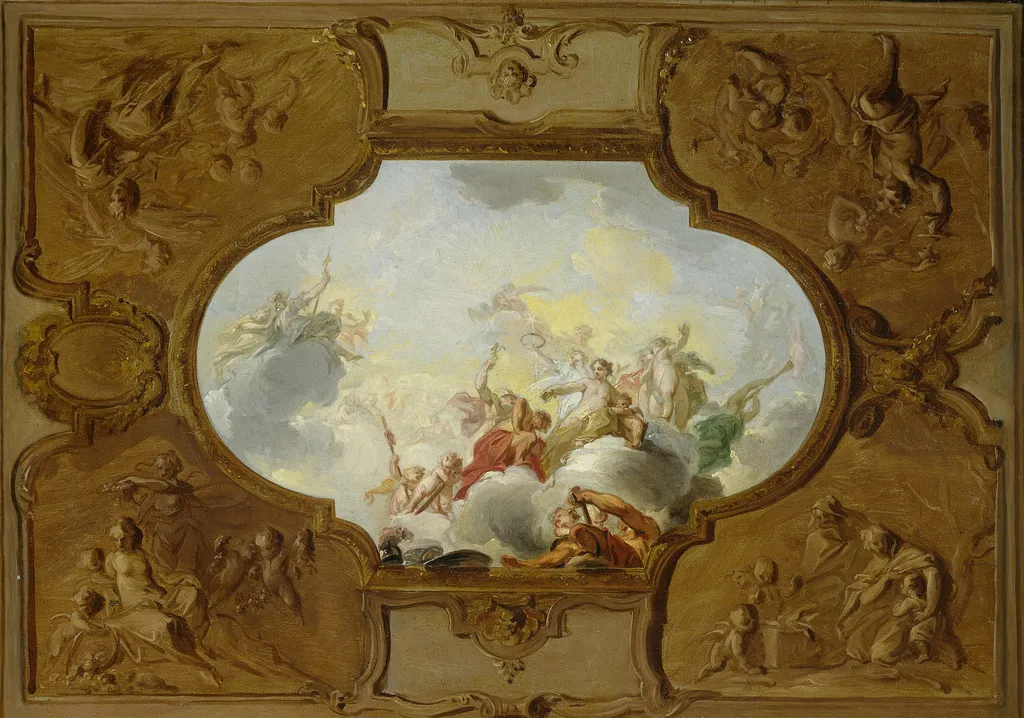
Design for a ceiling piece with Aeneas and the four seasons in the corners is an oil painting by the Rococo painting artist Jacob de Wit. It dates from 1720 and is held in the collection of the Rijksmuseum.
About this work
Subject & Meaning
The design centers on Aeneas as its principal subject, the Trojan hero of Virgil's epic, rendered in oil on canvas and intended as a ceiling composition.
The design centers on Aeneas as its principal subject, the Trojan hero of Virgil's epic, rendered in oil on canvas and intended as a ceiling composition. The four corners of the scheme are reserved for allegorical representations of the seasons, a conventional Baroque device that frames a mythological or heroic narrative with personifications of natural and temporal cycles. By pairing Aeneas with the four seasons, Jacob de Wit linked the legendary founding journey of Rome to the eternal rhythms of nature, lending the heroic subject a cosmological dimension typical of decorative ceiling programs.
The composition thus operates on two registers simultaneously: a narrative one rooted in classical mythology and an allegorical one in which the passage of the year sanctifies and elevates the hero's deeds.
Technique & Style
Jacob de Wit's Design for a ceiling piece with Aeneas and the four seasons in the corners is executed in oil paint on a canvas support. Created in 1720, the work measures 51.5 cm in height and 69.5 cm in width. Classified as a painting, the piece depicts the mythological figure Aeneas alongside allegorical representations of the four seasons positioned in the corners.
The composition serves as a preparatory design for a larger ceiling scheme, utilizing the fluidity of oil on canvas to establish the formal arrangement and stylistic approach for the intended architectural decoration.
Context
Jacob de Wit's Design for a ceiling piece with Aeneas and the four seasons in the corners (1720) represents a significant example of his early decorative oeuvre during the Dutch Golden Age's later phase. Executed in oil on canvas, the work serves as a preparatory study for a larger ceiling composition, a format for which the artist became renowned. The painting depicts the mythological figure Aeneas surrounded by allegorical representations of the seasons, reflecting the period's continued engagement with classical themes in domestic and civic decoration.
Currently held in the collection of the Rijksmuseum, the piece illustrates de Wit's skill in creating illusionistic effects intended for architectural integration. Its preservation allows for the study of his draftsmanship and compositional approach prior to the execution of final ceiling schemes.
Overview
Created in 1720, this oil-on-canvas design by Dutch artist Jacob de Wit serves as a preparatory sketch for a ceiling decoration. The composition is organized around a central oval scene populated by numerous figures, some appearing to float amid clouds, while each of the four corners contains a smaller vignette representing a season.
History & Provenance
Jacob de Wit, renowned for his decorative schemes in Dutch churches and private residences, produced this work as part of his interior‑painting practice. The sketch entered the Rijksmuseum’s collection, where it is displayed as an example of his approach to large‑scale ceiling programs.
Own this work as a print
Artist & collection
Artist
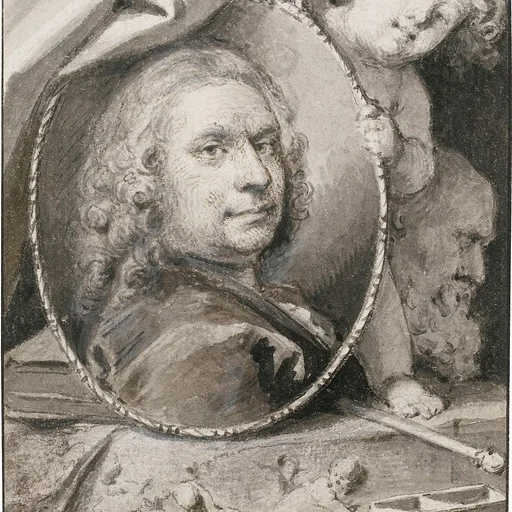
Jacob de Wit (19 December 1695 – 12 November 1754) was a Dutch painter and interior decorator. He is best known for his depictions of religious scenes.