Artwork
The Butcher shop
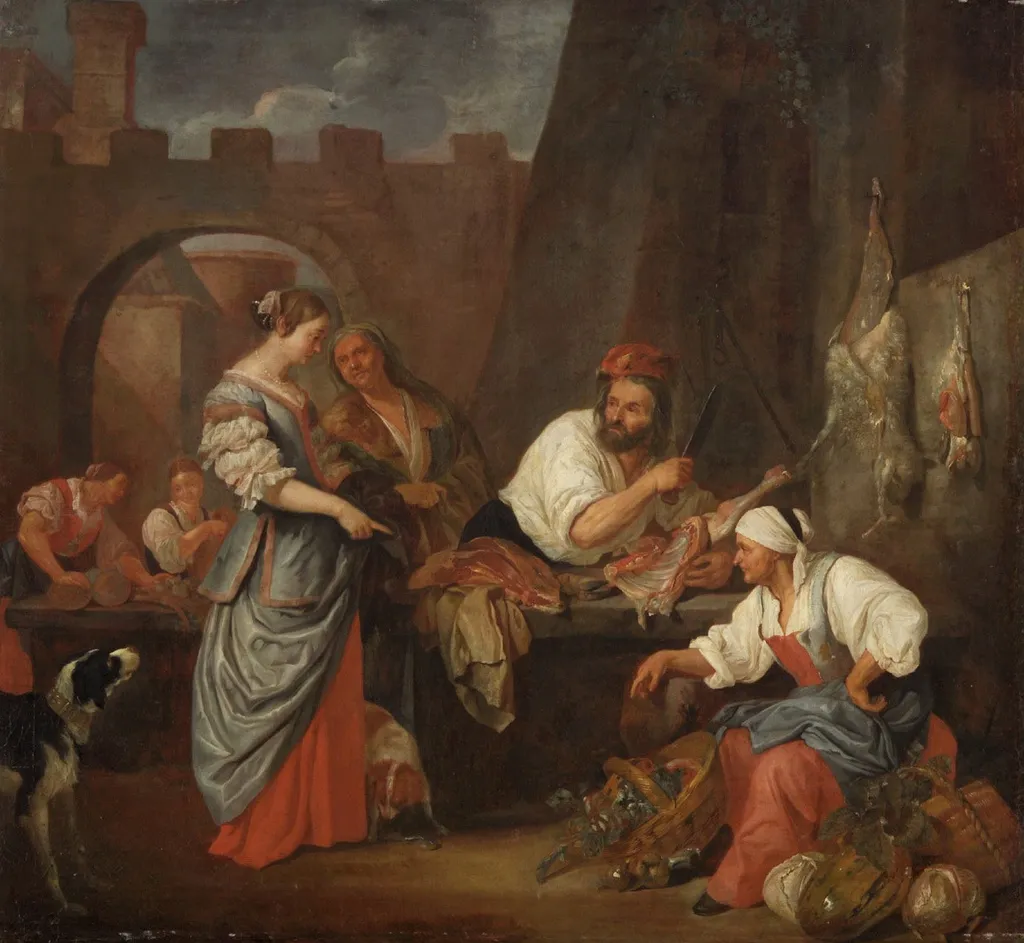
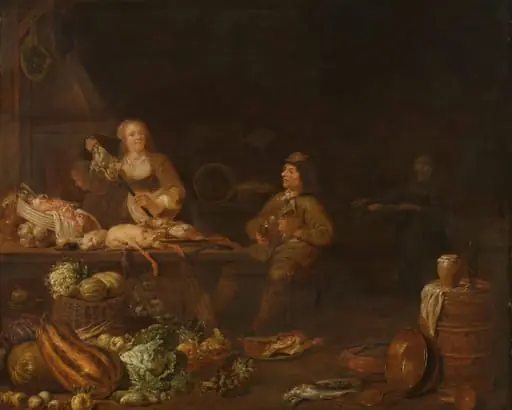
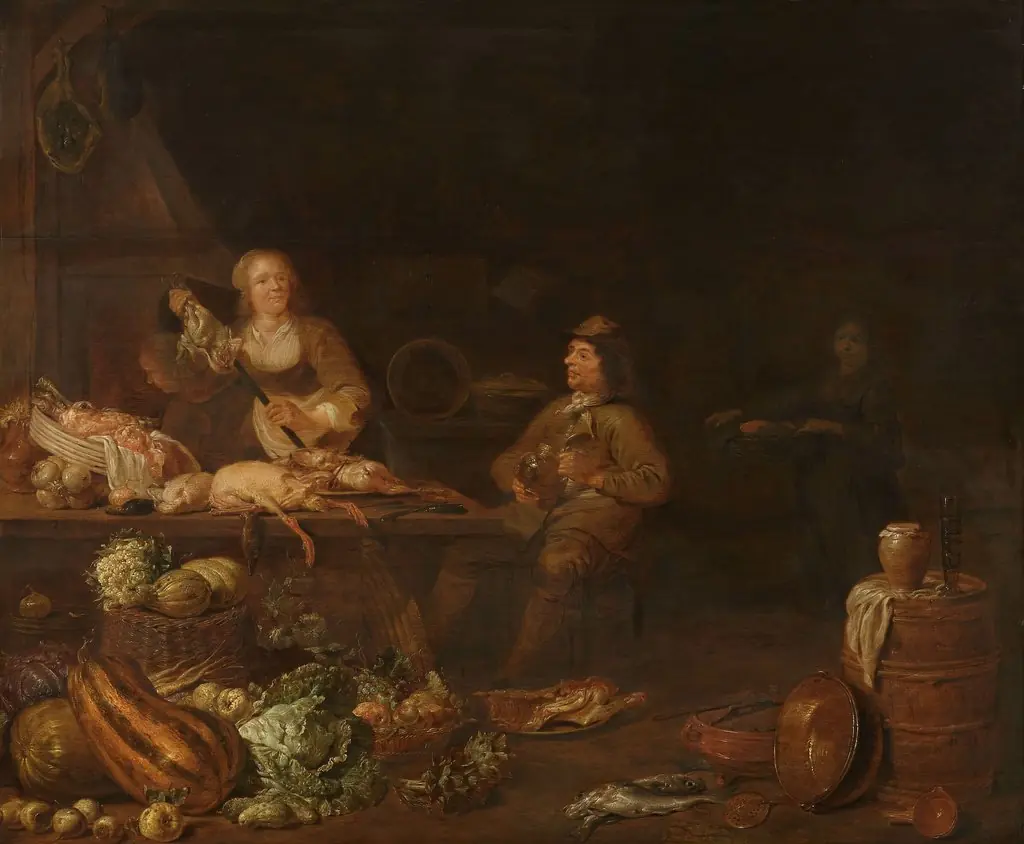
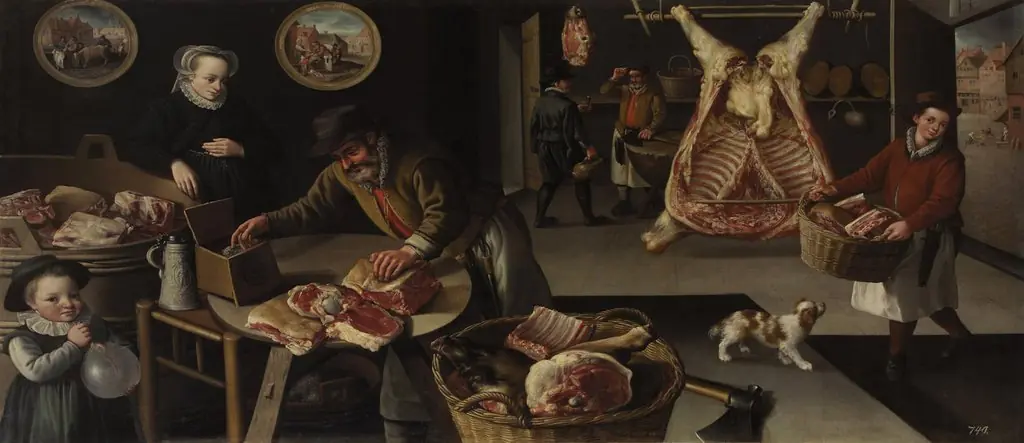
The Butcher shop is an oil painting by the Dutch Golden Age artist Jacob Toorenvliet. It dates from 1694 and is held in the collection of the Kunsthistorisches Museum.
About this work
Subject & Meaning
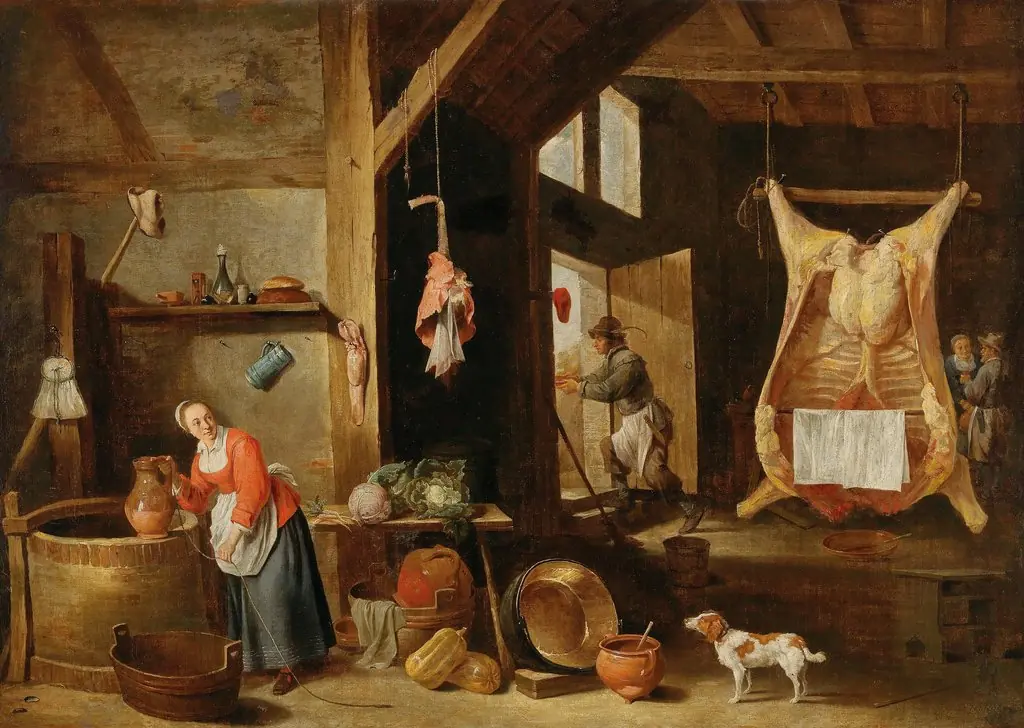
The composition centers on a butcher and includes figures such as a man and a woman, alongside a dog, situated within the commercial setting.
Jacob Toorenvliet's 1694 oil painting, The Butcher shop, is a genre scene depicting a bustling market stall environment. The composition centers on a butcher and includes figures such as a man and a woman, alongside a dog, situated within the commercial setting. As a work of genre art, the piece represents everyday life and commercial activity rather than mythological or historical narratives.
The visual focus remains on the interaction between the human figures and the animal within the context of the butcher's trade.
Technique & Style
Jacob Toorenvliet's The Butcher Shop, executed in 1694, is an oil painting on canvas. The work measures 55 cm in height and 59 cm in width. As a genre scene, the composition depicts a butcher, a market stall, and various figures including men, women, and a dog.
The medium of oil paint allows for the detailed rendering of the market environment and the interactions between the human and animal subjects.
History & Provenance
The work was created by Jacob Toorenvliet in 1694 and entered the holdings of the Kunsthistorisches Museum, Vienna, where it remains today. The painting's subject, a butcher's stall, aligns with the artist's known specialization in genre scenes of daily life, depicting a butcher, a market stall, a woman, a man, and a dog. No documented commission or earlier ownership history beyond its current institutional custody has been recorded, and the available sources contain no specific inventory or accession number or record of exhibition history.
Overview
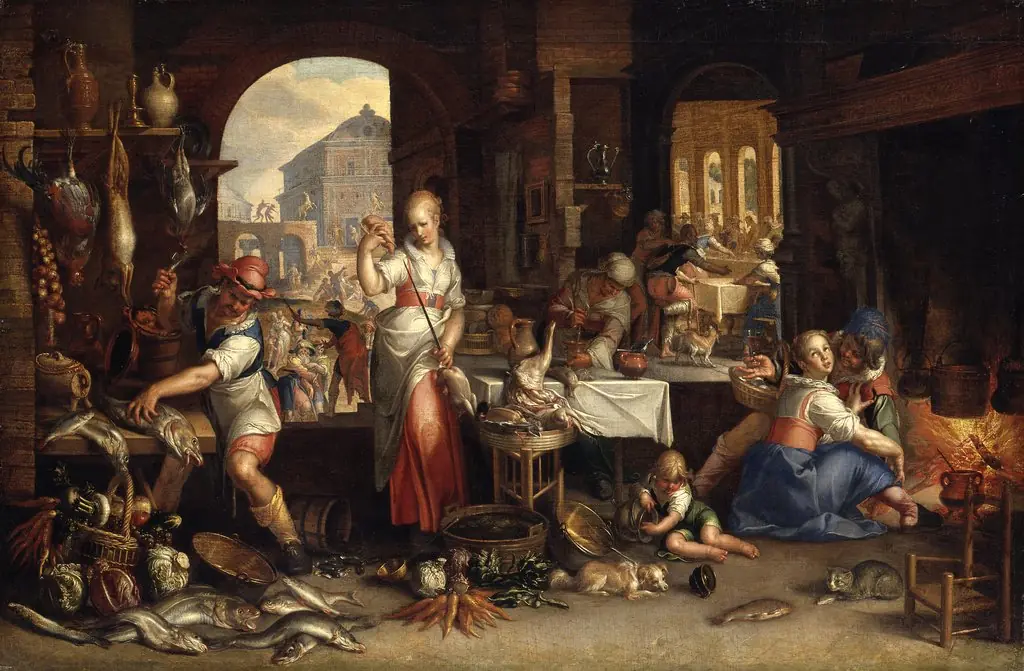
Painted in 1694 by Jacob Toorenvliet, The Butcher Shop is a genre scene depicting the interior of a meat market. The composition centers on a butcher in a white shirt and red hat, who is actively engaged in his trade, surrounded by hanging carcasses and tools of the profession. To his left stands a female customer dressed in a blue bodice and red skirt, gesturing toward the butcher as if negotiating a purchase.
In the foreground, another woman wearing a white headscarf and red apron sits on the floor, attending to goods or preparing for sale. Toorenvliet, a Dutch Golden Age painter known for his meticulous attention to detail and historical accuracy, renders the textures of the meat, fabric, and wooden surfaces with precise realism. The work exemplifies his mature style, characterized by a balanced arrangement of figures and a warm, naturalistic palette.
Created during the late phase of his career, this painting reflects the enduring Dutch interest in everyday commercial life and the specific social dynamics of the marketplace. The scene captures a moment of transaction, emphasizing the roles of different social actors within a domestic yet public commercial setting.
Context
The painting belongs to the Dutch Golden Age tradition of genre works that depict ordinary activities with moral or observational undertones. Toorenvliet, trained in the Dutch school, often focused on interior scenes that highlighted the interplay of light, texture, and human interaction.
Artist & collection