Artwork
Bentheim Castle
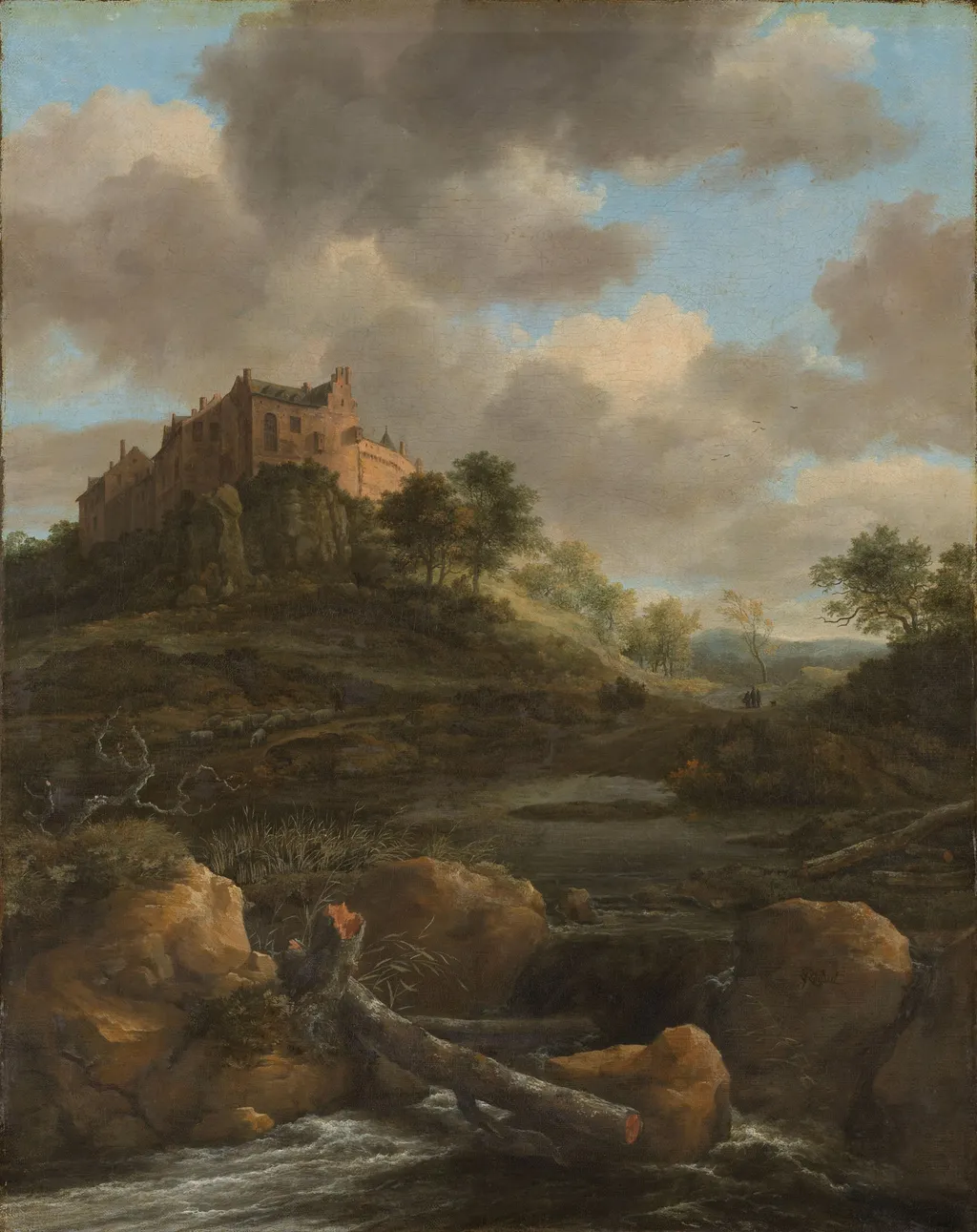
Bentheim Castle is an oil painting by the Dutch Golden Age artist Jacob van Ruisdael. It dates from 1650 and is held in the collection of the Rijksmuseum.
About this work
This is a Dutch landscape painting of Bentheim Castle. Jacob van Ruisdael shows the stone fortress on a hill. The sky takes up most of the space above it.
Painted around 1650, it’s part of the Dutch Golden Age. That was a time when Dutch artists made many everyday scenes look special.
Check out more works by Jacob van Ruisdael.
Subject & Meaning
The painting’s iconography reflects broader seventeenth-century Dutch interests in topography, travel, and material culture.
Bentheim Castle is depicted as a prominent fortress sited on a rocky eminence, framed by a cascading stream and gnarled tree remnants that underscore the site’s age and rugged terrain. The composition emphasizes the castle’s elevated position, contrasting the man-made structure with the surrounding natural landscape and the modest valley road below. Ruisdael’s rendering transforms the modest German hilltop keep into a dramatic, almost monumental landmark, aligning with Dutch Golden Age landscape conventions that invested local or foreign sites with grandeur.
The painting’s iconography reflects broader seventeenth-century Dutch interests in topography, travel, and material culture. The inclusion of the waterfall and rocky outcrops suggests an idealized, picturesque Northern European terrain, while the distant shepherd and sheep introduce a human presence that grounds the scene in everyday life. The work may also allude indirectly to the export of Bentheimer sandstone, a valued Dutch building material, linking the castle’s image to contemporary urban expansion in Amsterdam and Haarlem.
Technique & Style
Executed around 1650 in Haarlem, this work is an oil painting on canvas measuring 68 by 54 centimeters. The composition depicts Burg Bentheim situated on a rocky summit in the left middle distance, overlooking a valley with a road and a stream that forms a small waterfall in the foreground. Prominent formal elements include masses of rock, a shattered tree trunk lying diagonally across the water, and a shepherd driving sheep on the left bank.
The artist signed the piece in full on a rock to the right. Stylistically, the painting is characterized as a fine picture full of light, exemplifying Dutch Golden Age landscape traditions. Although the castle appears highly elevated in the scene, the actual site is only slightly raised above the surrounding plain, indicating an artistic exaggeration of the topography.
History & Provenance
Bentheim Castle was painted by Jacob van Ruisdael in 1650 while he was based in Haarlem, as noted in internal cataloguing and confirmed by the work’s dimensions of 68 × 54 cm. The oil on canvas depicts the German landmark Burg Bentheim with a waterfall and surrounding landscape. Contemporary documentation records its first documented sale in July 1805 from G. G. Baron Taets van Amerongen in Amsterdam for 750 florins, followed by a sale to p. de Smeth van Alphen in August 1810 for 740 florins. The painting entered the Rijksmuseum collection, where it was listed in the 1835 catalogue (No. 2080) and valued at £ 350.
Its provenance thus traces from the artist’s studio to private Dutch owners before its acquisition by the museum.
The painting Bentheim Castle (c. 1650) by Jacob van Ruisdael is part of the Rijksmuseum collection in Amsterdam; the museum lists it among its holdings but does not publish a separate accession number for the work. Its presence in the museum is documented in the 1910 Rijksmuseum catalogue (catalogue entry No. 2080) and was noted as early as 1835, when it was valued at £350. The work was also recorded by art historian Hofstede de Groot in 1911, further confirming its display in the museum’s galleries. These records trace the painting’s exhibition history within the Rijksmuseum from the 19th century onward.
Context
View of Bentheim Castle is recognized as a prime example of Dutch Golden Age landscape painting. Early scholarship by Hofstede de Groot in 1911 documented the work's provenance and praised its luminosity, noting its similarity to other depictions where Ruisdael exaggerated the castle's elevation relative to the actual flat terrain. The painting's creation is often contextualized within speculation about the artist's travels; while contemporaries typically toured Italy, Ruisdael journeyed east, possibly to source Bentheimer sandstone for Amsterdam's new Town Hall or as part of an expedition with Nicolaes Berchem.
Although archival evidence confirming joint travel with Berchem is absent, the stylistic connection is highlighted by Berchem's later mirror-image copy of Ruisdael's dramatic composition. This body of work underscores Ruisdael's unique focus on German landscapes during a period when such destinations were less common for Dutch artists.
Overview
Jacob van Ruisdael's "Bentheim Castle," painted around 1650, is an oil on canvas landscape. This work from the Dutch Golden Age depicts the historic Burg Bentheim, a prominent subject in the artist's oeuvre. It currently resides in the collection of the Rijksmuseum, Amsterdam, and exemplifies the period's focus on naturalistic yet idealized scenery.
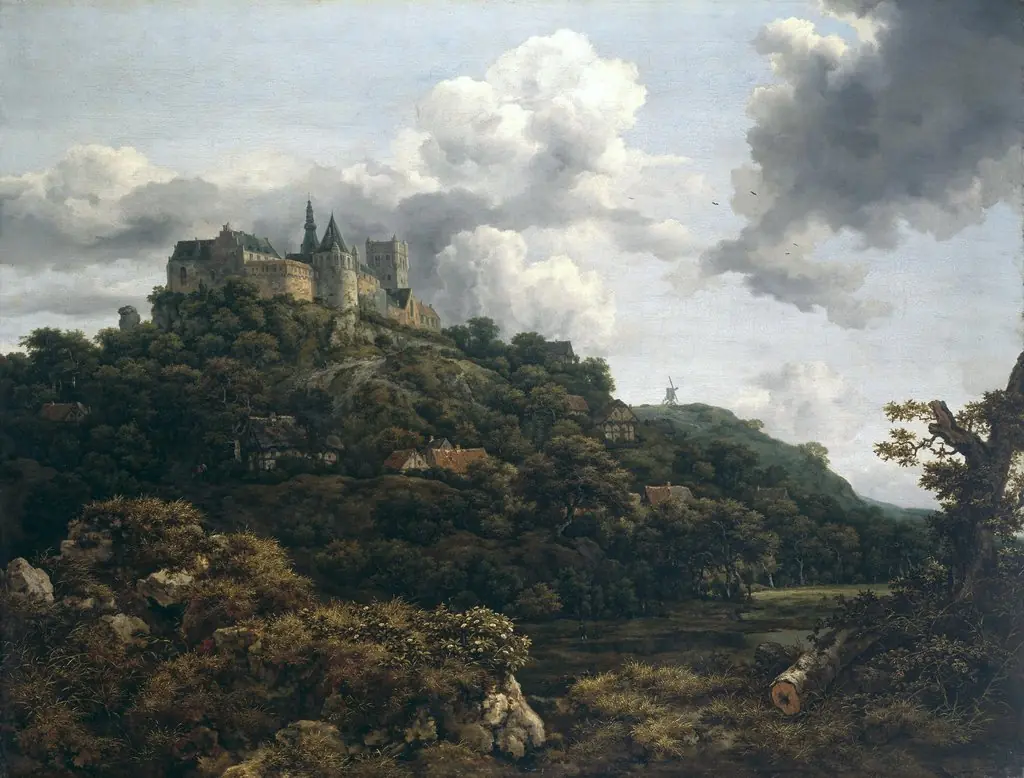
Own this work as a print
Artist & collection
Artist
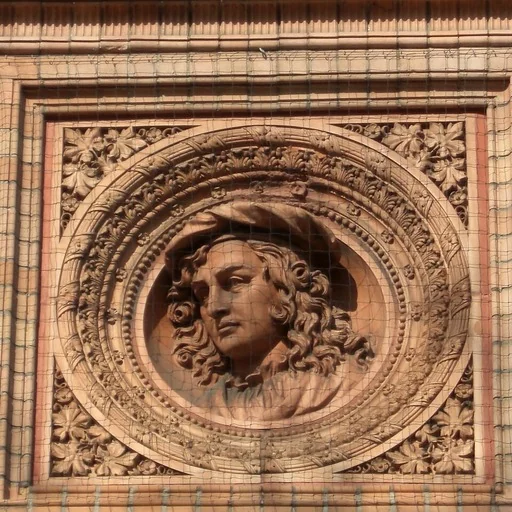
Jacob Isaackszoon van Ruisdael was a Dutch painter, draughtsman, and etcher. He is generally considered the pre-eminent landscape painter of the Dutch Golden Age, a period of great wealth and cultural achievement when…

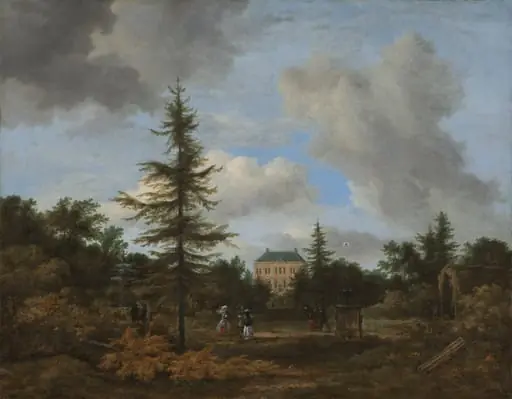
 Landscape with a castle
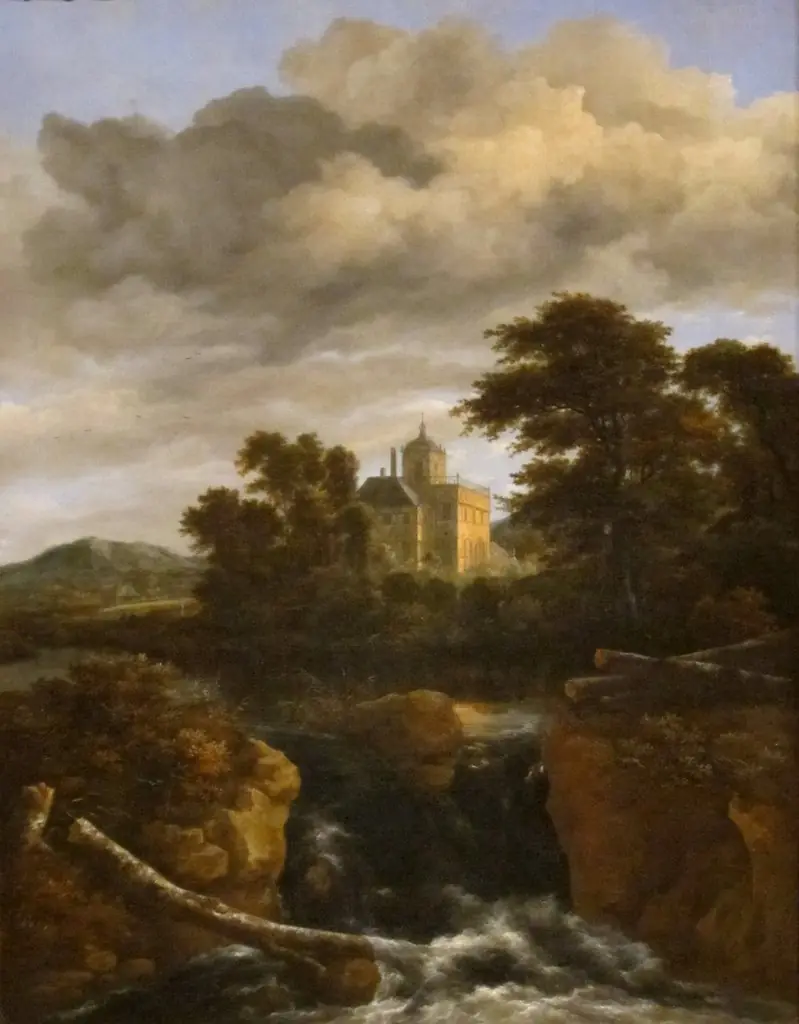 Rocky Landscape with Castle and Cascade
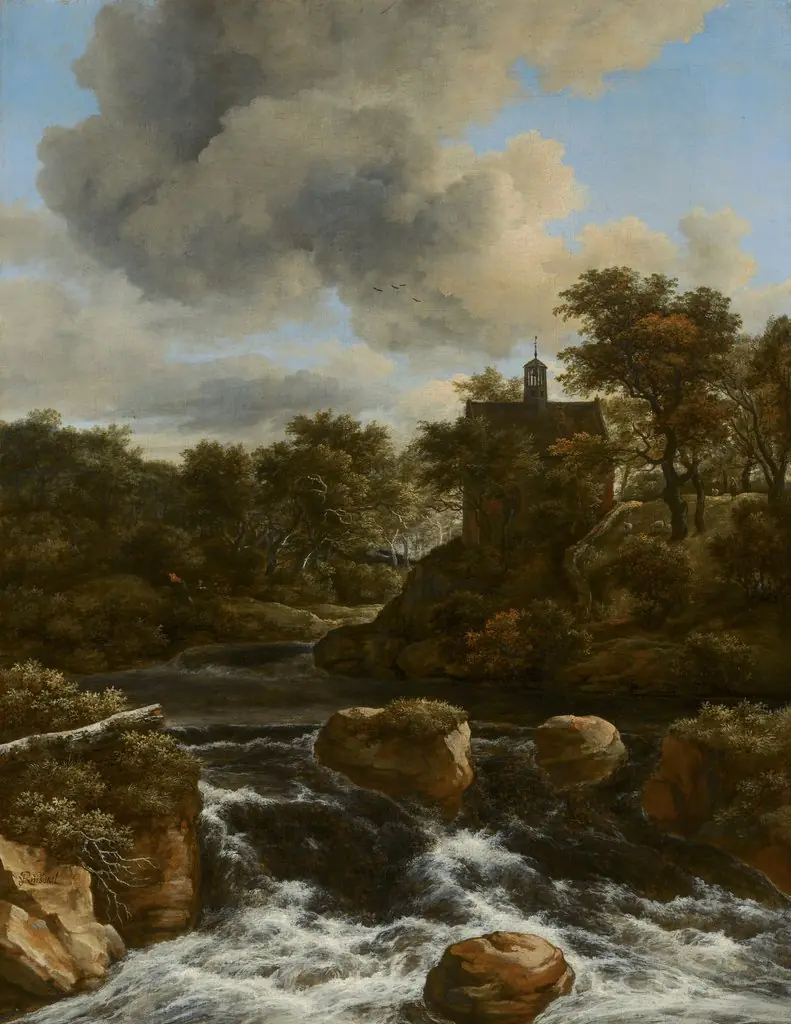 Mountain Landscape with Waterfall
 Landscape with a ruined castle near a fordable place in the river
 River landscape
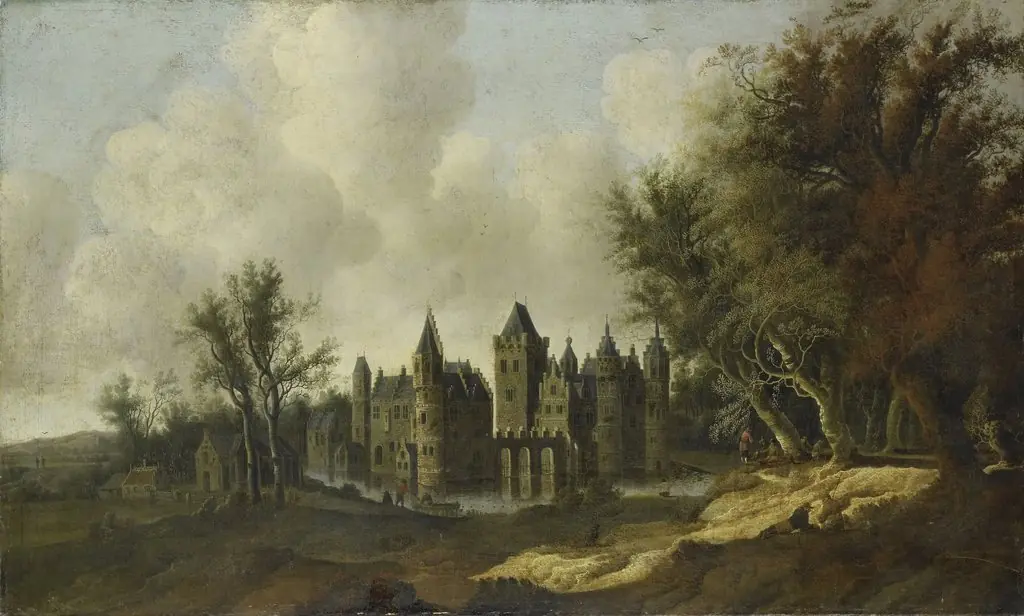 Egmond Castle
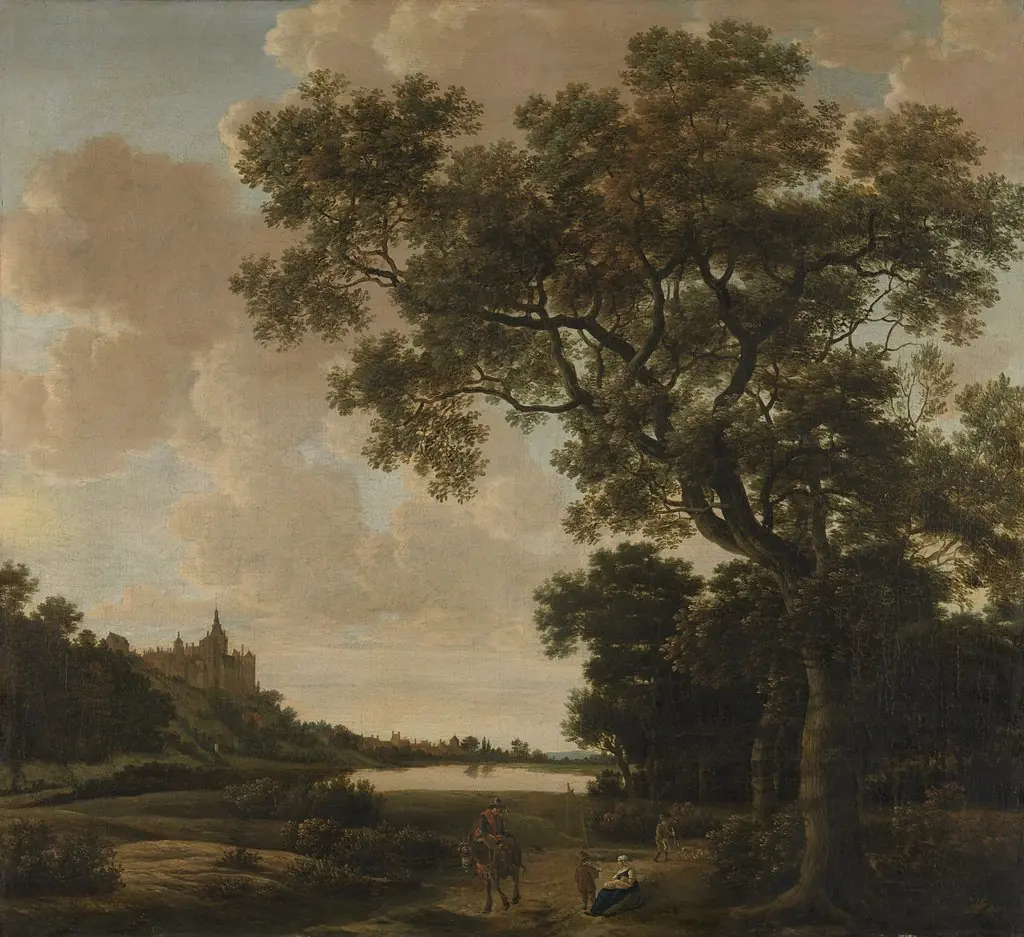 Landscape with the Schwanenturm, Kleve
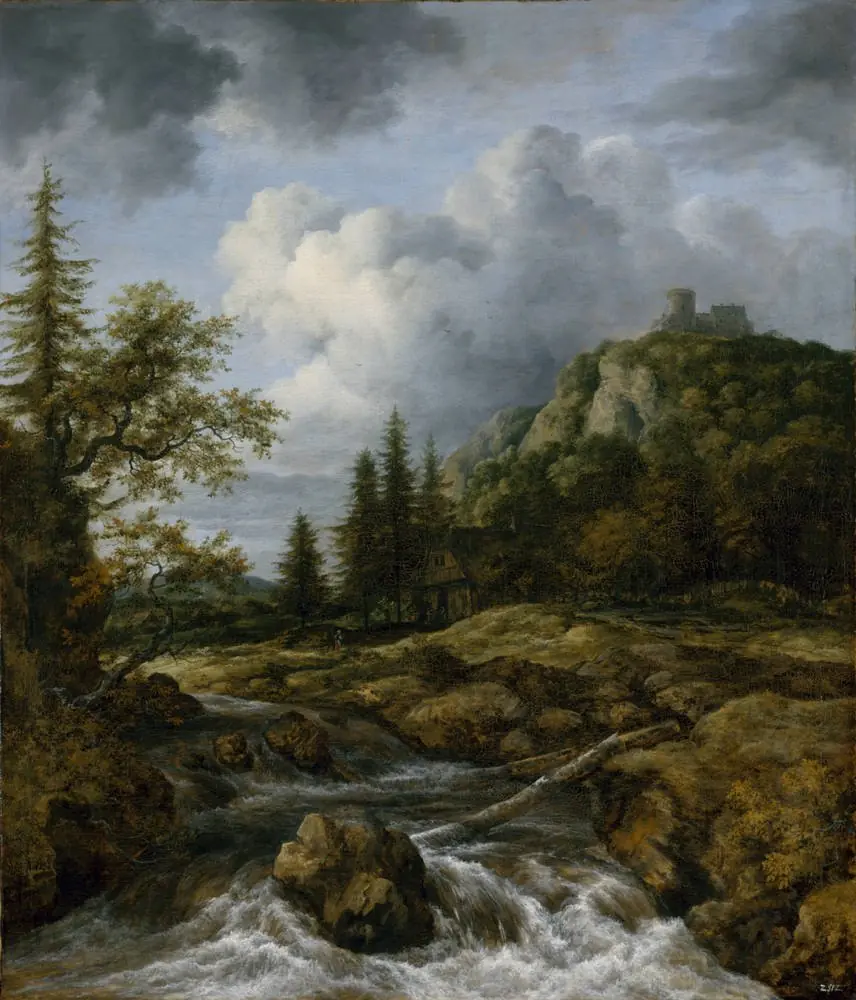 The Waterfall before the Mountain Castle
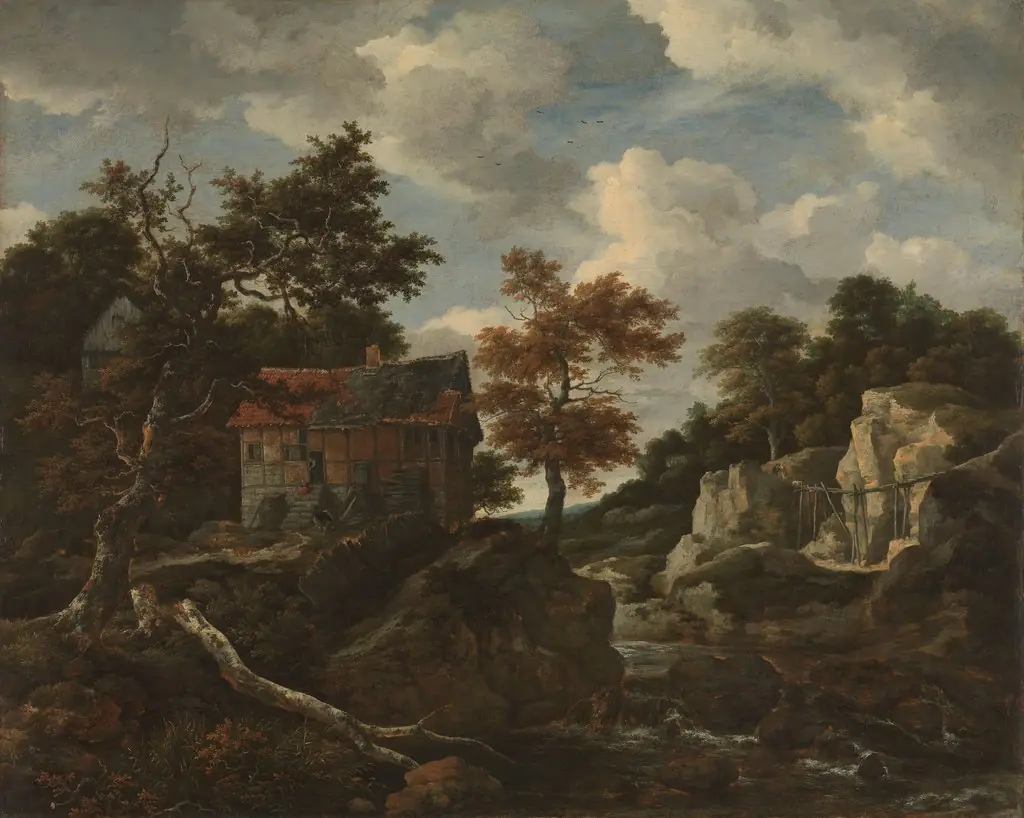 Rocky landscape
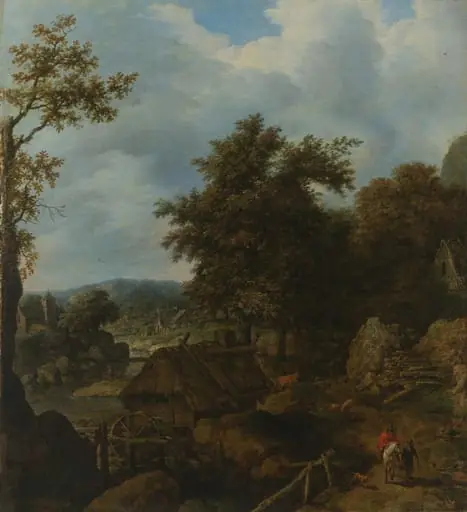 Swedish Landscape with a Water Mill