Artwork
Grainfields
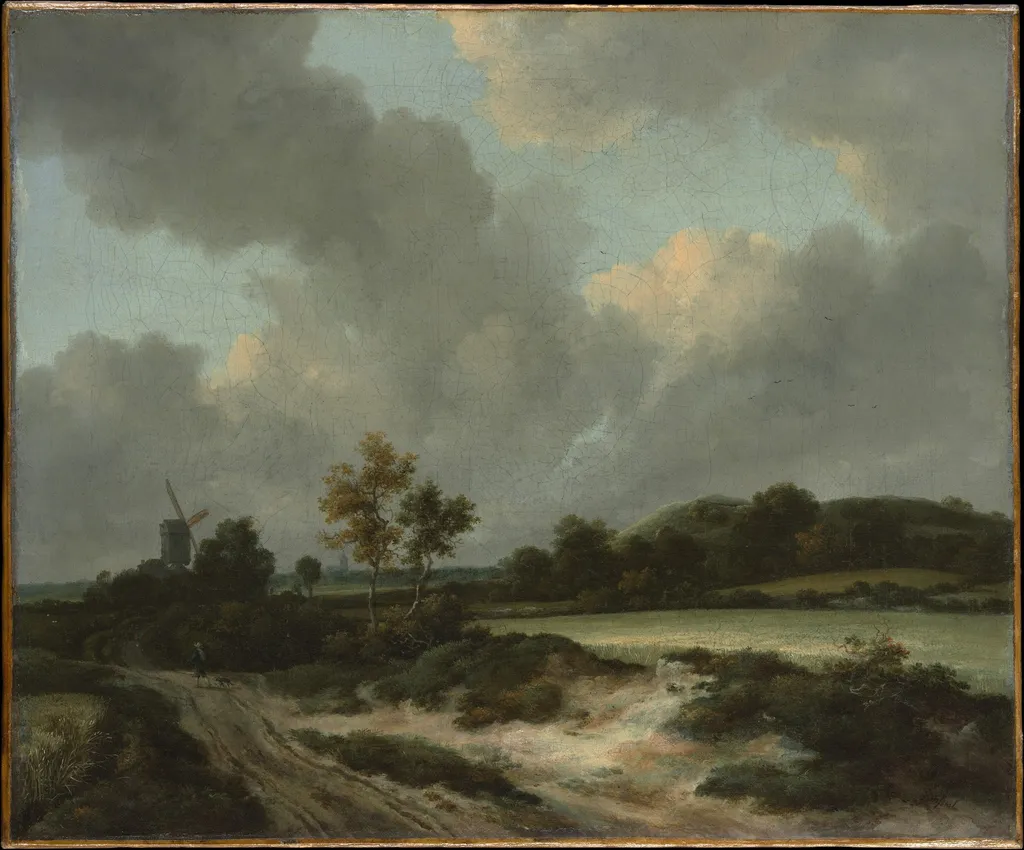
Grainfields is an oil painting by the Dutch Golden Age artist Jacob van Ruisdael. It dates from 1668 and is held in the collection of the Metropolitan Museum of Art.
About this work
Subject & Meaning
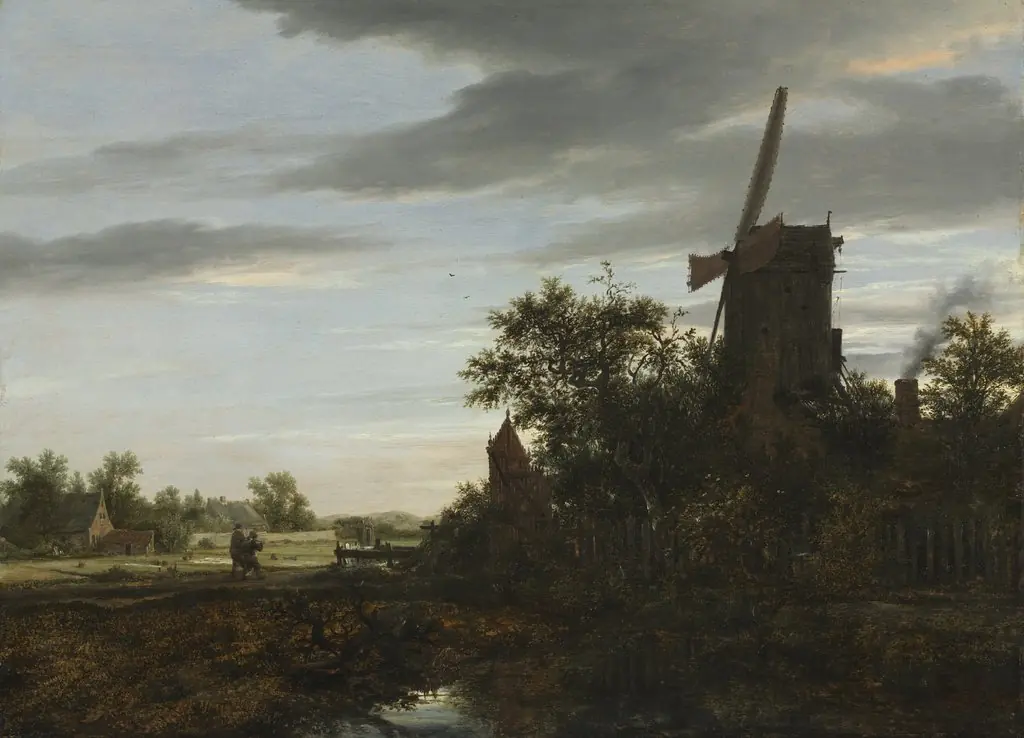
The composition incorporates specific rural elements, including a prominent tree and a windmill, which serve as key iconographic features within the depiction.
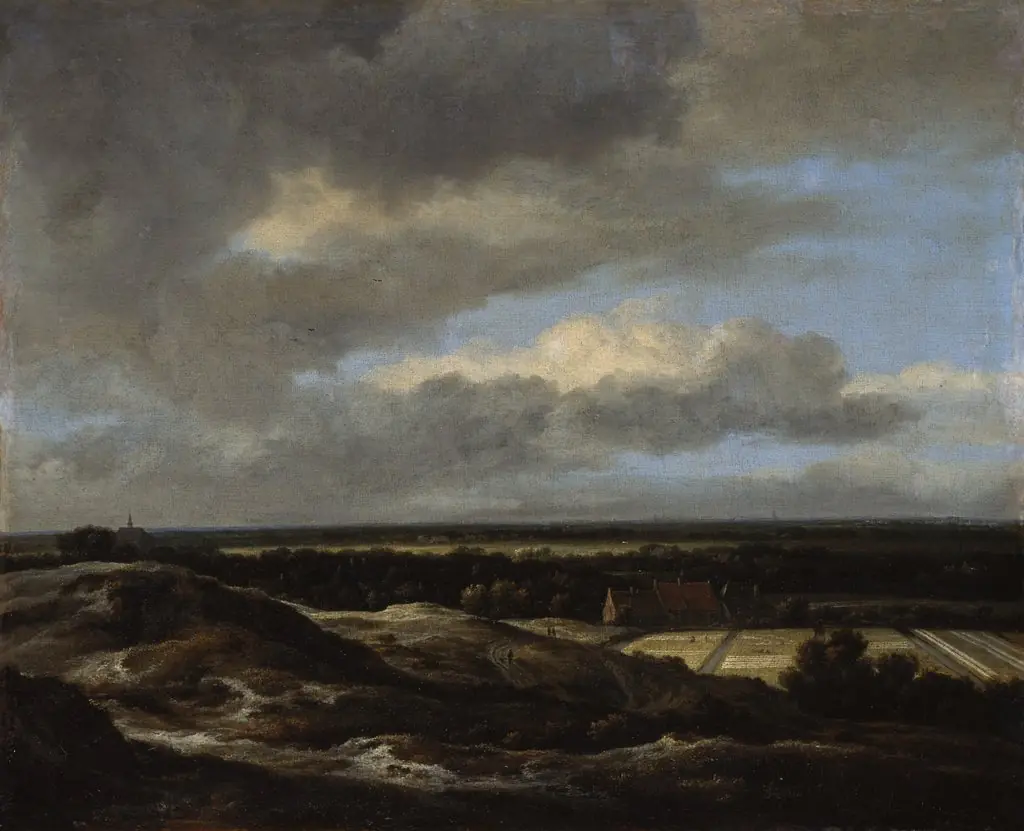
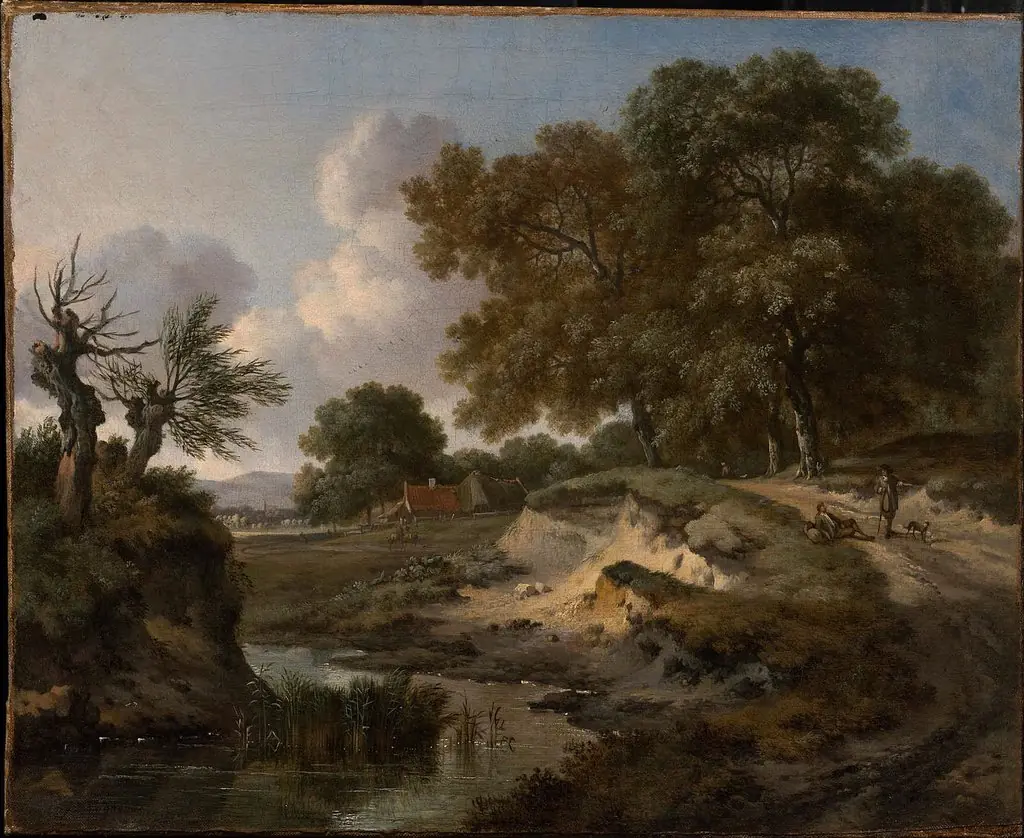
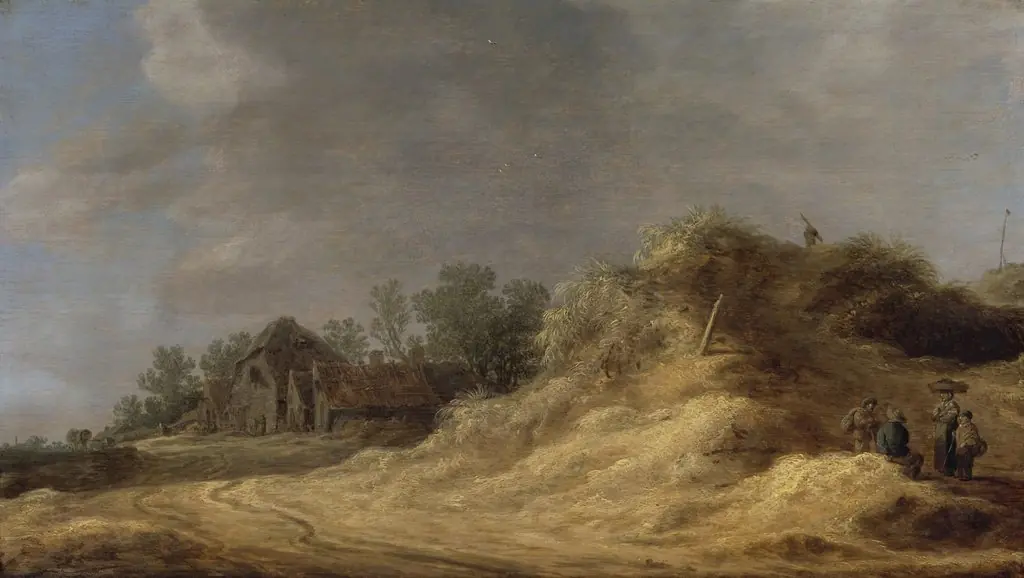
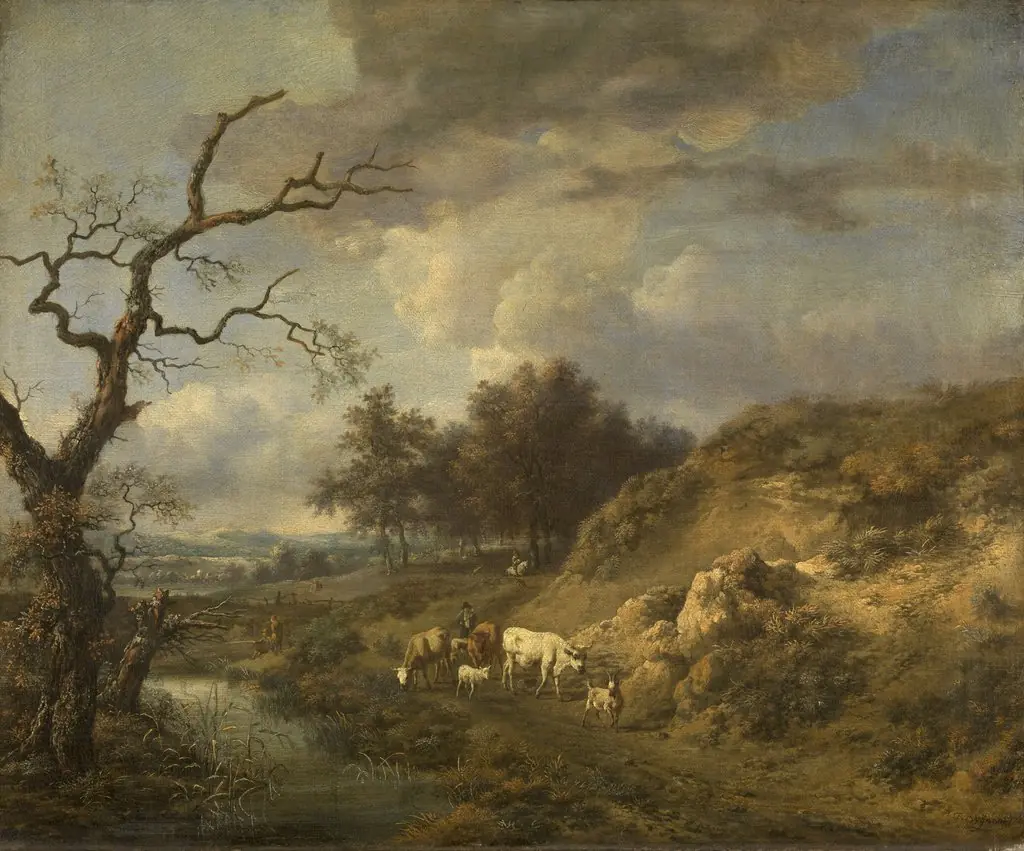
Created in 1668 by Jacob van Ruisdael, this oil painting on canvas presents a landscape scene centered on agricultural grainfields. The composition incorporates specific rural elements, including a prominent tree and a windmill, which serve as key iconographic features within the depiction. These components collectively illustrate a working countryside environment, emphasizing the presence of cultivated land and the infrastructure associated with farming.
As a work of the landscape genre, the painting represents a focused observation of the natural and man-made aspects of the Dutch rural setting, highlighting the interplay between the open fields and the functional windmill structure.
Technique & Style
Executed in 1668, Grainfields is a landscape painting in oil on canvas measuring 47 × 57.2 cm. The handling reflects Jacob van Ruisdael’s characteristic treatment of light and atmosphere, employing layered glazes to render the expansive sky and sunlit fields. Compositionally, the foreground presents a path threading between stacked sheaves of grain, while the middle ground opens into open fields under a broad, cloud-strewn sky. The windmill and distant foliage are rendered with precise yet economical brushwork, balancing detailed incident with atmospheric recession.
The work entered the Metropolitan Museum of Art as part of the Michael Friedsam bequest, where it remains.
History & Provenance
Jacob van Ruisdael created the landscape painting Grainfields in 1668 using oil on canvas. The work depicts a rural scene featuring fields, trees, and a windmill. Regarding its ownership history, the painting was part of the collection of Michael Friedsam before entering the holdings of the Metropolitan Museum of Art.
The Metropolitan Museum of Art currently houses the piece, which measures 47 by 57.2 centimeters. No specific commission details are recorded in the available sources, but the work is firmly dated to the late 1660s within Ruisdael's mature period.
Jacob van Ruisdael’s Grainfields (1668) is held in the collection of the Metropolitan Museum of Art, New York, where it is accessioned under the inventory number 32.100.15. The painting entered the museum’s holdings through the bequest of Michael Friedsam in 1931. Prior to its acquisition, it had been part of Friedsam’s private collection. Specific loan exhibitions beyond the institution are not documented in available sources.
Overview
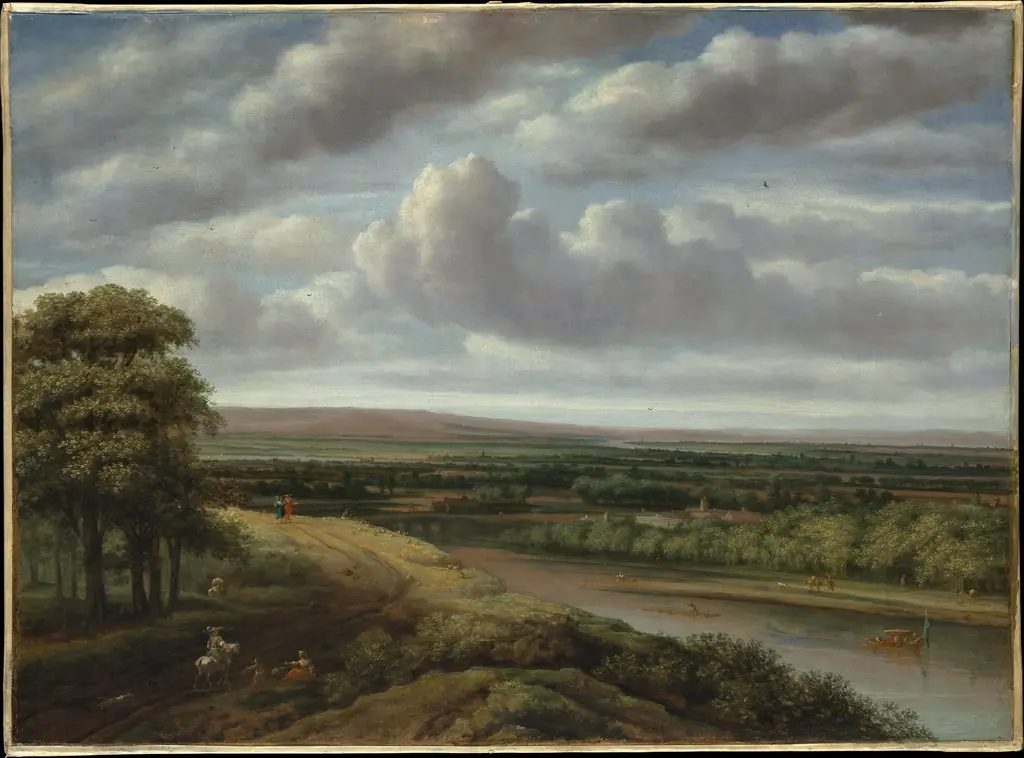
Jacob van Ruisdael's 'Grainfields,' executed in 1668, is a quintessential example of Dutch Golden Age landscape painting. The composition centers on a vast, undulating plain of harvested grain fields that dominate the foreground and middle ground, emphasizing the agricultural abundance of the Dutch countryside. A dirt track winds from the lower left toward the center, where a solitary figure guides a horse-drawn cart, providing a sense of scale and human presence within the expansive nature.
To the left, a windmill rises above the horizon line, its sails stationary, serving as a vertical counterpoint to the horizontal sweep of the land. The sky occupies nearly two-thirds of the canvas, filled with dramatic, billowing cumulus clouds that catch the light, suggesting the dynamic weather patterns typical of the region. Ruisdael employs a restrained palette of earth tones, greens, and grays, with subtle variations in light and shadow to model the terrain and atmosphere.
This work reflects the artist's mature style, characterized by a profound observation of nature and a mastery of atmospheric perspective, solidifying his reputation as a leading landscape painter of the 17th century.
Context
This landscape aligns with a tradition of Dutch landscape painting that emphasized naturalistic observation and atmospheric effects. The depiction of a rural scene, featuring a windmill and expansive sky, resonates with works by 17th-century masters such as Jacob van Ruisdael. Such paintings often celebrated the beauty of the local environment and the subtle drama of changing weather conditions.
Own this work as a print
Artist & collection
Artist
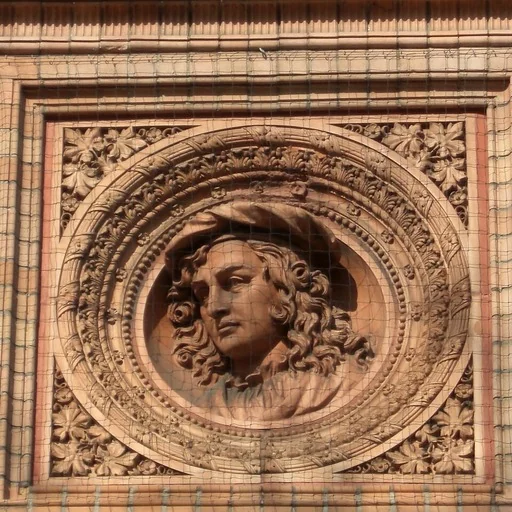
Jacob Isaackszoon van Ruisdael was a Dutch painter, draughtsman, and etcher. He is generally considered the pre-eminent landscape painter of the Dutch Golden Age, a period of great wealth and cultural achievement when…