Artwork
Sandy Track in the Dunes
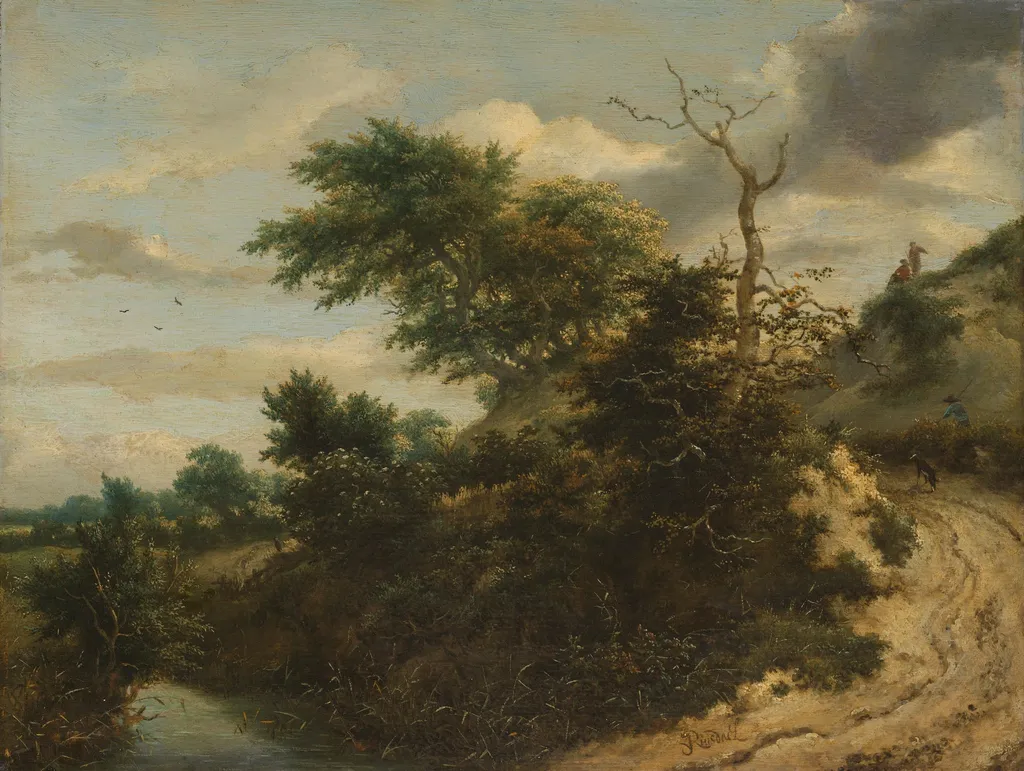
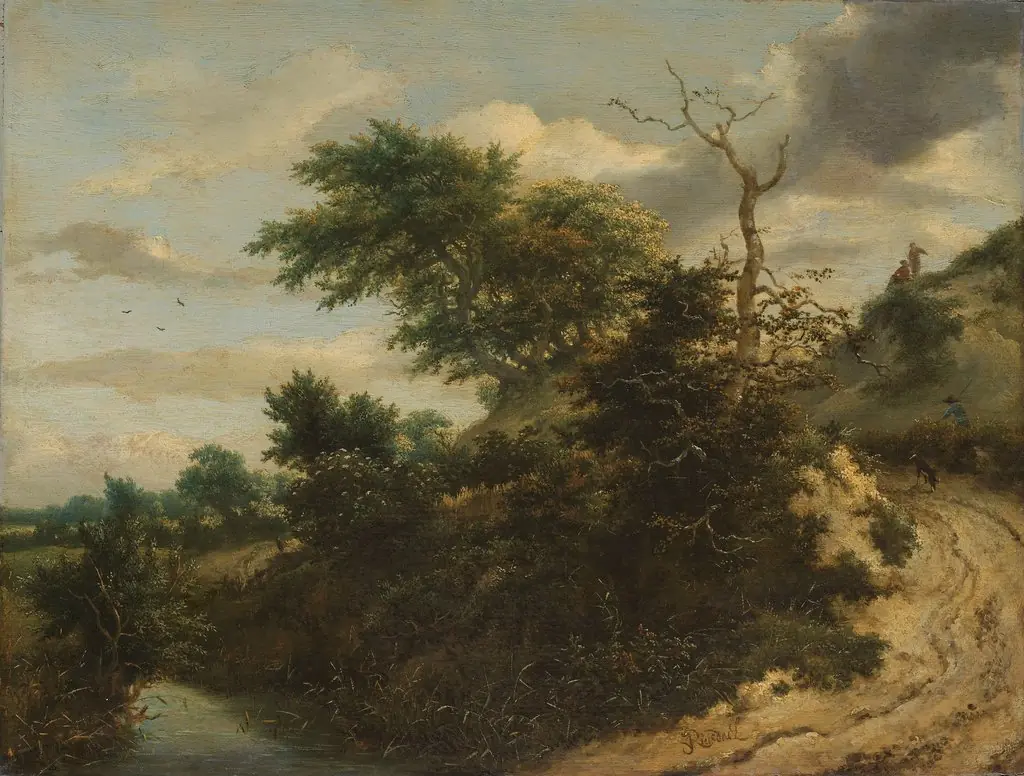
Sandy Track in the Dunes is an unspecified painting by the Baroque artist Jacob van Ruisdael. It dates from 1650 and is held in the collection of the Rijksmuseum.
About this work
Subject & Meaning
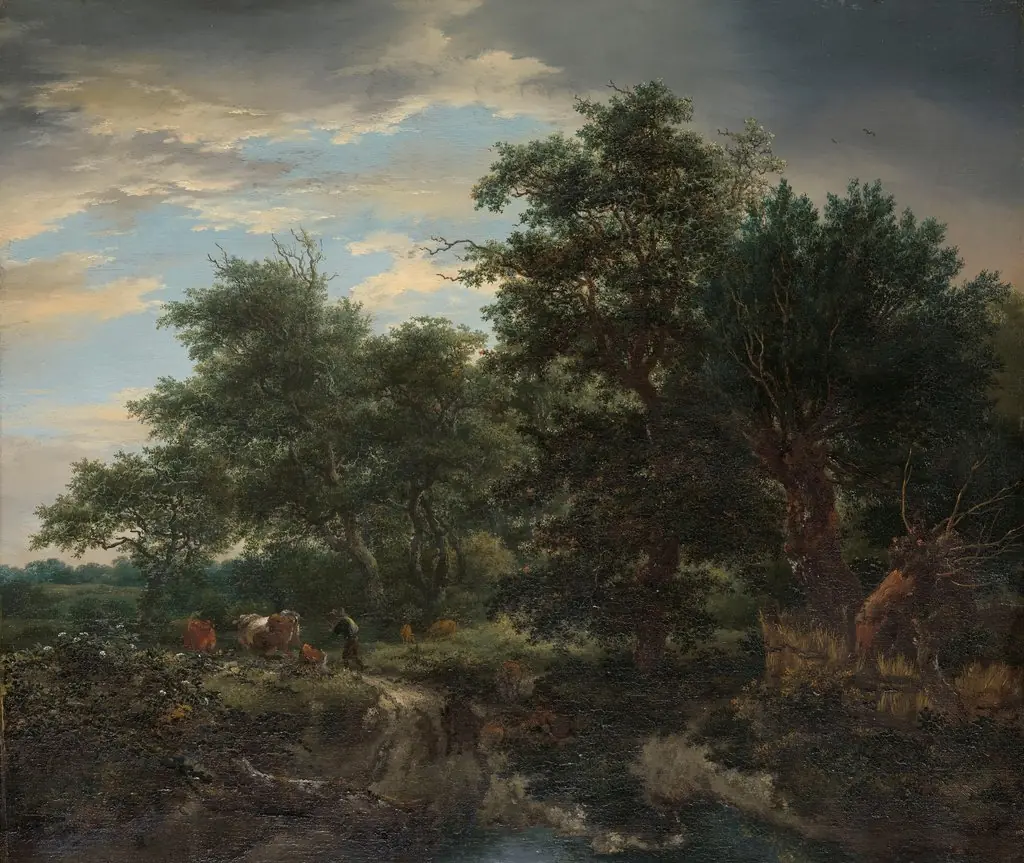
Sandy Track in the Dunes depicts a landscape scene within the Dutch countryside, a subject central to Jacob van Ruisdael's early career around 1650.
Sandy Track in the Dunes depicts a landscape scene within the Dutch countryside, a subject central to Jacob van Ruisdael's early career around 1650. The work illustrates the artist's focus on the dune regions surrounding Haarlem, characterized by careful observation of natural forms. While Ruisdael's later compositions often adopted a more heroic or epic character following his travels to Germany, this piece reflects his grounded interest in the specific topography of the local environment.
The painting exemplifies the Baroque landscape tradition where nature is rendered with dramatic lighting and distinct textures. Although specific symbolic interpretations such as paths representing life journeys are discussed in the context of Ruisdael's broader oeuvre, no definitive allegorical meaning is assigned to this specific track in the available records. The work remains a testament to the artist's ability to elevate ordinary rural scenery into a composed artistic statement.
Technique & Style
Sandy Track in the Dunes is an oil painting executed on canvas by Jacob van Ruisdael, created circa 1650–1655. The work exemplifies the Dutch Baroque landscape tradition through its dramatic use of light and shadow to define form and atmosphere. Ruisdael’s technique relies on precise observation of natural elements, particularly in the rendering of dune vegetation and terrain textures, reflecting his practice of making detailed studies from nature before completing the composition in the studio.
The painting displays a heroic character in its landscape motifs, a stylistic shift evident in his work following his 1650 travels to the German border region. While specific dimensions and current physical condition are not detailed in the available records, the handling demonstrates the artist's ability to construct powerful, erhaben compositions through contrasting light and robust natural forms.
History & Provenance
Sandy Track in the Dunes is attributed to Jacob Isaacksz van Ruisdael and dated to the period between circa 1650 and circa 1655. This timeframe aligns with a transformative phase in the artist's career following his journey to Germany in 1650, after which his landscapes adopted a more heroic character. During these years, Ruisdael was based in Haarlem before relocating to Amsterdam around 1656 or 1657.
While the painting belongs to the landscape genre for which he became the pre-eminent practitioner of the Dutch Golden Age, no specific records regarding its original commission, early ownership chain, or subsequent provenance history are provided in the available documentation.
Context
Jacob Isaacksz van Ruisdael is widely regarded as the pre-eminent landscape painter of the Dutch Golden Age, a period marked by significant cultural achievement and the rising popularity of landscape genres. His work, characterized by dramatic lighting and powerful natural motifs, evolved from early Haarlem scenes to more heroic compositions following a trip to Germany around 1650. Ruisdael's influence extended far beyond his lifetime, shaping landscape traditions globally from the English Romantics and the French Barbizon school to the Hudson River School in the United States.
Notable artists such as William Turner, John Constable, and Vincent van Gogh drew inspiration from his compositions. During his life, his paintings were in high demand within the Dutch Republic, and today his oeuvre is held in major institutions including the National Gallery in London, the Rijksmuseum, and the Hermitage Museum.
Legacy
Sandy Track in the Dunes belongs to the body of work that established Jacob Isaacksz van Ruisdael as the pre-eminent landscape painter of the Dutch Golden Age, and his oeuvre has shaped landscape painting traditions worldwide. His motifs and compositions influenced landscape art uniquely through the end of the nineteenth century, shaping painters including William Turner, John Constable, Roelof van Vries, and Vincent van Gogh.
His broader impact extended from the English Romantics to the Barbizon school in France and the Hudson River School in the United States, as well as generations of Dutch landscape artists. His work was reproduced and disseminated through engravings, some etched by Ruisdael himself, which contributed to his posthumous reputation. Today his paintings are held in private and institutional collections worldwide, with the National Gallery in London, the Rijksmuseum in Amsterdam, and the Hermitage Museum in St. Petersburg holding the largest collections.
Overview
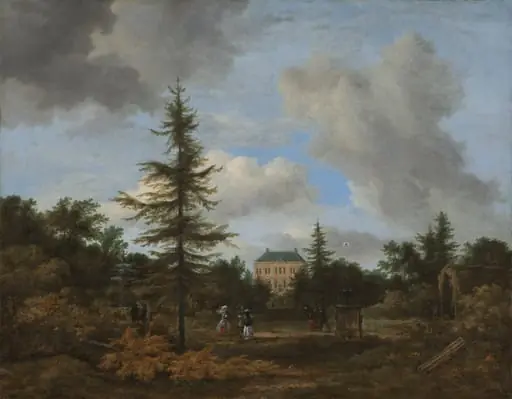
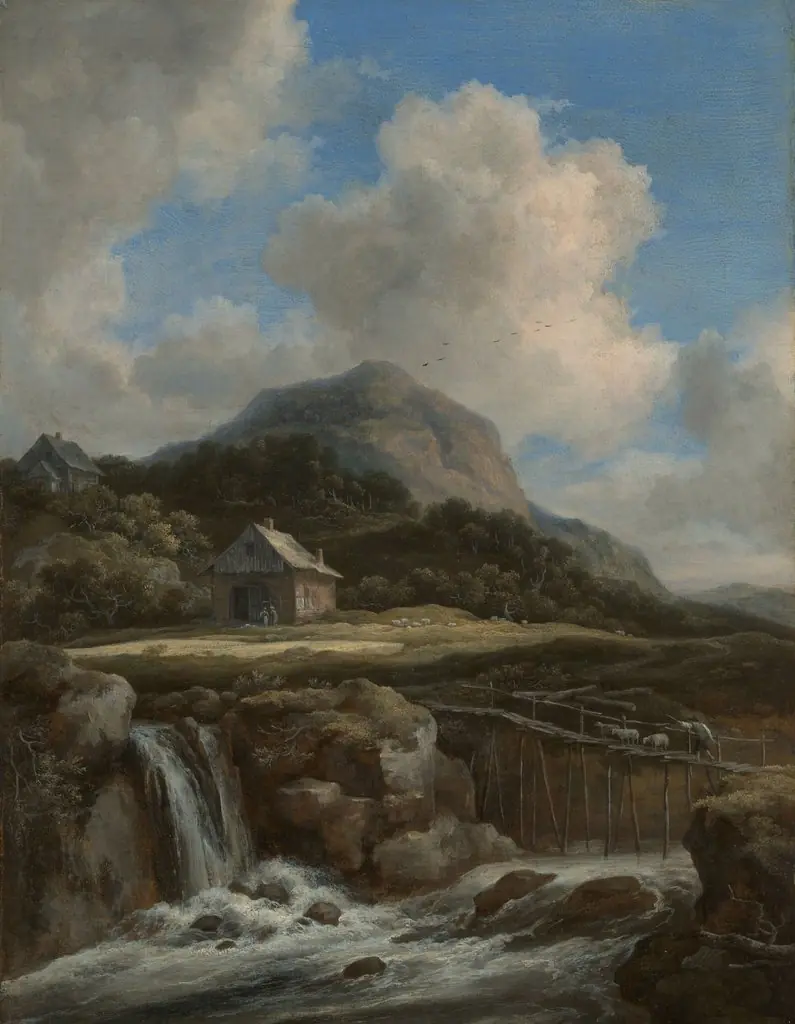
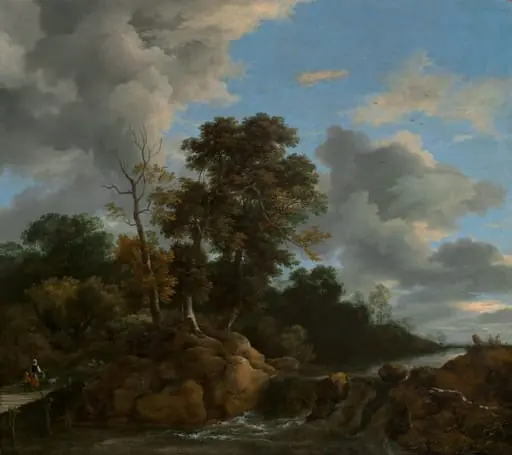
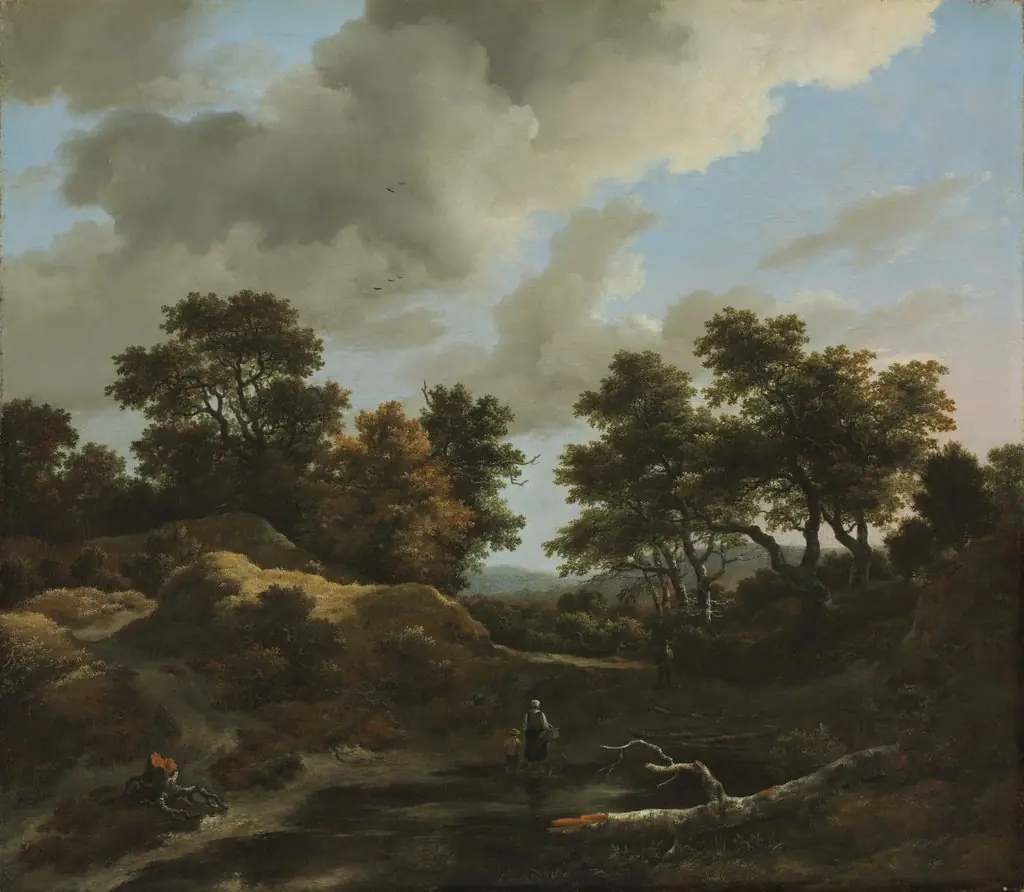
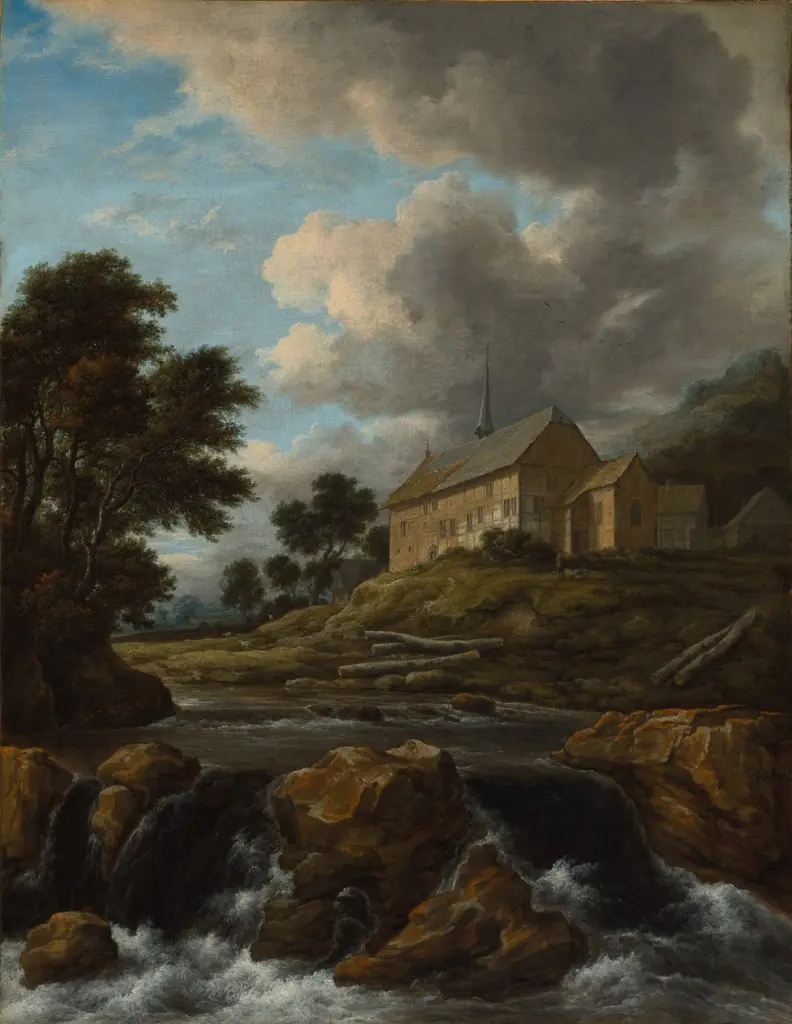
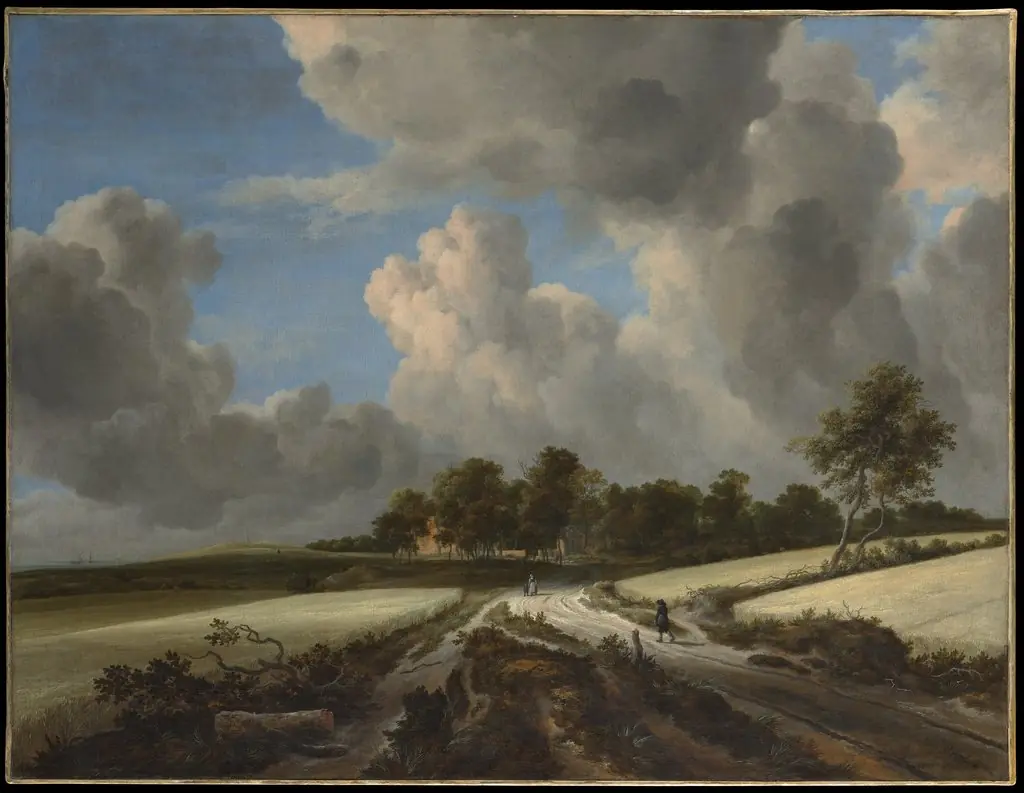
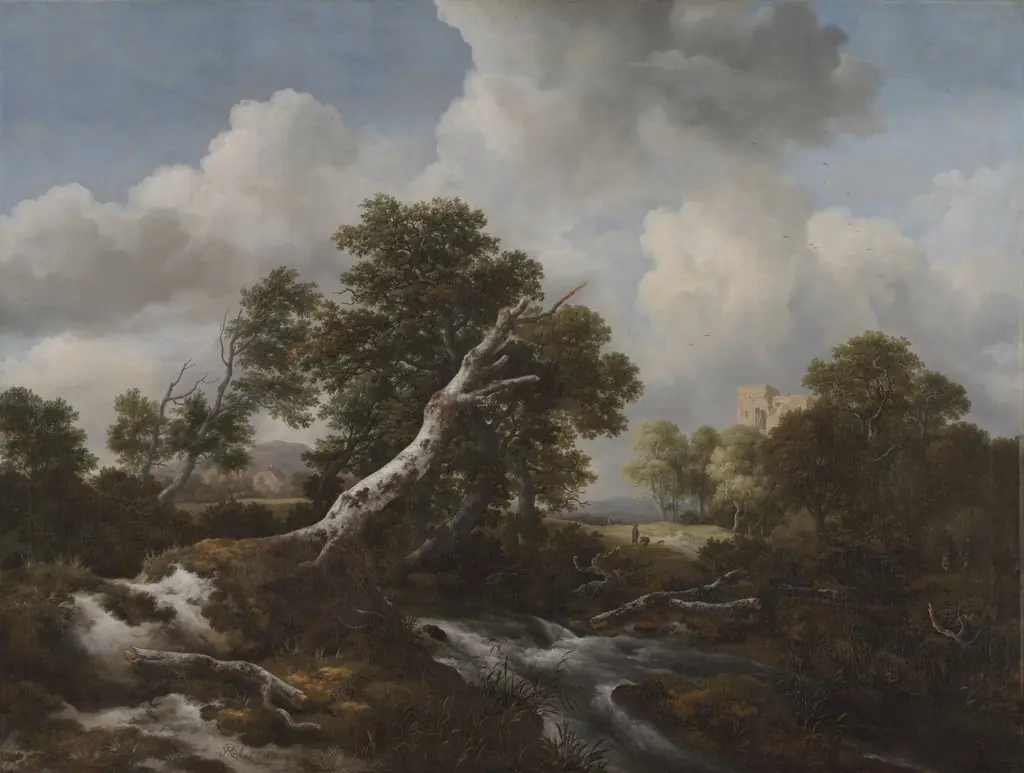
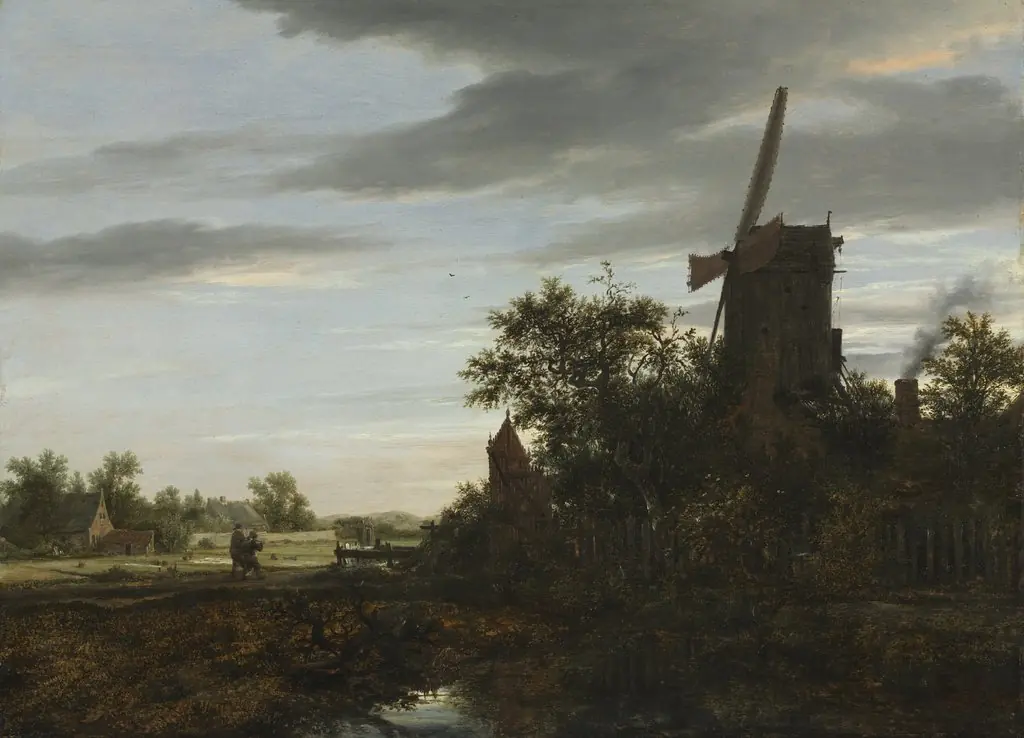
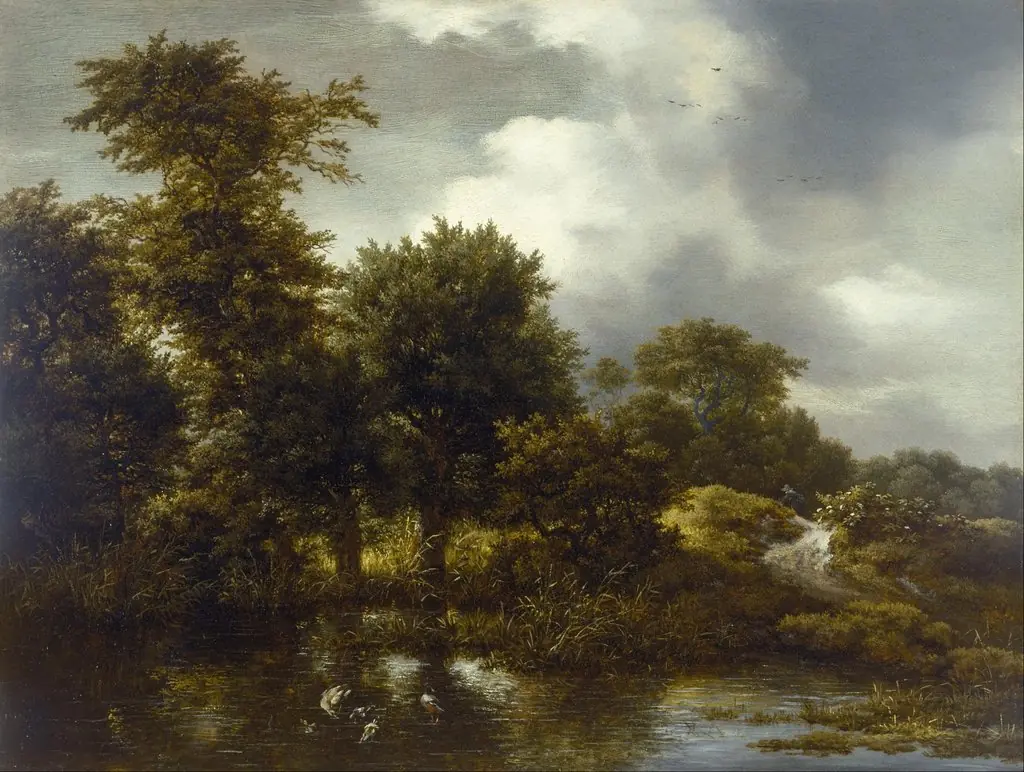
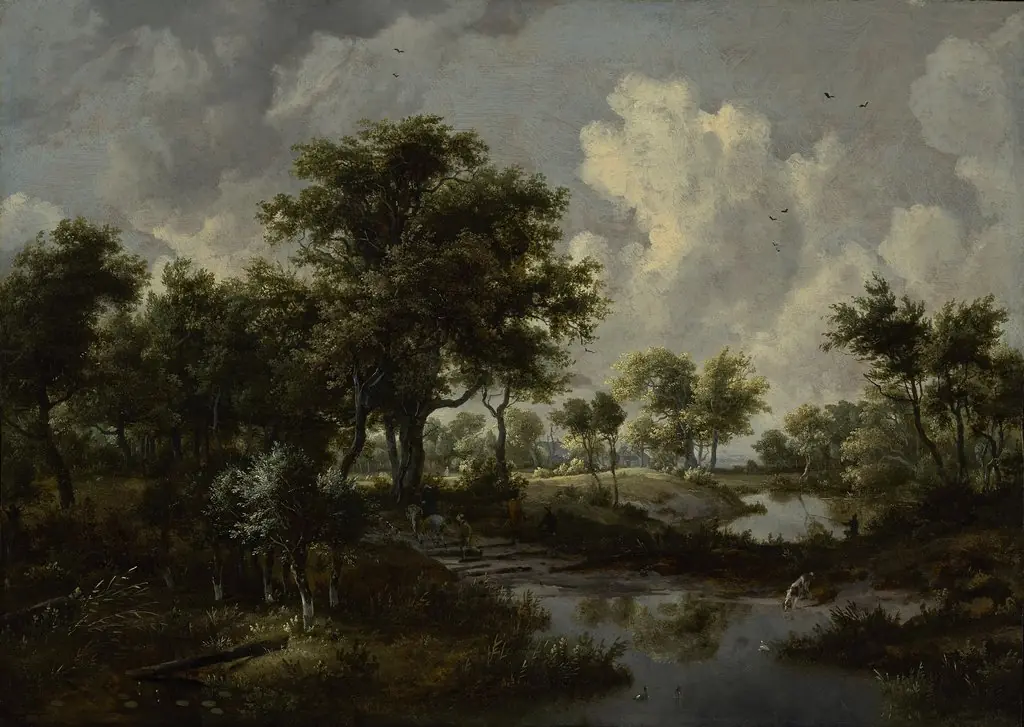
Sandy Track in the Dunes is an early landscape by Jacob van Ruisdael. The composition presents a sinuous sand track that cuts across a series of dunes, rising toward a modest group of figures perched on the crest. The scene unfolds from foreground reeds through treed slopes to a distant horizon under a cloud‑filled sky.
Own this work as a print
Artist & collection
Artist
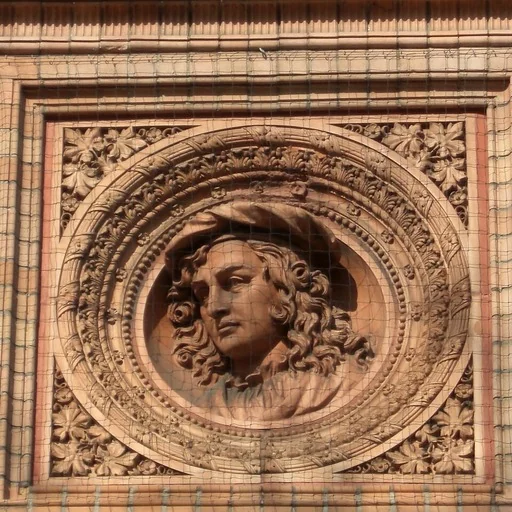
Jacob Isaackszoon van Ruisdael was a Dutch painter, draughtsman, and etcher. He is generally considered the pre-eminent landscape painter of the Dutch Golden Age, a period of great wealth and cultural achievement when…