Artwork
Forest Scene
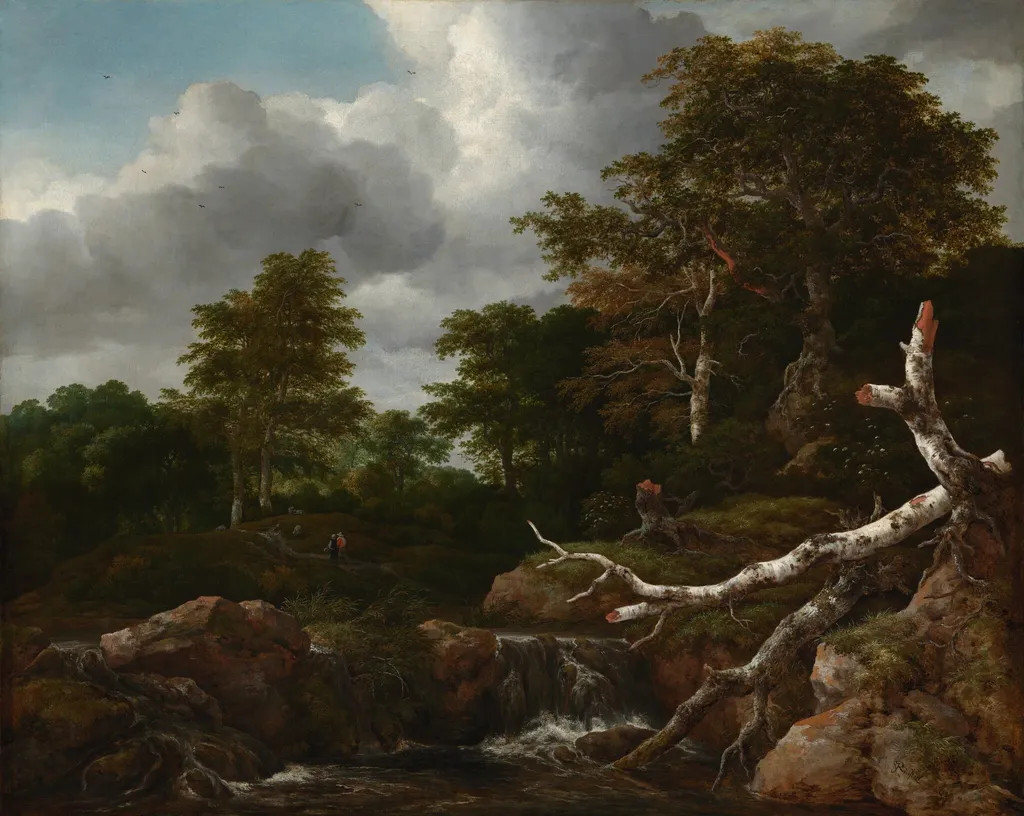
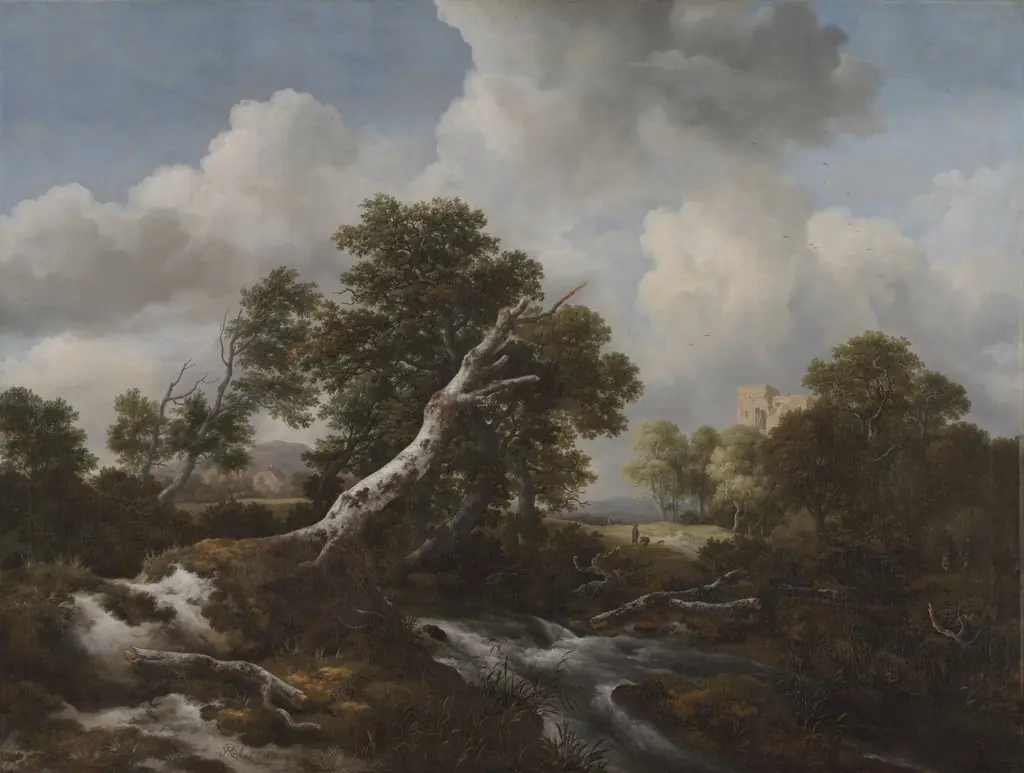
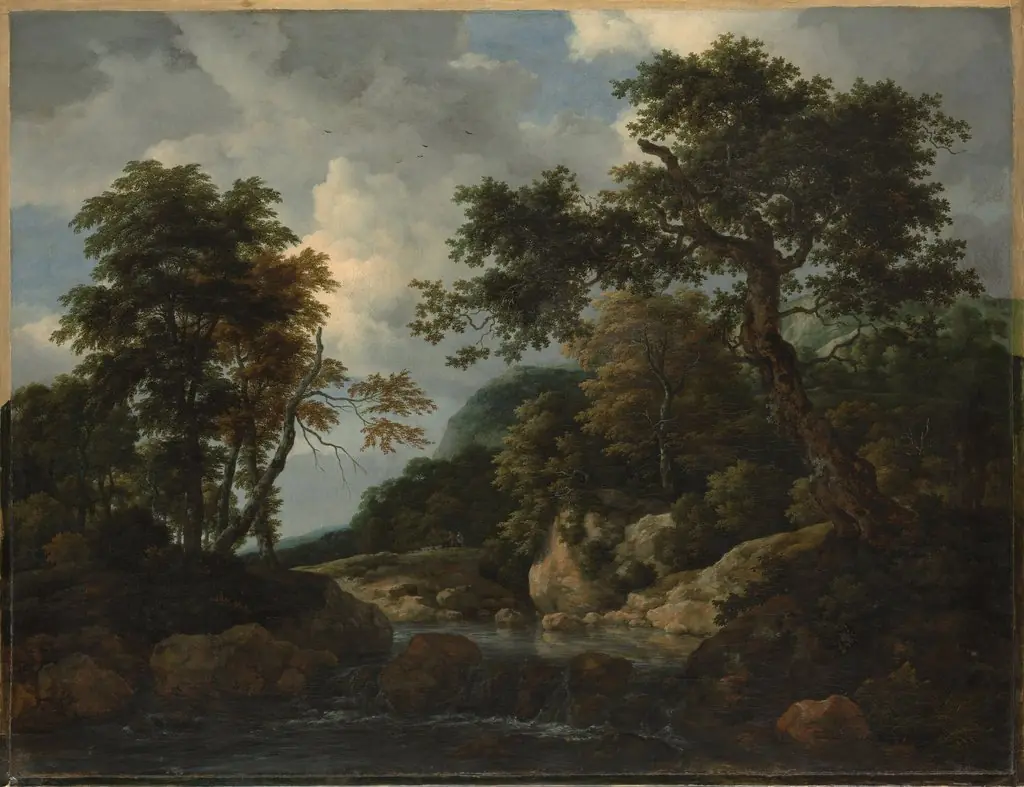
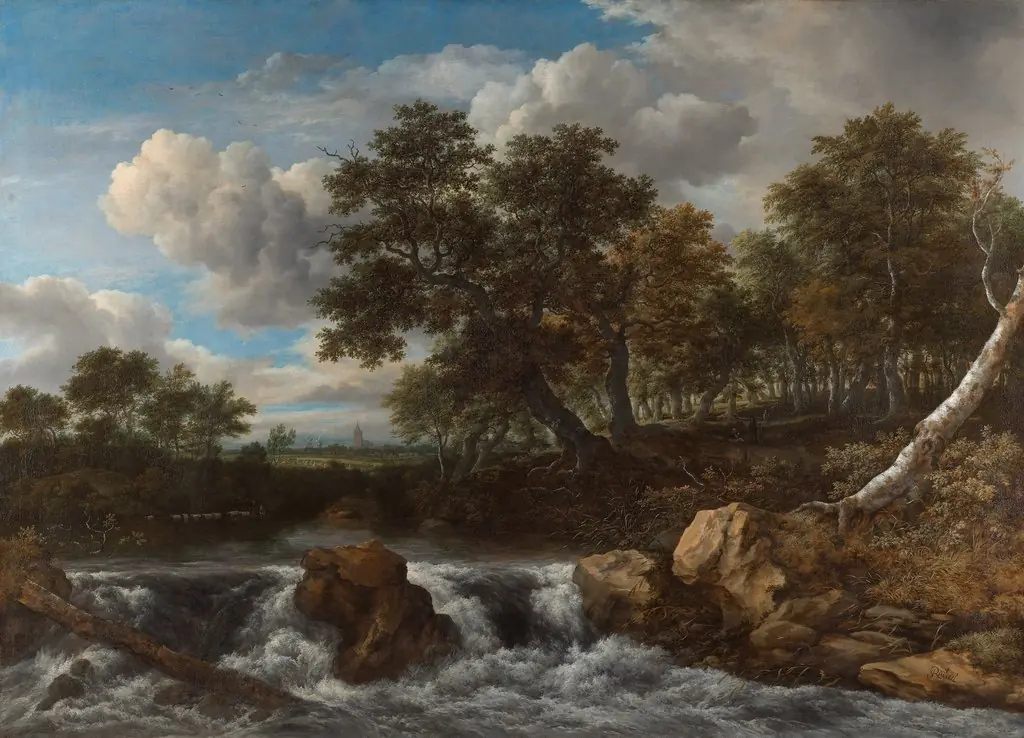
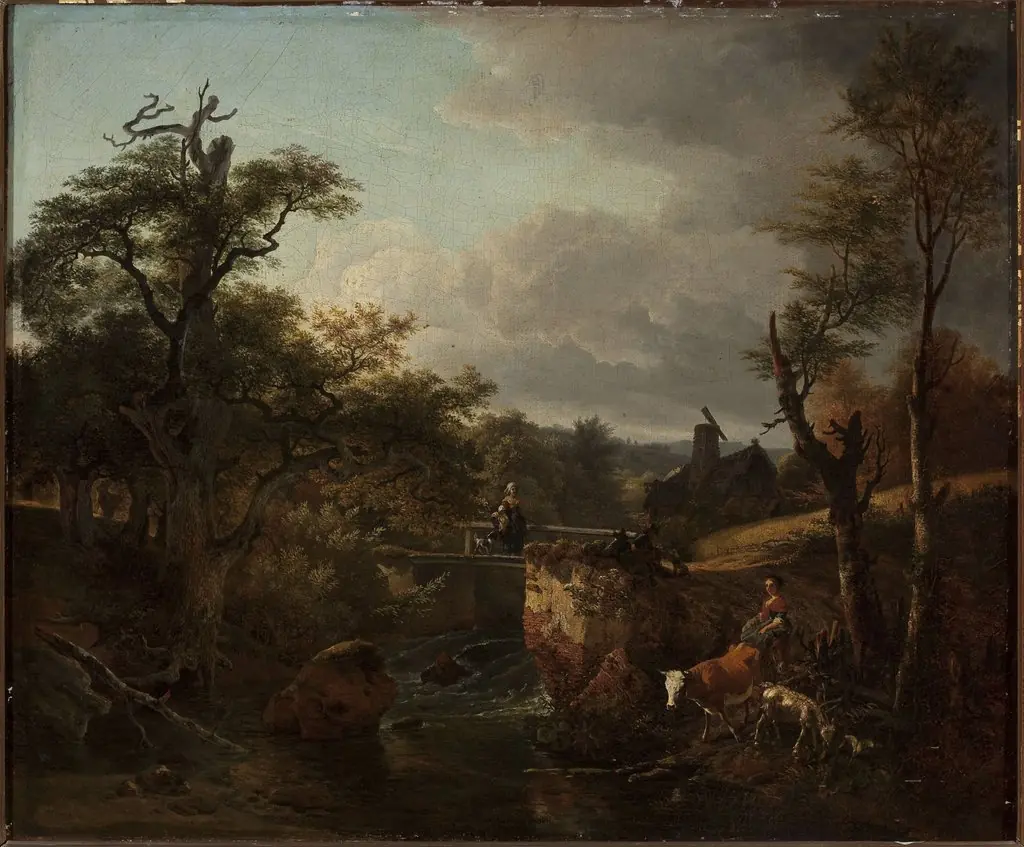
Forest Scene is an oil painting by the Baroque artist Jacob van Ruisdael. It dates from 1655 and is held in the collection of the National Gallery of Art.
- Inscription
- Inscribed:lower right: J v Ruisdael (JvR in ligature)
About this work
Subject & Meaning
As a landscape painting, it foregrounds the interplay of foliage, water, and light, reflecting the period’s interest in realistic depictions of untamed scenery.
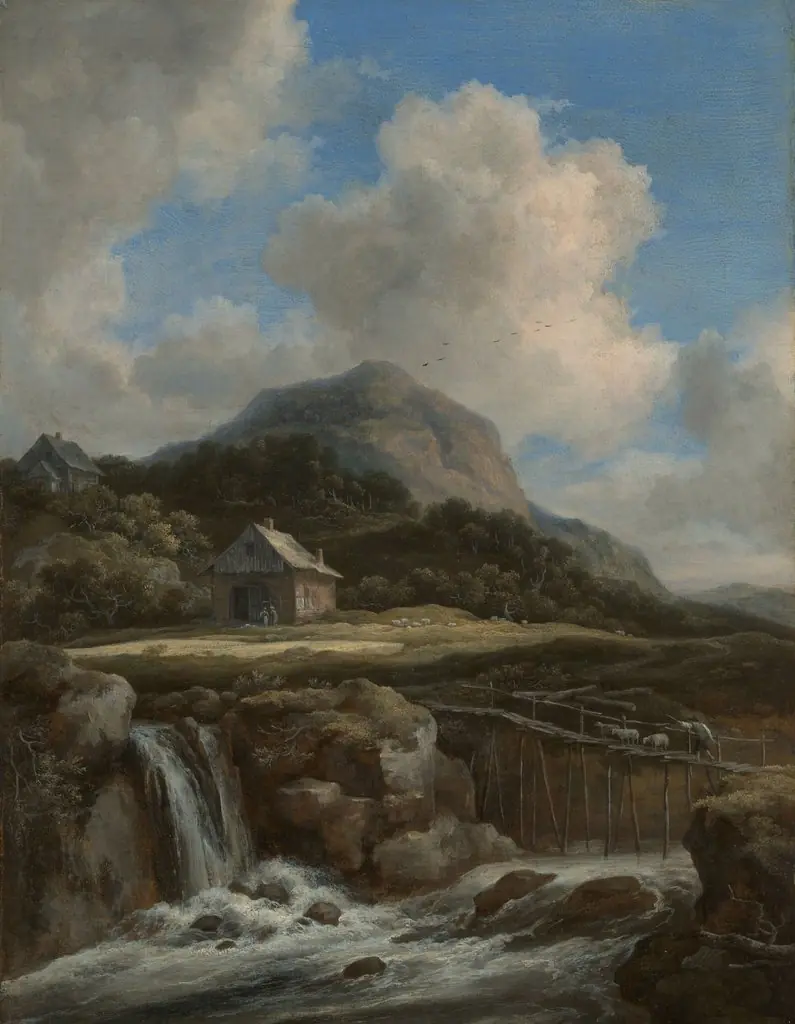
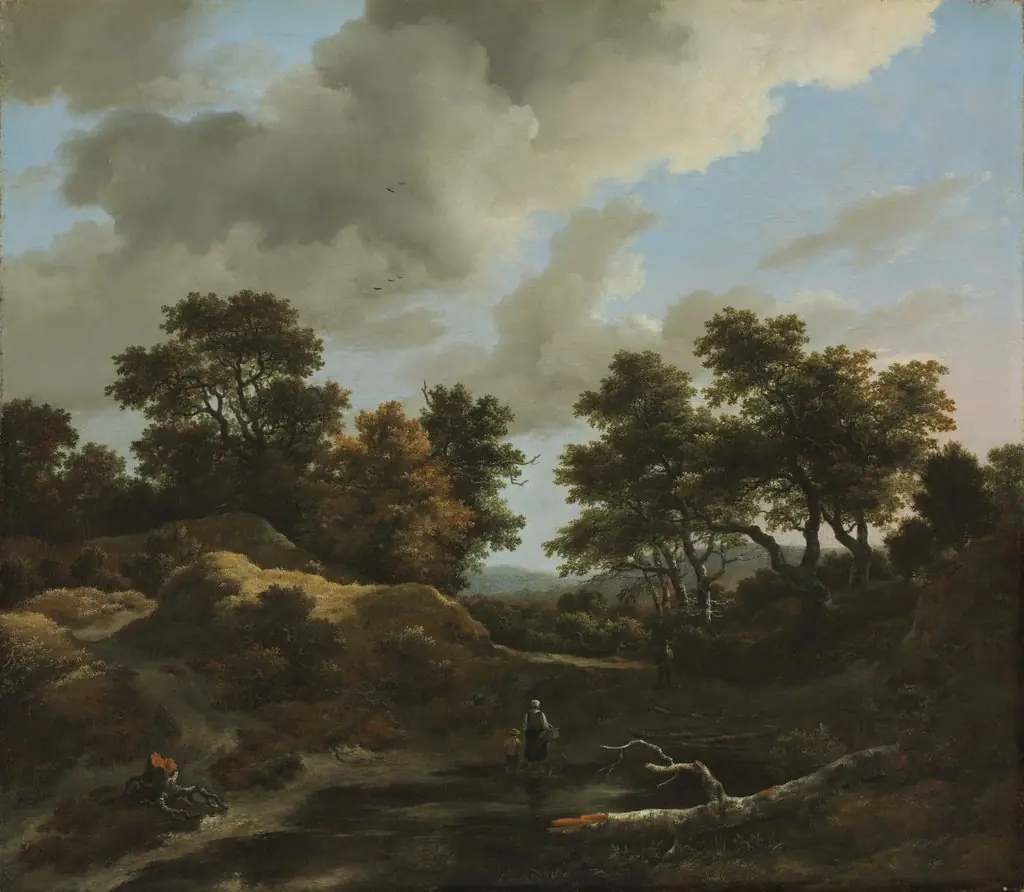
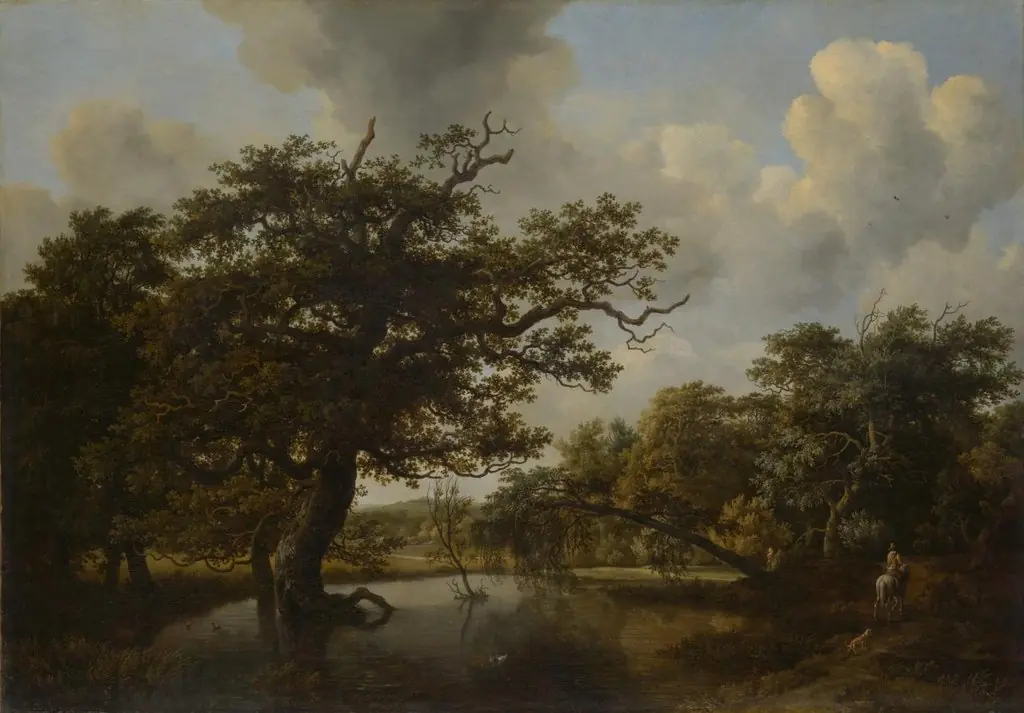
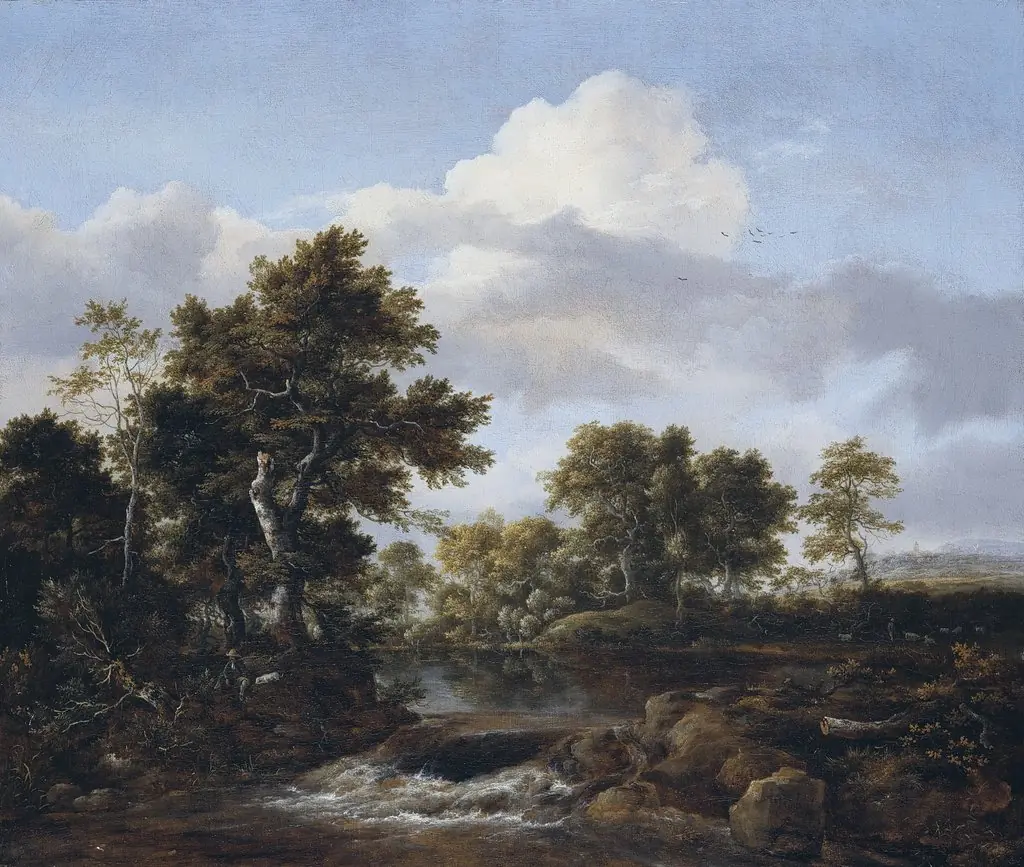
The work titled Forest Scene, painted by Jacob van Ruisdael in 1655, portrays a dense woodland intersected by a cascading waterfall, embodying the Dutch Golden Age fascination with meticulously observed natural terrain. As a landscape painting, it foregrounds the interplay of foliage, water, and light, reflecting the period’s interest in realistic depictions of untamed scenery. The composition underscores the genre’s emphasis on expansive, atmospheric environments, positioning the forest and its waterfall as central motifs that convey both visual depth and an idealized vision of nature.
The painting’s provenance traces a path from Irish aristocratic ownership through several European collectors to its present location at the National Gallery of Art, Washington, D.C.
Technique & Style
Executed in 1655, likely in Haarlem, this landscape is an oil painting on canvas measuring 105.5 by 123.4 centimeters. The work depicts a dense forest scene featuring a waterfall, characteristic of the genre. While specific details regarding the artist's brushwork, surface condition, or precise handling of the medium are not elaborated upon in the available records, the piece is formally classified as a painting.
The composition utilizes the traditional support of canvas paired with oil paints to render the naturalistic elements of the woodland environment.
History & Provenance
Jacob van Ruisdael executed this oil on canvas landscape in 1655, likely within Haarlem. The painting's early ownership history is complicated by contradictory entries in Cornelis Hofstede de Groot's catalogue raisonné, though it was probably held by Francis Nathaniel, the 2nd Marquess Conyngham, before 1857. By that year, the work belonged to Sir Hugh Hume-Campbell, 7th Baronet, at Marchmont House in Scotland.
Following Hume-Campbell's death, the piece was sold at Christie's in London on June 16, 1894, via the dealer P. & D. Colnaghi & Co. to American collector Peter A.B. Widener for his estate, Lynnewood Hall. Upon Widener's death, the painting passed by inheritance to his son, Joseph E. Widener, who donated it to the National Gallery of Art in Washington, D.C., in 1942.
Forest Scene by Jacob van Ruisdael is held by the National Gallery of Art in Washington, D.C., where it entered the collection in 1942 as a gift through the power of appointment of Joseph E. Widener of Elkins Park, Pennsylvania, having been inherited from the Estate of Peter A.B. Widener. It had been acquired by Peter A.B. Widener in 1894 through the London dealers P. & D. Colnaghi & Co., following its appearance at the estate sale of Sir Hugh Hume-Campbell, 7th bart. (1812–1894), at Marchmont House in the Scottish Borders, conducted by Christie, Manson, & Woods in London on 16 June 1894 (lot 48).
Earlier, the painting was recorded at Marchmont House by 1857. Its location before 1857 is uncertain, though it was probably owned by Francis Nathaniel, 2nd Marquess Conyngham (1797–1876), of Mount Charles, County Donegal, and Minster Abbey, Kent, or possibly his father Henry, 3rd Baron Conyngham.
Context
The Forest Scene (1655) is documented in Jacob van Ruisdael’s oeuvre as a mature landscape that exemplifies Dutch Golden Age naturalism, combining a dense woodland with a cascading waterfall. Scholarship on the work relies primarily on Hofstede de Groot’s catalogue raisonné, which records a complex provenance and notes the painting’s attribution to Ruisdael despite occasional confusion with other forest scenes, underscoring its significance in studies of the artist’s development. The canvas, executed in oil on canvas in Haarlem, entered the National Gallery of Art’s collection, affirming its recognized status within art‑historical narratives of 17th‑century landscape painting.
Overview
This oil on canvas painting, titled Forest Scene, was created by Jacob van Ruisdael around 1655. It presents a dense woodland landscape, characteristic of the artist's focus on natural environments. The work exemplifies Ruisdael's exploration of untamed scenery, capturing a specific moment within a wild, forested setting.
Own this work as a print
Artist & collection
Artist
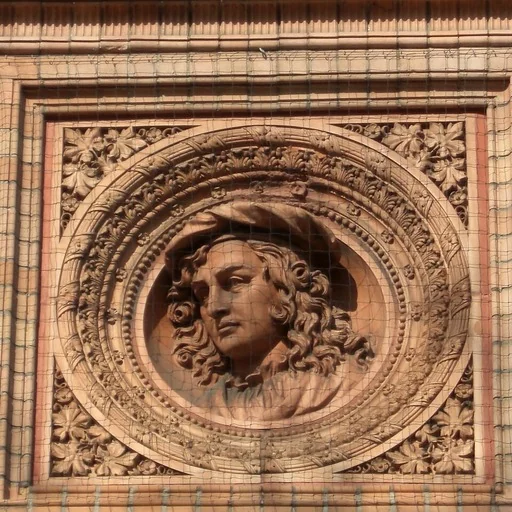
Jacob Isaackszoon van Ruisdael was a Dutch painter, draughtsman, and etcher. He is generally considered the pre-eminent landscape painter of the Dutch Golden Age, a period of great wealth and cultural achievement when…