Artwork
View of Haarlem from the Northwest
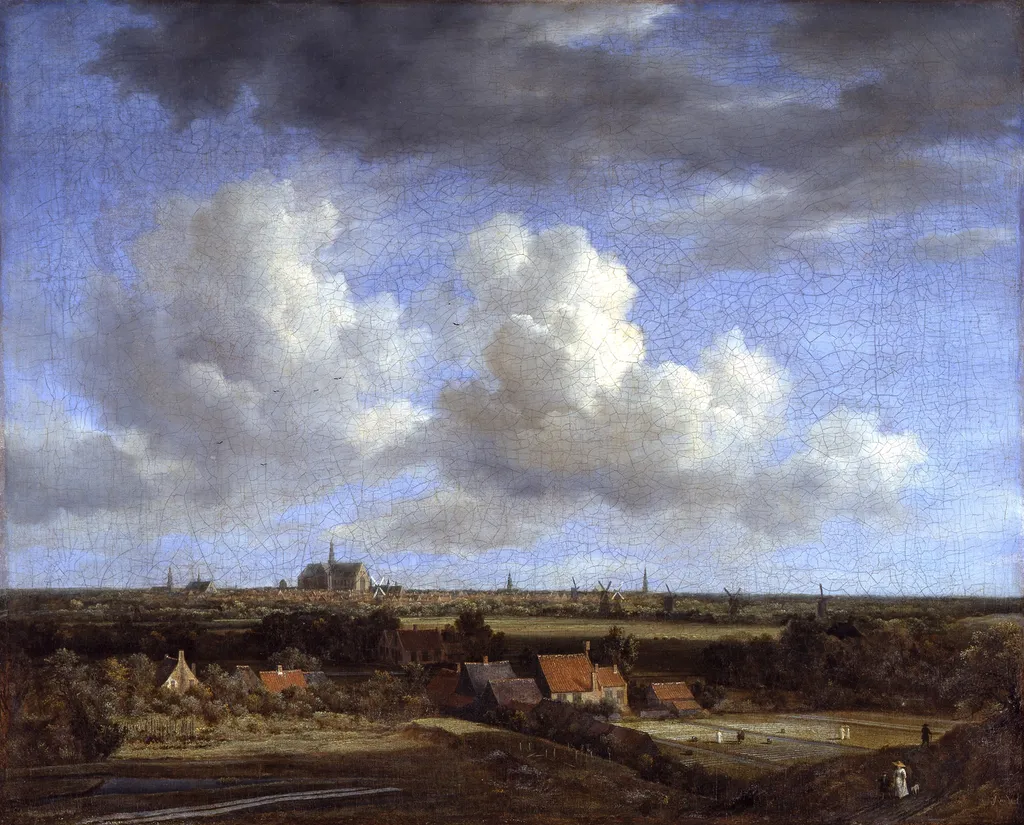
View of Haarlem from the Northwest is an oil painting by the Dutch Golden Age artist Jacob van Ruisdael. It dates from 1668 and is held in the collection of the Gemäldegalerie Berlin.
About this work
Subject & Meaning
The surrounding bleachfield and bleachery reference the region’s textile industry, linking the urban landscape to economic activity.
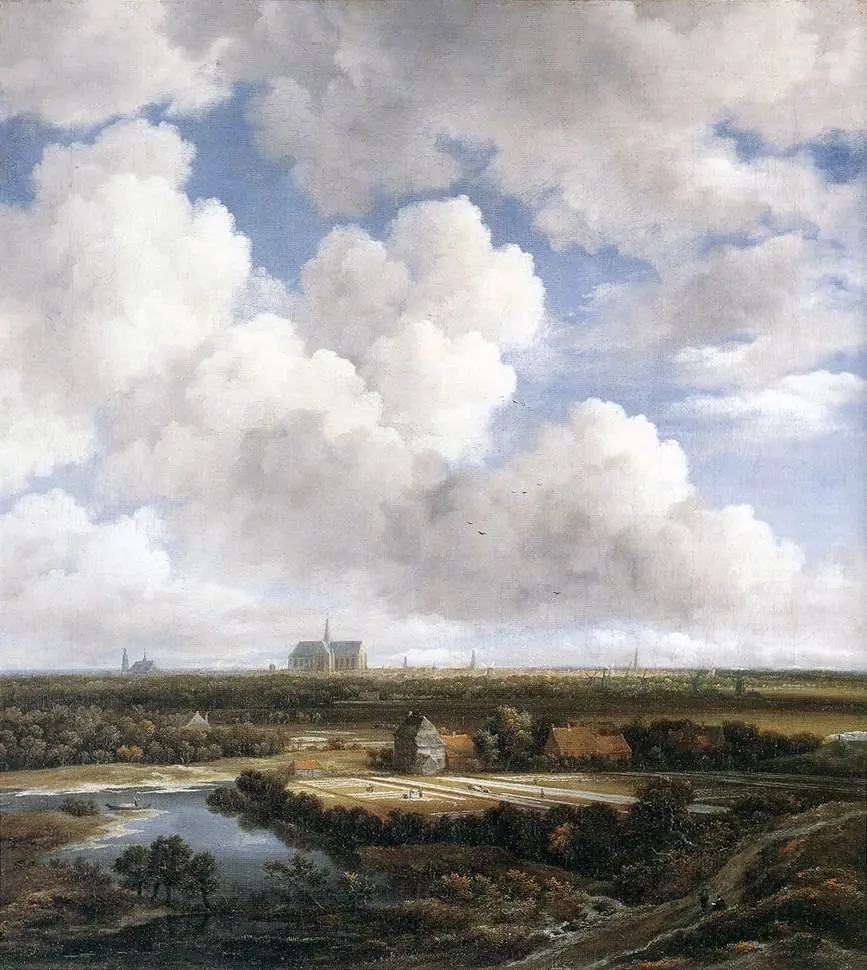
View of Haarlem from the Northwest depicts the city’s skyline centered on the Grote Kerk steeple and a prominent windmill, elements that symbolize Haarlem’s civic pride and commercial prosperity in the 17th century. The surrounding bleachfield and bleachery reference the region’s textile industry, linking the urban landscape to economic activity. Jacob van Ruisdael’s precise rendering of these features elevates the scene beyond topography into a meditation on light, atmosphere, and the harmonious relationship between humanity and its environment.
The painting was created in 1668 and is housed in the Gemäldegalerie Berlin, where it remains part of the museum’s collection.
Technique & Style
The painting is executed in oil on canvas, measuring 52 cm in height and 65 cm in width. Jacob van Ruisdael employed a restrained, atmospheric handling typical of Dutch landscape painting in the late 1660s, using translucent glazes to build depth in the sky while reserving denser impasto for the foreground foliage and architectural details.
Compositionally, the work balances broad horizontal bands, the low horizon, mid-ground fields, and expansive sky, with a carefully placed windmill and Grote Kerk steeple anchoring the right side. The handling of light and cloud formations reflects the artist’s engagement with atmospheric effects, while the muted palette and precise delineation of the Haarlem bleaching fields align with the genre’s documentary impulse.
History & Provenance
Jacob van Ruisdael created the oil painting View of Haarlem from the Northwest in 1668. The work depicts the city of Haarlem, featuring the Grote Kerk, a windmill, and the distinctive bleachfields in the foreground. Following its creation, the painting entered the collection of Barthold Suermondt. It is currently held by the Gemäldegalerie in Berlin.
Jacob van Ruisdael's oil painting View of Haarlem from the Northwest is held in the collection of the Gemäldegalerie in Berlin. The work, created in 1668, was formerly owned by the collector Barthold Suermondt before entering the museum's holdings. The provided sources do not list a specific inventory or accession number for the piece, nor do they detail a history of exhibitions in which the painting has appeared.
Overview
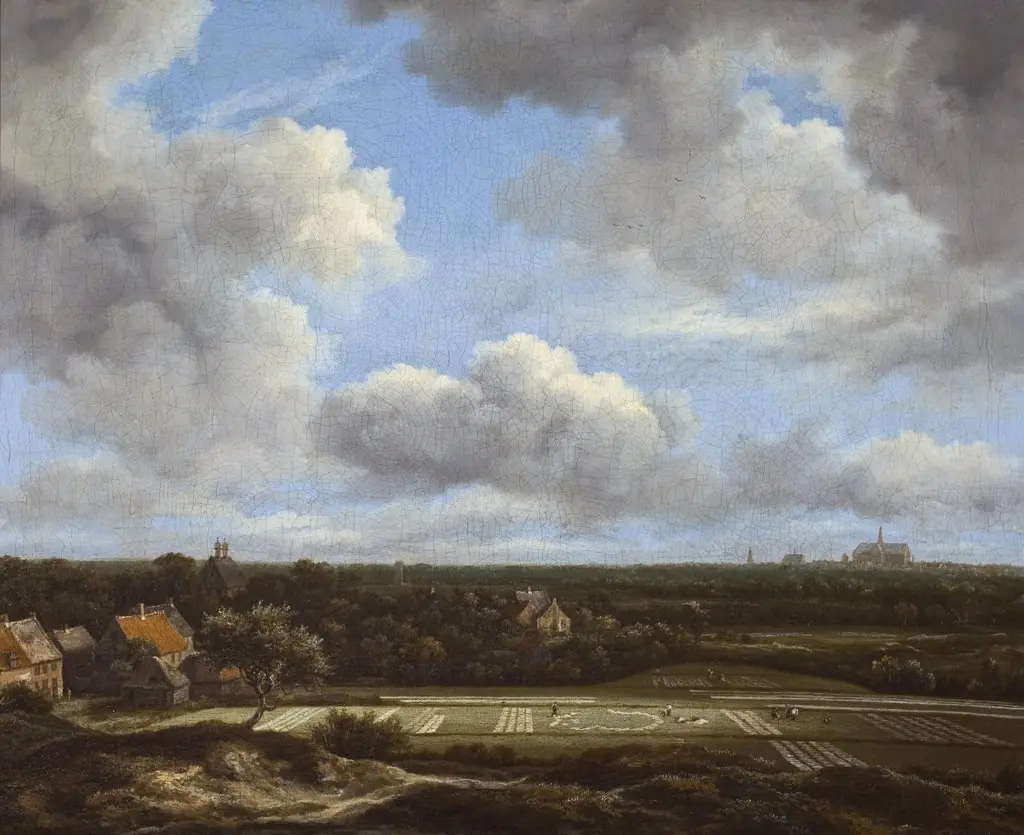
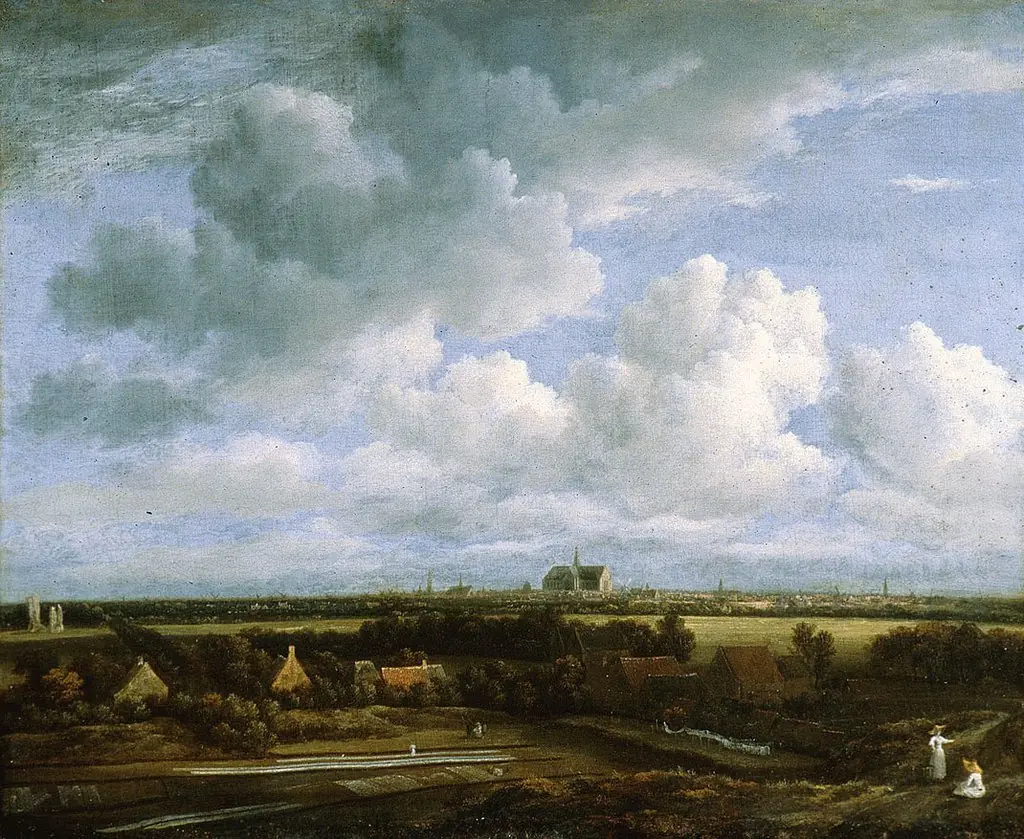
Jacob van Ruisdael's View of Haarlem from the Northwest, painted in 1668, is a seminal work of the Dutch Golden Age that depicts the city of Haarlem as seen from the dunes to the northwest. The composition is organized around a sweeping panoramic vista, with the foreground dominated by a vast, flat expanse of bleached linen fields where workers are engaged in the drying process. A winding path leads the viewer's eye toward the city, which is anchored by the towering Gothic spire of the Grote Kerk (St. Bavo's Church).
The skyline is punctuated by several windmills, emphasizing the region's industrial and agricultural activity. Ruisdael employs a low horizon line to allocate nearly two-thirds of the canvas to a dynamic, cloud-filled sky, a technique that heightens the sense of atmospheric depth and light. The artist's meticulous attention to the interplay of sunlight and shadow across the textured fields and the architectural details of the city reflects his mature style.
This work is widely considered one of the most important Dutch landscape paintings, celebrated for its synthesis of topographical accuracy and poetic grandeur, marking a high point in Ruisdael's career as a master of the panoramic view.
Context
The work reflects the Dutch Golden Age’s fascination with topographical accuracy and the celebration of local industry. Windmills, integral to the bleachfield’s operation, illustrate how technology shaped the landscape. Ruisdael’s focus on Haarlem aligns with his broader oeuvre, which often depicted recognizable Dutch towns within idealised natural settings.
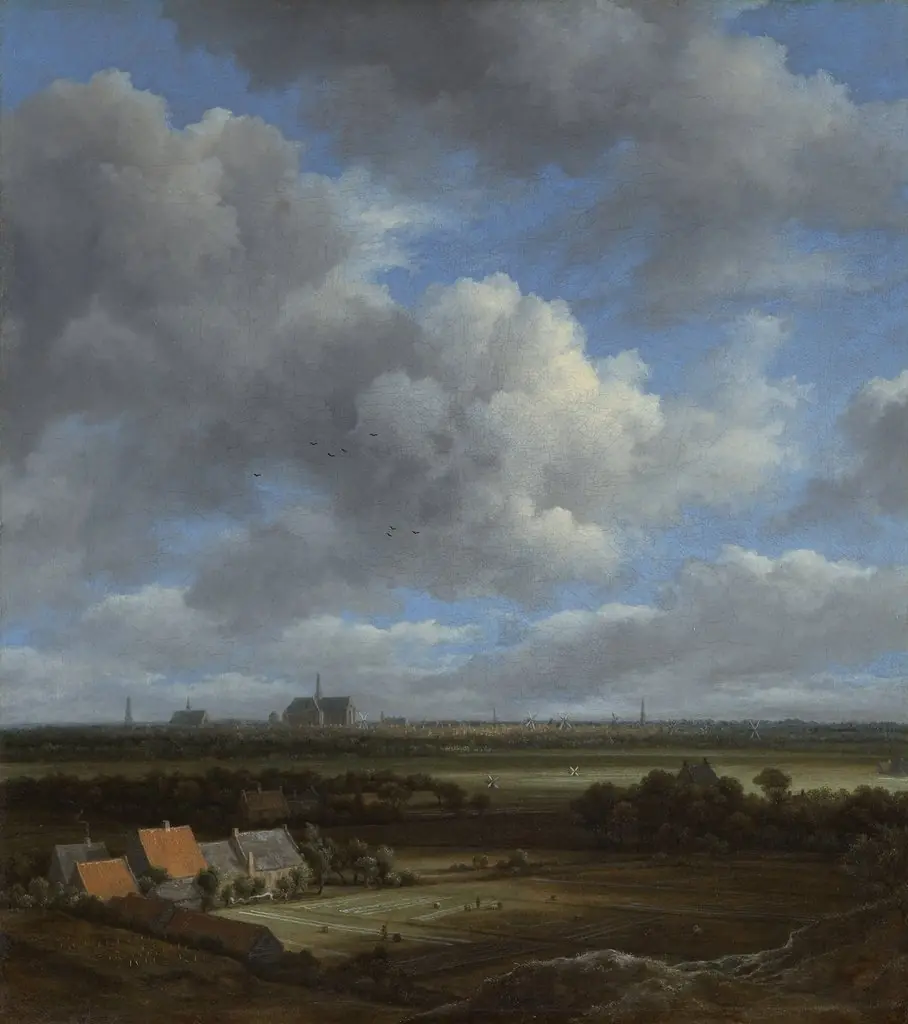
Own this work as a print
Artist & collection
Artist
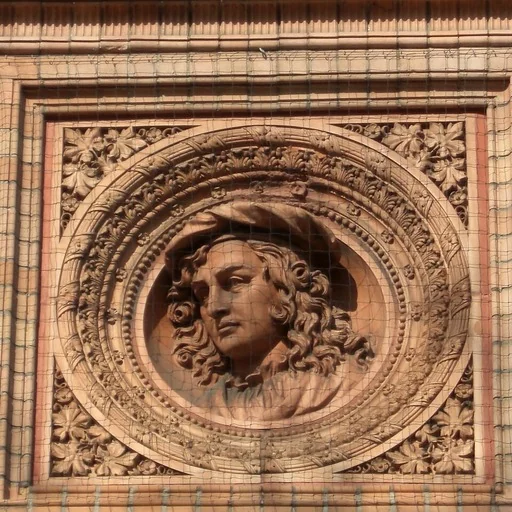
Jacob Isaackszoon van Ruisdael was a Dutch painter, draughtsman, and etcher. He is generally considered the pre-eminent landscape painter of the Dutch Golden Age, a period of great wealth and cultural achievement when…

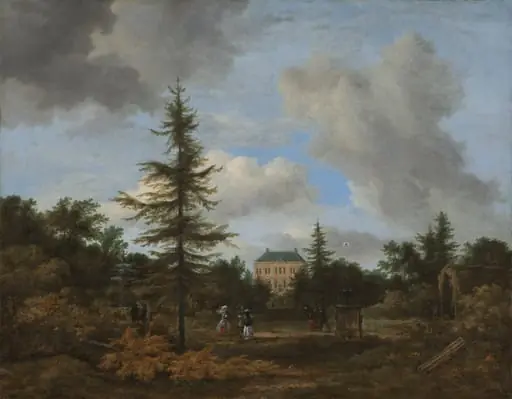
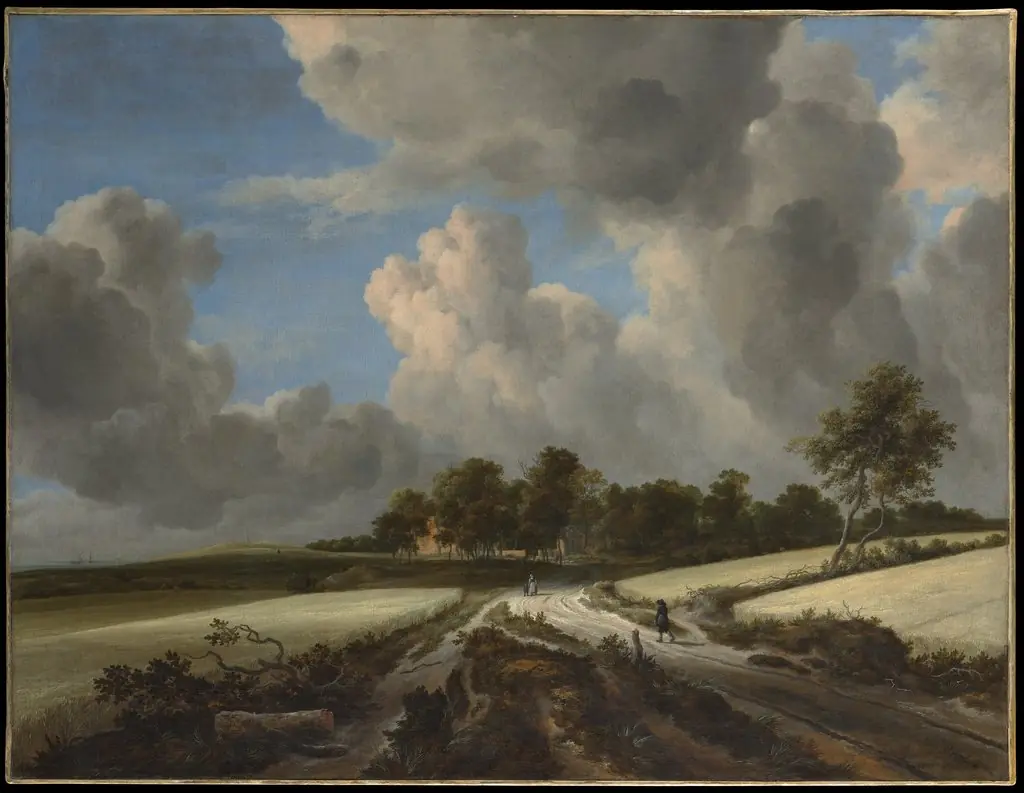
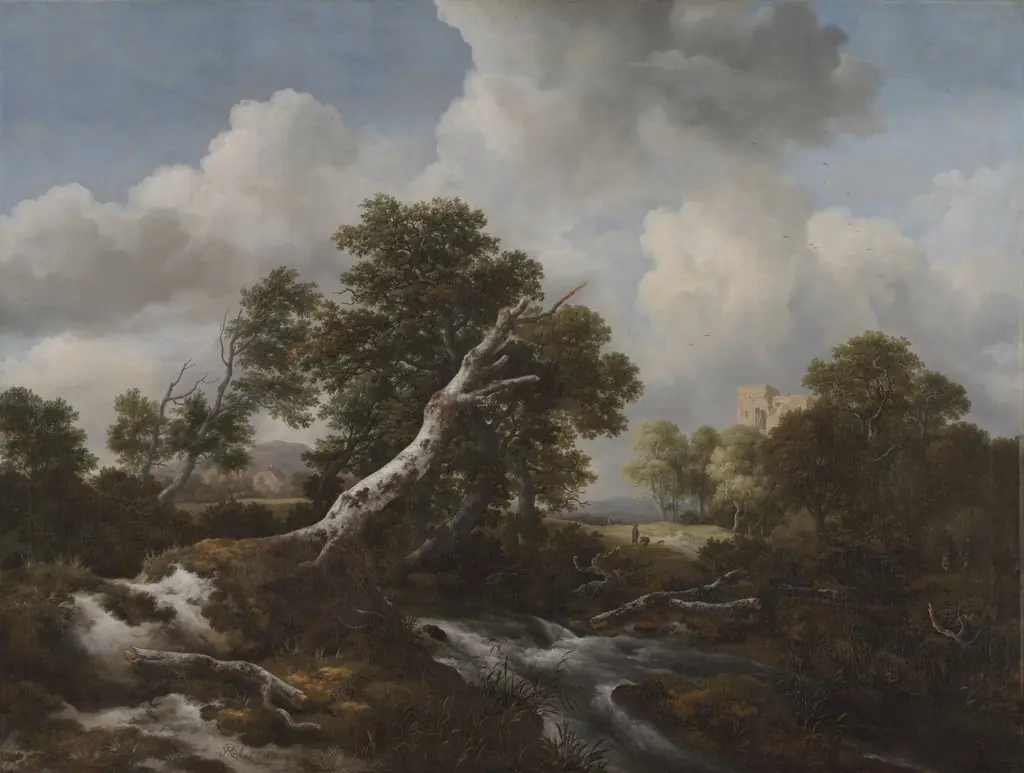
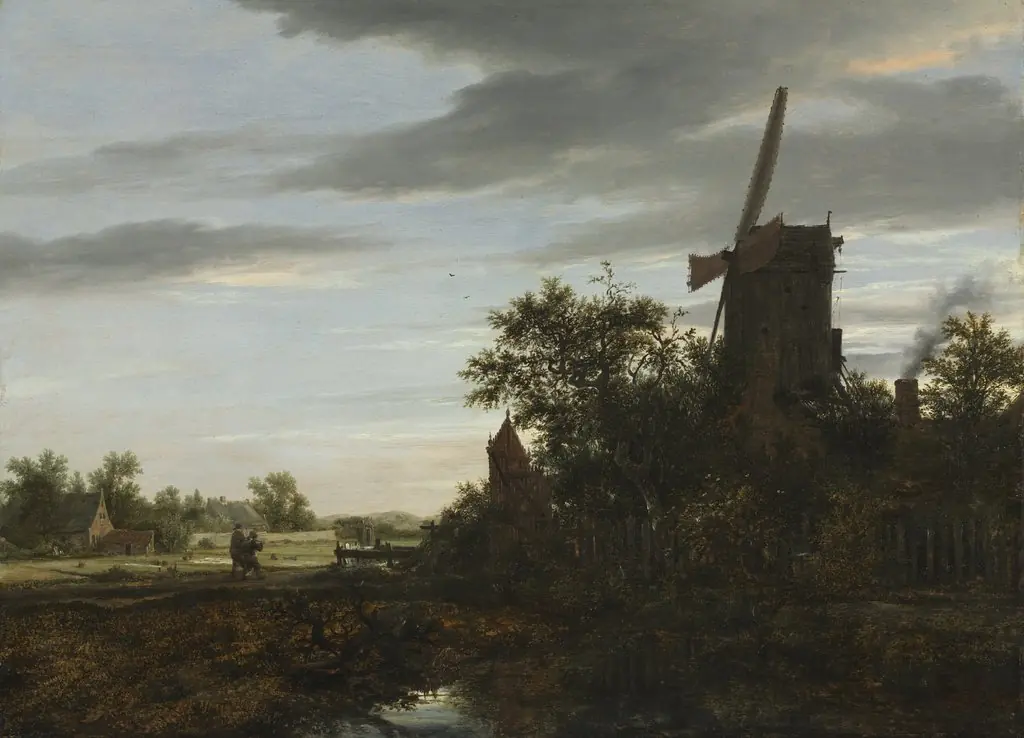
- View of Haarlem from the Northwest, with the Bleaching Fields in the Foreground
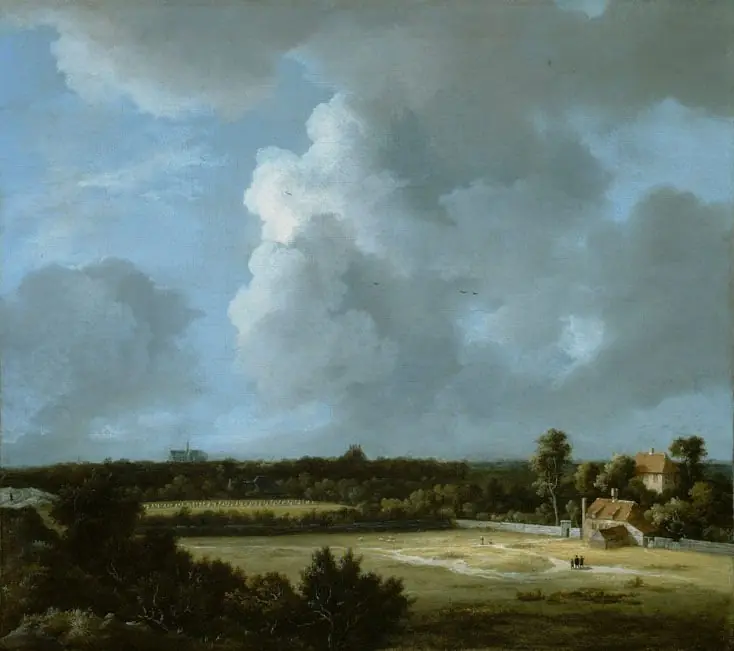 View of Haarlem
 View of Haarlem with Bleaching Fields
 View of the Plain of Haarlem with Bleaching Grounds
 The Bleaching Grounds near Haarlem
 A View of Haarlem
 A View of The Hague from the Northwest
 Dutch Panorama Landscape with a Distant View of Haarlem
 Dunes near Haarlem
 Bleaching Fields to the North-Northeast of Haarlem