Artwork
Winter Landscape
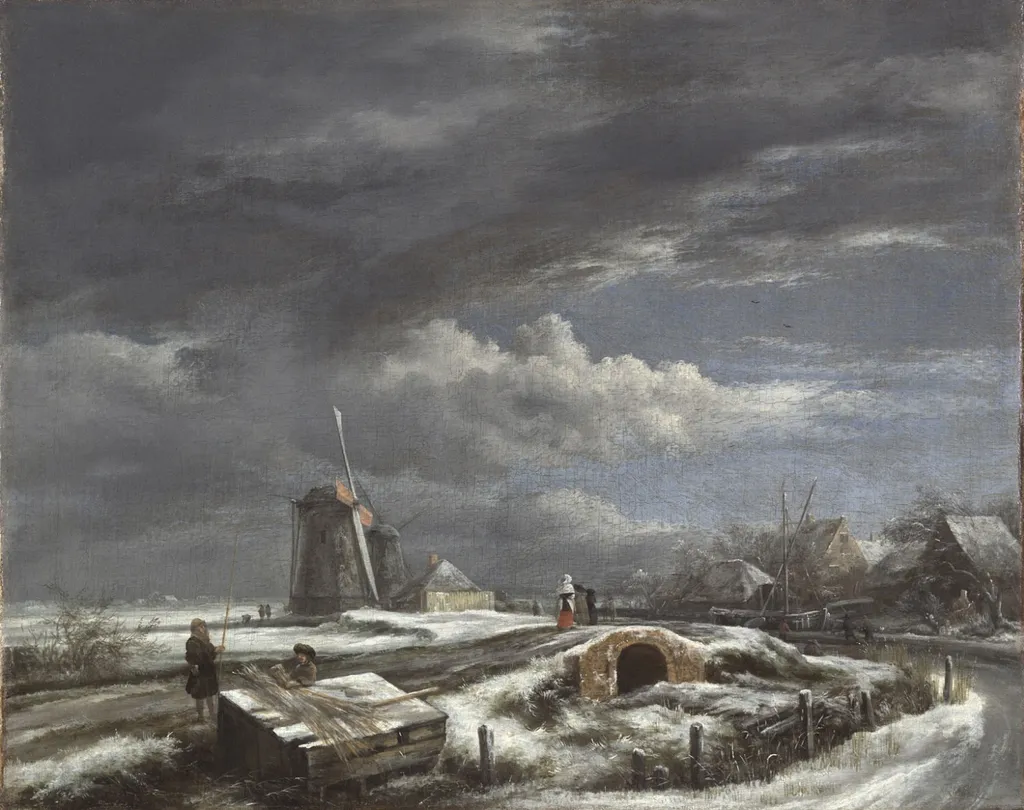
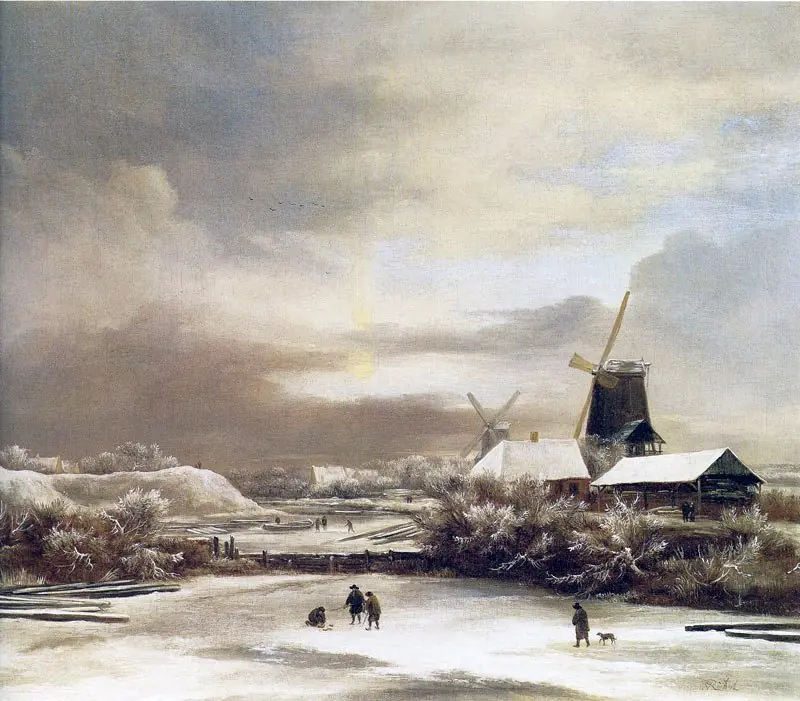
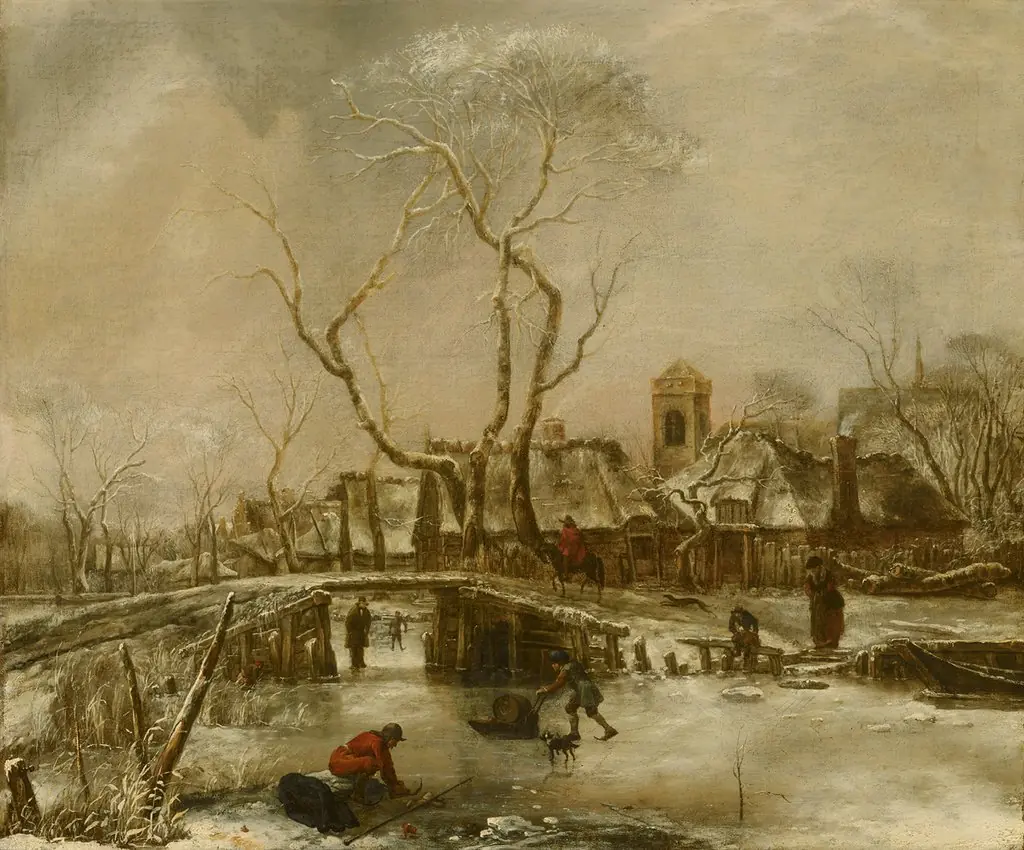
Winter Landscape is an oil painting by the Dutch Golden Age artist Jacob van Ruisdael. It dates from 1660 and is held in the collection of the Philadelphia Museum of Art.
About this work
Subject & Meaning
6 cm and was created in 1660, as documented in its provenance and material specifications.
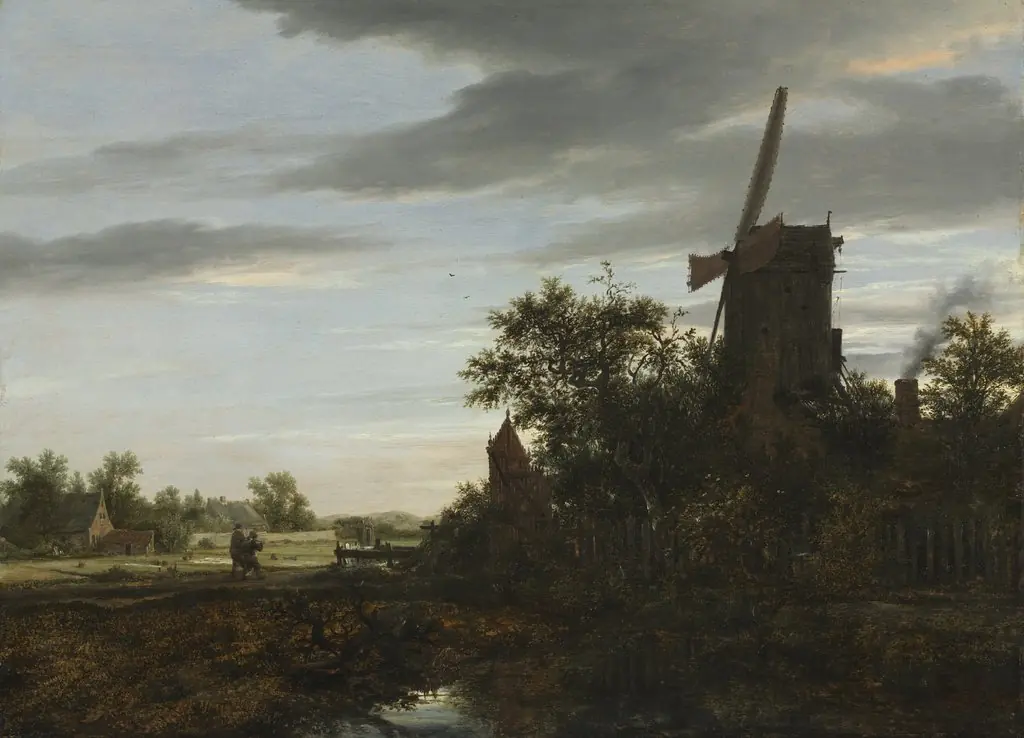
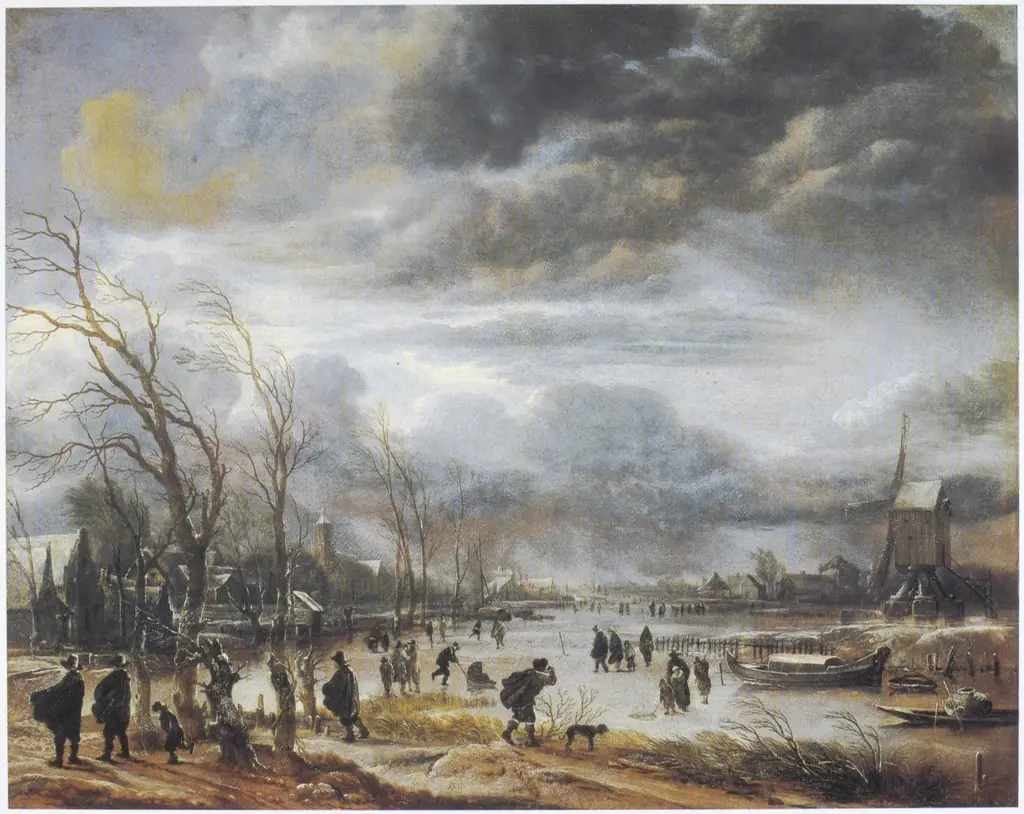
Winter Landscape depicts a frozen river scene with a windmill, figures on the ice, a canal bridge, and a sailing ship under a pale winter sky, rendered in detailed oil paint on canvas. The composition emphasizes the quiet activity of ice skating and daily life on the frozen waterway, reflecting 17th-century Dutch interest in seasonal change and domestic scenes within the landscape genre. The presence of a windmill and figures on the ice carries symbolic weight related to seasonal transition and human interaction with nature, characteristic of Jacob van Ruisdael's atmospheric approach to landscape painting.
The work measures 55.2 cm by 68.6 cm and was created in 1660, as documented in its provenance and material specifications. It is part of the Philadelphia Museum of Art collection, originally owned by John G. Johnson, and is classified as a landscape painting from the Dutch Golden Age, showcasing the artist's mastery in depicting atmospheric effects and intricate natural details within a winter scene.
Technique & Style
Winter Landscape is executed in oil paint on canvas, a standard support for Dutch landscape painters of the period. The composition measures 55.2 cm in height by 68.6 cm in width, presenting a horizontal format suited to its expansive topographical subject.
The work is classified as a landscape painting and depicts a winter scene populated with a windmill, figures of a man and a woman, a canal spanned by a bridge, a sailing ship, ice, and an ice skater. Ruisdael's handling of these motifs reflects the Dutch Golden Age tradition of naturalistic winter scenes, integrating architectural, human, and atmospheric elements into a unified panoramic view.
History & Provenance
Jacob van Ruisdael executed the oil painting Winter Landscape in 1660. The work, which depicts a winter scene featuring ice skaters, a windmill, and a canal, was at one point owned by John G. Johnson. It currently resides in the collection of the Philadelphia Museum of Art, where it is cataloged as number 569.
Winter Landscape is an oil painting by Jacob van Ruisdael created in 1660. It measures 55.2 cm by 68.6 cm and depicts a winter scene featuring a windmill, figures on ice, a canal, bridge, and sailing ship. The work is housed at the Philadelphia Museum of Art in Philadelphia, Pennsylvania, where it has been part of the collection since being acquired by John G. Johnson, whose holdings later entered the museum.
The painting was included in the museum's catalog as item 569 and has been exhibited as part of the institution's landscape painting displays.
Context
Jacob van Ruisdael's Winter Landscape (1660) occupies a pivotal position in Dutch Golden Age landscape painting, exemplifying his mastery of atmospheric effects and compositional depth. The work demonstrates his technical innovation, particularly in rendering ice and snow textures, while incorporating symbolic elements like the windmill and ice skaters that reflect 17th-century Dutch societal engagement with winter. Its inclusion in John G. Johnson's collection, later gifted to the Philadelphia Museum of Art, cemented its significance within American museum holdings of Dutch masters, influencing scholarly discourse on Northern Baroque art through detailed analyses of its provenance and material execution.
Overview
Jacob van Ruisdael’s 1660 oil painting titled Winter Landscape presents a frozen Dutch scene. The composition includes a small bridge spanning a canal, a windmill in the distance, and figures engaged in winter activities. The work is part of the collection of the Philadelphia Museum of Art.
Artist & collection
Artist
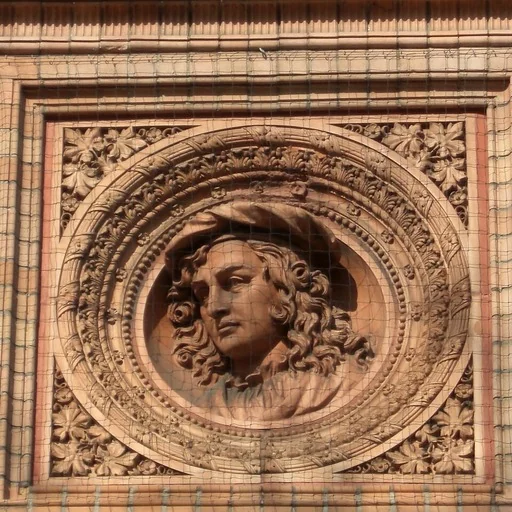
Jacob Isaackszoon van Ruisdael was a Dutch painter, draughtsman, and etcher. He is generally considered the pre-eminent landscape painter of the Dutch Golden Age, a period of great wealth and cultural achievement when…