Artwork
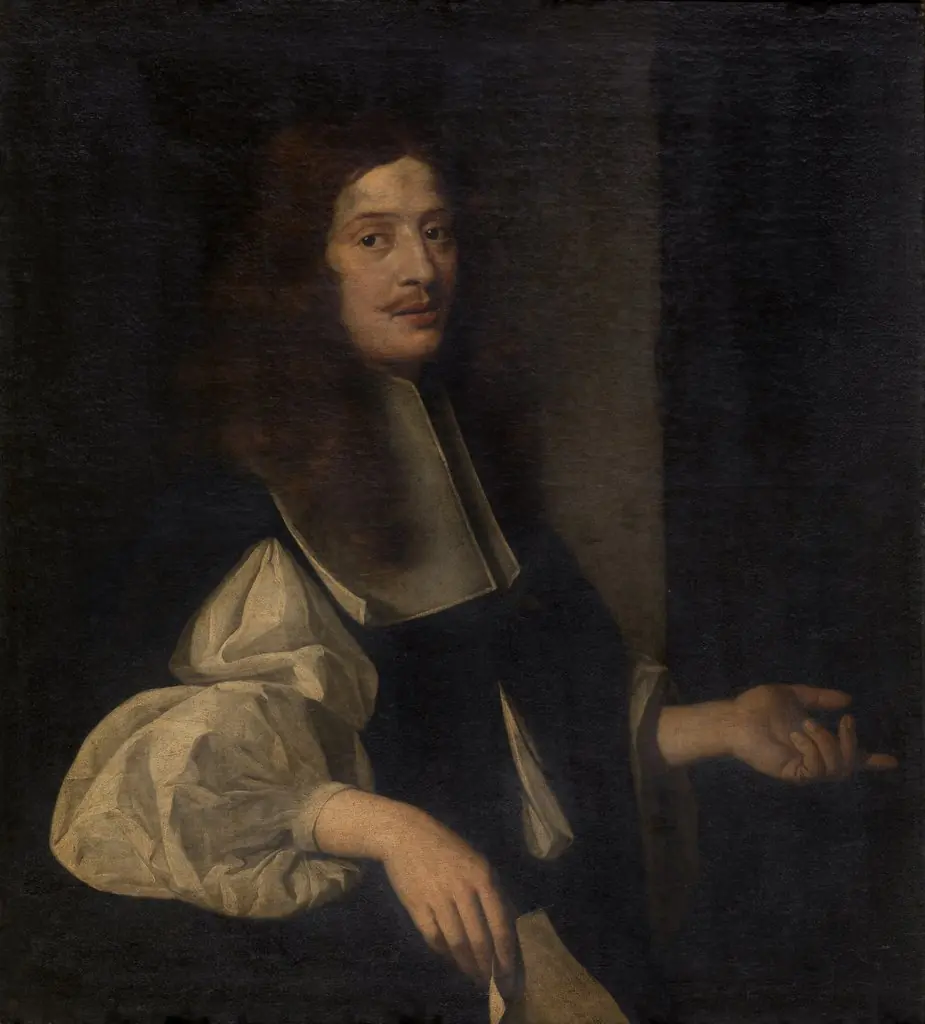
Portrait of a Man
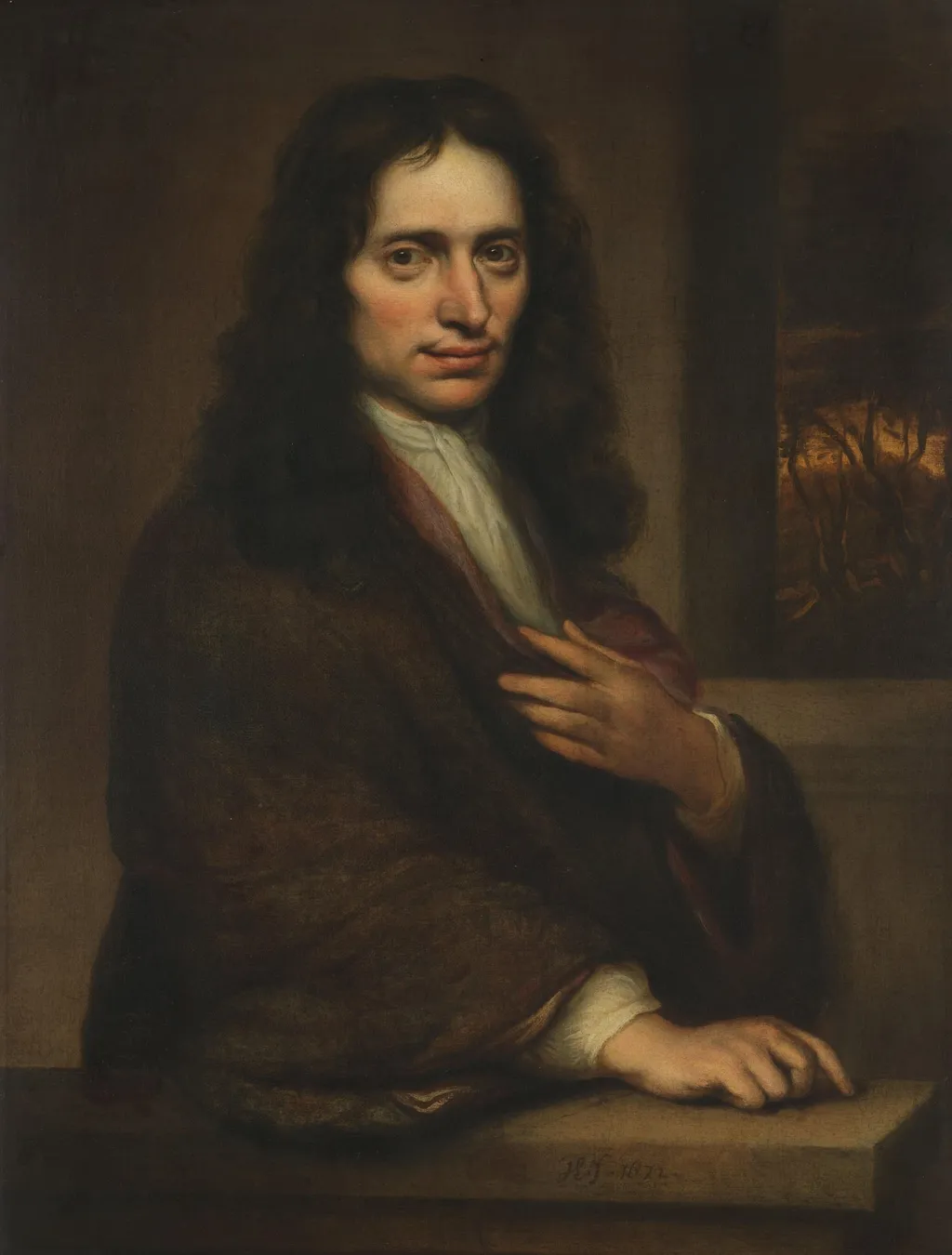
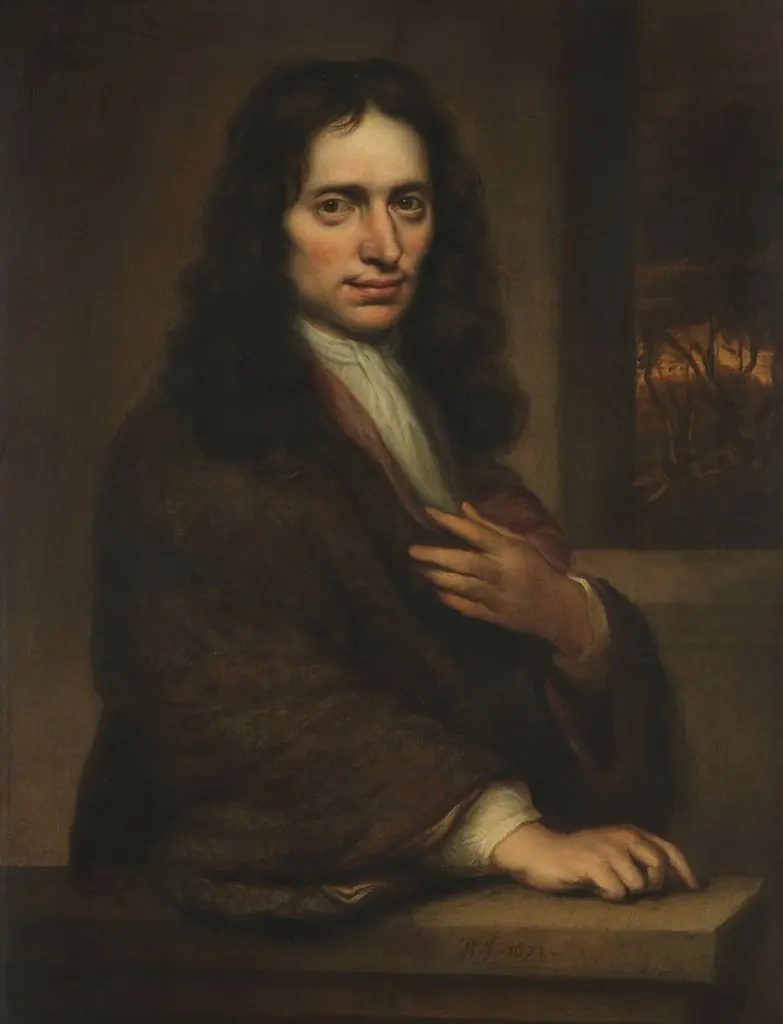
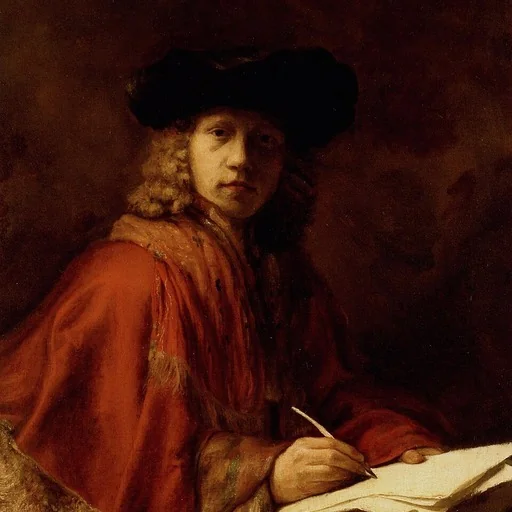
Portrait of a Man is an unspecified painting by the Baroque artist Jacob Levecq. It dates from 1672 and is held in the collection of the Rijksmuseum. The work presents a half‑length figure of a young man, positioned in profile as he leans against a stone balustrade.
About this work
Technique & Style
The condition of the work is not detailed in the sources, but Levecq’s technique, layered glazes and precise detailing, suggests an intention for durability.
Jacobus Levecq’s Portrait of a Man (1672) exemplifies the technical and stylistic qualities of his mature portraiture. The painting is executed in oil on canvas, a standard support for Dutch Golden Age portraits. Levecq’s handling reflects the influence of his training under Rembrandt, particularly in his earlier works, where a looser, more expressive brushstroke and chiaroscuro effects were prominent.
However, by 1672, his style had evolved toward a smoother, more polished finish, aligning with the refined elegance of contemporaries like Jan de Baen. The palette is subdued yet rich, with careful attention to tonal gradations in flesh and fabric, a hallmark of Dutch portraiture of the period.
The condition of the work is not detailed in the sources, but Levecq’s technique, layered glazes and precise detailing, suggests an intention for durability. Stylistically, the portrait balances naturalism with idealization, emphasizing the sitter’s individuality while adhering to conventions of dignified representation.
History & Provenance
The painting Portrait of a Man was created by the Dutch artist Jacobus Levecq in 1672. Levecq, born in Dordrecht in 1634, initially trained under Rembrandt in Amsterdam between 1653 and 1655 before returning to his hometown. Following the death of his father in 1660, he inherited funds that facilitated travel to France, where he painted in Paris and Sedan.
Upon his return to Dordrecht, his style evolved to resemble that of Jan de Baen. The specific commission details and subsequent ownership history of this 1672 portrait are not recorded in the available biographical accounts, which focus primarily on the artist's general career trajectory and his final years caring for a blind half-brother before his death in 1675.
Context
Jacobus Levecq (1634–1675) is situated within the Dutch Golden Age, operating as a Baroque portraitist who trained under Rembrandt in Amsterdam between 1653 and 1655. His early works reflect his master's influence through loose brushwork and chiaroscuro effects, though his later style evolved toward a smoother, more elegant manner following the models of Jan de Baen and Govert Flinck. Art historical scholarship, notably via Arnold Houbraken, records that Levecq's association with Rembrandt was significant enough that several of his paintings were historically misattributed to the master.
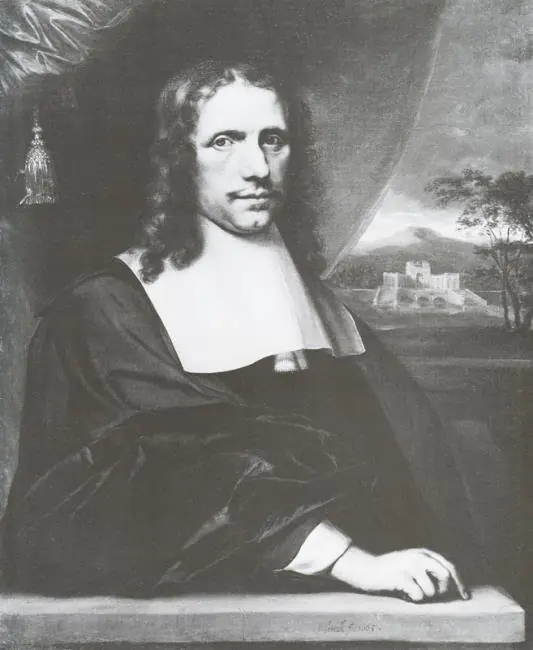
Despite his brief career and periods of illness that limited his output, Levecq is recognized for his portraiture, including a notable commission of Mattheus Eliasz van den Broucke around 1665. His legacy is further defined by his role as a teacher to Houbraken during his final months and his collection of prints, which included works by Rubens.
Overview
The work presents a half‑length figure of a young man, positioned in profile as he leans against a stone balustrade. To his right a window opens onto a gently rolling landscape, allowing daylight to illuminate his dark coat and crisp white collar. The composition captures a brief, contemplative pause.
Subject & Meaning
The sitter appears poised yet unembellished, his gaze directed outward without a smile. The restrained expression and the simple setting suggest a focus on personal presence rather than narrative, inviting viewers to consider the individual's inner steadiness.
Own this work as a print
Artist & collection
Artist
Jacob Levecq (c.1634–1675), né Jacques L'Evesque, who signed his name J. Leveck or J. L., and was also referred to as Jakob Lavecq, Jacobus Levecq, Jacobus L'Evesque, and Jacobus Lavecq, was a Dutch Golden Age painter trained by Rembrandt.