Artwork
Saint Sebastian
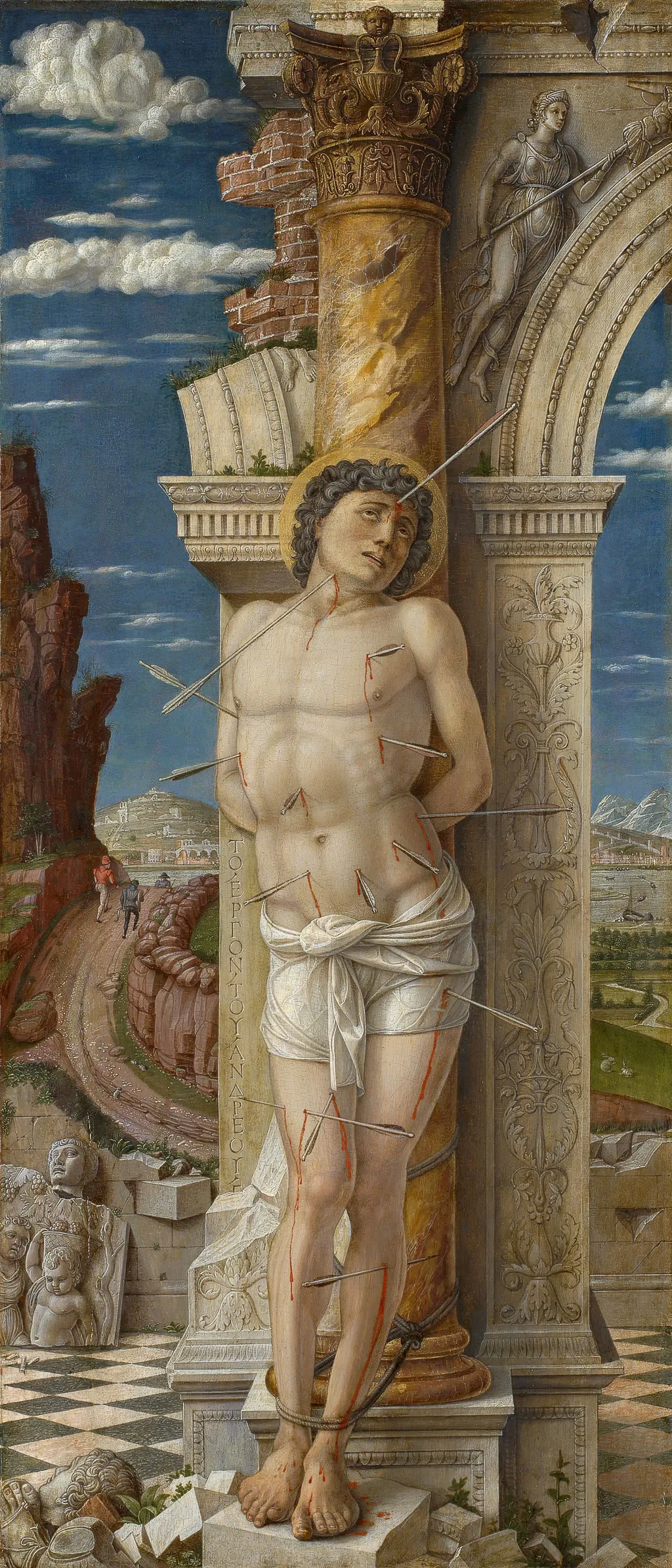
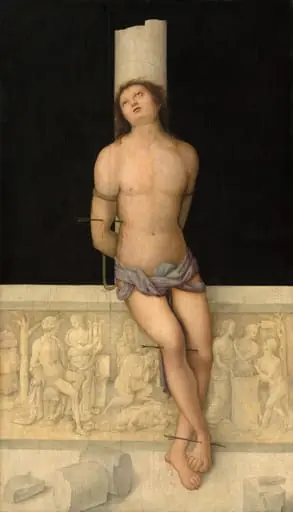
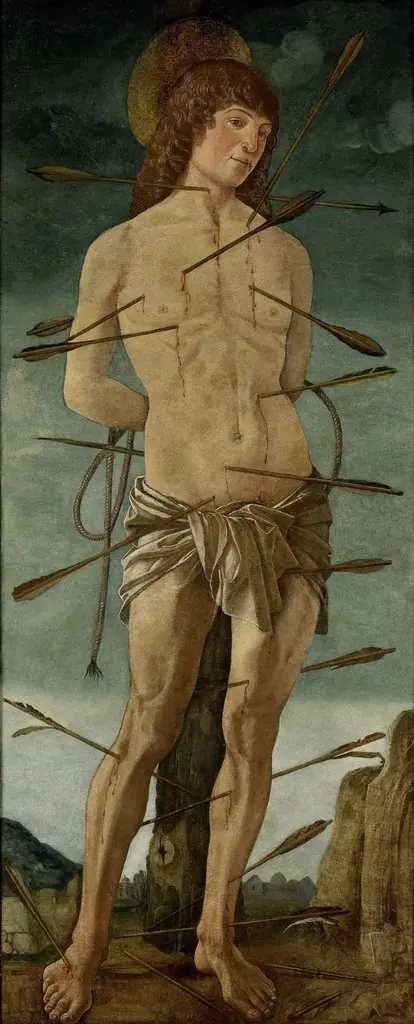
Saint Sebastian is a tempera painting by the Early Renaissance artist Andrea Mantegna. It dates from 1450 and is held in the collection of the Kunsthistorisches Museum.
About this work
Technique & Style
The figure is rendered in a nude pose typical of late Quattrocento art, emphasizing anatomical precision akin to classical sculpture.
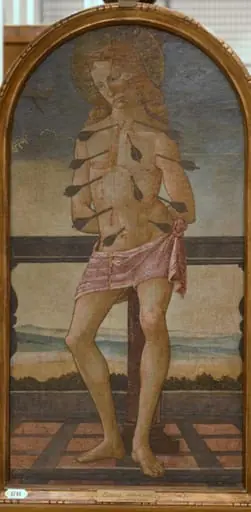
The painting is executed in tempera on a poplar wood panel, measuring 68 by 30 centimeters. It depicts the martyrdom of Saint Sebastian, who is shown bound to a ruined Roman column against a checkerboard floor, pierced by arrows that penetrate his flesh. The figure is rendered in a nude pose typical of late Quattrocento art, emphasizing anatomical precision akin to classical sculpture.
A Greek inscription on the right pilaster attributes the work to Andrea Mantegna. The composition includes architectural fragments and background elements that reflect Paduan humanist culture, with stylistic parallels to the Uffizi Circumcision triptych. The work is part of the Kunsthistorisches Museum collection, acquired through the patronage of Archduke Leopold Wilhelm of Austria.
History & Provenance
The painting Saint Sebastian was created by Andrea Mantegna around 1456-1457 as a tempera on panel work measuring 68 by 30 cm, originally commissioned within a devotional context linked to the plague of 1456-1457 in Padua and likely intended as a thank offering for its end.
The work entered the collection of Archduke Leopold Wilhelm of Austria before being acquired by the Kunsthistorisches Museum in Vienna, where it remains today.
The painting bears an inscription in Greek attributing it to Mantegna and reflects stylistic elements characteristic of his Paduan period, including the use of classical architectural fragments and references to local landmarks such as Verona.
Andrea Mantegna's Saint Sebastian is held in the Kunsthistorisches Museum in Vienna. The work is part of the museum's permanent collection, having been previously owned by Archduke Leopold Wilhelm of Austria. While the painting is signed and dated to the mid-1450s, specific accession numbers or detailed exhibition histories are not provided in the available records.
The museum maintains an official online record for the piece, confirming its status as a key work in their holdings of Renaissance religious art.
Context
Scholars have proposed a wide dating range for this work, spanning from the 1450s to the 1470s, though consensus places it within Mantegna's Paduan period prior to 1460. The inclusion of a complex Greek signature reflects the erudite humanist climate of Padua, while the subject matter likely responds to the plague epidemic that struck the city in 1456–1457, serving as a devotional offering for the contagion's end. Art historically, the painting exemplifies the mid-15th-century interest in anatomical precision, depicting the saint with a physique resembling a Greek statue against a backdrop of Roman ruins and epigraphic fragments.
Critical analysis often contrasts this panel with Mantegna's later, larger Saint Sebastian in Paris; the Vienna version presents a more contorted figure and harder contours, whereas the later work displays softer coloration and sfumato. Background details, including a cloud shaped like a horseman, may allude to Veronese legends or apocalyptic symbols of pestilence.
Overview
Created circa 1450, this tempera panel by Andrea Mantegna portrays the Christian martyr Saint Sebastian. The figure is shown bound to a stone column, his torso riddled with arrows, while a distant urban landscape stretches behind him under a clear sky. The painting resides in Vienna’s Kunsthistorisches Museum.
Subject & Meaning
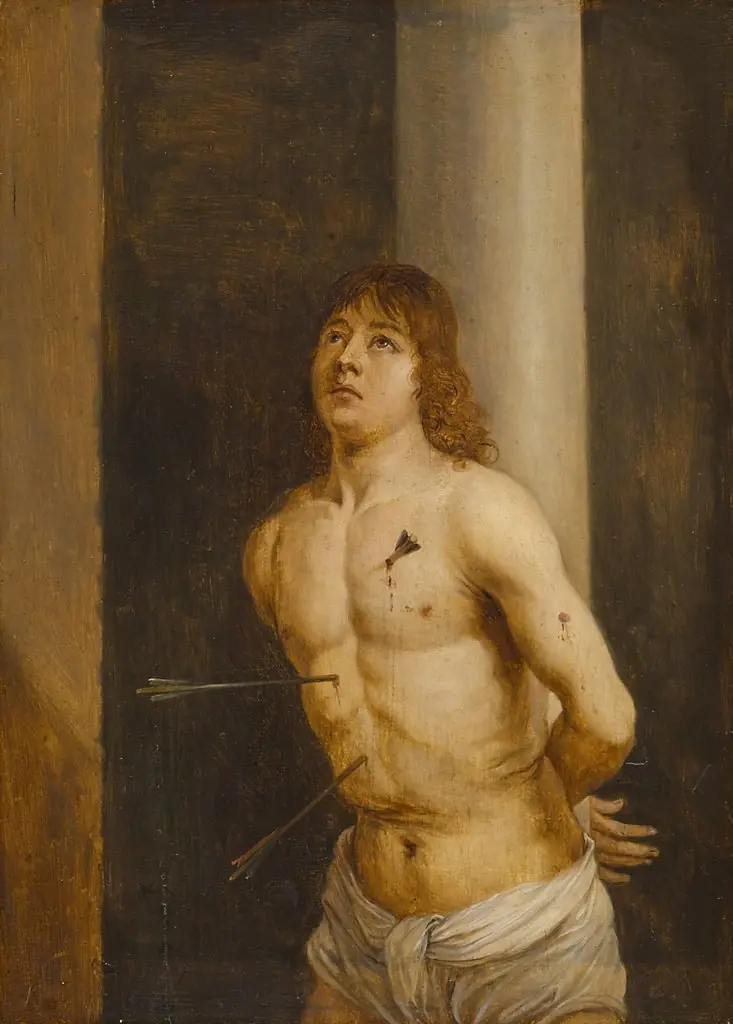
The work illustrates the traditional legend of Sebastian, who endured torture by arrow‑shooting yet remained serene, embodying steadfast faith amid suffering. His upward gaze and composed demeanor suggest a spiritual transcendence, inviting contemplation of martyrdom as both physical ordeal and testament to divine endurance.
Artist & collection
Artist
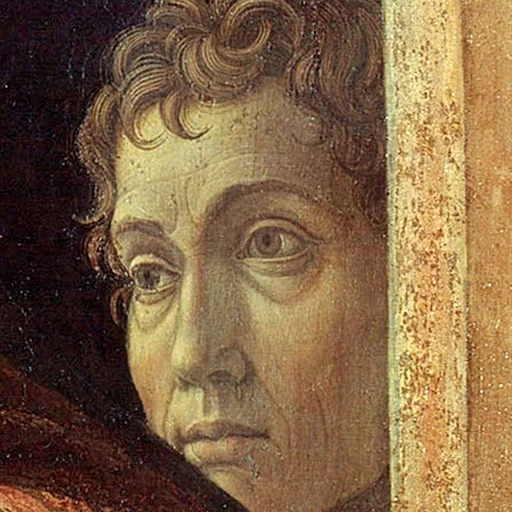
Andrea Mantegna (UK: US:; Italian:; c. 1431 – September 13, 1506) was an Italian Renaissance painter, a student of Roman archaeology, and the son-in-law of Jacopo Bellini. Like other artists of the time, Mantegna…