Artwork
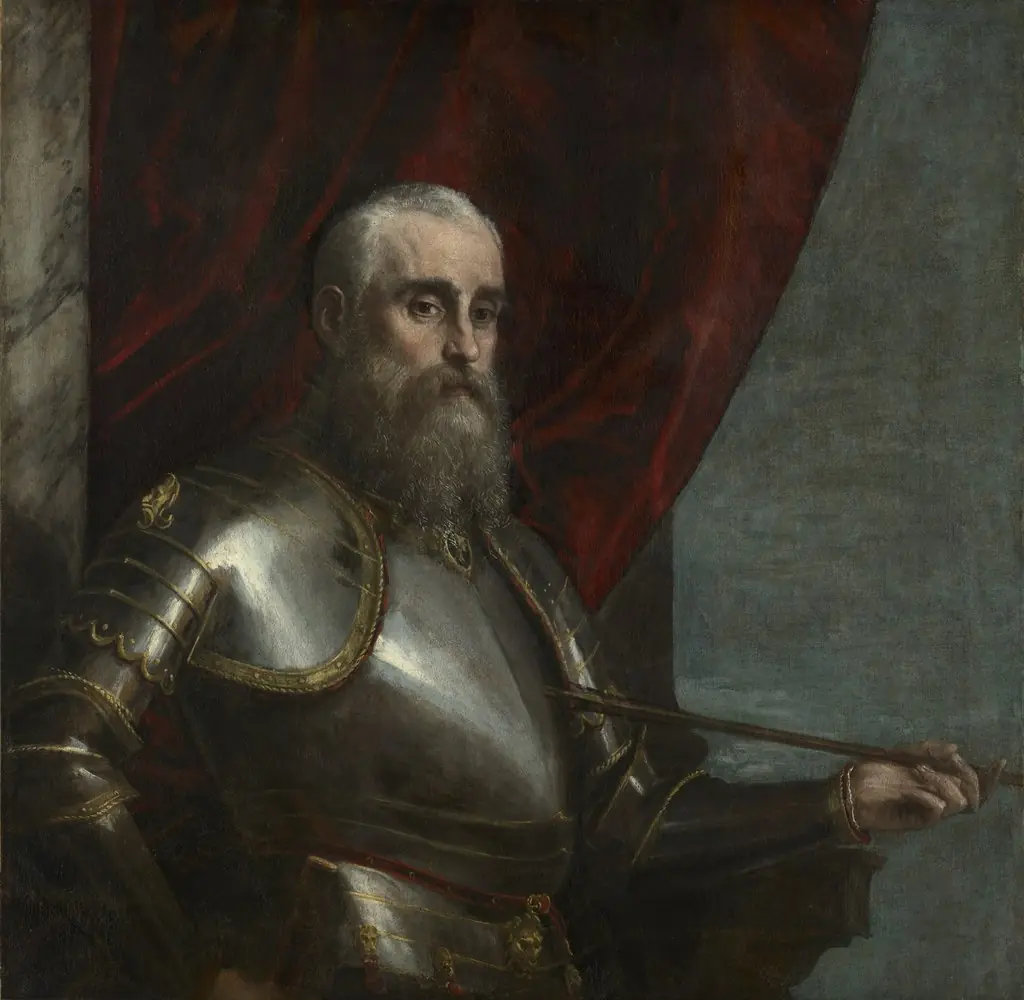
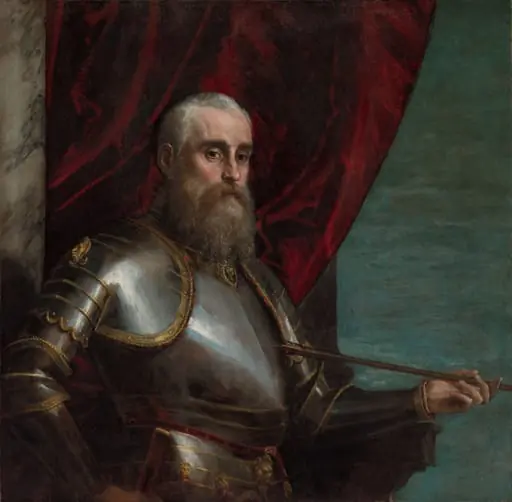
Portrait of the Doge Sebastiano Venier
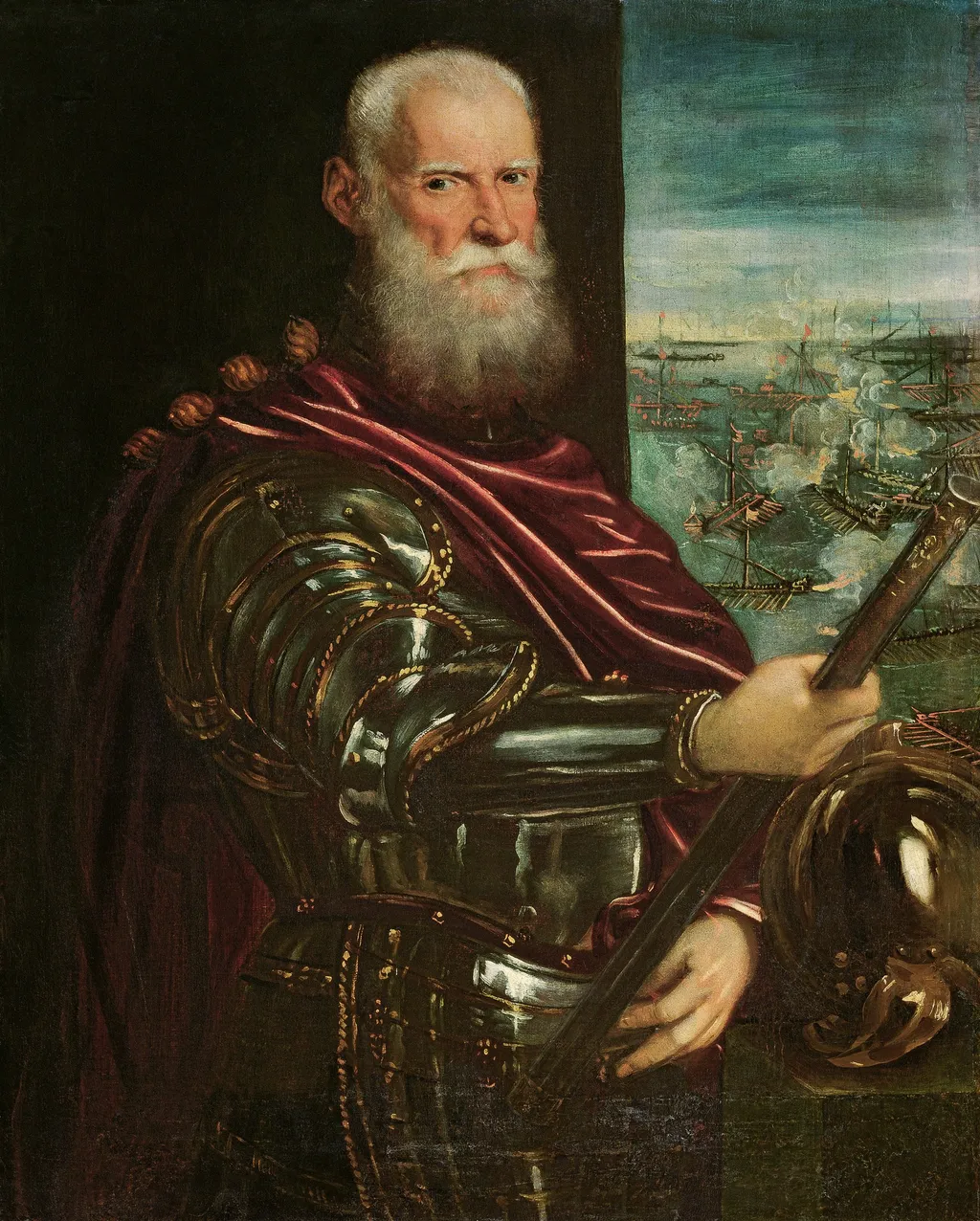
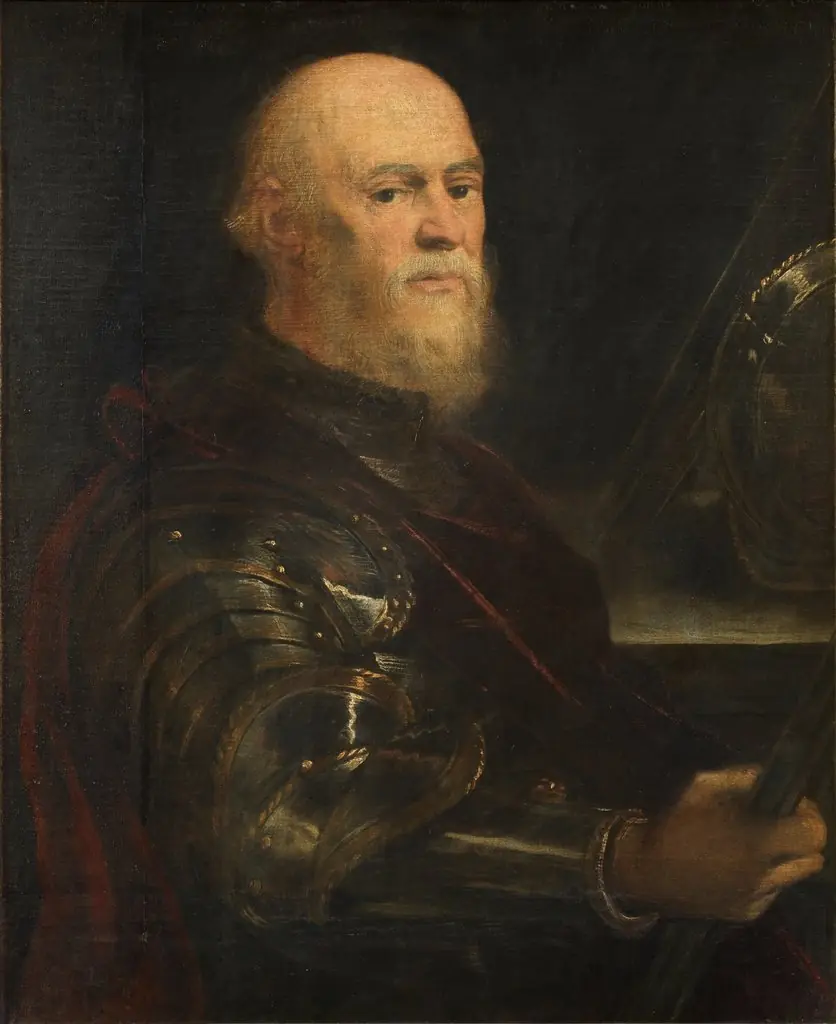
Portrait of the Doge Sebastiano Venier is an oil painting by the Mannerist artist Jacopo Tintoretto. It dates from 1566 and is held in the collection of the Kunsthistorisches Museum.
About this work
Subject & Meaning
This iconography underscores Venier's historical significance as a commander, particularly recalling his leadership during the Battle of Lepanto.
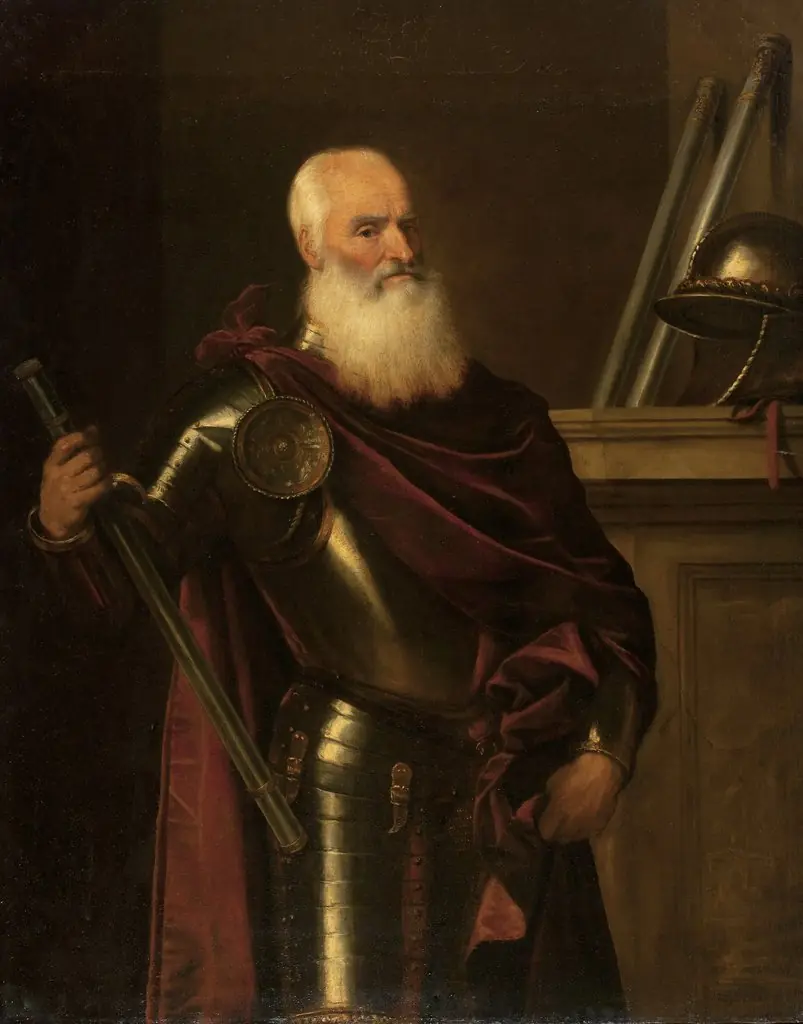
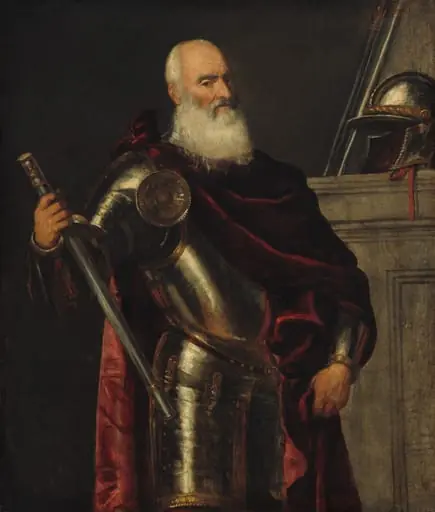
The work portrays Sebastiano Venier, the Doge of Venice, as its central figure. Tintoretto depicts him wearing body armor and a burgonet helmet while holding a baton, visual attributes that emphasize his military leadership and authority rather than solely his ceremonial ducal role. This iconography underscores Venier's historical significance as a commander, particularly recalling his leadership during the Battle of Lepanto.
The painting functions as a state portrait that merges the office of the Doge with the persona of a victorious general.
History & Provenance
The Portrait of the Doge Sebastiano Venier is an oil painting on canvas created by Jacopo Tintoretto. The work depicts the Doge wearing body armor and holding a baton, with a burgonet also visible in the composition. Historical records indicate that the painting was once owned by Bartolomeo della Nave. The artwork is currently held in the collection of the Kunsthistorisches Museum in Vienna.
Legacy
Tintoretto's 1582 portrait of Doge Sebastiano Venier, housed in the Kunsthistorisches Museum, has been frequently reproduced in scholarly studies of Venetian portraiture and cited in discussions of late Renaissance state imagery. The work's composition, particularly its depiction of the doge in body armor with a baton and burgonet, has informed later interpretations of ducal authority in Venetian art historiography.
The painting's provenance, including ownership by Bartolomeo della Nave, and its long-term placement in the Kunsthistorisches Museum collection, have made it a reference point for studies of museum acquisition practices in the 19th century.
Overview
Jacopo Tintoretto’s portrait of Sebastiano Venier, painted around 1566, presents the former Doge of Venice in full armor. Executed in oil on canvas, the work is part of the Kunsthistorisches Museum’s collection and exemplifies the artist’s vigorous handling of paint.
Technique & Style
Tintoretto employs a stark chiaroscuro, using deep shadows and bright highlights to isolate the figure from a bustling seascape background. The composition reflects Mannerist tendencies, with elongated forms and a dramatic perspective that heightens the sense of movement.
Context
Sebastiano Venier served as Doge during the mid‑16th century, a time when Venice’s maritime power was central to its identity. The background, populated with ships and city structures, alludes to the Republic’s naval heritage and the Doge’s role in defending it.
Own this work as a print
Artist & collection
Artist
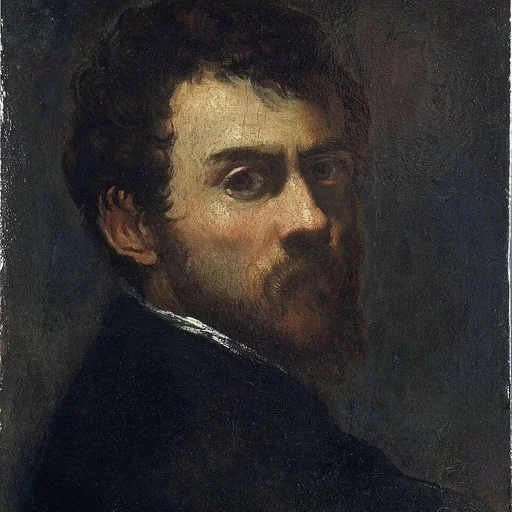
Jacopo Robusti (late September or early October 1518 – 31 May 1594), best known as Tintoretto ( TIN-tə-RET-oh; Italian:; Venetian: ), was an Italian Renaissance painter of the Venetian school.