Artwork
Susanna and the Elders
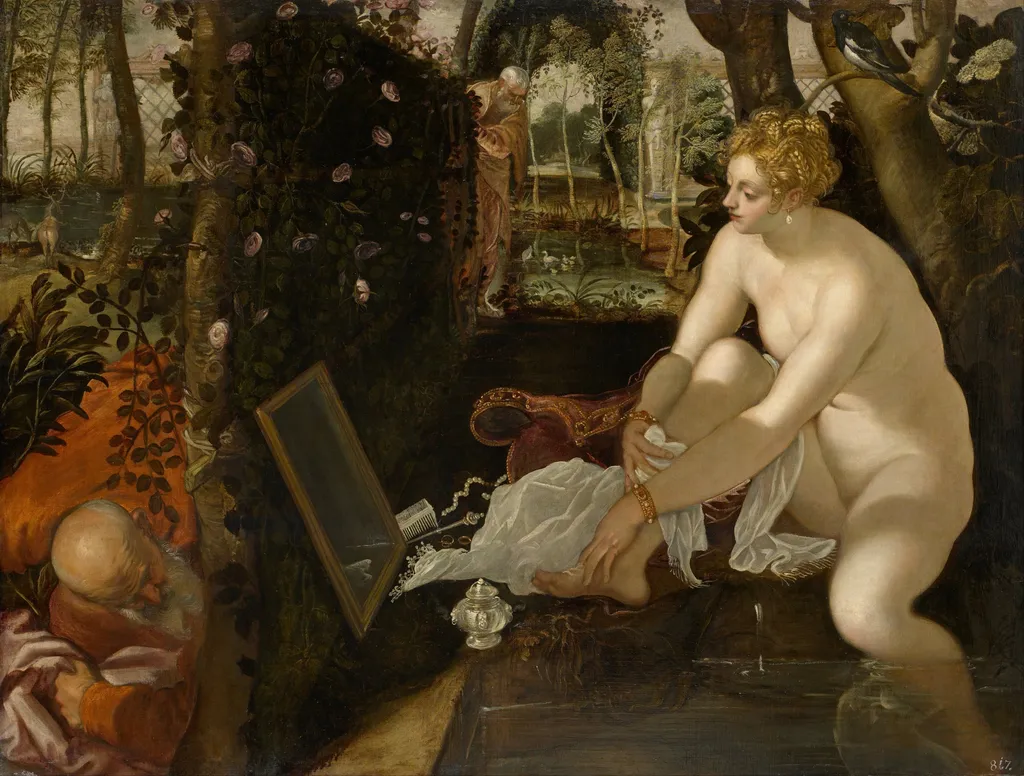
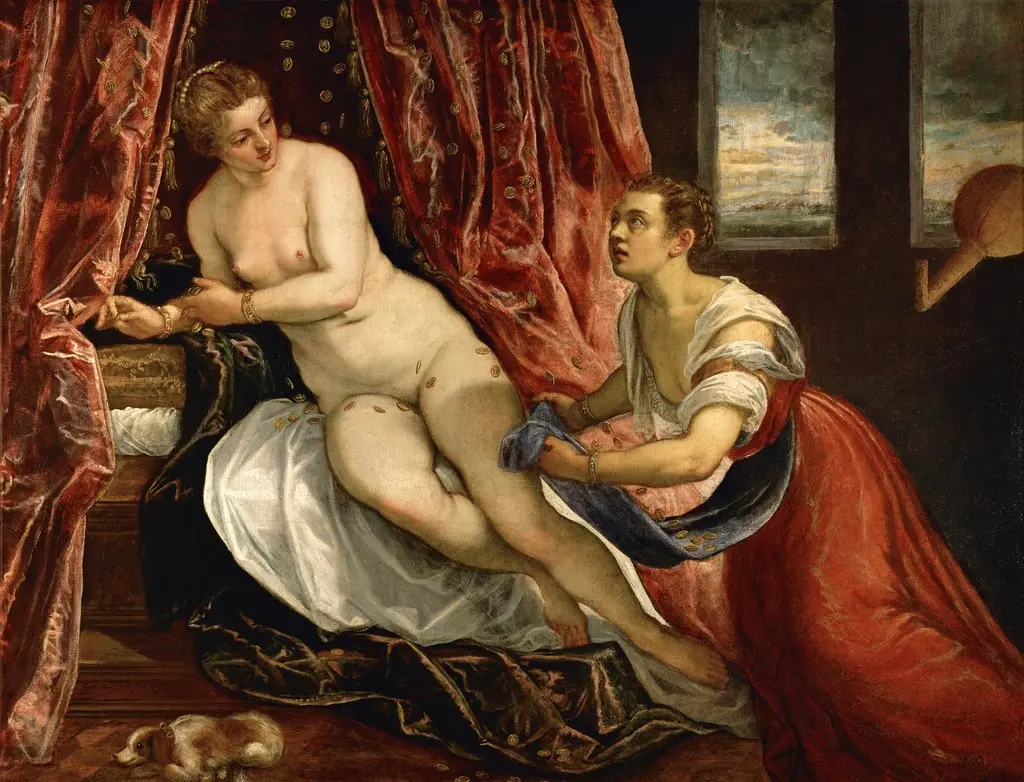
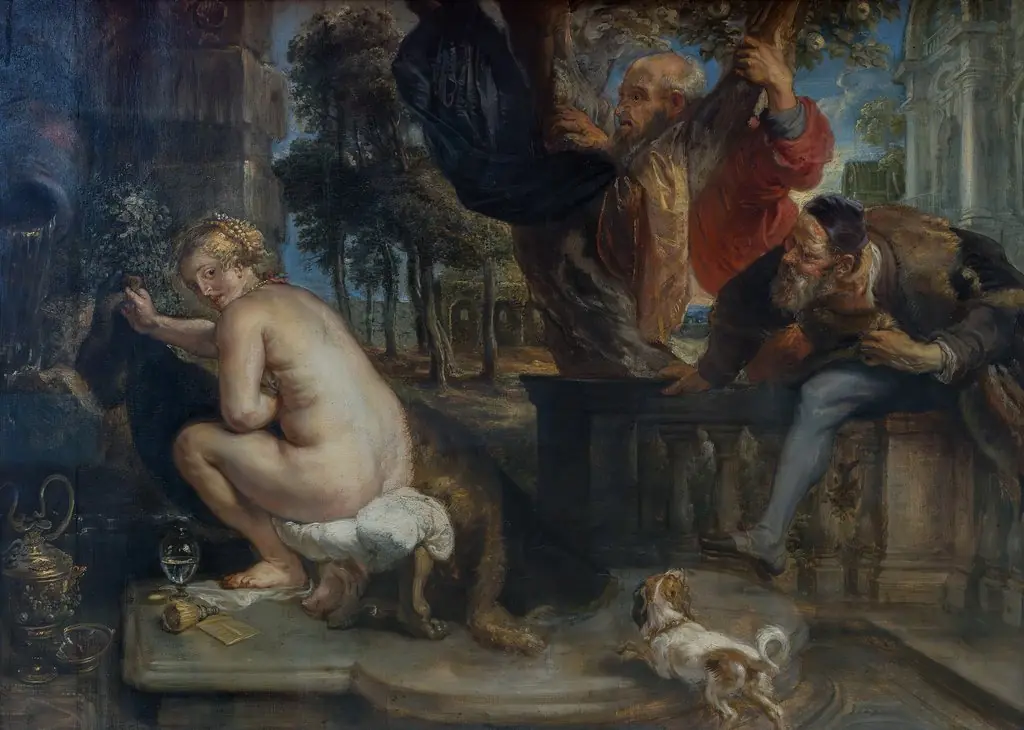
Susanna and the Elders is an oil painting by the Mannerist artist Jacopo Tintoretto. It dates from 1555 and is held in the collection of the Kunsthistorisches Museum.
About this work
Subject & Meaning
The magpie represents impending defamation, while white objects and elderflowers signify innocence and purity.
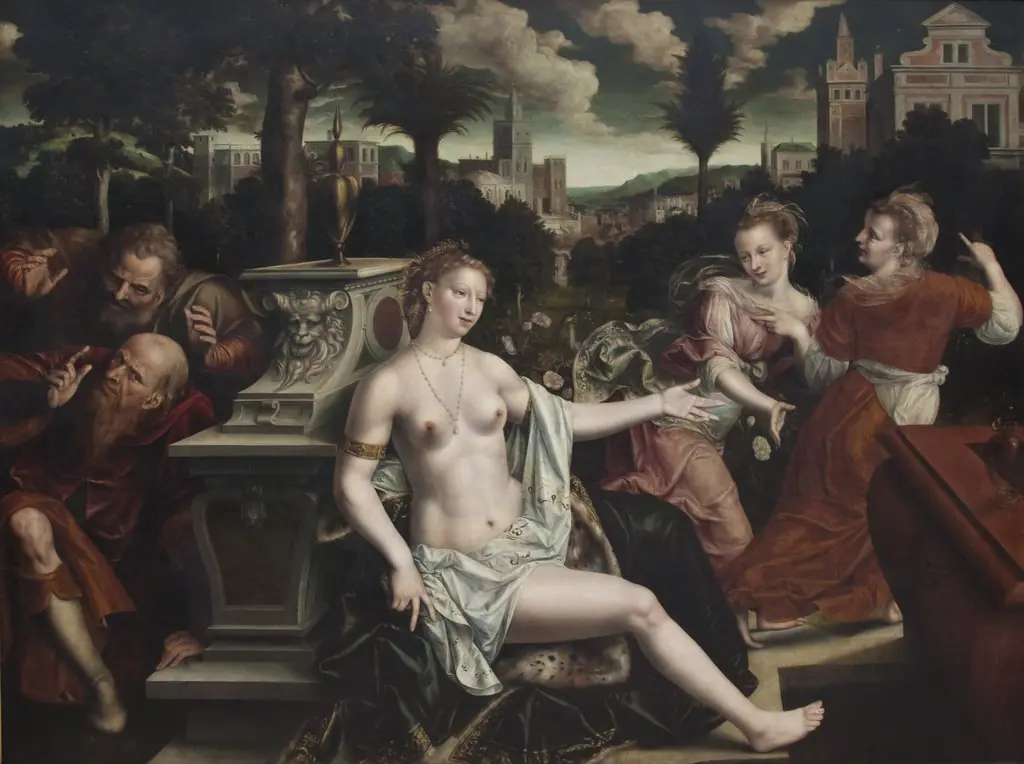
Tintoretto's Susanna and the Elders depicts a scene from the Book of Daniel, illustrating the biblical episode in which a virtuous woman is accosted by two elderly judges. The painting captures the moment Susanna, absorbed in her reflection within a garden mirror, remains unaware of the two men peering voyeuristically from behind a rose trellis. Iconographically, the work uses rich symbolism to convey moral and political messages.
The magpie represents impending defamation, while white objects and elderflowers signify innocence and purity. Conversely, the red garments of the elders and the roses symbolize lust and danger. The deer in the background suggests desire but may also allude to the prophet Daniel or the Christian cross.
The composition includes a distant view of Venice, leading scholars to interpret Susanna as a personification of the Republic, threatened by the Ottoman Empire, represented by the predatory elders.
Technique & Style
Executed in oil on canvas, this work measures approximately 146 by 194 centimetres and dates to circa 1555–1557. Tintoretto employs a dynamic chiaroscuro technique, directing sunlight onto specific areas of Susanna's face and body to create dramatic contrast against the shadowed garden. The composition is structurally divided by a vertical tree trunk, creating an asymmetrical balance where the right side occupies roughly eighty percent of the surface.
The figures are arranged within a triangular configuration slightly offset from the central axis. Stylistically, the painting exhibits the energetic handling characteristic of the Venetian school, using vivid color contrasts between the subject's pale skin, white accessories, and the elder's salmon-red garment. Detailed still-life elements, including jewelry and textiles, are rendered with precise attention to texture and light reflection.
History & Provenance
Executed by the Venetian artist Jacopo Tintoretto, this oil painting was created circa 1555 to 1557. While some records pinpoint the inception to 1555, others suggest a completion date around 1557. The work depicts the biblical narrative of Susanna and has remained in the collection of the Kunsthistorisches Museum in Vienna.
Tintoretto produced multiple versions of this subject during his career, with other iterations housed in the Louvre, the Museo del Prado, and the National Gallery of Art in Washington, D.C., alongside one held in an unidentified private collection. No specific details regarding the original commissioner or the early ownership chain prior to its museum acquisition are provided in the available records.
Context
Tintoretto's Susanna and the Elders (c. 1555–56), an oil on canvas (146 × 193.6 cm) housed in the Kunsthistorisches Museum, exemplifies Venetian painting through its dynamic composition, dramatic chiaroscuro, and emphasis on sensual movement. The work belongs to a series of paintings on the same biblical episode, a subject that enjoyed broad popularity in late Renaissance art. Scholarship highlights its intricate visual rhetoric: Susanna's absorbed gaze in the mirror creates a voyeuristic space, while symbolic elements, roses, a magpie, deer, and the Venetian-like landscape, have been interpreted as allegories for lust, slander, and the political threat of the Ottoman Empire to Venice.
Critical analyses, including Hahn's 2004 study, situate the painting within Tintoretto's broader oeuvre and its influence on subsequent depictions of the narrative.
Legacy
Tintoretto's Susanna and the Elders has secured a lasting place in art-historical discourse, sustained by its residence in the Kunsthistorisches Museum in Vienna and its status as one of several versions of the subject produced by the artist's studio, with related works held at the Louvre, the Museo del Prado, and the National Gallery of Art in Washington, D.C. The painting has attracted sustained scholarly attention, notably through R. Hahn's 2004 article "Caught in the Act: Looking at Tintoretto's Susanna" published in The Massachusetts Review, and through its inclusion in Tom Nichols's Tintoretto – Tradition and Identity. It also features in Paul Veyne's Mon musée imaginaire, a testament to its canonical status. Its complex iconography, including the symbolic animals and the veiled reference to Venice, continues to invite allegorical readings linking the biblical narrative to sixteenth-century Venetian anxieties about Ottoman threats.
Overview
Tintoretto's oil painting, Susanna and the Elders, created around 1555–56, depicts a scene from the Old Testament's Book of Daniel. The Venetian artist, also known as Jacopo Robusti, was renowned for his dynamic approach to both sacred and secular narratives during the "golden century" of Venetian art. This particular work, now housed in the Kunsthistorisches Museum in Vienna, exemplifies his dramatic style and engagement with popular biblical themes of the era.
Own this work as a print
Artist & collection
Artist
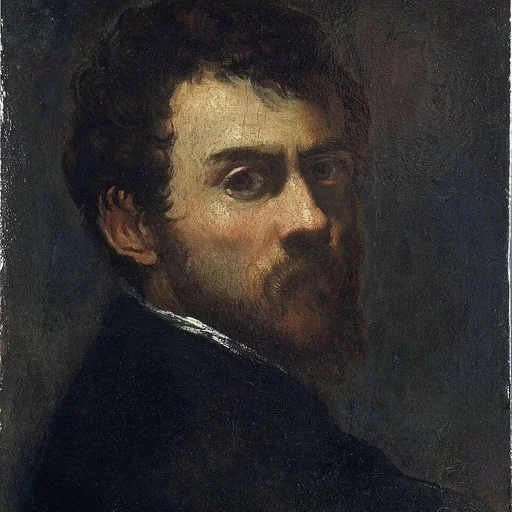
Jacopo Robusti (late September or early October 1518 – 31 May 1594), best known as Tintoretto ( TIN-tə-RET-oh; Italian:; Venetian: ), was an Italian Renaissance painter of the Venetian school.