Artwork
Doge Alvise Mocenigo (1507–1577) Presented to the Redeemer
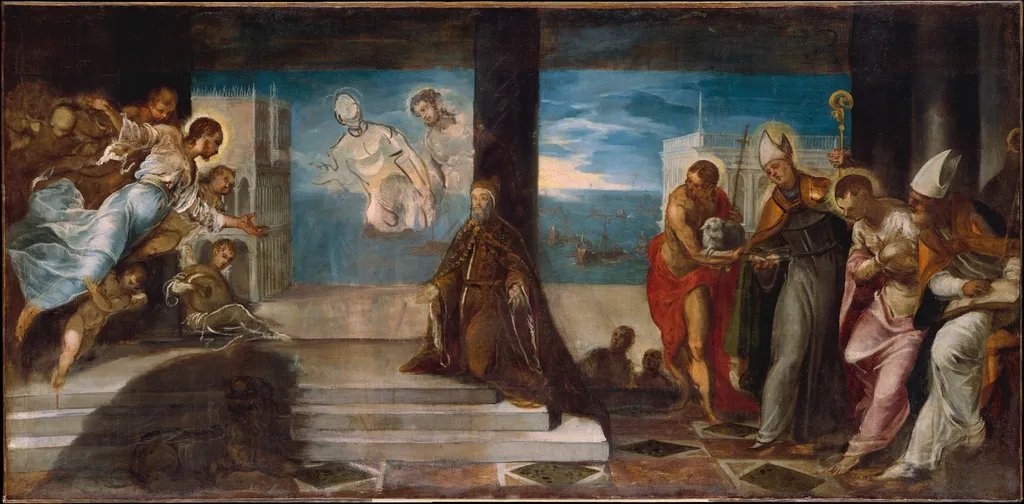
Doge Alvise Mocenigo (1507–1577) Presented to the Redeemer is an oil painting by the Mannerist artist Jacopo Tintoretto. It dates from 1589 and is held in the collection of the Metropolitan Museum of Art.
About this work
Subject & Meaning
Mark and thus Venice itself, while the angel and Christ together convey the Doge’s pious devotion and the promise of spiritual redemption under divine watch.
Doge Alvise Mocenigo is shown kneeling before Christ the Redeemer, who extends a blessing. Standing beside the Doge is Saint Mark the Evangelist, identified by his traditional attribute, the winged lion, which lies at the saint’s feet. An angel hovers above, acting as a heavenly intercessor.
The composition links the Venetian ruler with the city’s patron saint and its divine protector, suggesting that Mocenigo’s authority is sanctified by both civic and heavenly powers. The lion symbolizes St. Mark and thus Venice itself, while the angel and Christ together convey the Doge’s pious devotion and the promise of spiritual redemption under divine watch.
Technique & Style
Dogе Alvise Mocenigo (1507–1577) Presented to the Redeemer is an oil painting on canvas created in 1577. The work measures approximately 97.2 cm in height by 198.1 cm in width and was executed by Jacopo Tintoretto using oil paint on a canvas support. It is housed in the Metropolitan Museum of Art and depicts Alvise I Mocenigo together with Saint Mark, a lion, an angel, and Jesus Christ, forming a religious composition typical of the period.
History & Provenance
The painting was created by Jacopo Tintoretto in 1577, with the inception date recorded as 23 December 1577. Executed in oil on canvas, it was produced as a religious work depicting Doge Alvise Mocenigo being presented to the Redeemer. The canvas, measuring 97.2 by 198.1 centimeters, entered the collection of the Metropolitan Museum of Art, where it remains held.
The sources document the work's creation date, medium, and current institutional ownership, but do not provide details on the original commission, early patronage, or the chain of custody prior to its acquisition by the Metropolitan Museum of Art.
The painting Doge Alvise Mocenigo (1507–1577) Presented to the Redeemer, attributed to Jacopo Tintoretto and dated 1577, is housed in the Metropolitan Museum of Art in New York. The work is recorded as part of the museum’s collection, though no specific accession or inventory number is disclosed in the available documentation. Its dimensions are noted as approximately 97.2 cm by 198.1 cm. The sources do not mention any exhibition record for the piece, indicating that it has not been listed in publicly documented exhibitions up to the present.
The painting’s provenance is tied to its presentation to the titular redeemer, and it remains on view in the museum’s European art galleries.
Context
Jacopo Tintoretto’s 1577 oil on canvas, Doge Alvise Mocenigo Presented to the Redeemer, exemplifies late‑century Venetian religious painting. The work, recorded in the artist’s catalogue and detailed in the Metropolitan Museum of Art’s collection entry, portrays the doge before symbolic figures of Mark the Evangelist, a lion, an angel, and Christ, underscoring the ceremonial link between civic authority and divine patronage. Its inclusion in a major museum highlights the painting’s enduring significance within Tintoretto’s oeuvre and the broader narrative of 16th‑century Venetian art.
Overview
This oil painting, titled Doge Alvise Mocenigo (1507–1577) Presented to the Redeemer, depicts a significant religious and political event. The composition centers on a kneeling figure, presumably the Doge, surrounded by various individuals in a grand, expansive setting. The work utilizes a palette of both vibrant and subdued tones, creating a distinct visual atmosphere.
Artist & collection
Artist
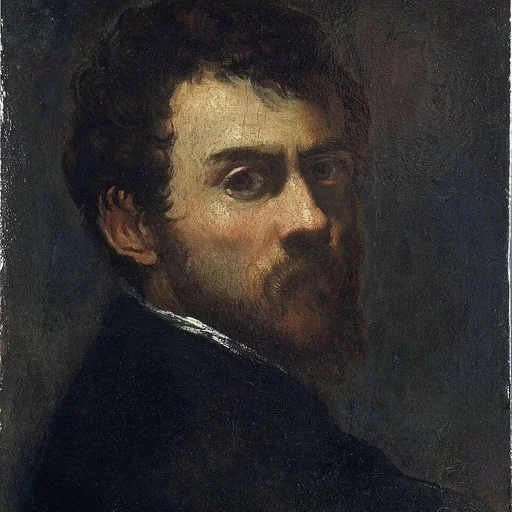
Jacopo Robusti (late September or early October 1518 – 31 May 1594), best known as Tintoretto ( TIN-tə-RET-oh; Italian:; Venetian: ), was an Italian Renaissance painter of the Venetian school.

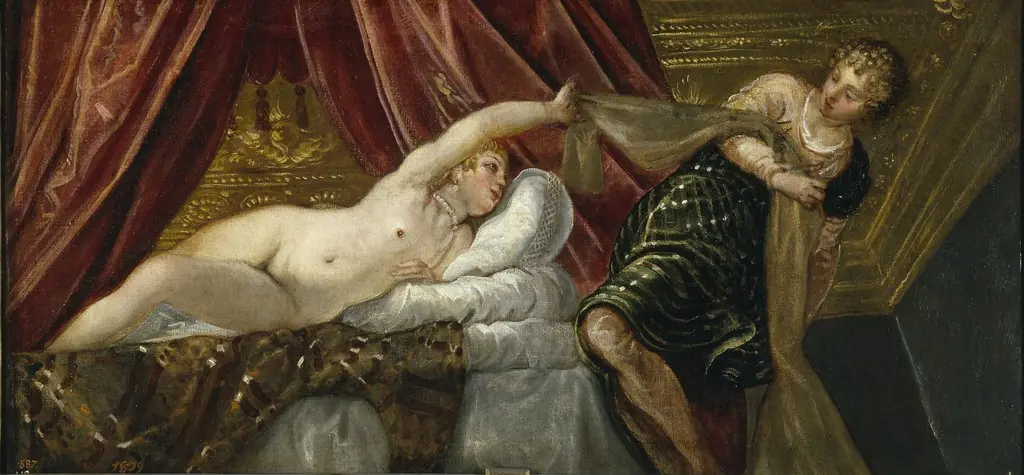
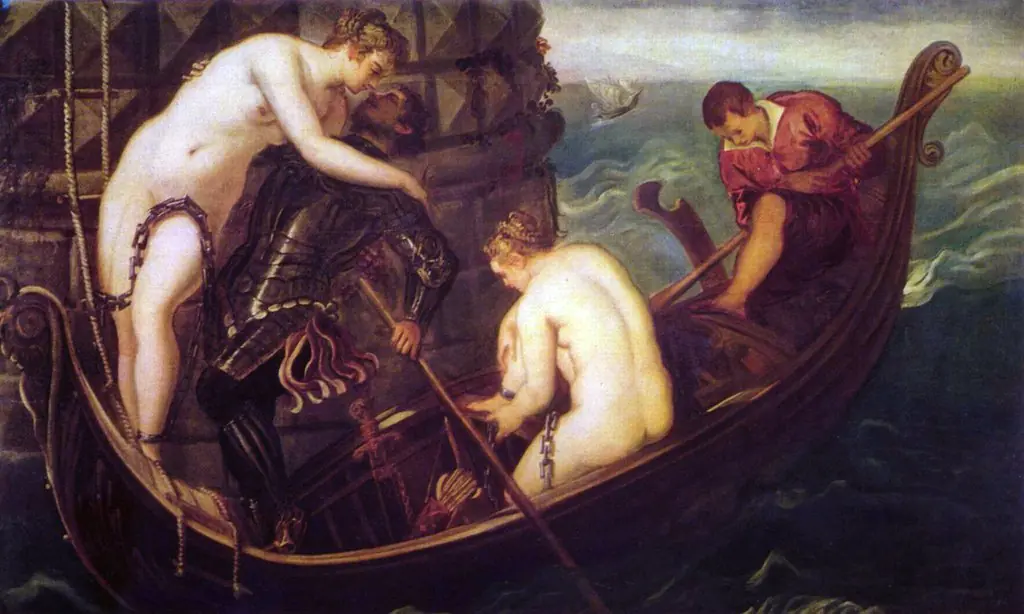
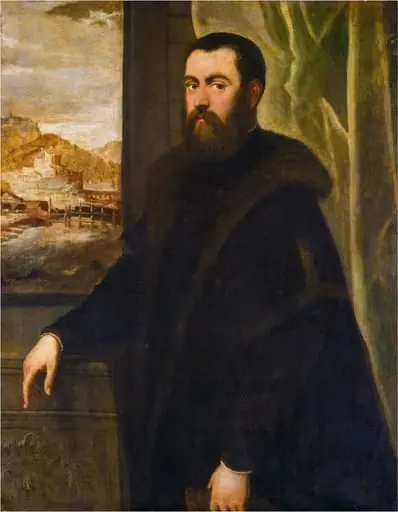
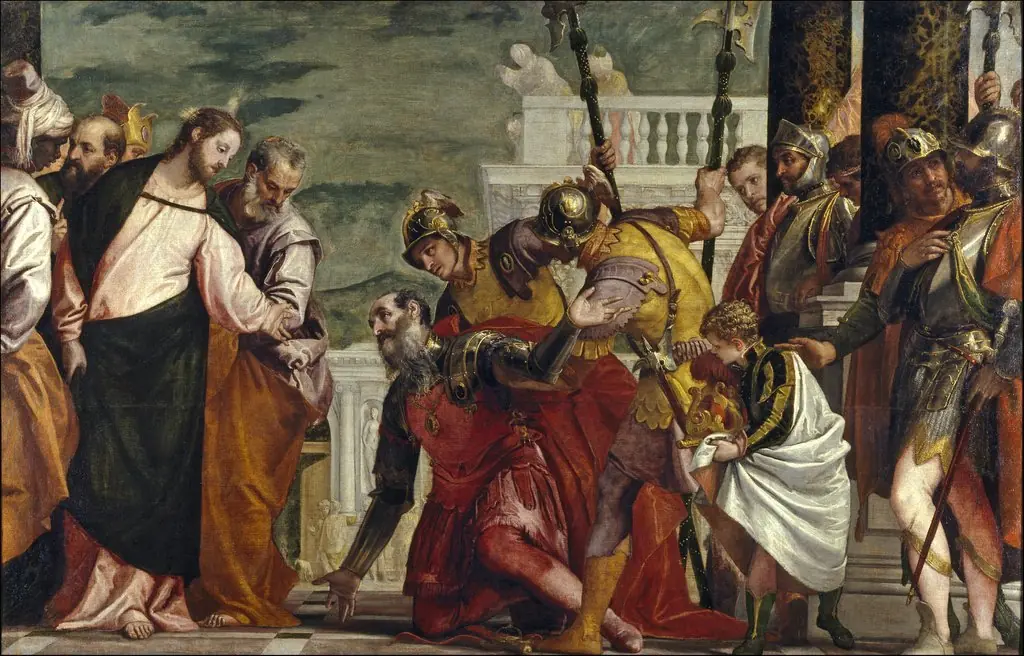
- Christ and the Centurion
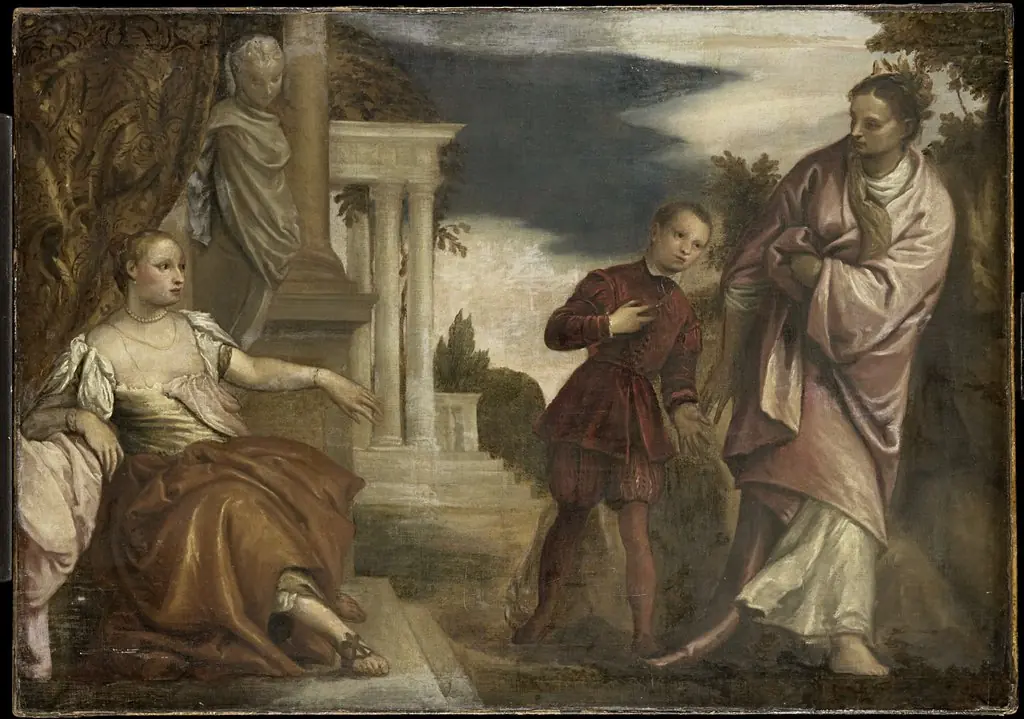 The Choice between Virtue and Passion
 Count Wilczek beseeching king John Sobieski to help Vienna against the Turks, sketch
 Ecce Homo
 The Investiture of Bishop Harold as Duke of Franconia
 Visitation (Meeting of Mary and Elizabeth in the Presence of Saints Joseph and Jerome)
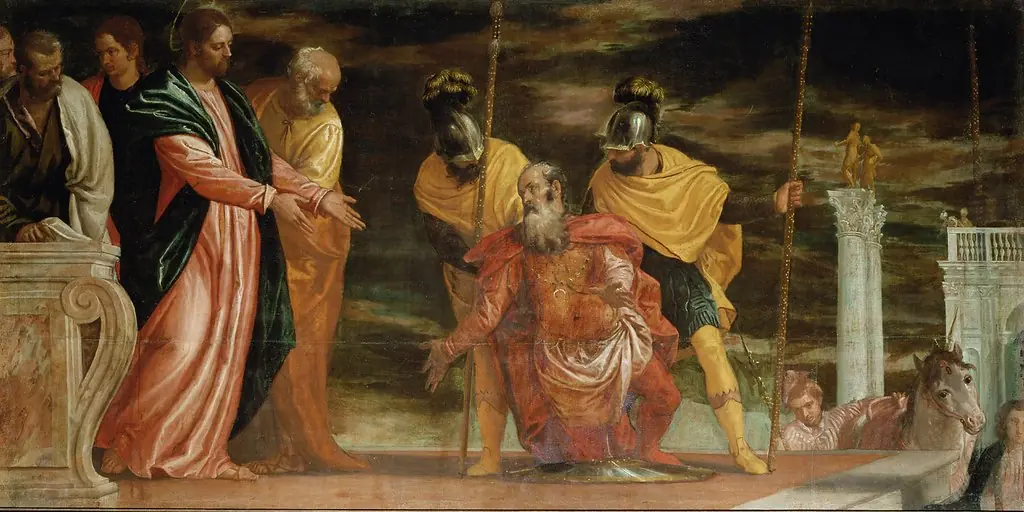 Christus und der Hauptmann von Kafarnaum
 The Presentation of Christ in the Temple, and the Baptism of Christ
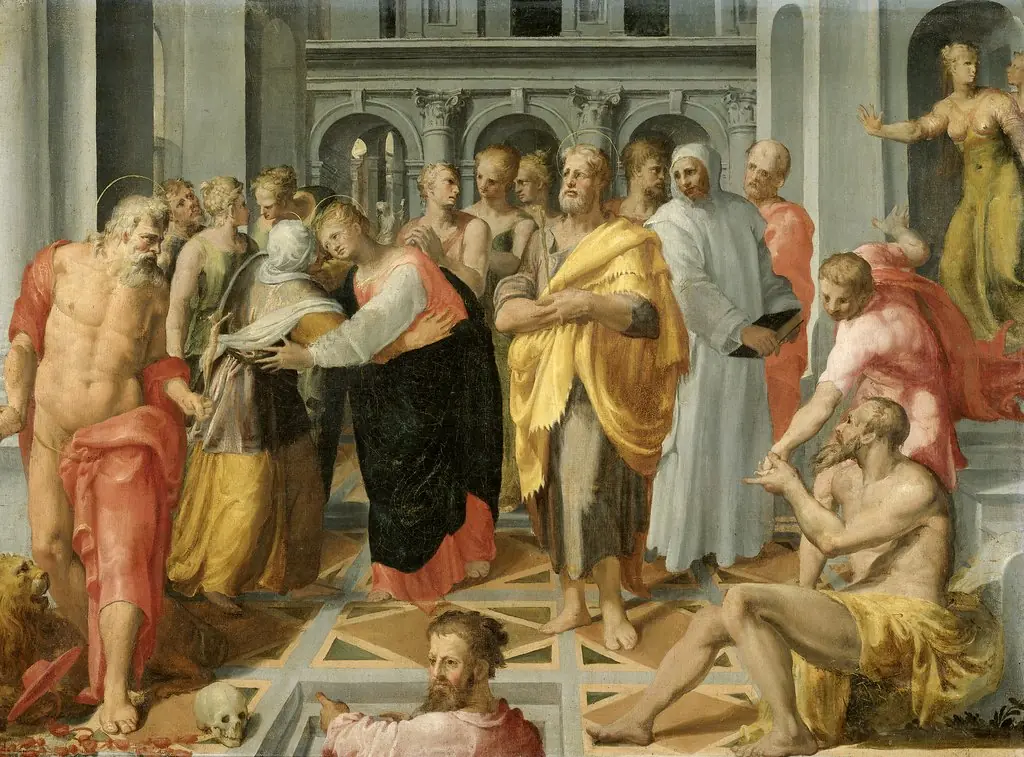 Visitation (Meeting of Mary and Elizabeth in the Presence of Saints Joseph and Jerome)
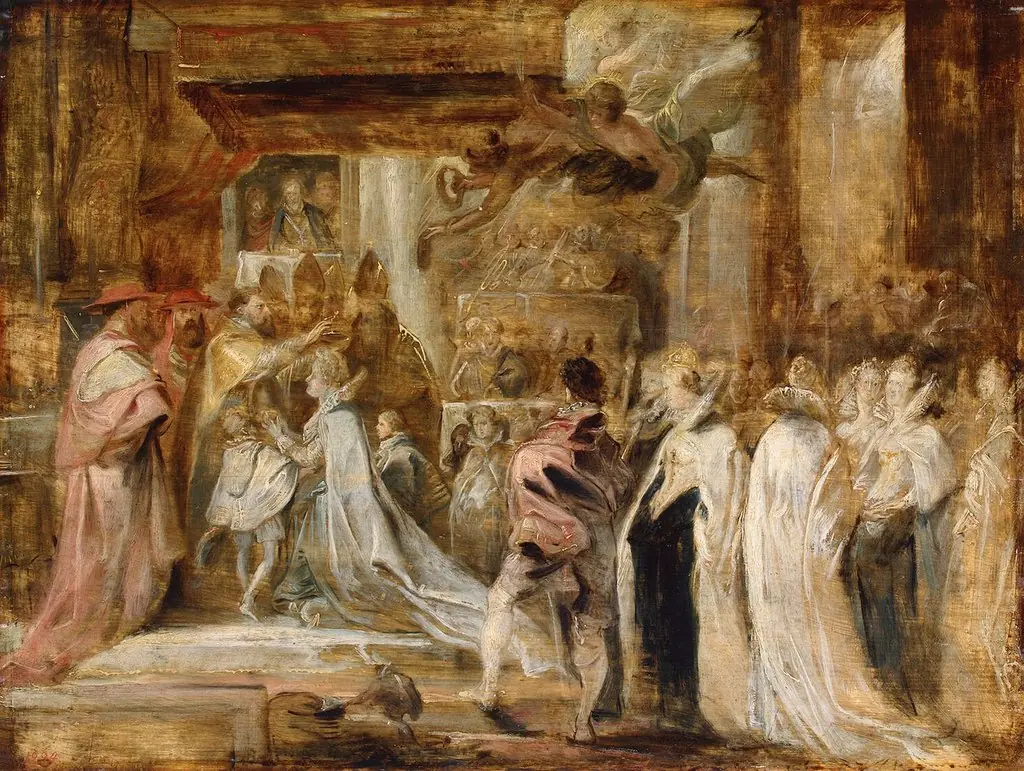 Coronation of Maria de' Medici
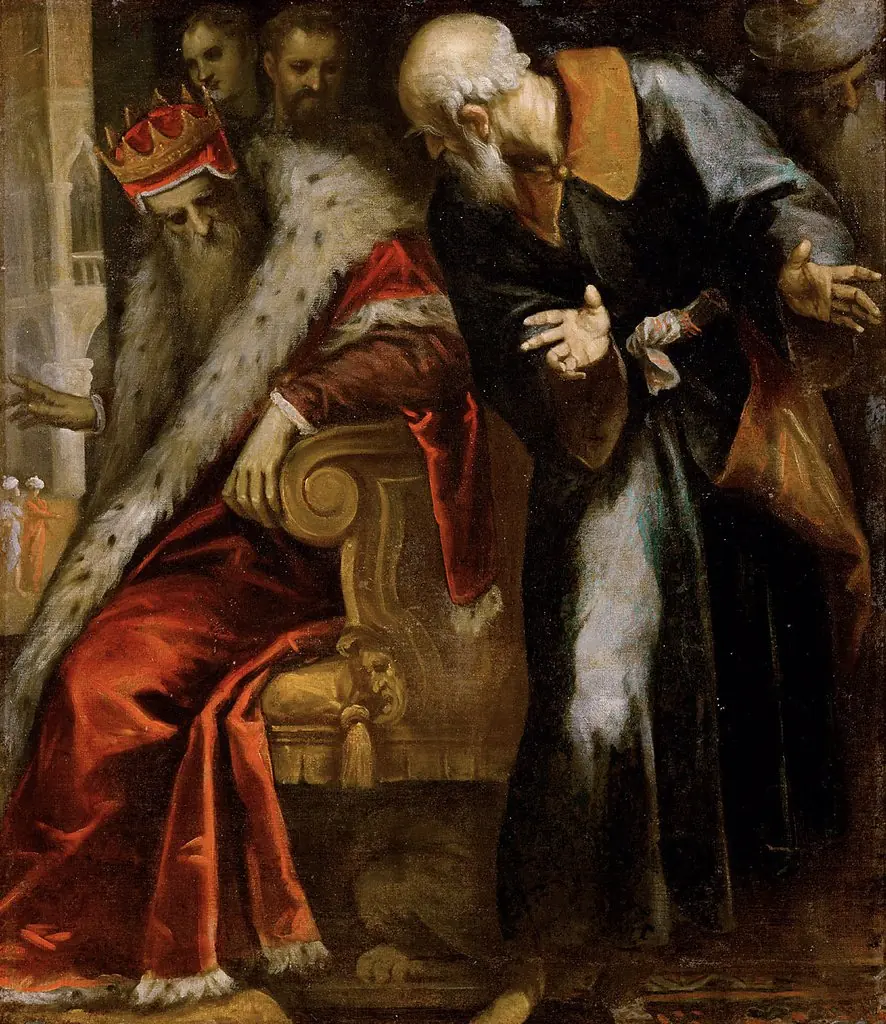 The prophet Nathan admonishes King David
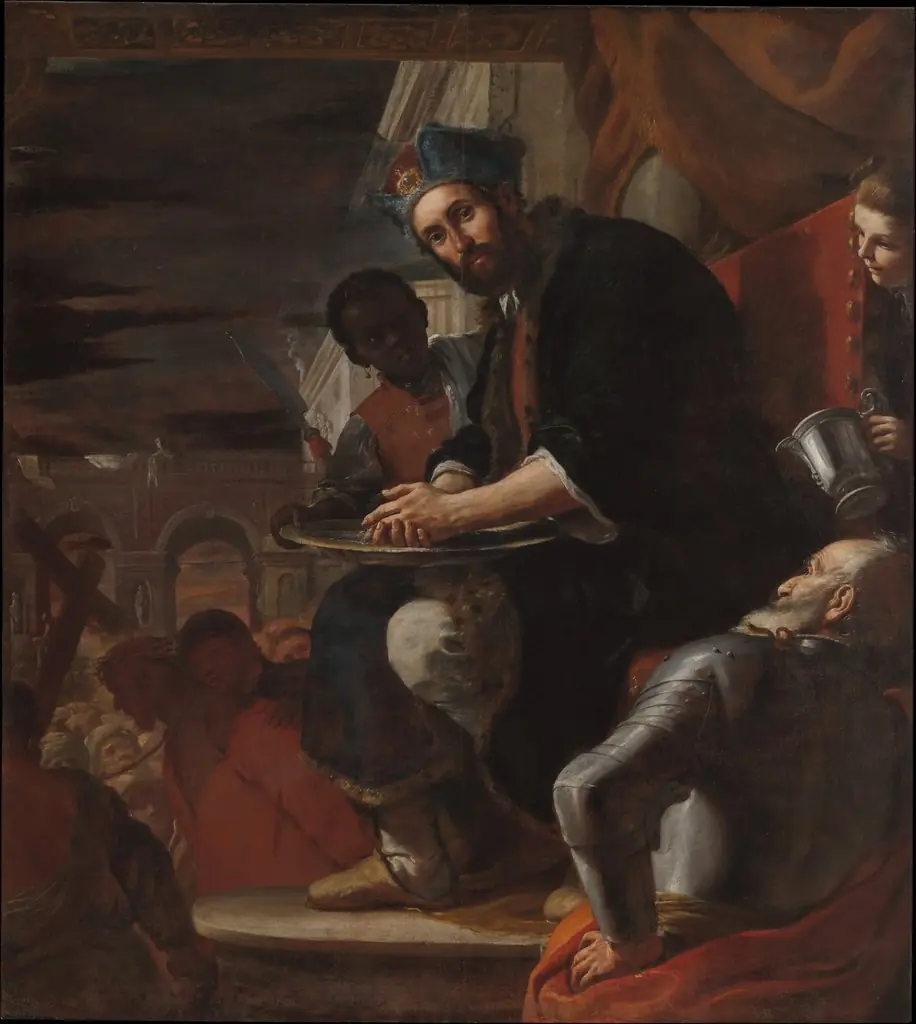 Pilate Washing His Hands