Artwork
The Deliverance of Arsinoe
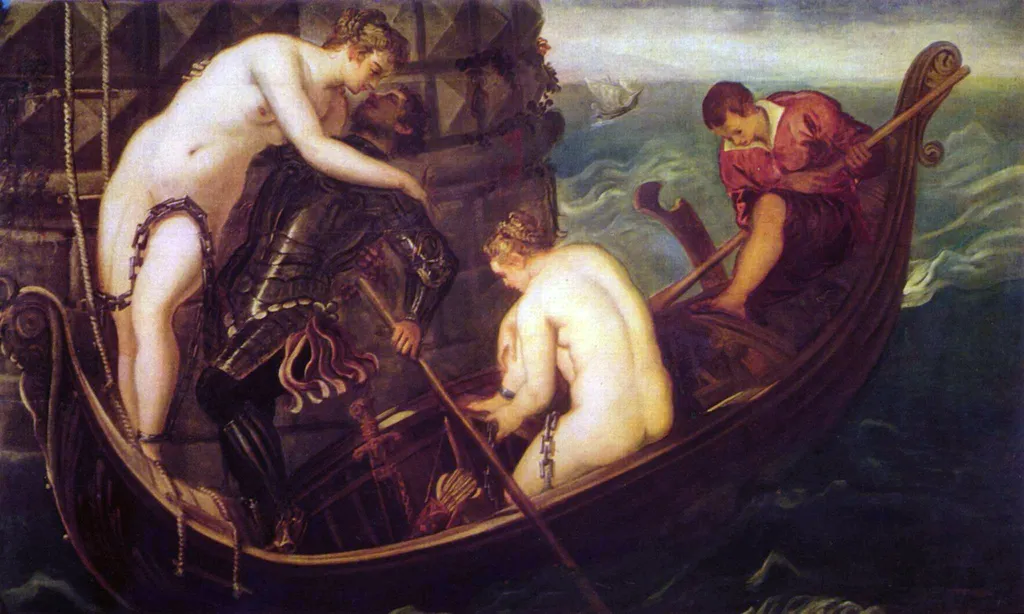
The Deliverance of Arsinoe is an oil painting by the Mannerist artist Jacopo Tintoretto. It dates from 1592 and is held in the collection of the Staatliche Kunstsammlungen Dresden.
About this work
Subject & Meaning
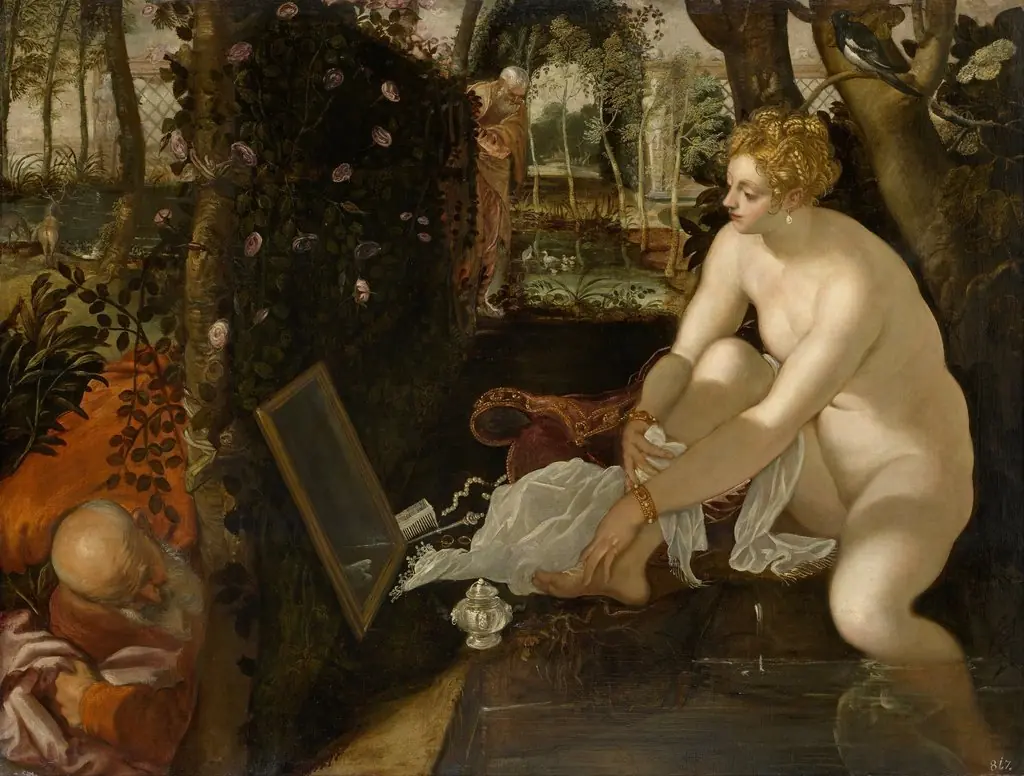
The handmaid seated on the boat's edge, removing her shackles, recalls the figure of Susanna, linking the work to Tintoretto's earlier Susanna and the Elders.
The painting depicts the flight of Arsinoe IV of Egypt, half-sister of Cleopatra, from Alexandria in 48 BC following Julius Caesar's arrival and his siding with Cleopatra. According to the medievalized version of Lucan's Pharsalia that Tintoretto followed, the knight Ganymede plans to seize the throne after Ptolemy's death by rescuing the imprisoned Arsinoe and marrying her. He reaches the fortress walls by night in a boat, while Arsinoe and her handmaid slip through a narrow window, forcing them to undress, and descend to the vessel.
Tintoretto replaced the rope of the source with a rope ladder for aesthetic reasons. The iconographic contrast between the nude women and the armored rescuer carries a satirical edge, exemplified by the knight blowing Arsinoe a kiss. The handmaid seated on the boat's edge, removing her shackles, recalls the figure of Susanna, linking the work to Tintoretto's earlier Susanna and the Elders.
Technique & Style
Executed in oil paint on canvas, this history painting measures 153 by 251 centimeters. Stylistically aligned with the Venetian school and Mannerism, the work features a dynamic composition defined by a strong diagonal created by the rocking boat and rising sea waves, which injects tension into the scene. Tintoretto employs a striking visual contrast between the nudity of the female figures, Arsinoe and her attendant, and the armored form of their male rescuer.
The artist modified the literary source for aesthetic purposes, replacing a described rope with a rope ladder to facilitate the figures' descent. Formal similarities in the movement and rendering of the female bodies, particularly the attendant removing chains, link this piece to Tintoretto's 'Susanna and the Elders,' suggesting a creation date between 1555 and 1560.
History & Provenance
Jacopo Tintoretto created The Deliverance of Arsinoe between 1555 and 1556, with some scholarship suggesting a completion date as late as 1560 based on stylistic similarities to his Susanna and the Elders. The work depicts a scene derived from a medieval adaptation of Lucan's Pharsalia, wherein the knight Ganymede rescues Arsinoe IV from imprisonment by Julius Caesar. Currently housed in the Gemäldegalerie Alte Meister in Dresden as part of the Staatliche Kunstsammlungen, the painting has remained in this collection since at least the modern cataloging era.
While the narrative source involves a rope, Tintoretto aesthetically substituted a rope ladder for the descent. The composition contrasts the nude figures of Arsinoe and her companion against the armored rescuer, capturing the moment of escape from the fortress walls.
Context
Created between 1555 and 1556, The Deliverance of Arsinoe is a significant example of Venetian Mannerism by Jacopo Tintoretto. The work draws its narrative from a medieval adaptation of Lucan's Pharsalia, transforming a Roman historical epic into a chivalric romance featuring the knight Ganymede. Art historical analysis highlights the painting's satirical tone, such as the armored rescuer blowing a kiss, which contrasts with the nudity of the fleeing Arsinoe and her companion.
Scholars note formal similarities between this piece and Tintoretto's Susanna and the Elders, particularly in the poses of the female figures, suggesting a production date around 1560. The composition emphasizes tension through the diagonal balance of the boat against the sea waves. Currently held in the Gemäldegalerie Alte Meister in Dresden, the painting exemplifies the artist's ability to merge classical subjects with contemporary stylistic innovations.
Overview
Jacopo Tintoretto's 1592 oil painting, The Deliverance of Arsinoe, exemplifies the Venetian Mannerist style. It portrays the Egyptian queen Arsinoe IV, wounded by an arrow, being brought aboard a vessel. The composition features a man in armor alongside three nude female figures, set against a backdrop of water and a dramatic sky. This historical subject allowed the artist to explore dynamic human forms and a compelling narrative.
Artist & collection
Artist
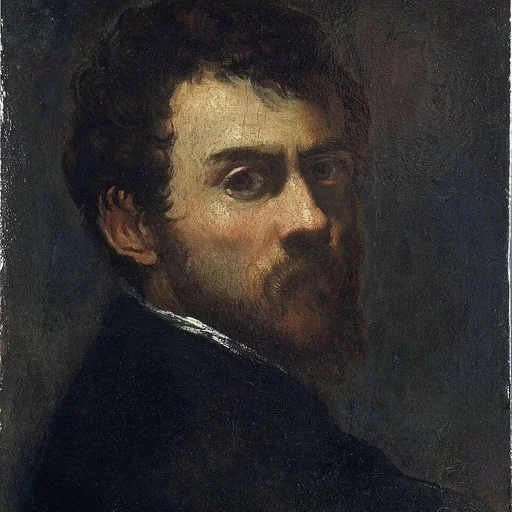
Jacopo Robusti (late September or early October 1518 – 31 May 1594), best known as Tintoretto ( TIN-tə-RET-oh; Italian:; Venetian: ), was an Italian Renaissance painter of the Venetian school.

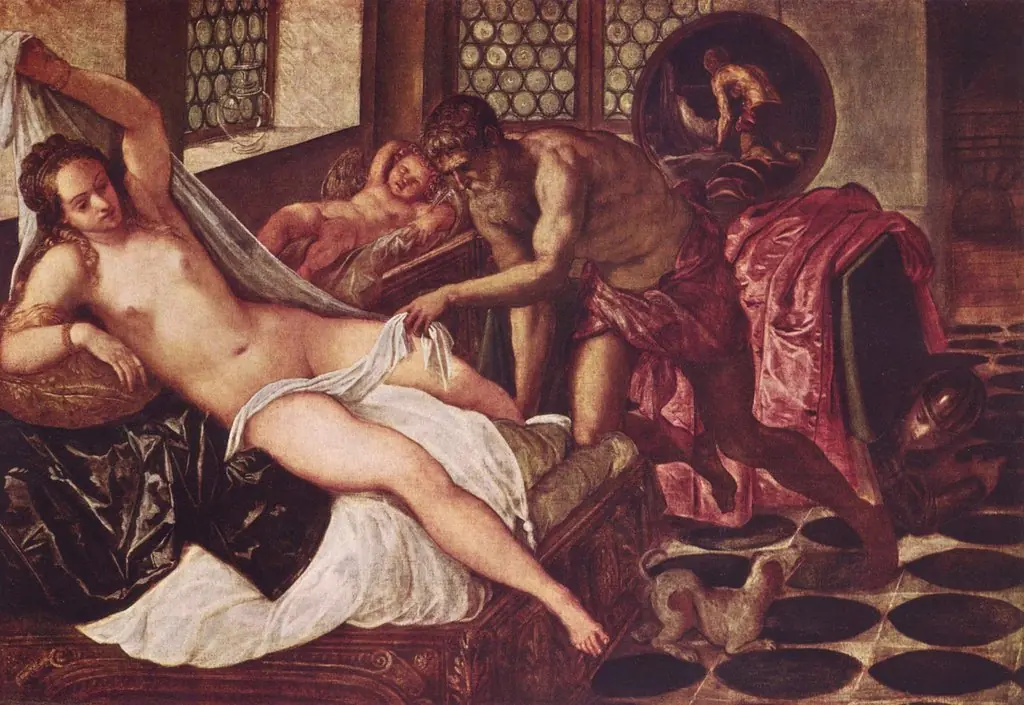

- Vulcan showing the captured Mars and Venus to the gods
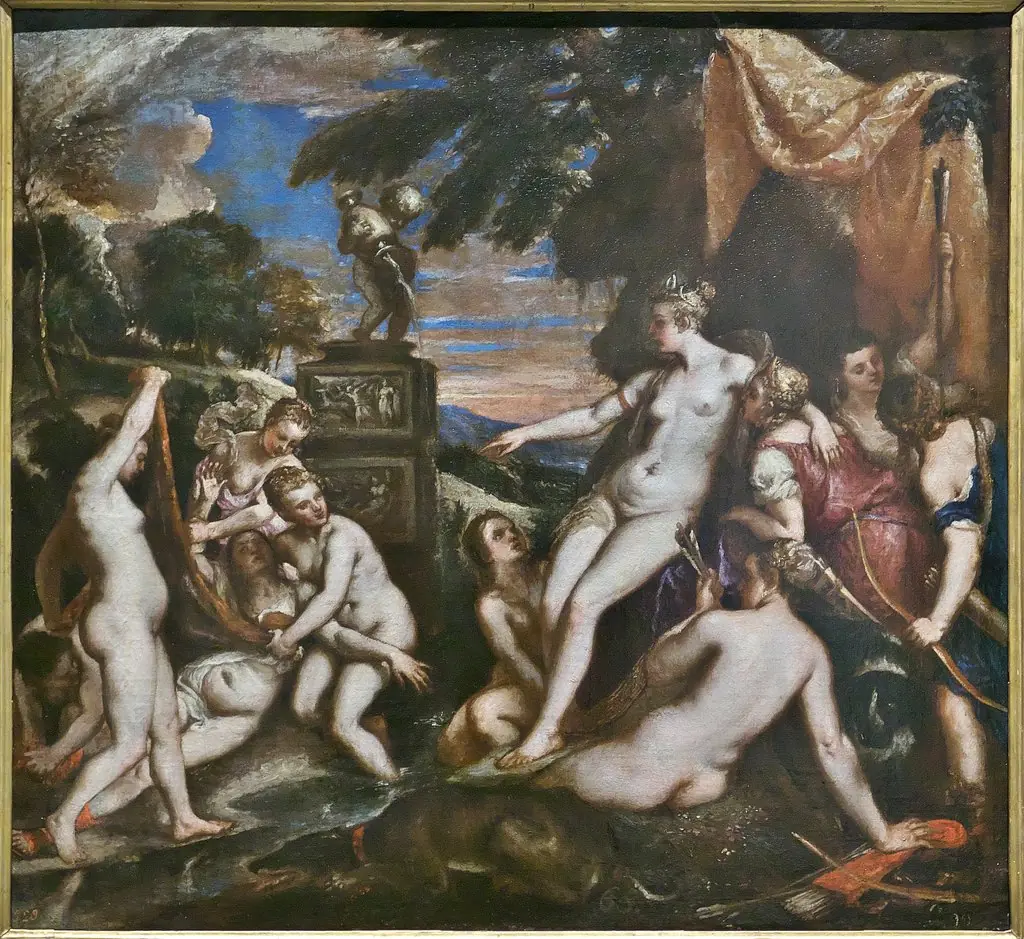 Diana and Callisto
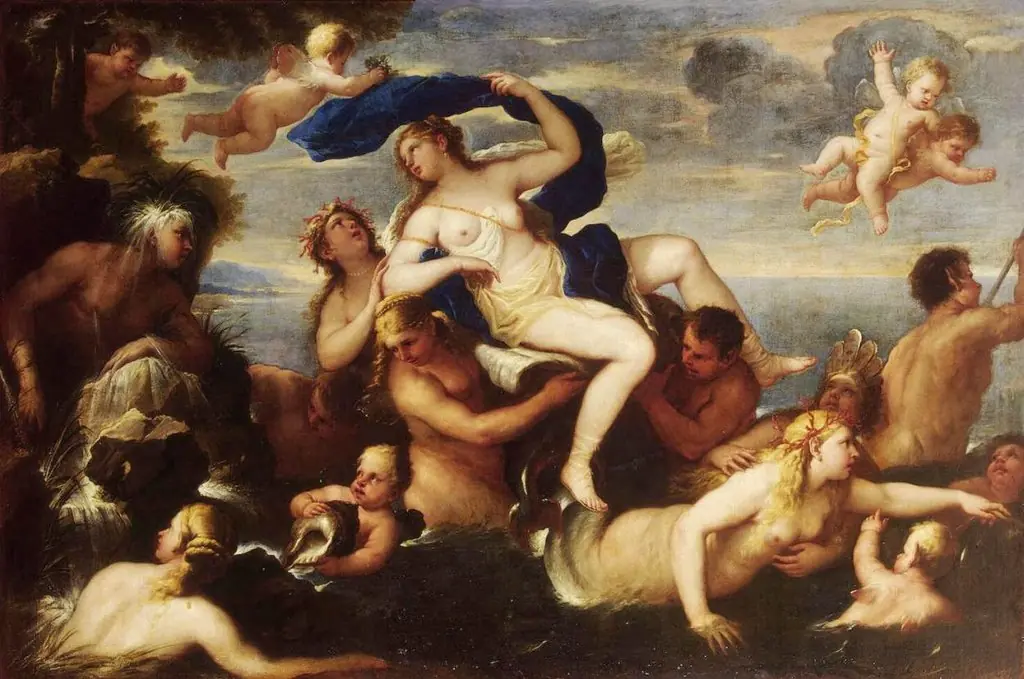 Triumph of Galatea
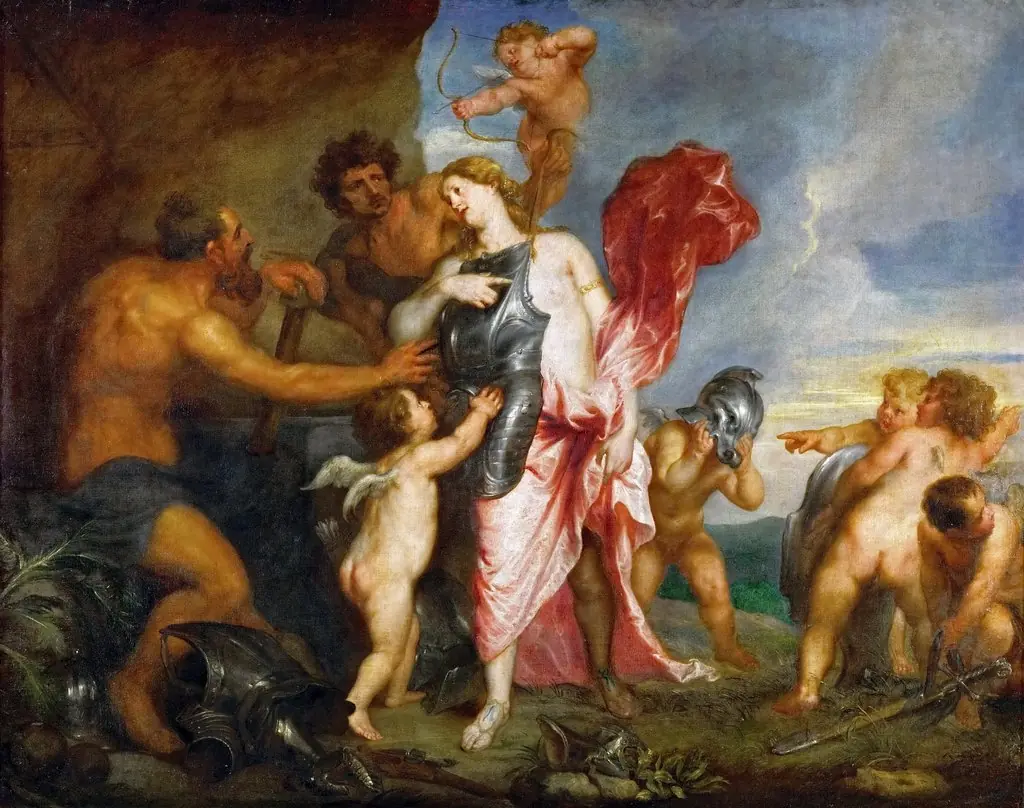 Thetis Receiving the Weapons of Achilles from Hephaestus
 Et fruentimmer bortføres over søen af fire tritoner
 Et fruentimmer bortføres over søen af fire tritoner
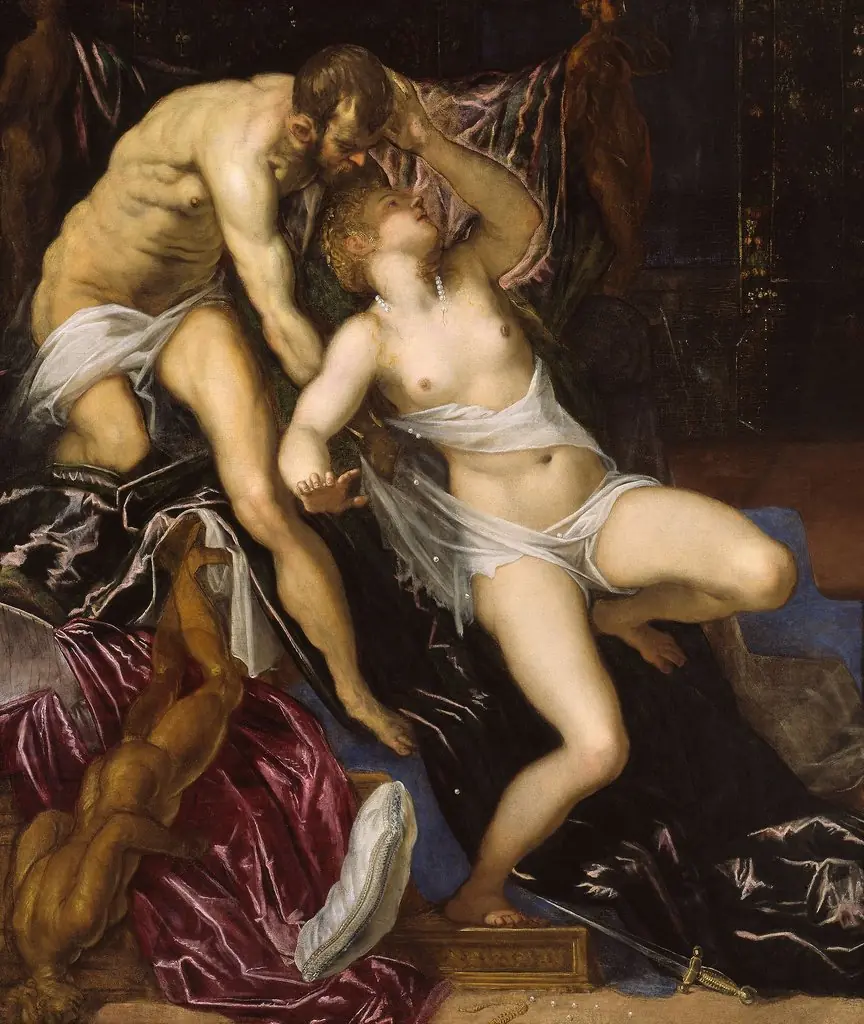
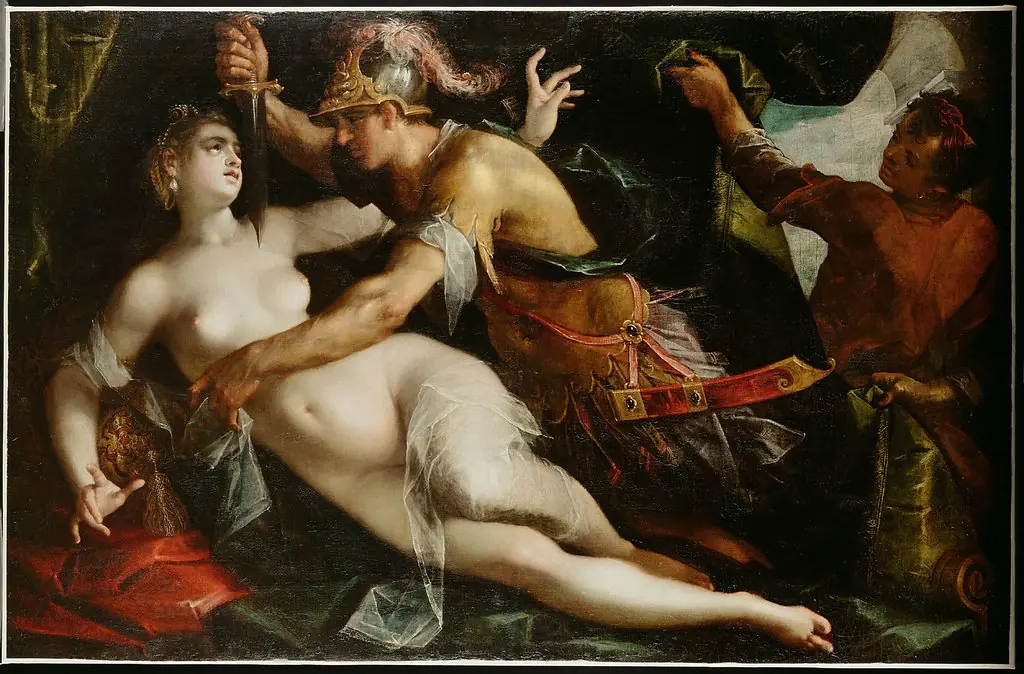 Tarquinius und Lukrezia
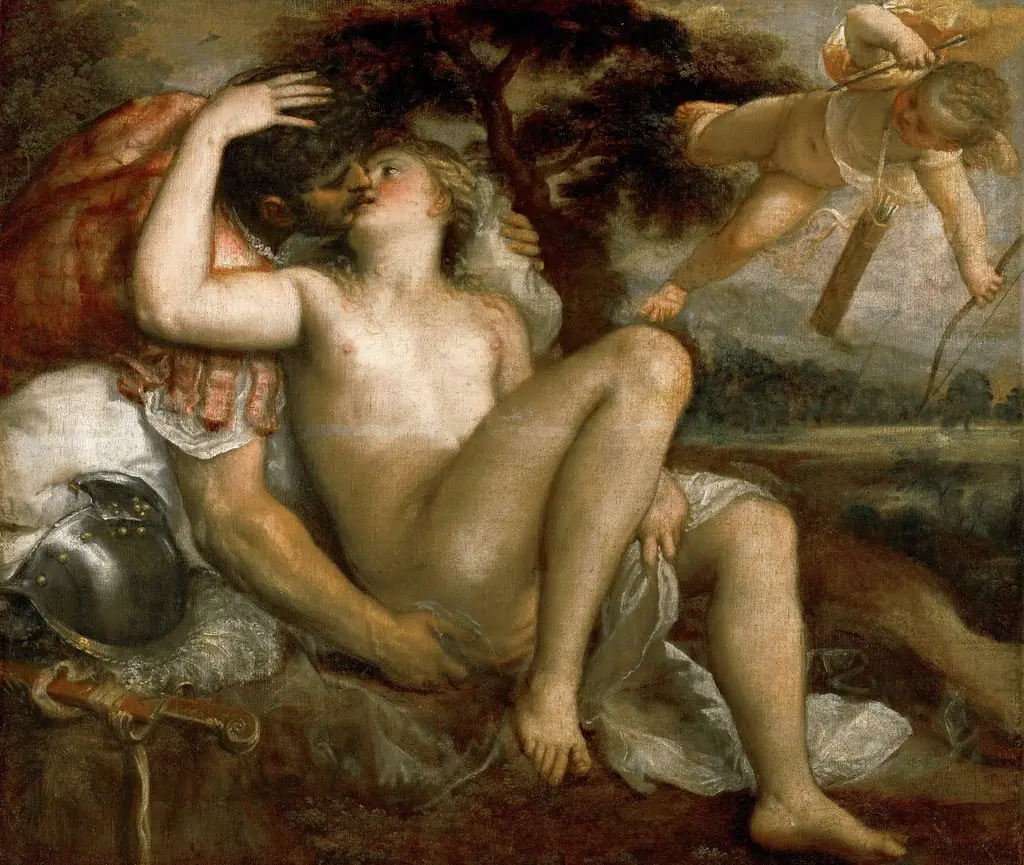 Mars, Venus and Amor
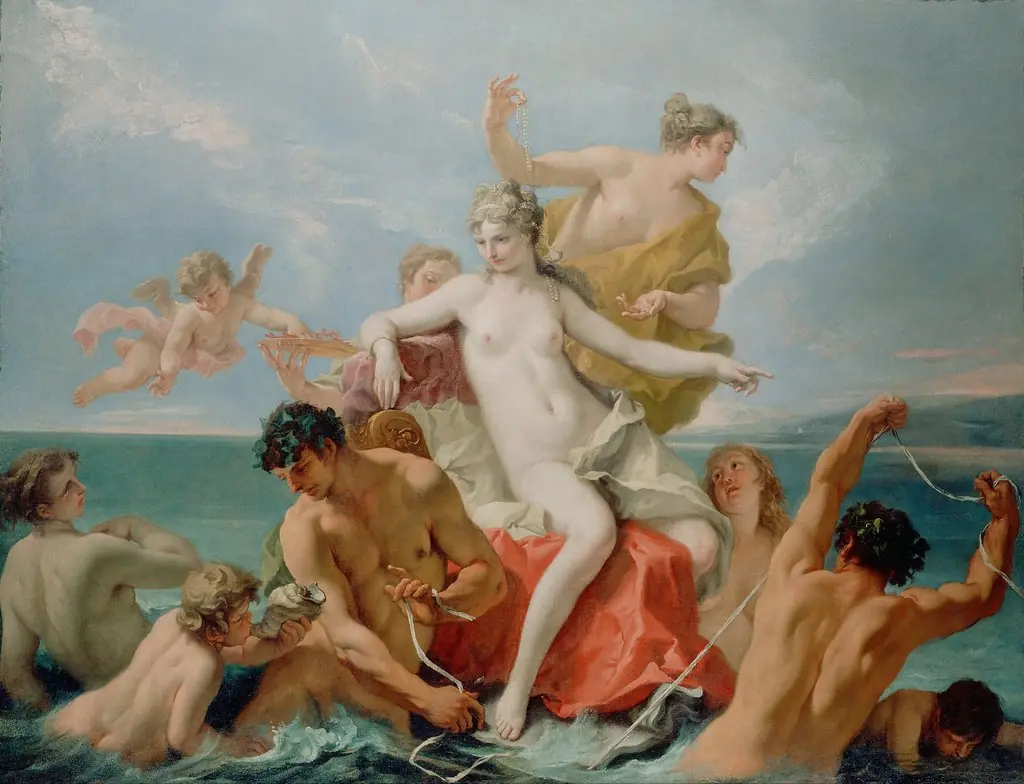 Triumph of the Marine Venus
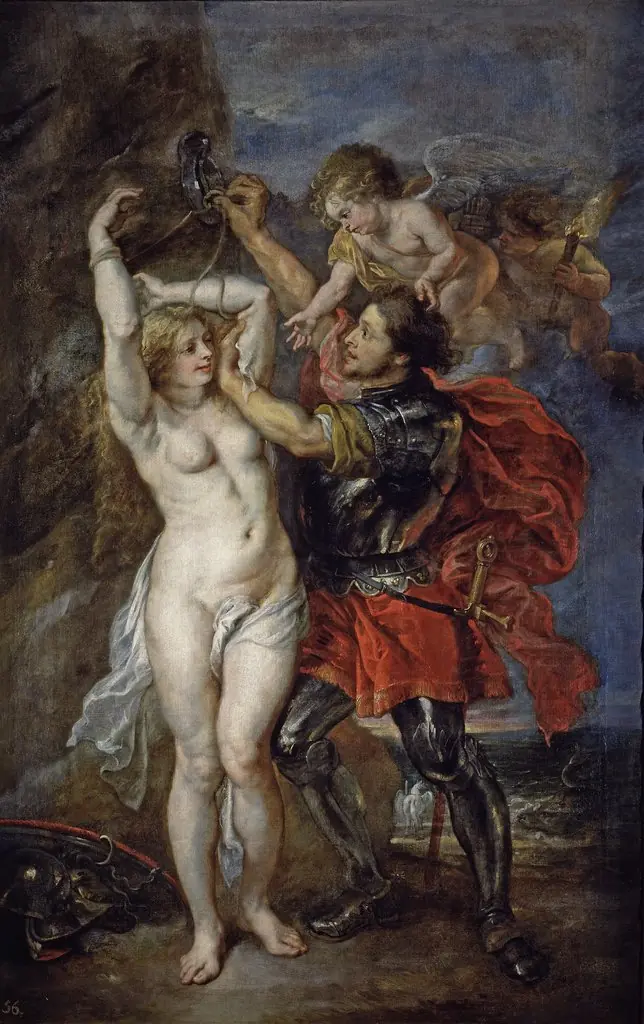 Perseus Freeing Andromeda
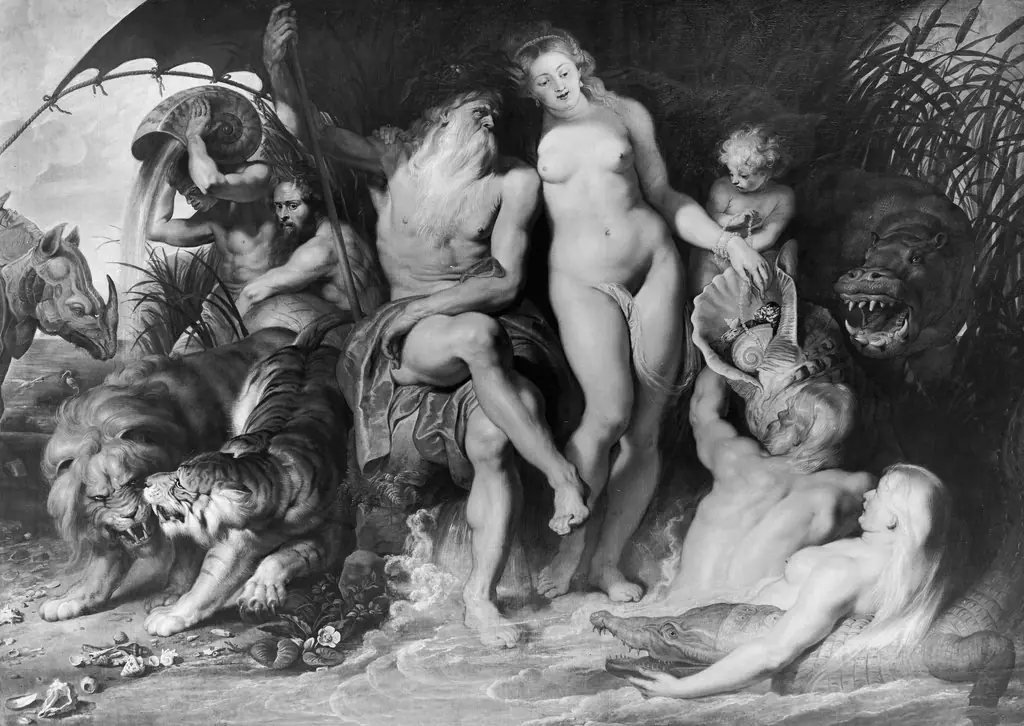 Neptune and Amphitrite
 The Triumph of Amphitrite